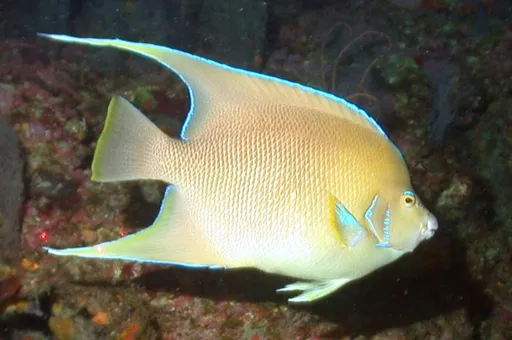
Blue angelfish
Holacanthus bermudensis
Also known as Bermuda Blue Angelfish, Common Angelfish, Blue Angel, Bermuda Angelfish
SaltwaterFish
Care at a glance
- Temperature
- 72–81°F
- 22–27°C
- pH
- 8.1–8.4
- Adult size
- 17.7 in
- 45 cm
- Minimum tank
- 251 gal
- 950 L
- Temperament
- Aggressive
- Social behavior
- Solitary
- Own kind
- One per tank
- Tankmates
- With caution
- Swim level
- Middle
- Diet
- Omnivore
- Difficulty
- Medium
- Breeding
- No record
- Rarity
- Common
- Reef safe
- Reef safe with caution
- Family
- Pomacanthidae
- Origin
- Western Atlantic from Bermuda and Florida through the Gulf of Mexico, on coral reefs and rocky ledges.
Overview
The blue angelfish is a large Atlantic angel for a very big saltwater tank. It takes a little experience to keep well.
Did you know
The blue angelfish interbreeds freely with the queen angelfish where their ranges overlap. The mixed-color hybrids were long thought to be their own species, once called the Townsend angel.
Caring for the blue angelfish
Give a blue angelfish at least 251 gal (950 L), with big rock caves and open water. Adults are dominant and need room.
Keep the water at 72 to 81°F (22 to 27°C) with a pH of 8.1 to 8.4. It is hardier and more willing to eat prepared foods than the rock beauty. It takes spirulina, angelfish preparations and meaty items.
The blue angelfish is aggressive toward other angels, so house only one per tank. Choose its other tank mates with caution too.
It nips stony and soft corals and clam mantles, so it is reef safe only with caution. Keep it in a fish-only tank or a carefully chosen reef.
Good to know
The blue angelfish belongs to the family Pomacanthidae. It has a tan-blue body and yellow-tipped fins. Adults lack the crown spot of the queen angelfish, Holacanthus ciliaris. It also goes by Bermuda blue angelfish and Bermuda angelfish.
In the wild
The blue angelfish ranges through the subtropical western Atlantic, from Bermuda and Florida through the Gulf of Mexico. It lives on coral reefs and rocky ledges, working the ledges and rocky bottoms for sponges, algae and tunicates.
Common questions
What size tank does a blue angelfish need?
A blue angelfish needs at least 251 gal (950 L). It spends most of its time in the middle.
What temperature and pH does a blue angelfish need?
A blue angelfish is comfortable at 72–81°F (22–27°C) with a pH of 8.1–8.4.
What does a blue angelfish eat?
A blue angelfish takes spirulina, angelfish preparations and meaty items. It is more willing to eat prepared foods than the rock beauty.
How big does a blue angelfish get?
An adult blue angelfish reaches about 17.7 in (45 cm).
Related species
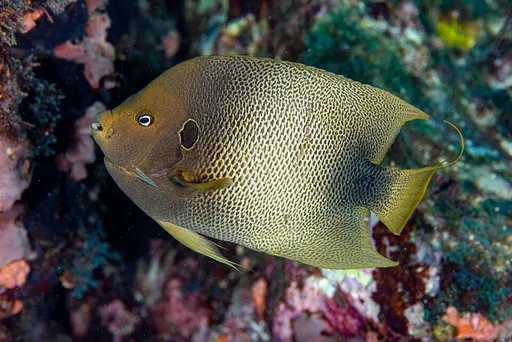 17.7 in (45 cm)251 gal (950 L)73–81°F (23–27°C)
African angelfish
Holacanthus africanus
17.7 in (45 cm) · 251 gal (950 L)
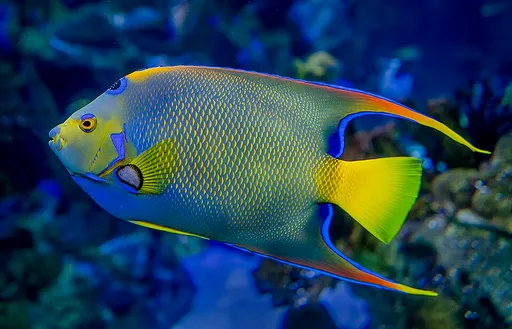 17.7 in (45 cm)251 gal (950 L)75–81°F (24–27°C)
Queen angelfish
Holacanthus ciliaris
17.7 in (45 cm) · 251 gal (950 L)
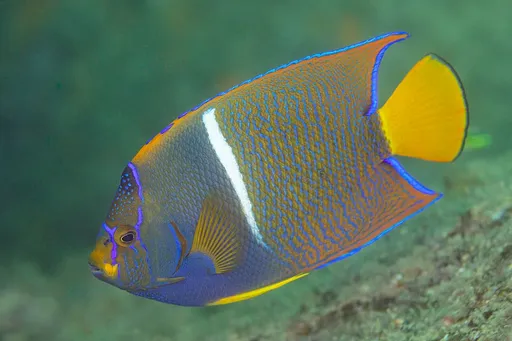 13.8 in (35 cm)151 gal (570 L)72–81°F (22–27°C)
King angelfish
Holacanthus passer
13.8 in (35 cm) · 151 gal (570 L)
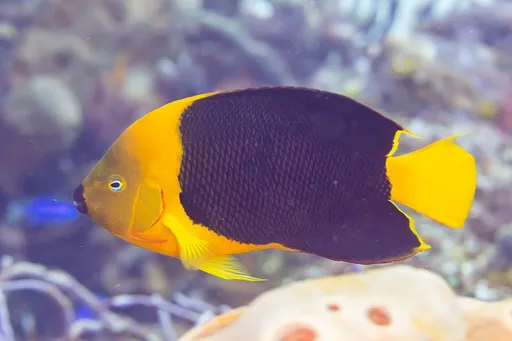 13.8 in (35 cm)140 gal (530 L)73–81°F (23–27°C)
Rock beauty angelfish
Holacanthus tricolor
13.8 in (35 cm) · 140 gal (530 L)
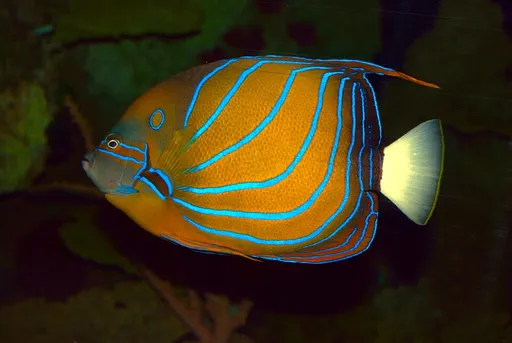 17.7 in (45 cm)219 gal (830 L)73–81°F (23–27°C)
Annularis angelfish
Pomacanthus annularis
17.7 in (45 cm) · 219 gal (830 L)
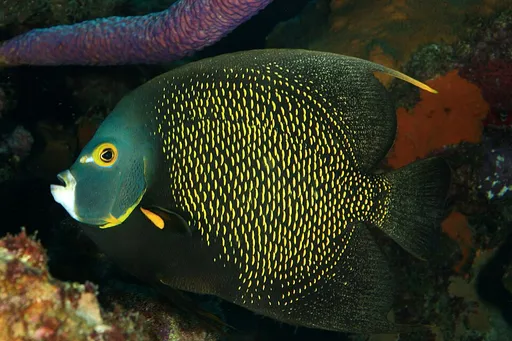 16.1 in (41 cm)201 gal (760 L)72–81°F (22–27°C)
French angelfish
Pomacanthus paru
16.1 in (41 cm) · 201 gal (760 L)