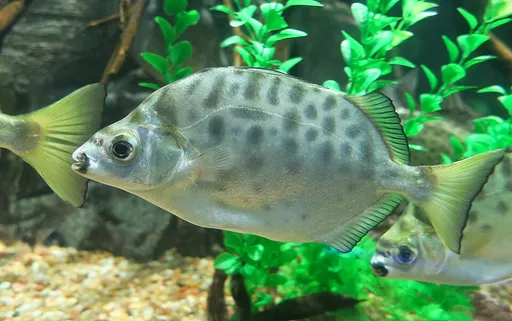
Silver scat
Selenotoca multifasciata
Also known as False scat, Silver barred scat, Banded scat
BrackishSaltwaterFish
Care at a glance
- Temperature
- 72–82°F
- 22–28°C
- pH
- 7.5–8.5
- Adult size
- 11.8 in
- 30 cm
- Minimum tank
- 119 gal
- 450 L
- Temperament
- Mostly peaceful
- Social behavior
- Schooling
- Tankmates
- With caution
- Swim level
- Middle
- Difficulty
- Difficult
- Breeding
- Hard
- Rarity
- Common
- Reef safe
- Not reef safe
- Family
- Scatophagidae
- Origin
- Estuaries and coastal rivers of northern Australia, New Guinea, and the western Pacific
Overview
Keep them in a group of at least five or six, since they are shoaling fish that grow nervous and nippy alone. A group of large, active grazers needs a big tank, on the order of 450 liters or more with a long open footprint. They swim through the middle of the water column and are mostly peaceful, but they get boisterous and can nip when crowded or hungry, so pair them with sturdy brackish species like monos, spotted scats, and archers rather than small or long-finned fish. Hold the water hard and alkaline at a pH of 7.5 to 8.5 and 22 to 28 C, and increase salinity gradually as they age. Feed a mostly vegetarian omnivore diet with blanched greens, algae, and spirulina plus some meaty foods.
In the wild
Silver scats come from estuaries, tidal rivers, and coastal waters of northern Australia, New Guinea, and the western Pacific, where they move between fresh, brackish, and marine water with the tide. They are the silvery, black-barred relative of the spotted scat and share the same rising-salinity pattern: juveniles cope with low brackish, adults want high brackish to marine conditions. Give them a large, alkaline, well-filtered tank with a pH of 7.5 to 8.5 and a temperature of 22 to 28 C, plenty of open swimming length, and either tough plants or none, since they graze and dig.
Good to know
This is a scat in the family Scatophagidae, distinguished from the spotted scat by a silver body crossed with dark vertical bars and spots low on the flanks. Aquarium adults commonly reach around 30 cm, with larger sizes reported in the wild. Like other scats it carries venomous dorsal spines that can deliver a painful sting, so handle it carefully. It is a pelagic spawner not bred in home aquaria, so stock is wild-caught.
Did you know
It is often sold as the false scat because at a glance it looks like a washed-out spotted scat, but it is a separate species with its own bold barring. Both scats carry venom in their dorsal spines, so the smart move when moving one is to steer it into a container rather than netting it by hand.
Common questions
What size tank does a Silver scat need?
A Silver scat needs at least 119 gal (450 L). It spends most of its time in the middle.
What temperature and pH does a Silver scat need?
A Silver scat is comfortable at 72–82°F (22–28°C) with a pH of 7.5–8.5.
How big does a Silver scat get?
An adult Silver scat reaches about 11.8 in (30 cm).
Does a Silver scat need a group?
Yes. A Silver scat is a schooling species and should be kept in a group, not singly.
Related species
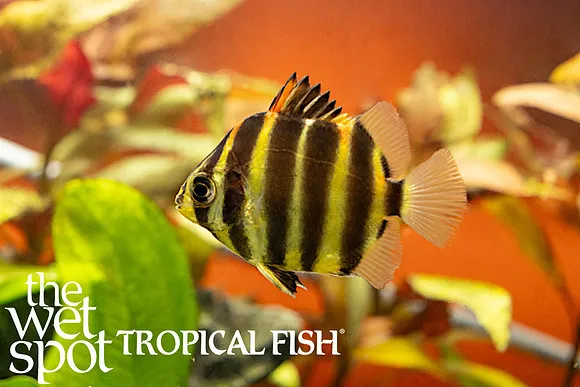 11.8 in (30 cm)159 gal (600 L)73–82°F (23–28°C)
African tiger scat
Scatophagus tetracanthus
11.8 in (30 cm) · 159 gal (600 L)
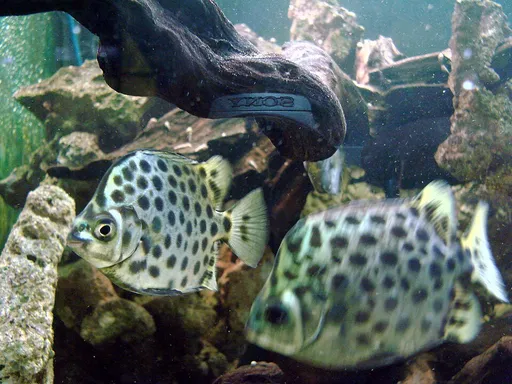 11.8 in (30 cm)119 gal (450 L)72–82°F (22–28°C)
Spotted scat
Scatophagus argus
11.8 in (30 cm) · 119 gal (450 L)
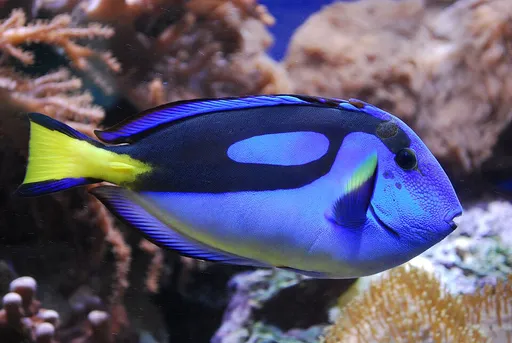 11.8 in (30 cm)180 gal (680 L)73–81°F (23–27°C)
Blue hippo tang
Paracanthurus hepatus
11.8 in (30 cm) · 180 gal (680 L)
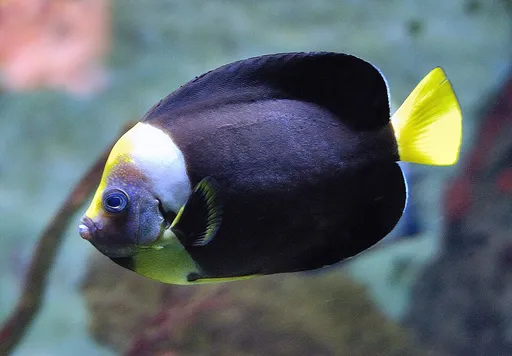 11.8 in (30 cm)180 gal (680 L)72–79°F (22–26°C)
False personifer angelfish
Chaetodontoplus meredithi
11.8 in (30 cm) · 180 gal (680 L)
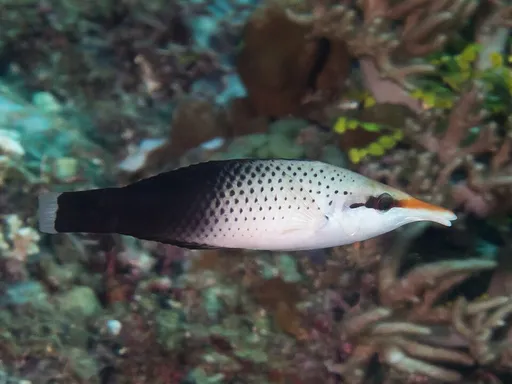 11.8 in (30 cm)125 gal (473 L)72–79°F (22–26°C)
Green bird wrasse
Gomphosus varius
11.8 in (30 cm) · 125 gal (473 L)
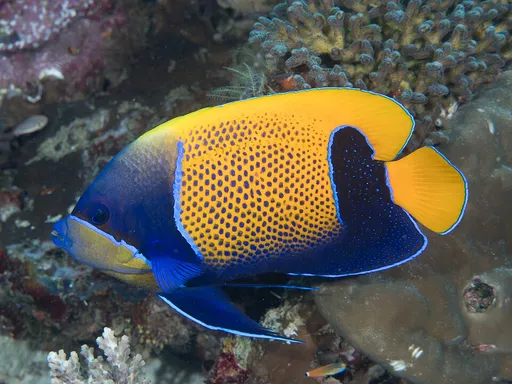 11.8 in (30 cm)145 gal (550 L)73–81°F (23–27°C)
Majestic angelfish
Pomacanthus navarchus
11.8 in (30 cm) · 145 gal (550 L)