Spotted scat
Scatophagus argus
Also known as Green scat, Argus fish, Spotted butterfish
BrackishSaltwaterFish
Care at a glance
- Temperature
- 72–82°F
- 22–28°C
- pH
- 7.5–8.5
- Adult size
- 11.8 in
- 30 cm
- Minimum tank
- 119 gal
- 450 L
- Temperament
- Mostly peaceful
- Social behavior
- Schooling
- Tankmates
- With caution
- Swim level
- Middle
- Difficulty
- Difficult
- Breeding
- Hard
- Rarity
- Common
- Reef safe
- Not reef safe
- Family
- Scatophagidae
- Origin
- Indo-Pacific estuaries, harbours, and mangroves from India and Southeast Asia to Australia and the western Pacific
Overview
Keep them in a group of at least five or six, since scats are social and a shoal is calmer and more confident than lone fish. A group of large, boisterous grazers needs a big tank, on the order of 450 liters or more with a long open footprint. They occupy the middle of the water column and are mostly peaceful, but they can be pushy and nip fins when crowded or underfed, so house them with similarly robust brackish tankmates like monos and archers and skip small, delicate fish. Hold the water hard and alkaline at a pH of 7.5 to 8.5 and 22 to 28 C, raising salinity gradually as they grow. Feed them as hungry omnivores that lean heavily vegetarian, offering blanched greens, algae, and spirulina alongside meaty foods to prevent diet-related problems.
In the wild
Spotted scats live in estuaries, harbours, river mouths, and mangrove swamps across the Indo-Pacific, often in silty, nutrient-rich tidal water. They are famously tolerant of dirty, variable conditions in the wild, but in a tank they need clean, stable water, so do not read that hardiness as a licence to skip maintenance. Salinity rises with age here too: juveniles handle low brackish, while adults trend toward high brackish and marine water. Give them a large, alkaline, heavily filtered tank at a pH of 7.5 to 8.5 and 22 to 28 C, with open swimming space and hardy plants or none, since they graze and uproot soft greenery.
Good to know
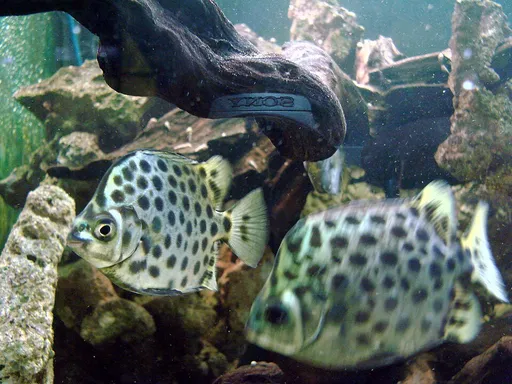
This is a deep, roughly disc-shaped fish in the family Scatophagidae, reaching around 30 cm in aquaria and more in the wild. The name Scatophagus means dung-eater, a nod to its habit of scavenging around sewage outfalls and harbour mud in its native range. It has venomous dorsal spines that give a painful sting, so handle it with care. It is a pelagic spawner and is not bred in home tanks, so fish are wild-caught juveniles.
Did you know
Their genus name literally means dung-eater, earned by scavenging around harbour outfalls and mangrove mud in the wild, where they help clean up organic waste. In the tank that shows up as a big appetite for greens and a habit of grazing constantly, so they do best fed a mostly plant-based diet rather than the meaty foods people assume a large fish wants.
Common questions
What size tank does a Spotted scat need?
A Spotted scat needs at least 119 gal (450 L). It spends most of its time in the middle.
What temperature and pH does a Spotted scat need?
A Spotted scat is comfortable at 72–82°F (22–28°C) with a pH of 7.5–8.5.
How big does a Spotted scat get?
An adult Spotted scat reaches about 11.8 in (30 cm).
Does a Spotted scat need a group?
Yes. A Spotted scat is a schooling species and should be kept in a group, not singly.
Related species
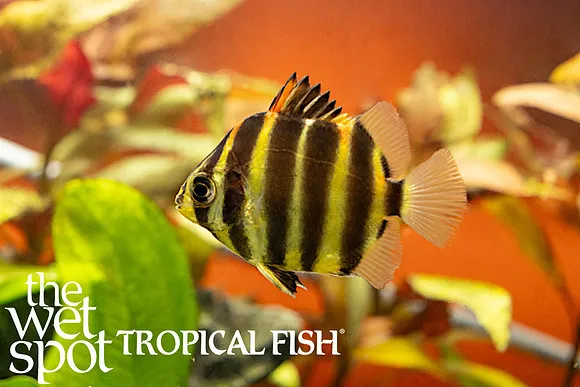 11.8 in (30 cm)159 gal (600 L)73–82°F (23–28°C)
African tiger scat
Scatophagus tetracanthus
11.8 in (30 cm) · 159 gal (600 L)
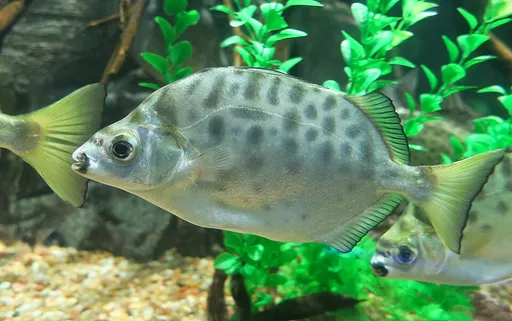 11.8 in (30 cm)119 gal (450 L)72–82°F (22–28°C)
Silver scat
Selenotoca multifasciata
11.8 in (30 cm) · 119 gal (450 L)
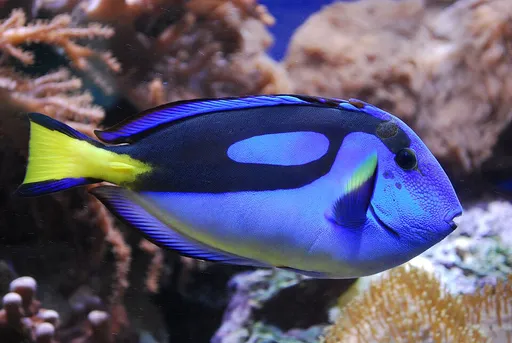 11.8 in (30 cm)180 gal (680 L)73–81°F (23–27°C)
Blue hippo tang
Paracanthurus hepatus
11.8 in (30 cm) · 180 gal (680 L)
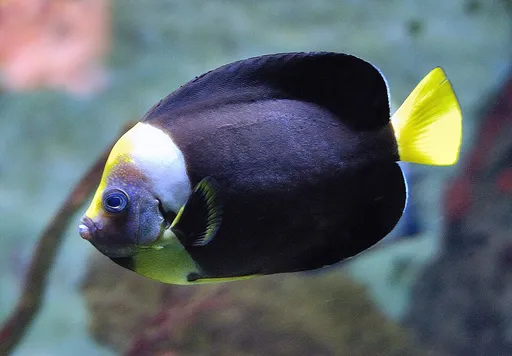 11.8 in (30 cm)180 gal (680 L)72–79°F (22–26°C)
False personifer angelfish
Chaetodontoplus meredithi
11.8 in (30 cm) · 180 gal (680 L)
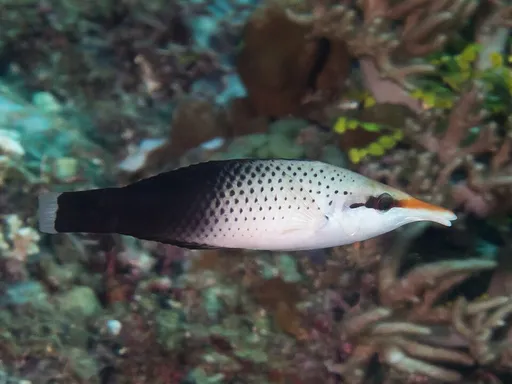 11.8 in (30 cm)125 gal (473 L)72–79°F (22–26°C)
Green bird wrasse
Gomphosus varius
11.8 in (30 cm) · 125 gal (473 L)
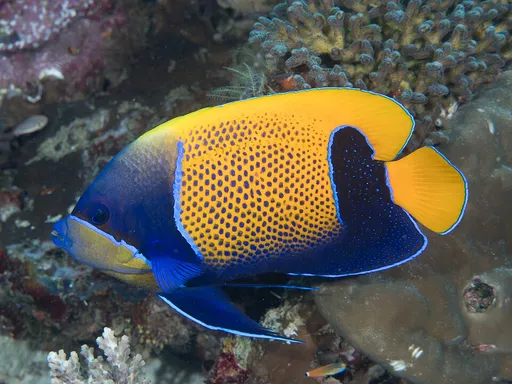 11.8 in (30 cm)145 gal (550 L)73–81°F (23–27°C)
Majestic angelfish
Pomacanthus navarchus
11.8 in (30 cm) · 145 gal (550 L)