Orbiculate batfish
Platax orbicularis
Also known as Orbic batfish, Circular batfish, Round batfish, Orbiculate spadefish
SaltwaterFish
Care at a glance
- Temperature
- 75–81°F
- 24–27°C
- pH
- 8.0–8.4
- Adult size
- 19.7 in
- 50 cm
- Minimum tank
- 185 gal
- 700 L
- Temperament
- Mostly peaceful
- Social behavior
- Social
- Tankmates
- With caution
- Swim level
- Middle
- Difficulty
- Difficult
- Breeding
- No record
- Rarity
- Common
- Reef safe
- Not reef safe
- Family
- Ephippidae
- Origin
- Native to the Indo-Pacific, with juveniles sheltering in mangroves and lagoons and adults schooling on open reefs and wrecks.
Overview
This is a big, tall fish that needs a deep tank of at least 700 litres, and the taller the better since the body is so high. Keep it at 24 to 27 C and pH 8.0 to 8.4 with strong filtration. It is not reef safe and will eat invertebrates, anemones, small fish and pick at corals, so keep it in a fish-only system with peaceful, larger tankmates. Newly imported fish often arrive thin and stressed and can be hard to start feeding, so buy a fish that is already eating. Offer a varied diet of meaty foods and marine algae.
In the wild
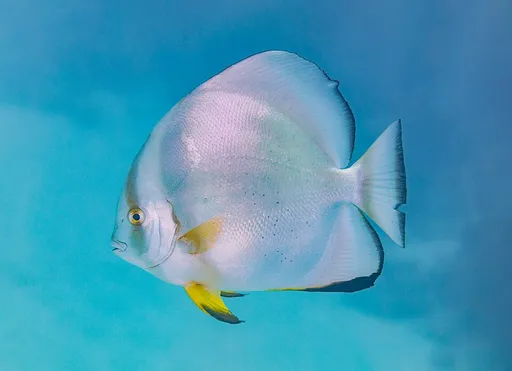
The orbiculate batfish is a tall, disc-shaped fish that is almost as high as it is long, silvery with a couple of dark bars through the head. Juveniles are reddish-brown and drift on their side to mimic a dead leaf among mangrove roots. Adults become large, round, plate-like fish that cruise the open water in loose schools.
Good to know
Platax orbicularis reaches around 50 cm in length but grows even taller through the fins, so it needs surprising vertical space. Juveniles mimic drifting leaves for protection, lying flat and swaying with the current. Adults grow fast and lose the tall juvenile fins as they fill out into a rounded disc.
Did you know
Juvenile orbiculate batfish float on their sides and drift with the current to imitate a dead mangrove leaf, a disguise so convincing that predators swim right past them.
Common questions
What size tank does an Orbiculate batfish need?
An Orbiculate batfish needs at least 185 gal (700 L). It spends most of its time in the middle.
What temperature and pH does an Orbiculate batfish need?
An Orbiculate batfish is comfortable at 75–81°F (24–27°C) with a pH of 8.0–8.4.
How big does an Orbiculate batfish get?
An adult Orbiculate batfish reaches about 19.7 in (50 cm).
Related species
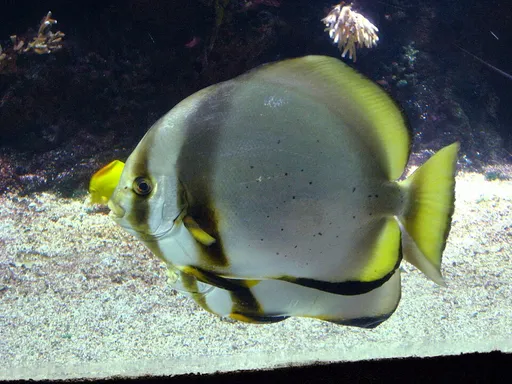 17.7 in (45 cm)198 gal (750 L)75–81°F (24–27°C)
Pinnatus batfish
Platax pinnatus
17.7 in (45 cm) · 198 gal (750 L)
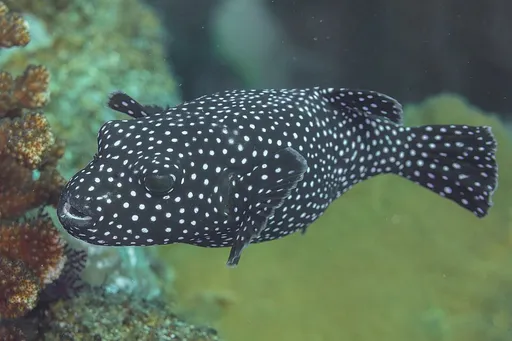 19.7 in (50 cm)180 gal (680 L)75–81°F (24–27°C)
Guineafowl puffer
Arothron meleagris
19.7 in (50 cm) · 180 gal (680 L)
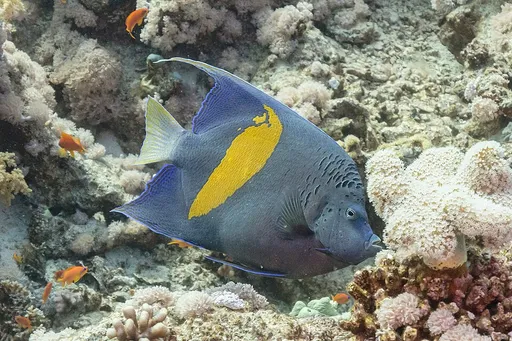 19.7 in (50 cm)180 gal (680 L)75–82°F (24–28°C)
Yellowbar angelfish
Pomacanthus maculosus
19.7 in (50 cm) · 180 gal (680 L)
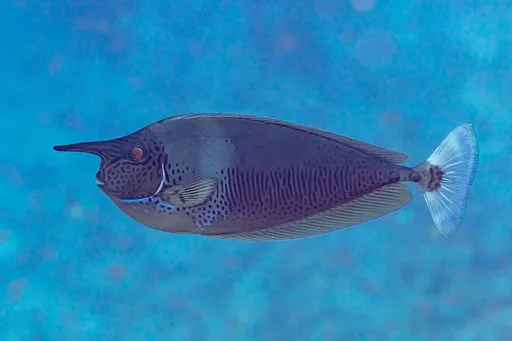 21.7 in (55 cm)343 gal (1,300 L)75–81°F (24–27°C)
Spotted unicornfish
Naso brevirostris
21.7 in (55 cm) · 343 gal (1,300 L)
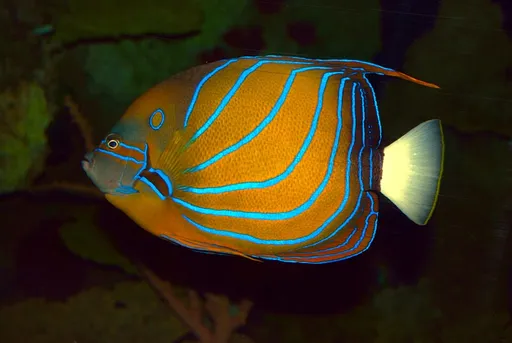 17.7 in (45 cm)219 gal (830 L)73–81°F (23–27°C)
Annularis angelfish
Pomacanthus annularis
17.7 in (45 cm) · 219 gal (830 L)
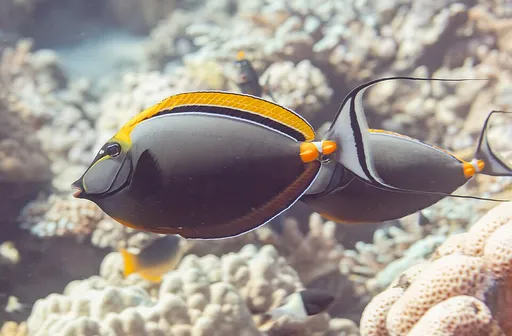 17.7 in (45 cm)180 gal (680 L)75–81°F (24–27°C)
Blonde naso tang
Naso elegans
17.7 in (45 cm) · 180 gal (680 L)