Pinnatus batfish
Platax pinnatus
Also known as Pinnate batfish, Dusky batfish, Red-finned batfish, Shaded batfish
SaltwaterFish
Care at a glance
- Temperature
- 75–81°F
- 24–27°C
- pH
- 8.0–8.4
- Adult size
- 17.7 in
- 45 cm
- Minimum tank
- 198 gal
- 750 L
- Temperament
- Mostly peaceful
- Social behavior
- Social
- Tankmates
- With caution
- Swim level
- Middle
- Difficulty
- Difficult
- Breeding
- No record
- Rarity
- Rare
- Reef safe
- Not reef safe
- Family
- Ephippidae
- Origin
- Native to the western Pacific, with juveniles hiding in caves and on reef slopes and adults ranging over deeper reef.
Overview
Only experienced keepers should attempt this fish, and only in a large, mature tank of at least 750 litres with tall open water, at 24 to 27 C and pH 8.0 to 8.4. The hurdle is feeding: fresh juveniles frequently starve, so buy one only after seeing it eat and offer frequent small meals of enriched mysis, chopped seafood and grazing foods. It is not reef safe and will nip corals and eat small invertebrates. Keep it with calm tankmates, as it is easily bullied while it settles.
In the wild
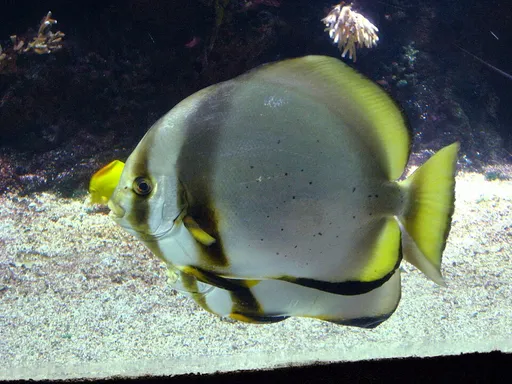
The pinnatus batfish is famous for its jet-black juvenile form outlined in a brilliant orange border, one of the most beautiful young fish on the reef. As it grows it loses the orange and turns into a tall silvery-grey disc like other batfish. The juvenile stage is what people buy, but it is also where nearly all the difficulty lies.
Good to know
Platax pinnatus grows to around 45 cm and is considered the hardest batfish to keep alive because juveniles are specialised feeders that often refuse aquarium food. Research suggests young pinnatus batfish naturally eat a lot of small invertebrates and even sponge material. The dramatic black-and-orange juvenile colour fades within months as the fish matures.
Did you know
The black juvenile with its glowing orange trim is thought to mimic a toxic flatworm, borrowing the flatworm's warning colours to keep predators from biting.
Common questions
What size tank does a Pinnatus batfish need?
A Pinnatus batfish needs at least 198 gal (750 L). It spends most of its time in the middle.
What temperature and pH does a Pinnatus batfish need?
A Pinnatus batfish is comfortable at 75–81°F (24–27°C) with a pH of 8.0–8.4.
How big does a Pinnatus batfish get?
An adult Pinnatus batfish reaches about 17.7 in (45 cm).
Related species
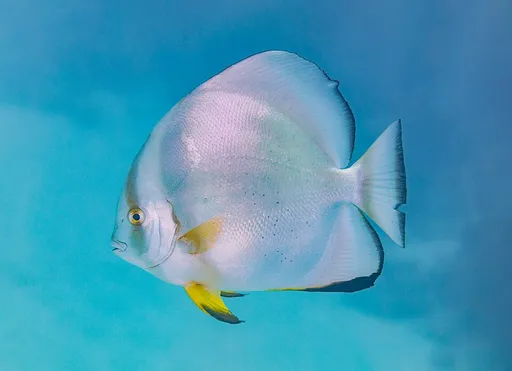 19.7 in (50 cm)185 gal (700 L)75–81°F (24–27°C)
Orbiculate batfish
Platax orbicularis
19.7 in (50 cm) · 185 gal (700 L)
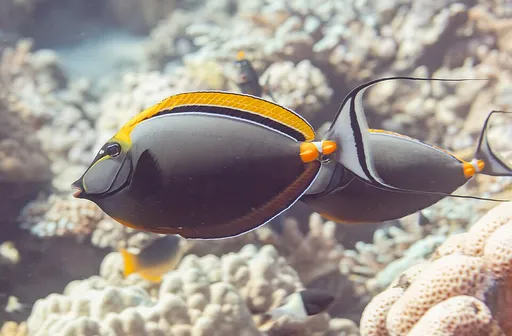 17.7 in (45 cm)180 gal (680 L)75–81°F (24–27°C)
Blonde naso tang
Naso elegans
17.7 in (45 cm) · 180 gal (680 L)
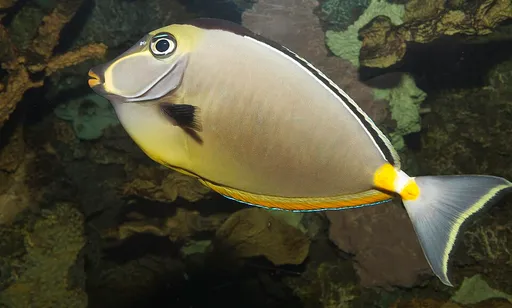 17.7 in (45 cm)180 gal (680 L)73–82°F (23–28°C)
Naso tang
Naso lituratus
17.7 in (45 cm) · 180 gal (680 L)
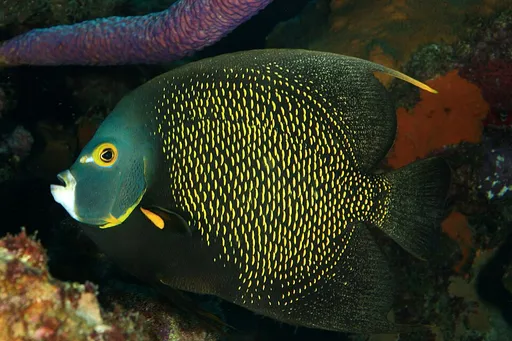 16.1 in (41 cm)201 gal (760 L)72–81°F (22–27°C)
French angelfish
Pomacanthus paru
16.1 in (41 cm) · 201 gal (760 L)
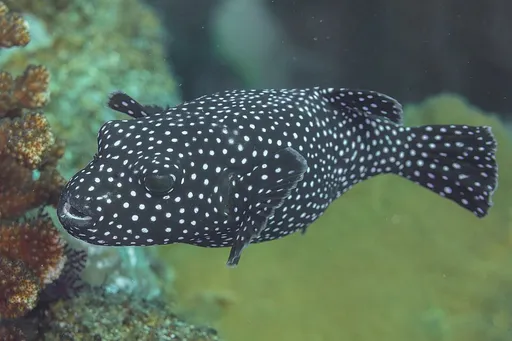 19.7 in (50 cm)180 gal (680 L)75–81°F (24–27°C)
Guineafowl puffer
Arothron meleagris
19.7 in (50 cm) · 180 gal (680 L)
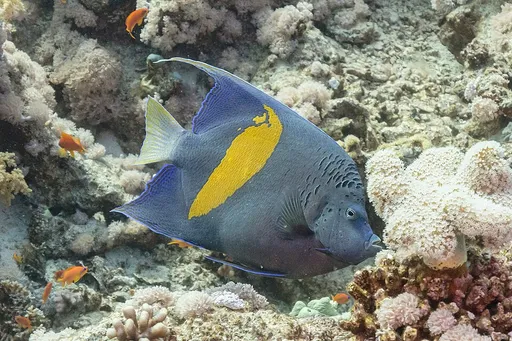 19.7 in (50 cm)180 gal (680 L)75–82°F (24–28°C)
Yellowbar angelfish
Pomacanthus maculosus
19.7 in (50 cm) · 180 gal (680 L)