Naso tang
Naso lituratus
Also known as Orangespine Unicornfish, Lipstick Tang
SaltwaterFish
Care at a glance
- Temperature
- 73–82°F
- 23–28°C
- pH
- 8.1–8.4
- Adult size
- 17.7 in
- 45 cm
- Minimum tank
- 180 gal
- 680 L
- Temperament
- Mostly peaceful
- Social behavior
- Solitary
- Own kind
- One per tank
- Tankmates
- With caution
- Swim level
- Middle
- Difficulty
- Medium
- Breeding
- No record
- Rarity
- Common
- Reef safe
- Reef safe
- Family
- Acanthuridae
- Origin
- Pacific Ocean
Overview
A generally peaceful, reef-safe tang that will not touch corals, but it grows large (to around 45 cm) and needs a big tank, so it is best suited to established, spacious systems. It can be mildly territorial toward other Naso or similarly shaped tangs but is calm with most tankmates. Its diet must be built around brown macroalgae and dried marine algae, not just meaty foods, or it declines over time.
In the wild
A large Pacific surgeonfish of outer reef slopes and channels where it feeds on tough brown macroalgae like Sargassum, Dictyota and Padina, cruising along the reef face in moderate to strong current. It is a powerful, wide-ranging swimmer that needs a very long tank with big open swimming lanes and strong flow, not just tall rockwork.
Good to know
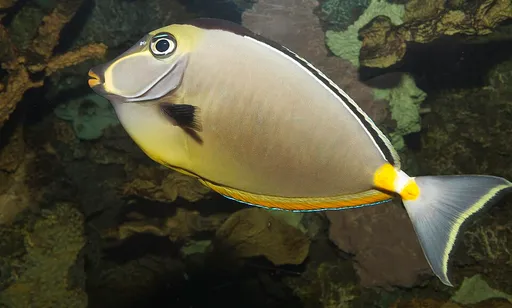
Naso lituratus is the orangespine unicornfish: unlike true unicornfish it grows no horn, but it carries two fixed orange, forward-hooking scalpel plates on each side of the tail base, set in bright orange, that it uses as slashing weapons. Adults develop trailing filaments on the tail lobes and a striking yellow-and-black facial mask with orange lips, the source of the lipstick tang nickname.
Did you know
The fixed orange tail spines are permanently locked in the extended position rather than folding away like most surgeonfish scalpels, so this fish is essentially always armed and can slash sideways at a rival or a careless hand at any moment.
Common questions
What size tank does a Naso tang need?
A Naso tang needs at least 180 gal (680 L). It spends most of its time in the middle.
What temperature and pH does a Naso tang need?
A Naso tang is comfortable at 73–82°F (23–28°C) with a pH of 8.1–8.4.
How big does a Naso tang get?
An adult Naso tang reaches about 17.7 in (45 cm).
Related species
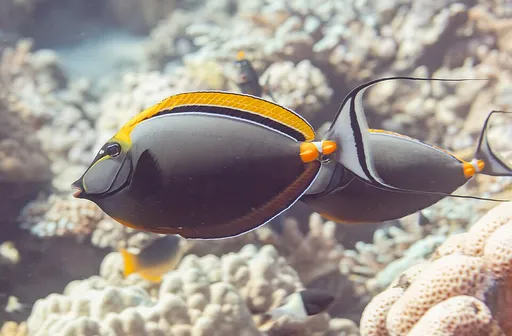 17.7 in (45 cm)180 gal (680 L)75–81°F (24–27°C)
Blonde naso tang
Naso elegans
17.7 in (45 cm) · 180 gal (680 L)
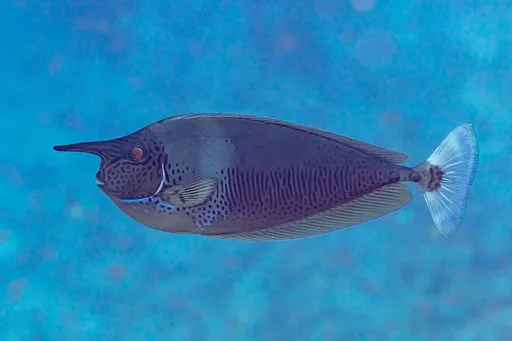 21.7 in (55 cm)343 gal (1,300 L)75–81°F (24–27°C)
Spotted unicornfish
Naso brevirostris
21.7 in (55 cm) · 343 gal (1,300 L)
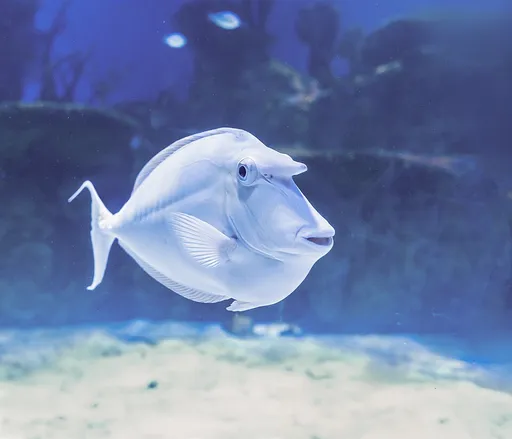 23.6 in (60 cm)396 gal (1,500 L)75–81°F (24–27°C)
Bluespine unicornfish
Naso unicornis
23.6 in (60 cm) · 396 gal (1,500 L)
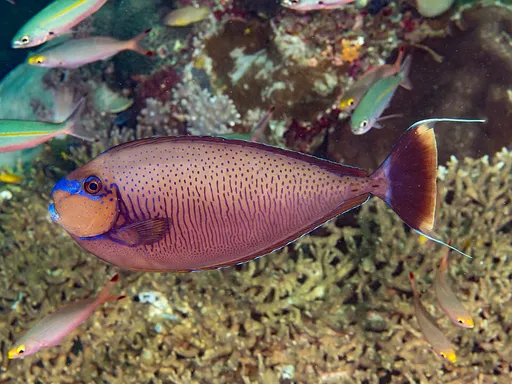 23.6 in (60 cm)359 gal (1,360 L)75–81°F (24–27°C)
Vlamingi tang
Naso vlamingii
23.6 in (60 cm) · 359 gal (1,360 L)
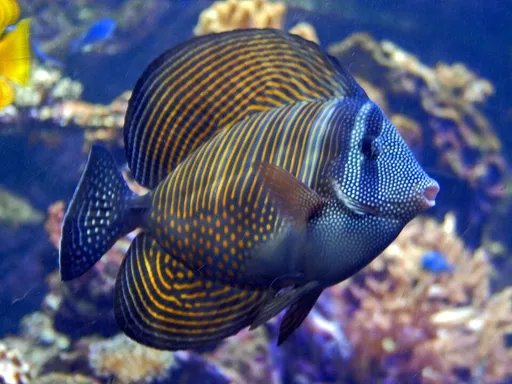 15.7 in (40 cm)180 gal (680 L)75–82°F (24–28°C)
Red Sea sailfin tang
Zebrasoma desjardinii
15.7 in (40 cm) · 180 gal (680 L)
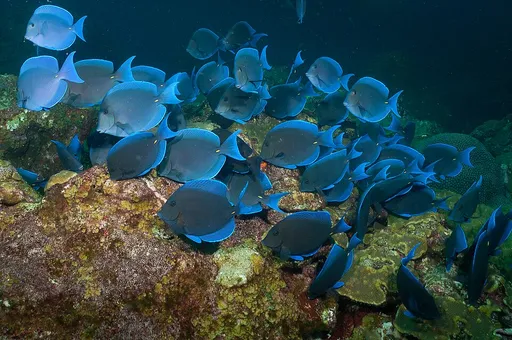 13.8 in (35 cm)151 gal (570 L)75–81°F (24–27°C)
Atlantic blue tang
Acanthurus coeruleus
13.8 in (35 cm) · 151 gal (570 L)