Blonde naso tang
Naso elegans
Also known as Elegant Unicornfish, Orangespine Unicornfish, Indian Ocean Naso Tang
SaltwaterFish
Care at a glance
- Temperature
- 75–81°F
- 24–27°C
- pH
- 8.1–8.4
- Adult size
- 17.7 in
- 45 cm
- Minimum tank
- 180 gal
- 680 L
- Temperament
- Mostly peaceful
- Social behavior
- Solitary
- Tankmates
- With caution
- Swim level
- Middle
- Difficulty
- Medium
- Breeding
- Hard
- Rarity
- Common
- Reef safe
- Reef safe
- Family
- Acanthuridae
- Origin
- Indian Ocean reefs
Overview
This tang is mostly peaceful with tankmates but squares off with other tangs and surgeonfish, so it does best as the only member of its genus in the tank. It's reef safe and won't bother corals or invertebrates, though it needs a diet heavy in marine algae and nori alongside meatier fare to stay healthy long term. Give it a tight fitting lid, since naso tangs are known jumpers when startled.
In the wild
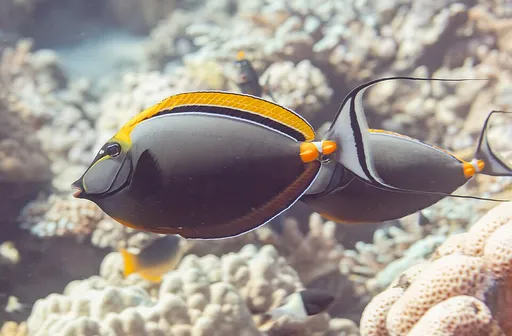
Blonde naso tangs live along outer reef slopes and drop-offs in the Red Sea and Indian Ocean, often cruising open water in loose groups above the reef instead of hugging the rockwork the way many tangs do. Juveniles start out gray with a yellow dorsal stripe and settle into deeper blue-gray tones with a lyre-shaped tail as they mature. It grows large enough that it needs at least 680 litres (180 US gal) with a long, open swimming lane.
Good to know
Naso elegans belongs to the unicornfish group within the surgeonfish family, though unlike some Naso species it never grows a horn on its forehead. It was split from the closely related Naso lituratus in 2001 based on coloration and range: elegans keeps to the Indian Ocean and Red Sea while lituratus is a Pacific species with a mostly black dorsal fin instead of elegans' yellow one. Both carry a pair of sharp, moveable spines near the base of the tail that fold out for defense.
Did you know
The two yellow patches at the base of the tail sit right in front of those scalpel-like spines, which is likely why they evolved bright coloring there in the first place, as a warning flag to other fish.
Common questions
What size tank does a Blonde naso tang need?
A Blonde naso tang needs at least 180 gal (680 L). It spends most of its time in the middle.
What temperature and pH does a Blonde naso tang need?
A Blonde naso tang is comfortable at 75–81°F (24–27°C) with a pH of 8.1–8.4.
How big does a Blonde naso tang get?
An adult Blonde naso tang reaches about 17.7 in (45 cm).
Related species
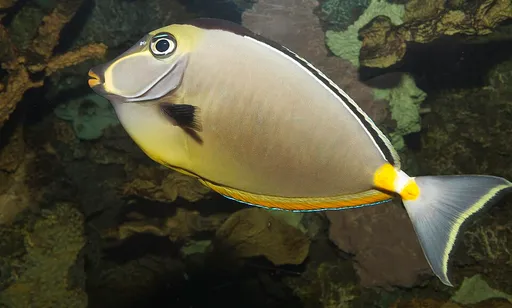 17.7 in (45 cm)180 gal (680 L)73–82°F (23–28°C)
Naso tang
Naso lituratus
17.7 in (45 cm) · 180 gal (680 L)
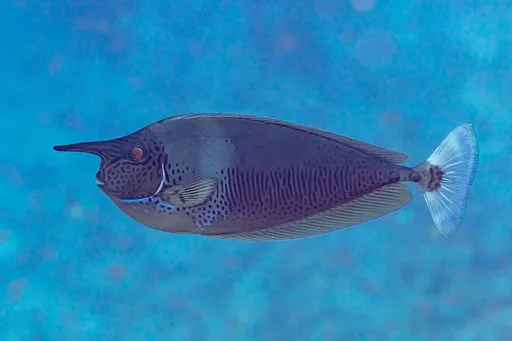 21.7 in (55 cm)343 gal (1,300 L)75–81°F (24–27°C)
Spotted unicornfish
Naso brevirostris
21.7 in (55 cm) · 343 gal (1,300 L)
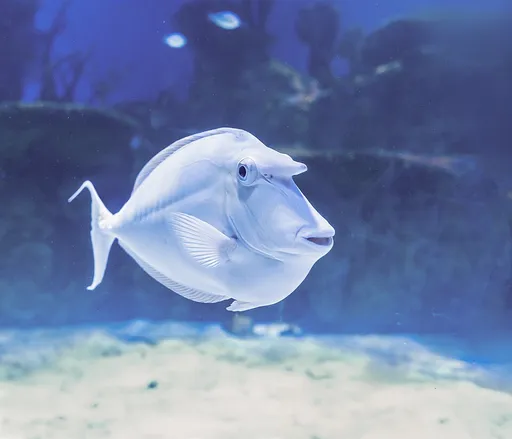 23.6 in (60 cm)396 gal (1,500 L)75–81°F (24–27°C)
Bluespine unicornfish
Naso unicornis
23.6 in (60 cm) · 396 gal (1,500 L)
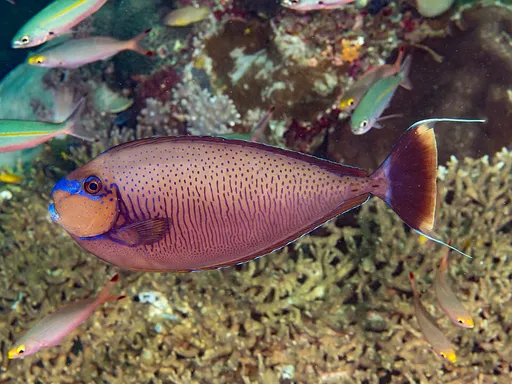 23.6 in (60 cm)359 gal (1,360 L)75–81°F (24–27°C)
Vlamingi tang
Naso vlamingii
23.6 in (60 cm) · 359 gal (1,360 L)
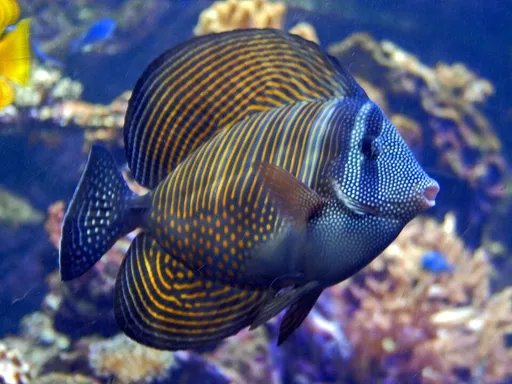 15.7 in (40 cm)180 gal (680 L)75–82°F (24–28°C)
Red Sea sailfin tang
Zebrasoma desjardinii
15.7 in (40 cm) · 180 gal (680 L)
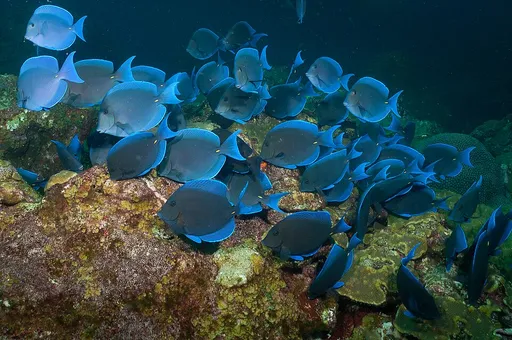 13.8 in (35 cm)151 gal (570 L)75–81°F (24–27°C)
Atlantic blue tang
Acanthurus coeruleus
13.8 in (35 cm) · 151 gal (570 L)