Anubias gilletii
Also known as Arrow-leaf Anubias
FreshwaterRhizomeRhizome division
Care at a glance
- Light
- Low light
- CO2
- No CO₂ needed
- Temperature
- 72–82°F
- 22–28°C
- Max height
- 11.8 in
- 30 cm
- Growth rate
- Slow
- Placement
- Epiphyte
- Type
- Rhizome
- pH
- 5.5–8.0
- Hardness
- 2–15 dGH
- Spread
- 9.8 in (25 cm)
- Nutrient uptake
- Root + water column
- Growth region
- Submersed or emersed
- Difficulty
- Easy
- Family
- Araceae
- Origin
- Nigeria, Cameroon, Gabon, Republic of the Congo, Democratic Republic of the Congo
Overview
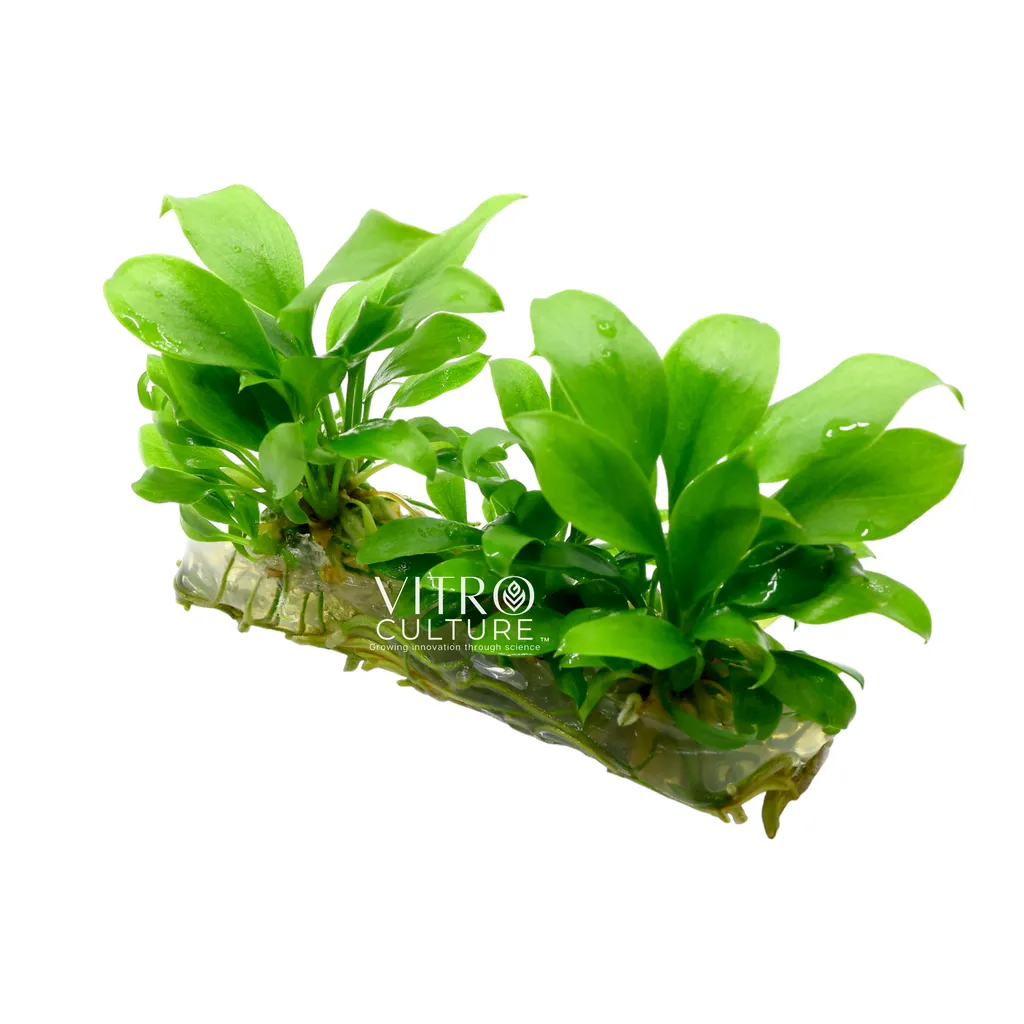
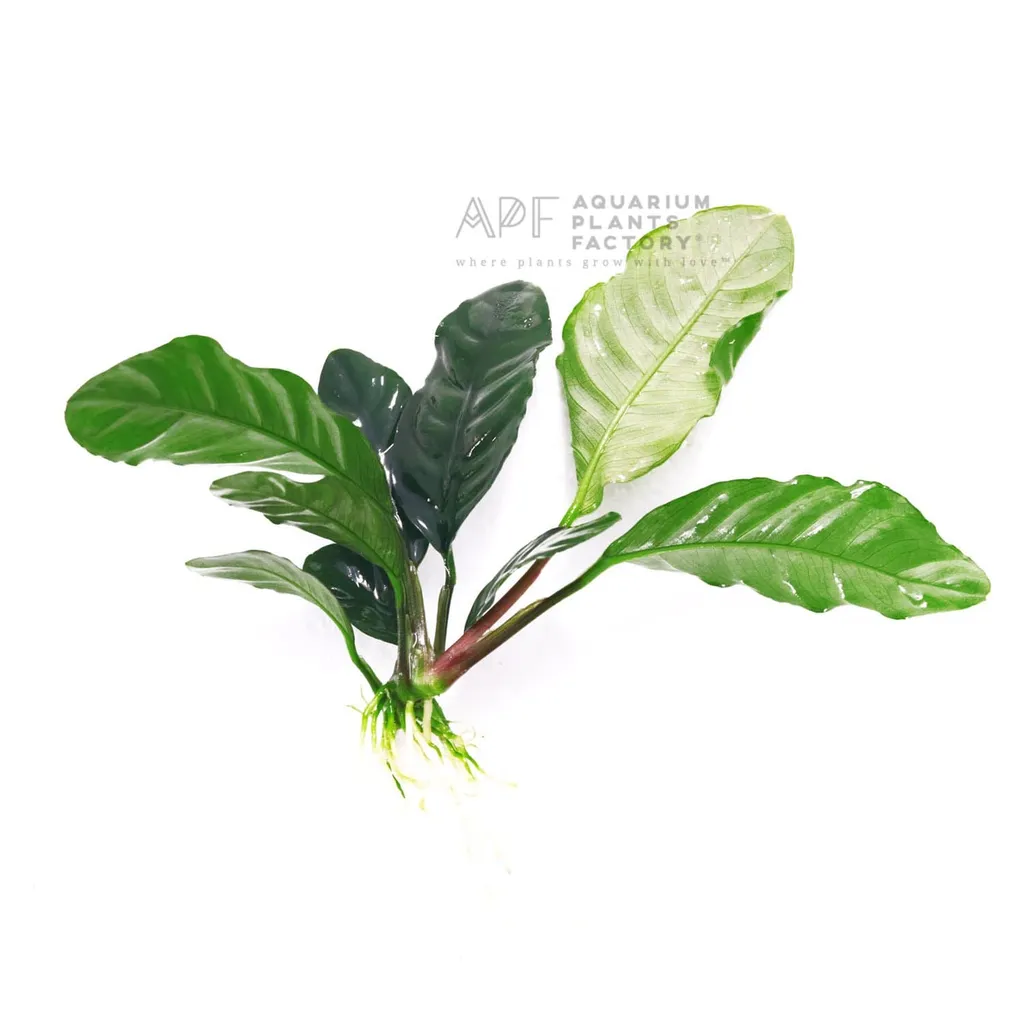
Anubias gilletii is a medium to large anubias that reaches around 25 to 30 cm. Treat it as a midground or background specimen in larger tanks. It is undemanding and easy to keep.
Did you know
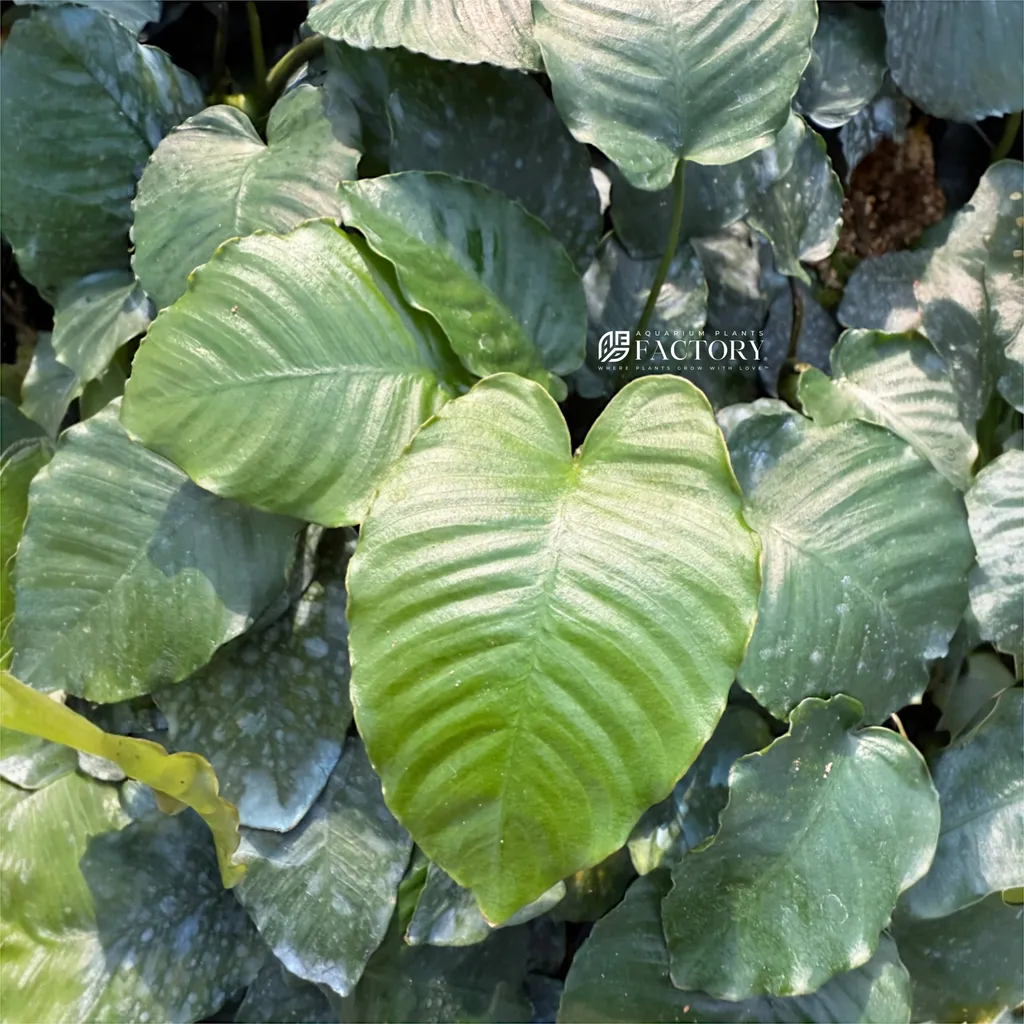
The arrowhead leaf of Anubias gilletii only shows up on mature plants. Young plants have simple lanceolate leaves and are routinely sold as a plain narrow-leaf anubias. Keepers are often surprised when their tidy little plant slowly turns into a large lobed showpiece.
Caring for Anubias gilletii
Attach Anubias gilletii to sizable driftwood or rock, and keep the rhizome exposed so it does not rot. Pick a piece big enough for a plant that needs open space.
It tolerates low light and needs no CO2, though it colors up a little better under moderate light. It feeds through its roots and from the water, so a liquid fertilizer covers it. It handles a pH from 5.5 to 8.
Growth is slow, and the thick, waxy leaves shrug off nibbling fish. To propagate, cut the rhizome into pieces with several leaves each.
Good to know
Anubias gilletii was described in 1901 by De Wildeman and Durand, and it belongs to the family Araceae. It is a true species rather than a cultivar. Mature leaves are hastate blades that can reach 25 cm or more on long stalks, with basal lobes. It is also one of the parents of the Nangi hybrid.
In the wild
Anubias gilletii grows wild in Nigeria, Cameroon, Gabon and both Congos. It lives along shaded rainforest rivers and streams as an epiphyte on rocks and wood in the flood zone. Along stream banks it often grows fully emersed, with its leaves above the waterline.
Common questions
Does Anubias gilletii need to be planted in the substrate?
No. Anubias gilletii grows attached to rock or wood, so tie or glue the rhizome in place. If you plant its roots, keep the rhizome above the substrate, since a buried rhizome rots.
Does Anubias gilletii need CO2?
No. Anubias gilletii grows well without added CO2 and suits a low-tech tank.
How much light does Anubias gilletii need?
Anubias gilletii is a low-light plant, and the light that comes with a standard tank kit is enough for it.
Does Anubias gilletii need root tabs?
No. Anubias gilletii feeds from the water, so a liquid fertilizer suits it better. Root tabs only help if its roots reach into the substrate.
How do you propagate Anubias gilletii?
Anubias gilletii propagates by rhizome division. Cut the rhizome into pieces with several leaves each, then tie or plant each piece.
How tall does Anubias gilletii grow?
Anubias gilletii grows to about 11.8 in (30 cm) tall. It grows slowly and rarely needs trimming.
Related plants
 Low lightEpiphyte11.8 in (30 cm)
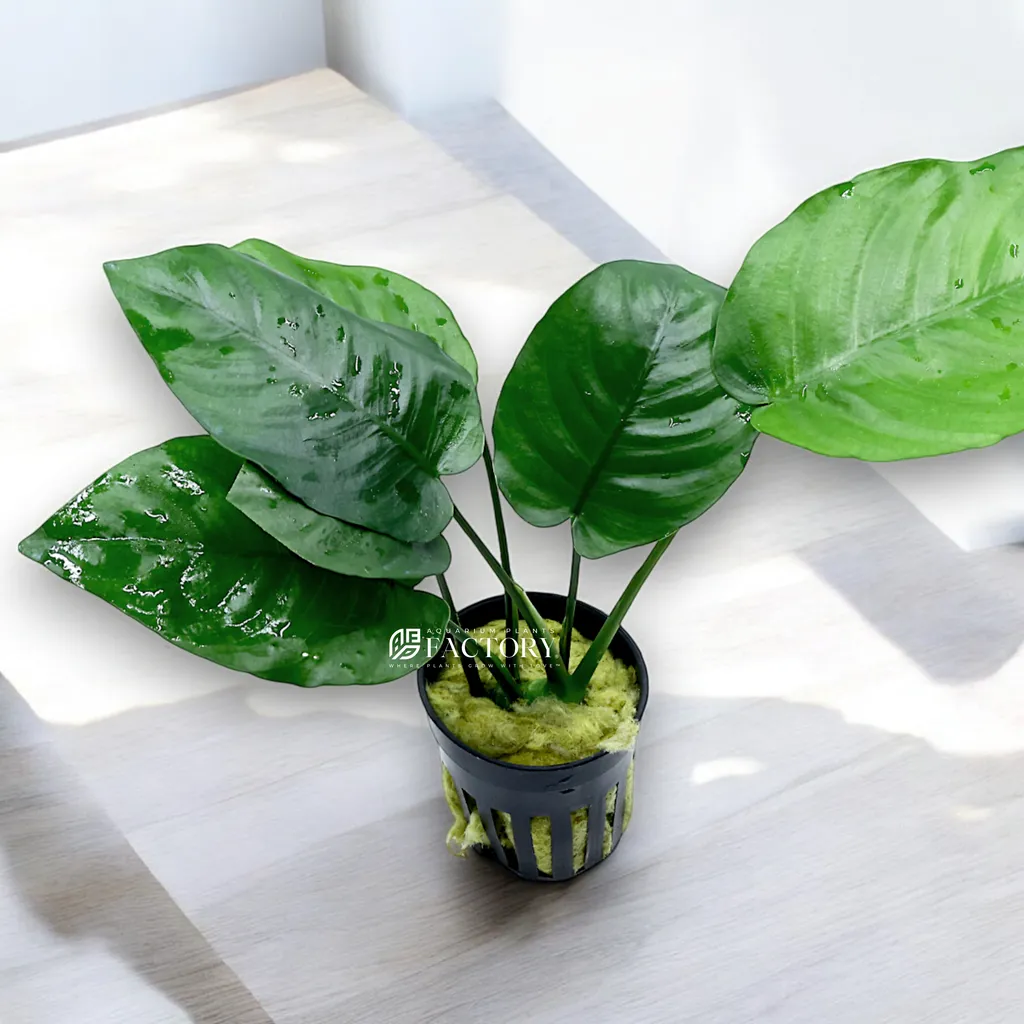
Anubias Broad Leaf
Anubias barteri var. barteri 'Broad Leaf'
Low light · Epiphyte
 Low lightEpiphyte13.8 in (35 cm)
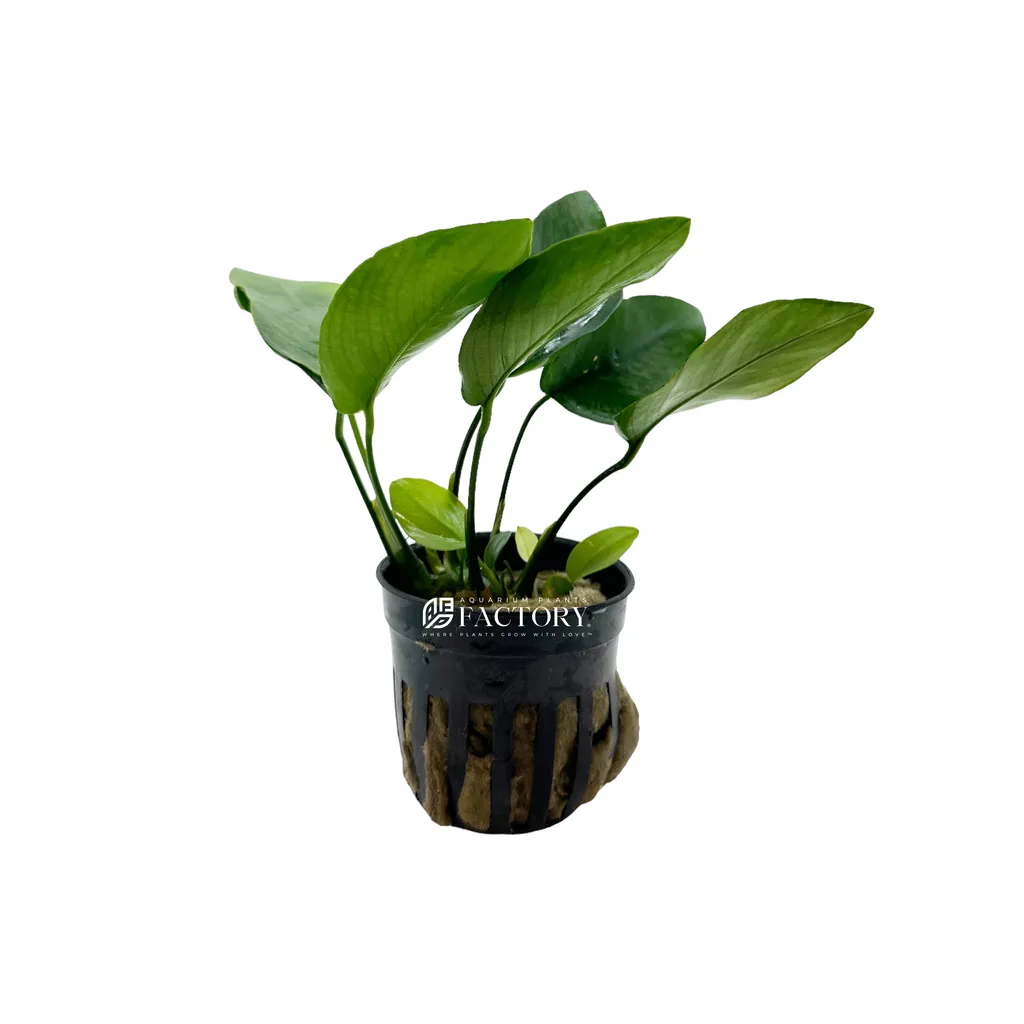
Anubias barteri
Low light · Epiphyte
 Medium lightEpiphyte9.8 in (25 cm)
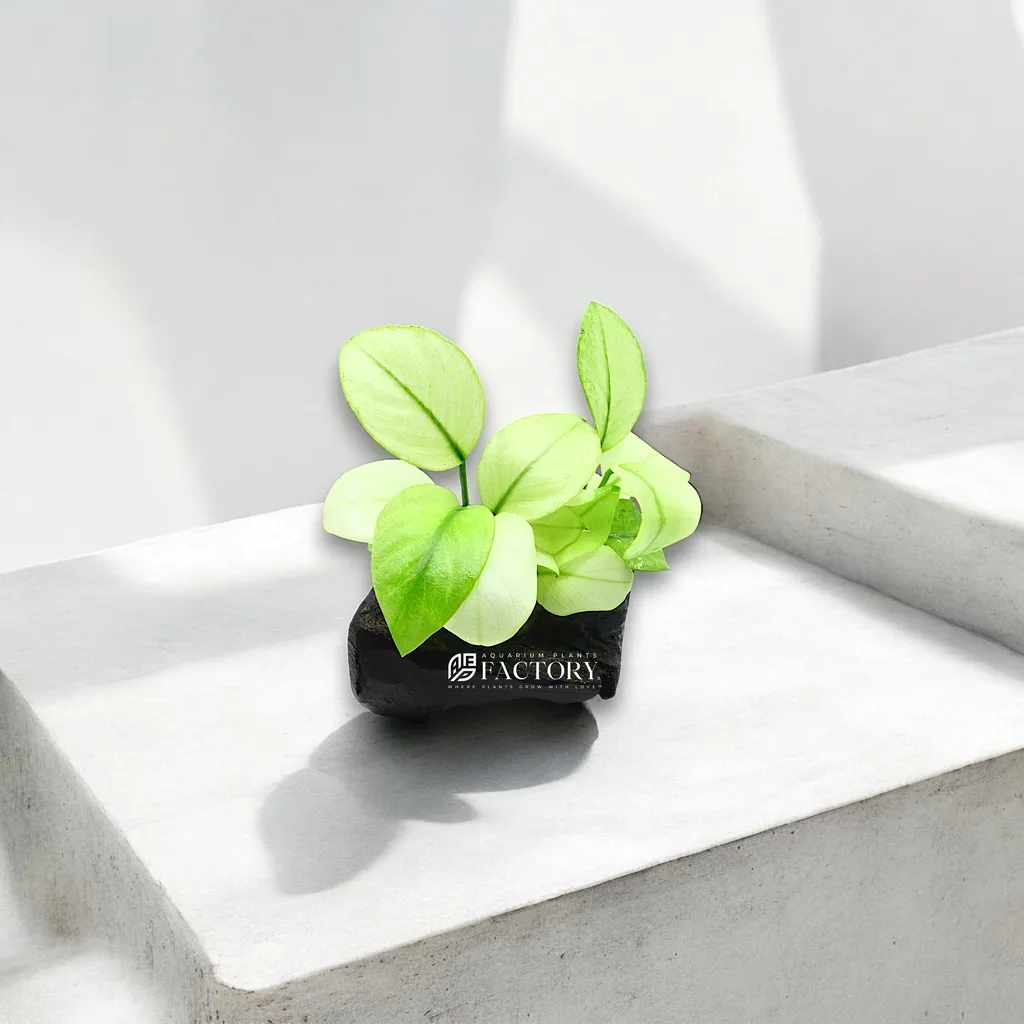
Anubias Broad White
Anubias barteri 'Broad White'
Medium light · Epiphyte
 Low lightEpiphyte9.8 in (25 cm)
Anubias coffeefolia
Anubias barteri var. coffeefolia
Low light · Epiphyte
 Low lightEpiphyte9.8 in (25 cm)
Anubias Emerald Bloom
Anubias barteri 'Emerald Bloom'
Low light · Epiphyte
- Low lightEpiphyte9.8 in (25 cm)
Anubias Frazeri
Anubias 'Frazeri'
Low light · Epiphyte