Form of Anubias barteri
Anubias Broad White
Anubias barteri 'Broad White'
One of 29 forms of Anubias barteri · See all forms →
Also known as Anubias White Broad Leaf, Anubias barteri 'Broad Leaf White', Broad White Anubias
FreshwaterBrackishRhizomeRhizome division
Forms · Anubias barteri
See all 29 →
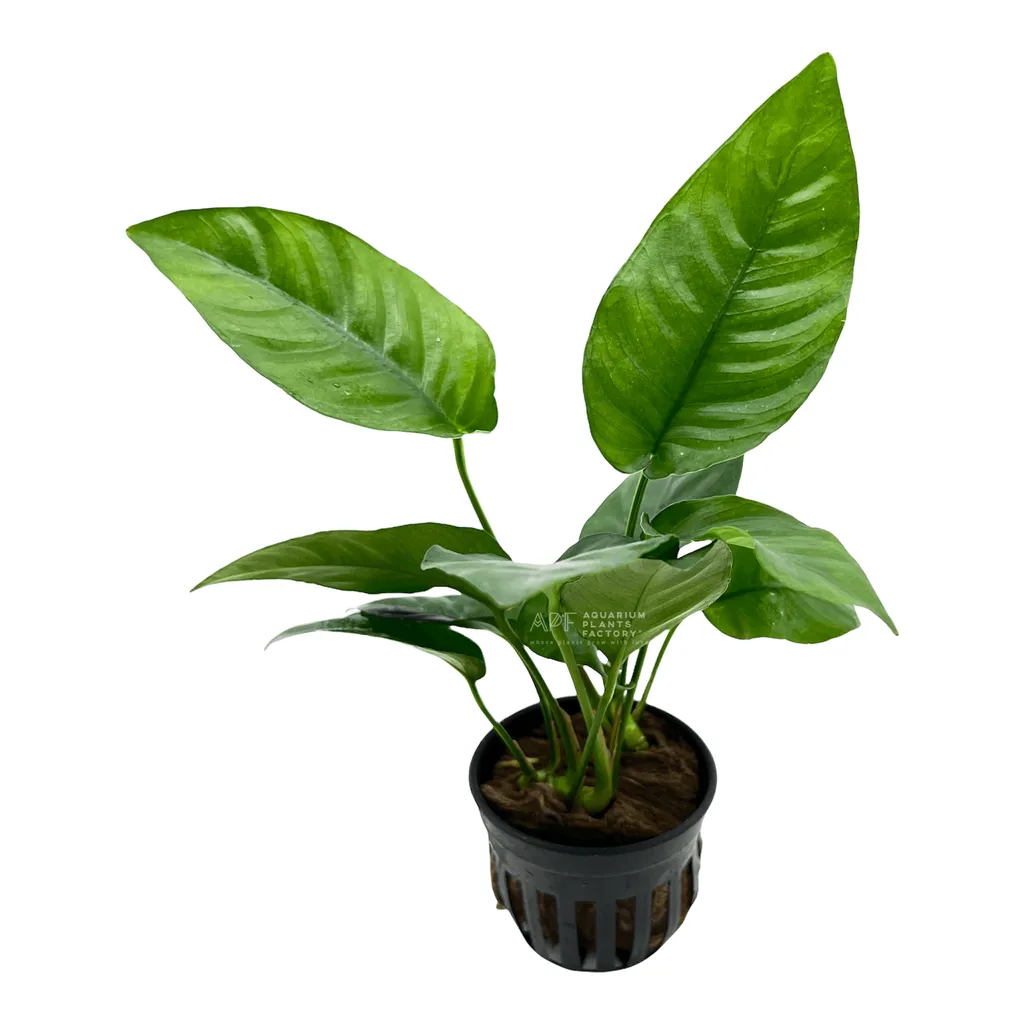
Care at a glance
- Light
- Medium light
- CO2
- CO₂ beneficial
- Temperature
- 72–82°F
- 22–28°C
- Max height
- 9.8 in
- 25 cm
- Growth rate
- Slow
- Placement
- Epiphyte
- Type
- Rhizome
- pH
- 6.0–7.5
- Hardness
- 2–18 dGH
- Spread
- 7.9 in (20 cm)
- Nutrient uptake
- Root + water column
- Growth region
- Submersed or emersed
- Difficulty
- Medium
- Family
- Araceae
- Origin
- Cultivar (parent species native to West Africa)
Overview
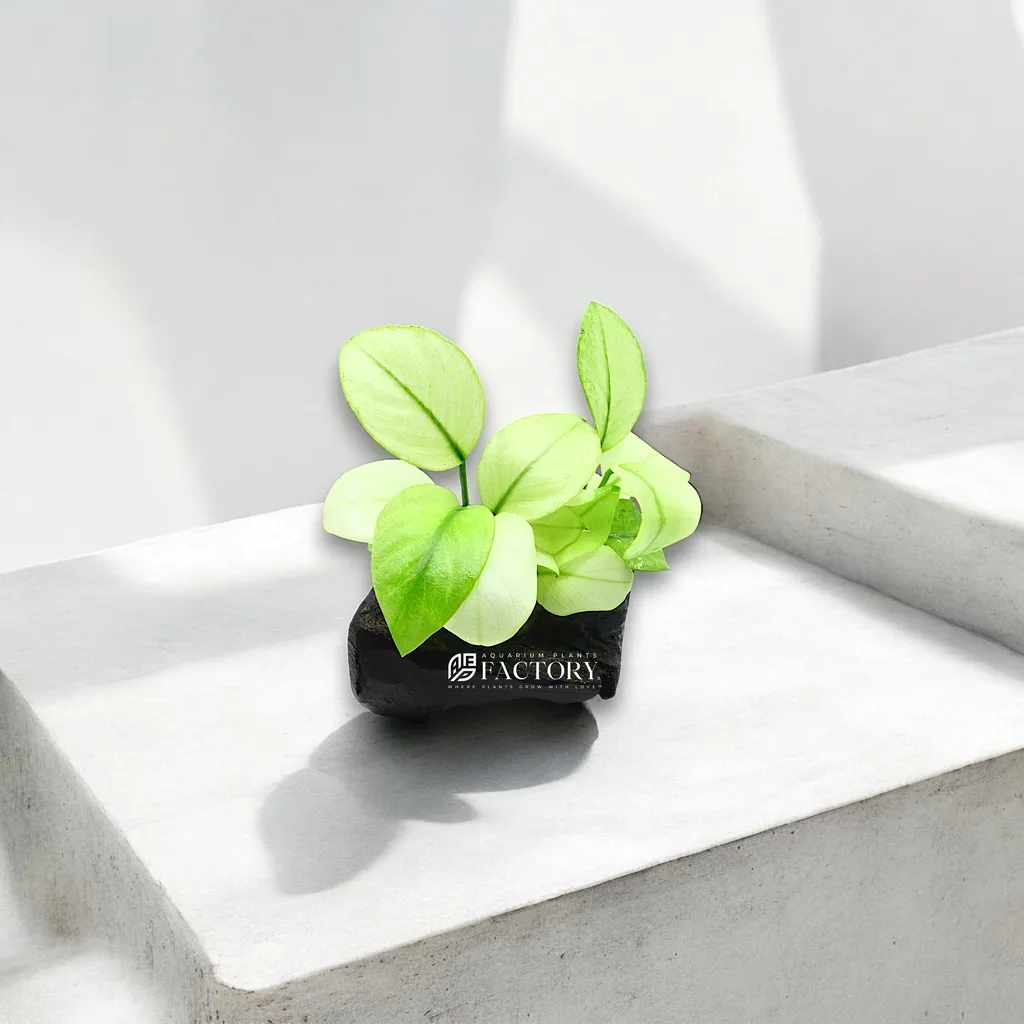
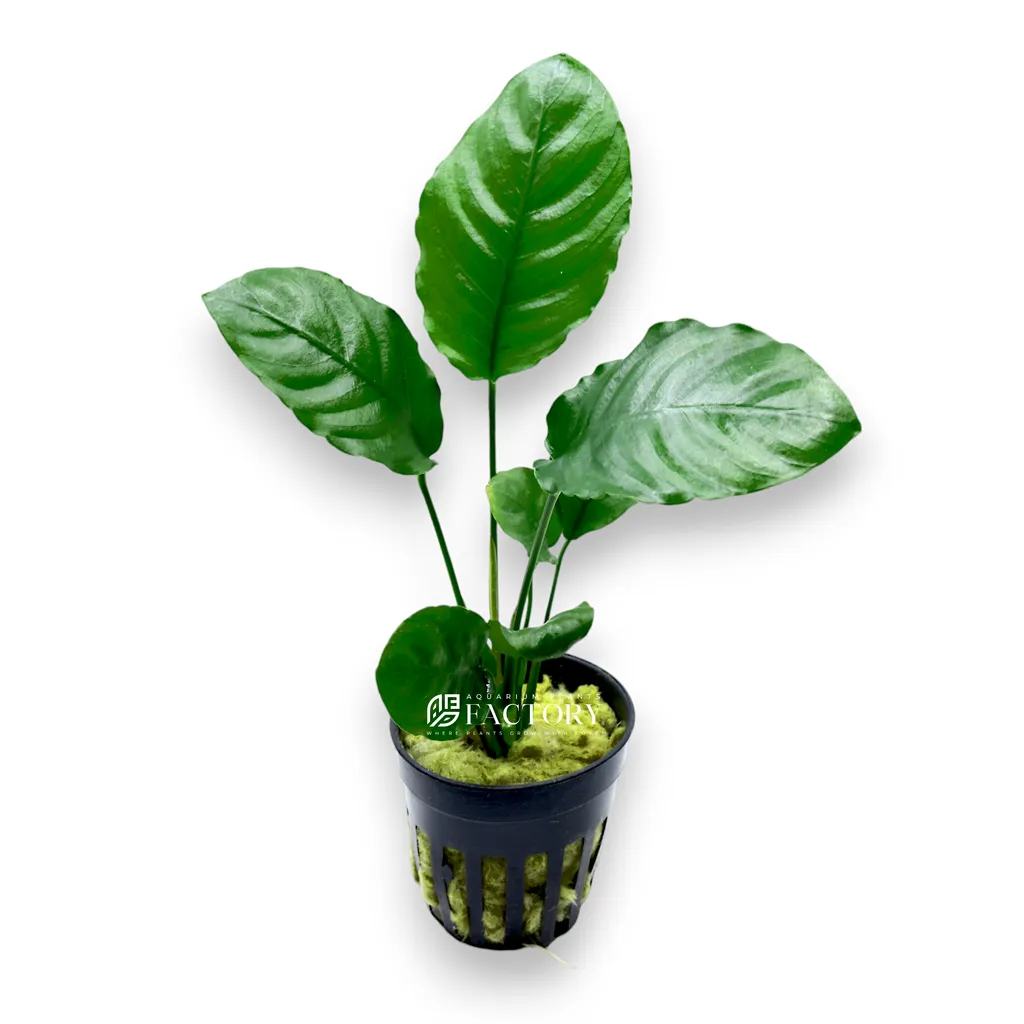
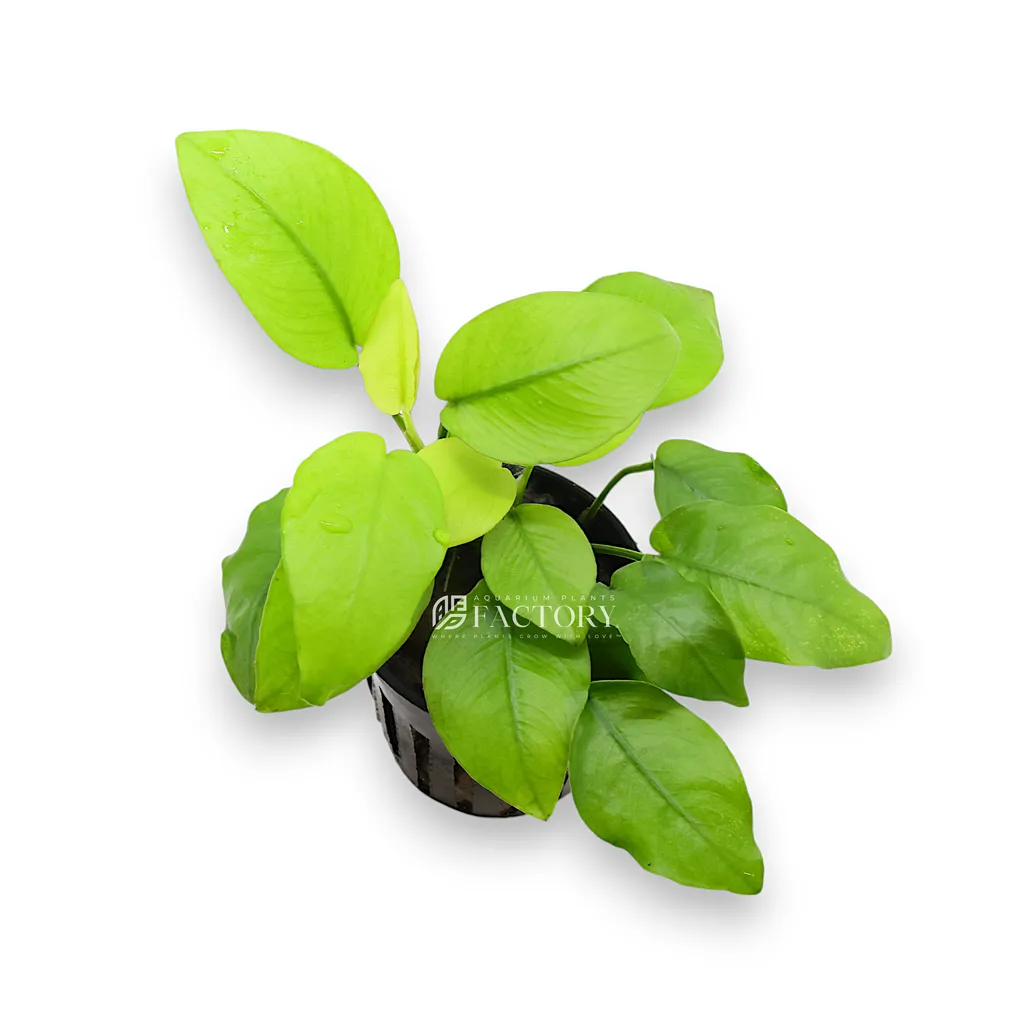
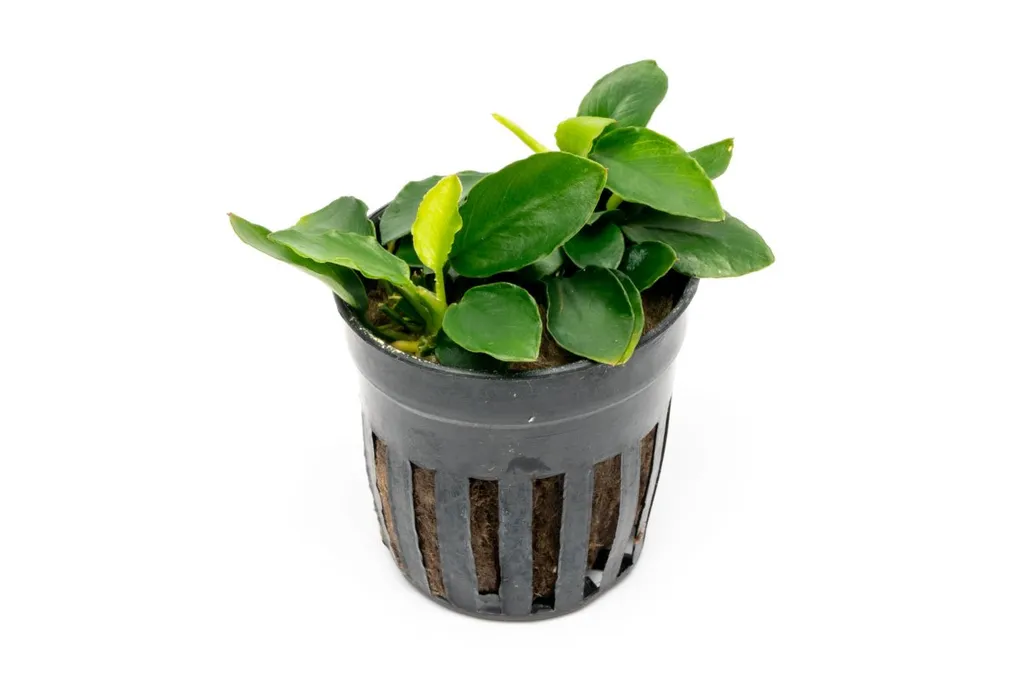
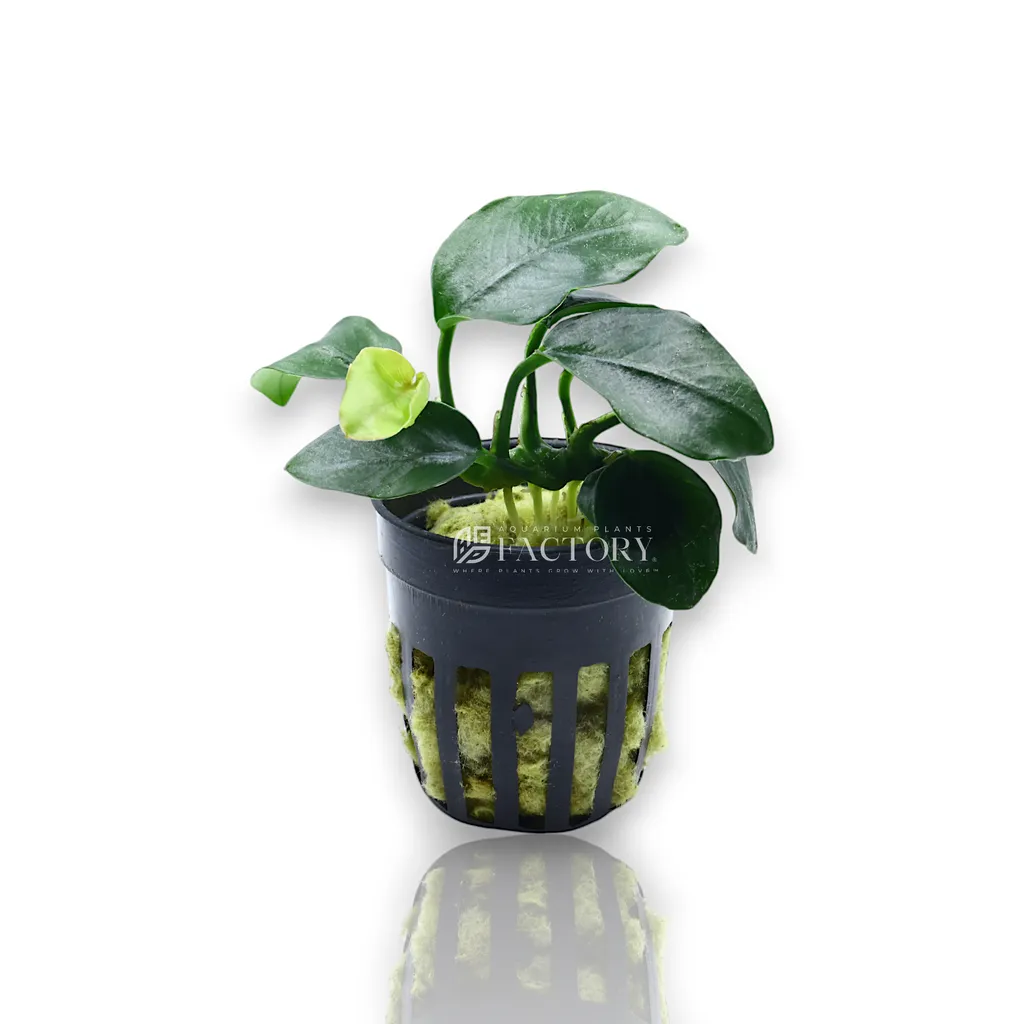
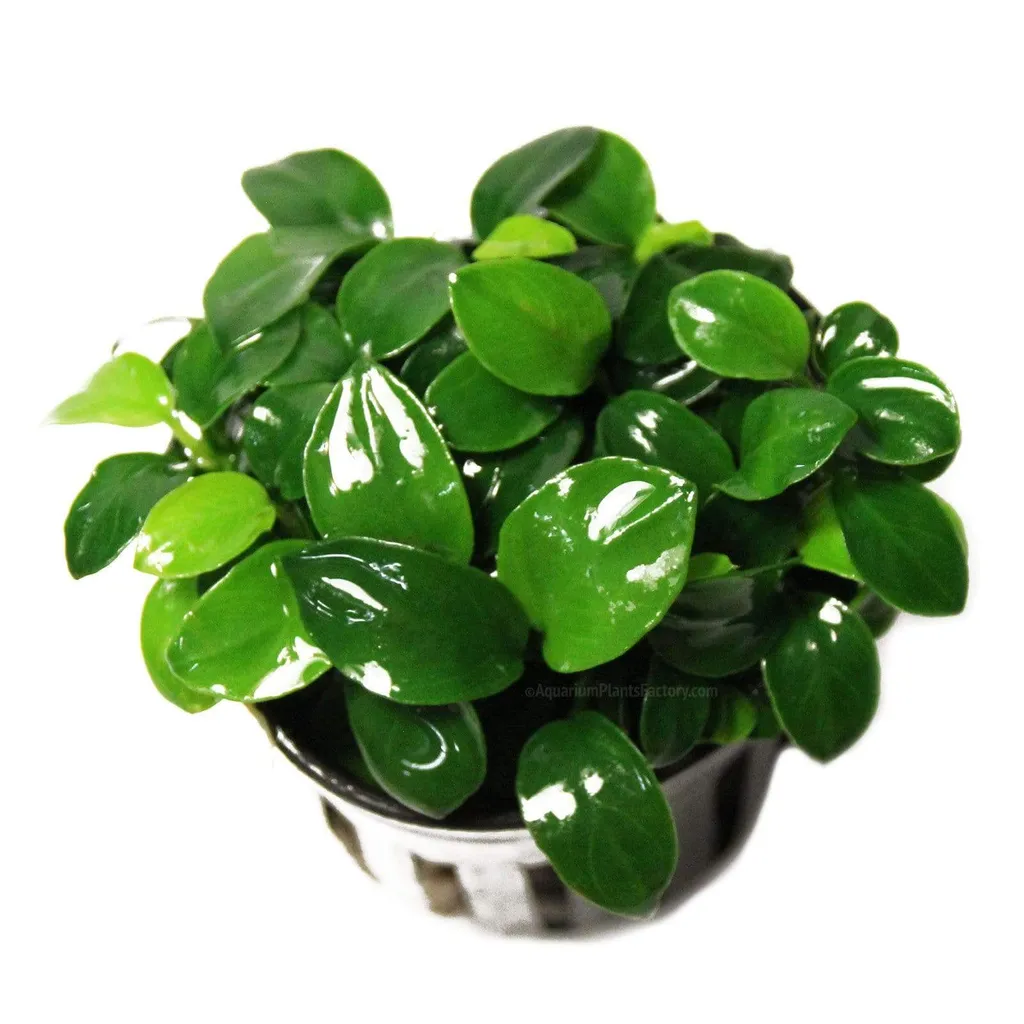
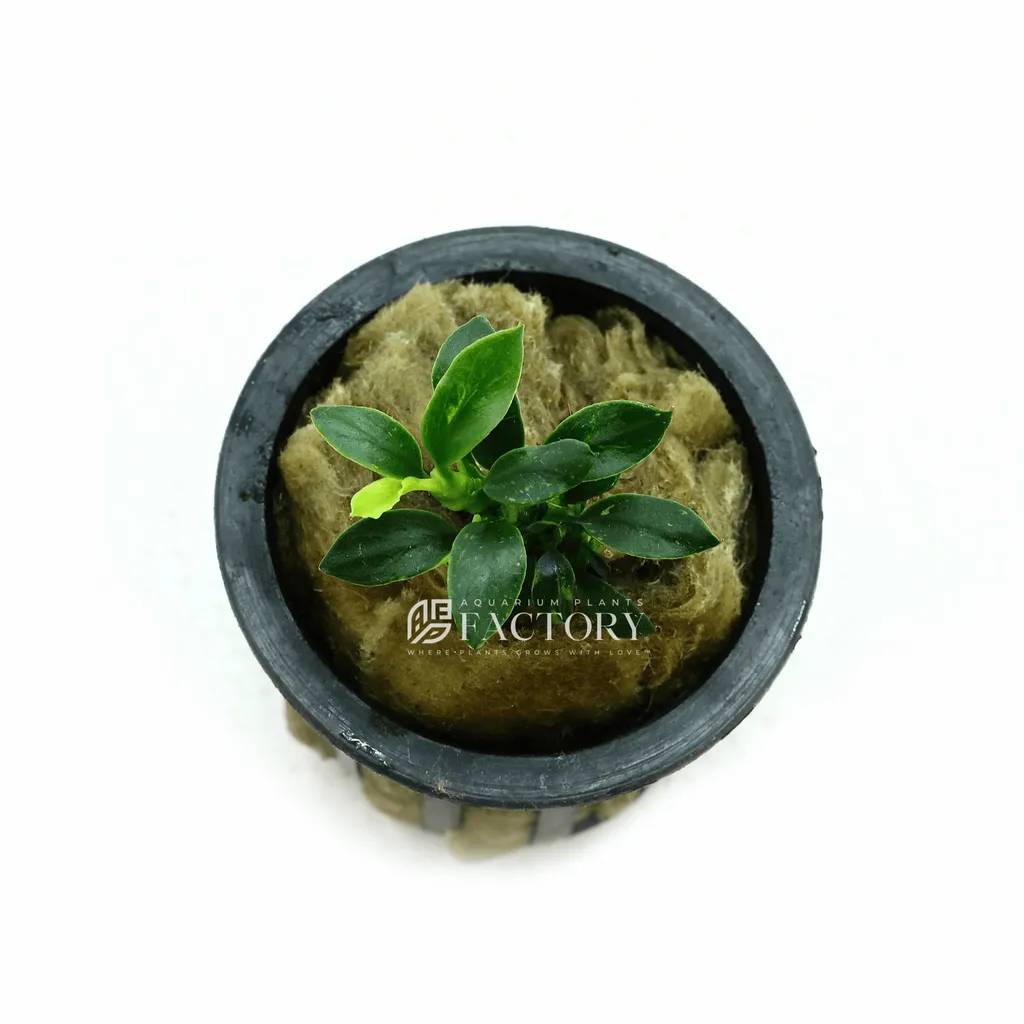
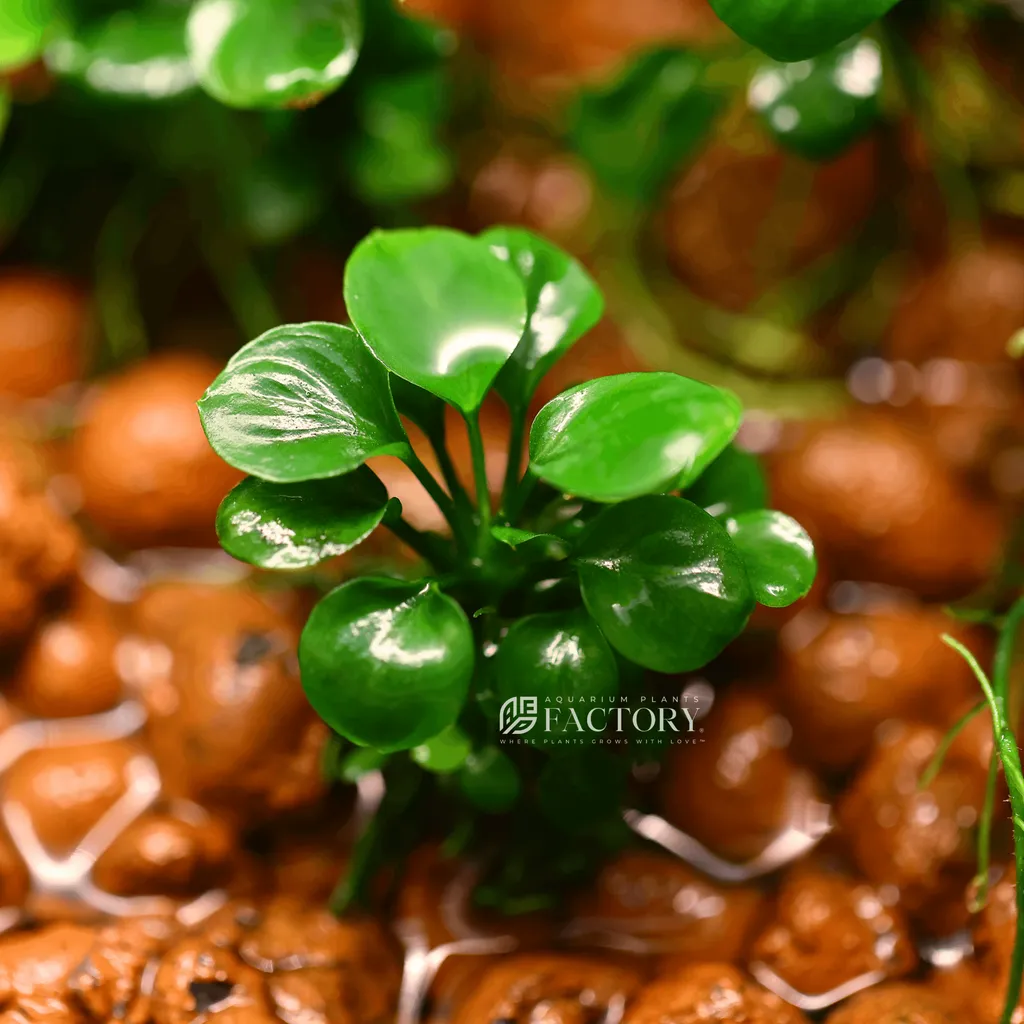
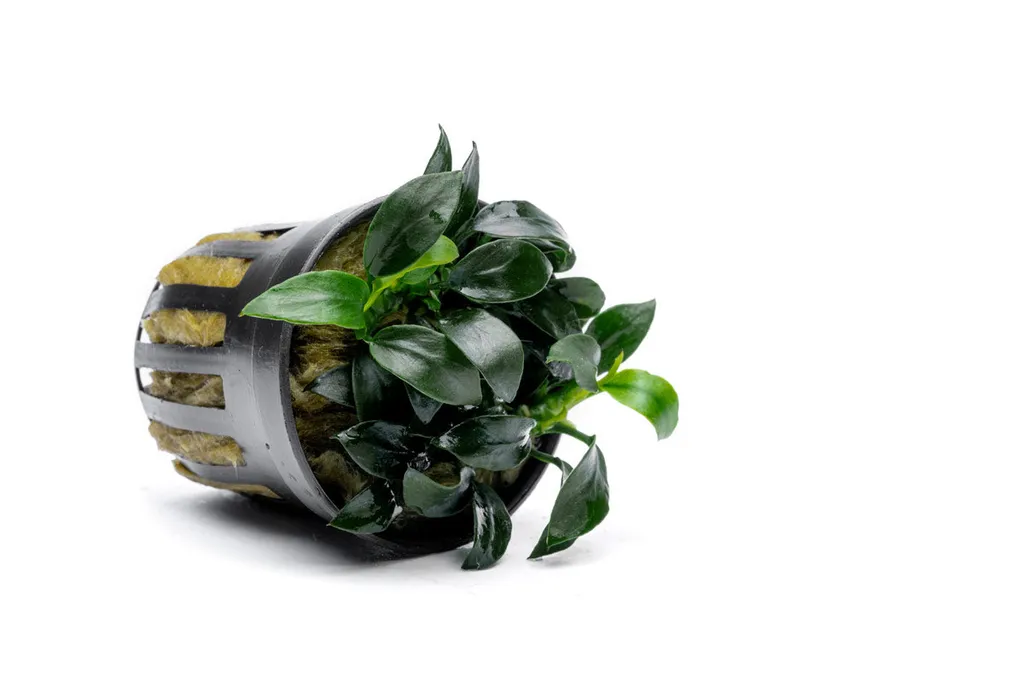
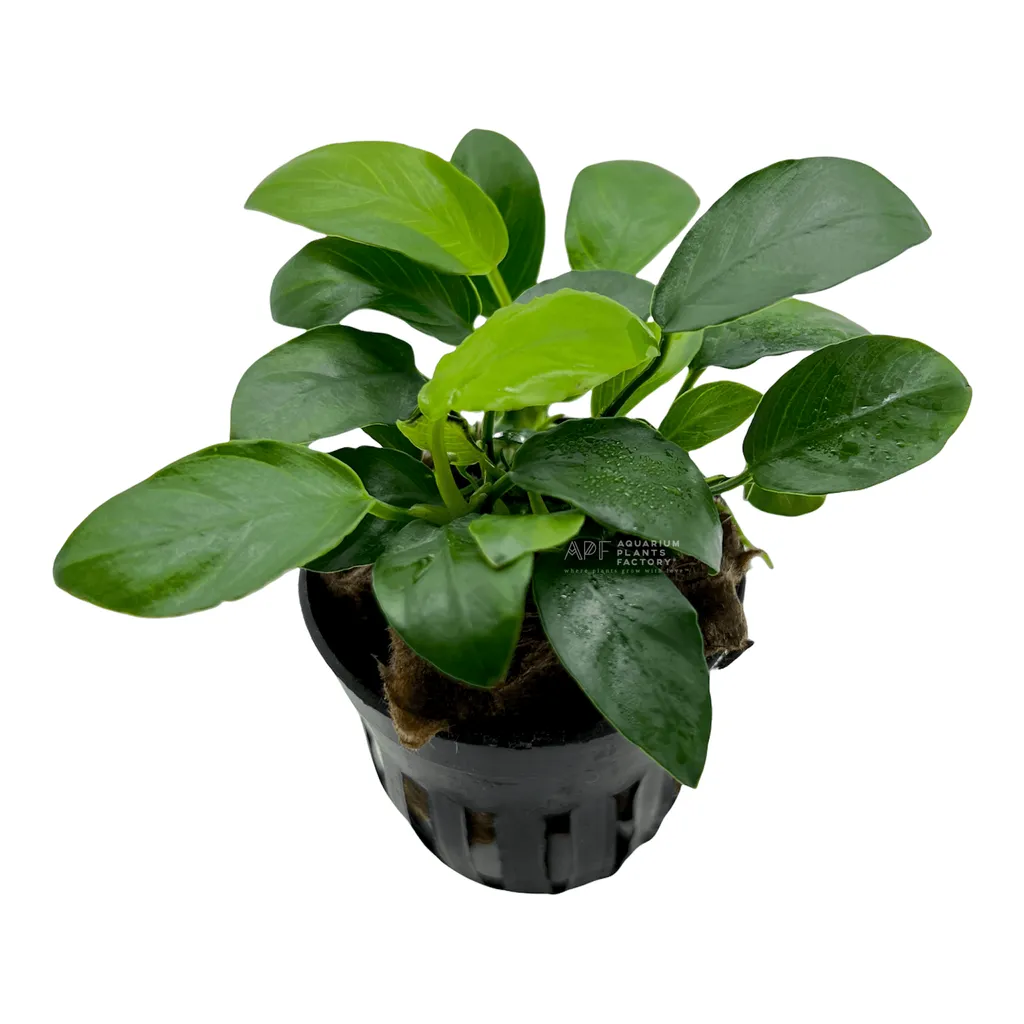
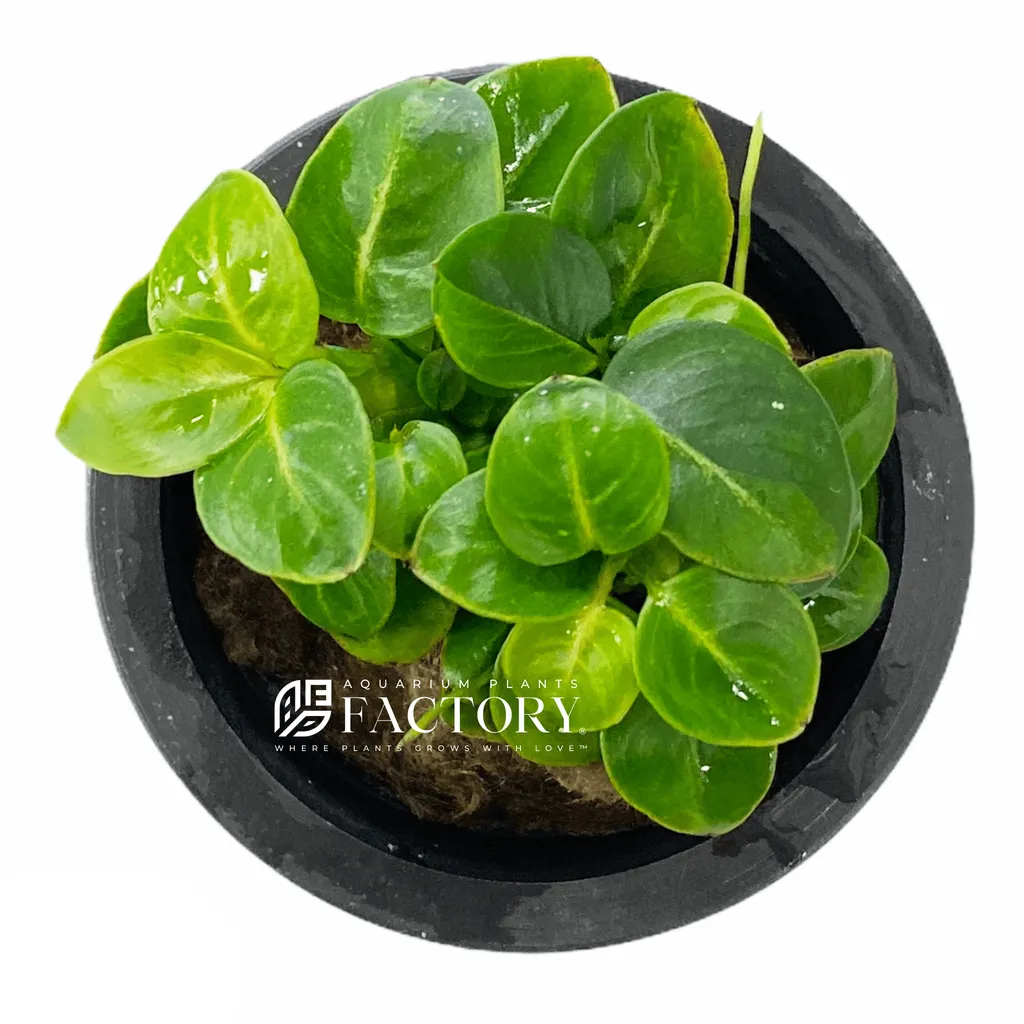
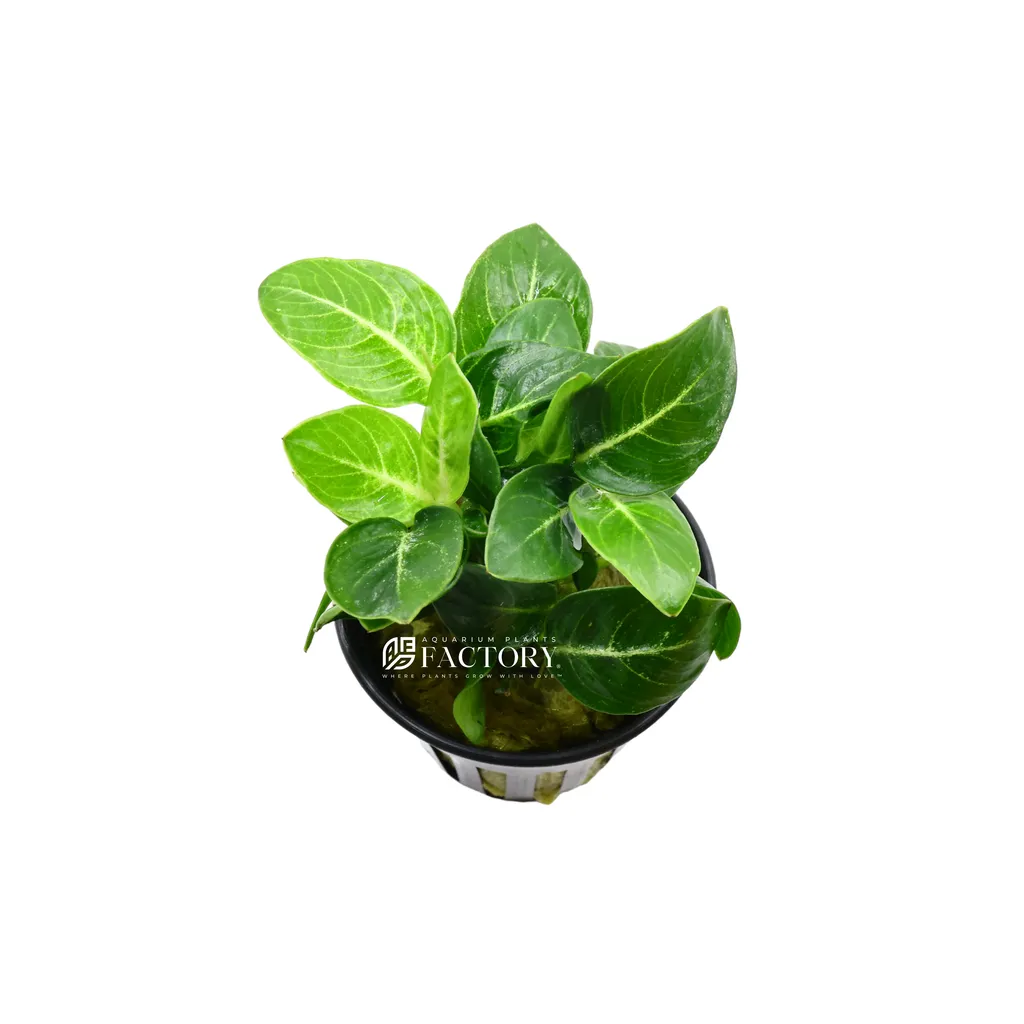
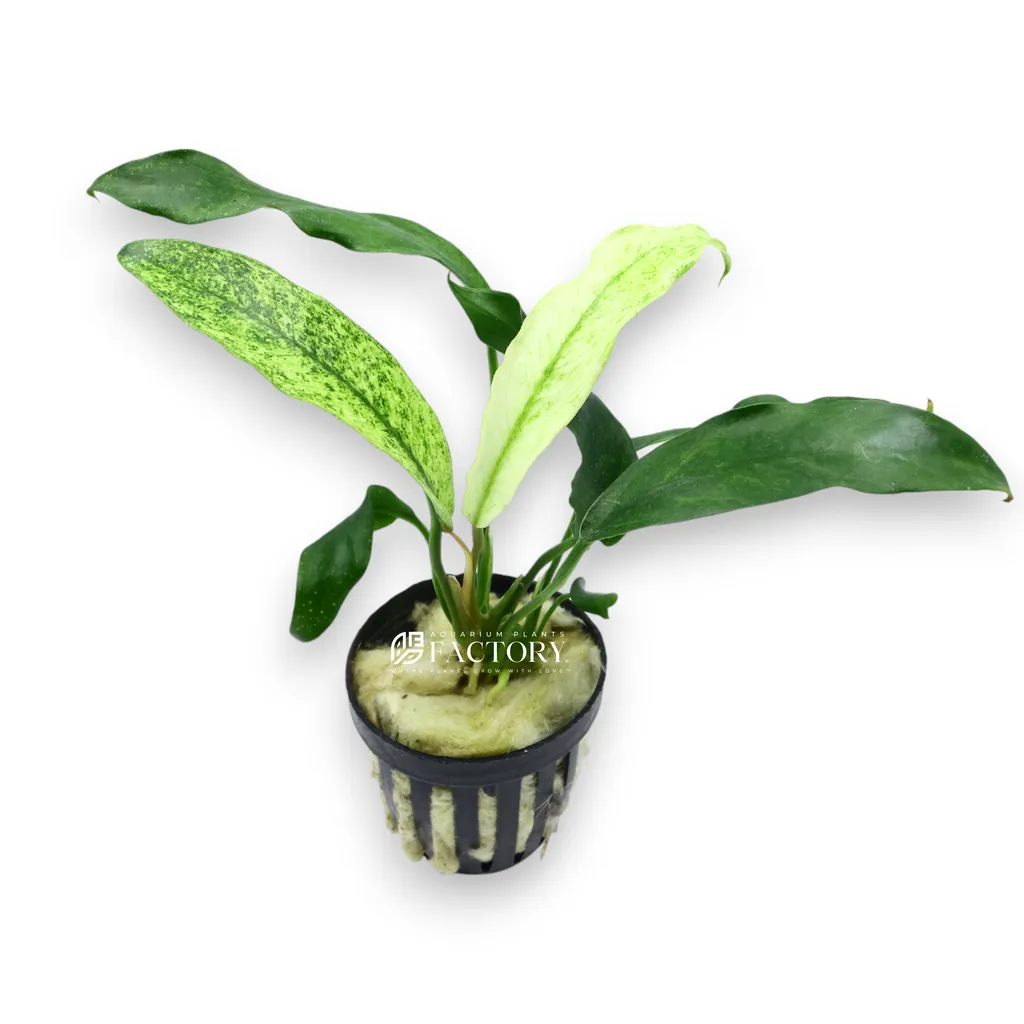
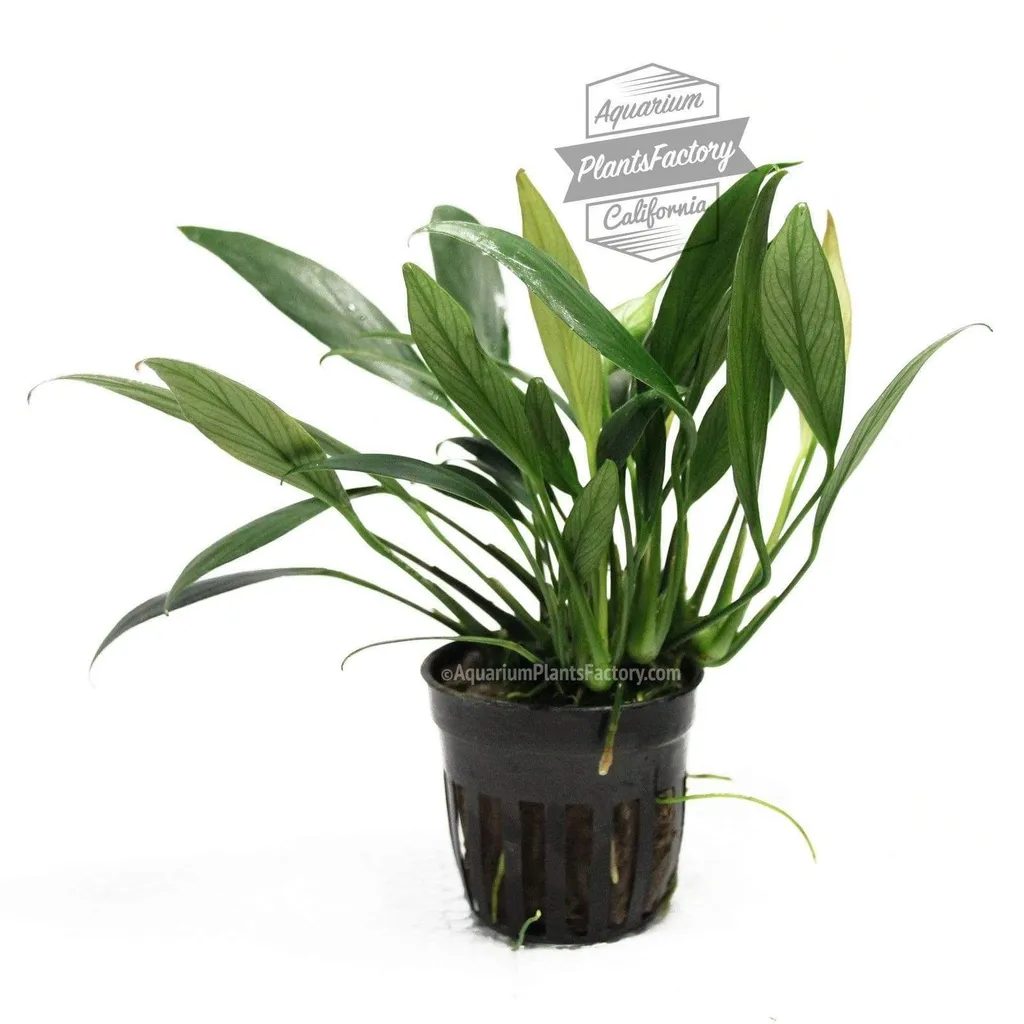
Anubias Broad White is a white-marbled anubias for wood and stone. It is fussier than most anubias and is rated medium difficulty.
Did you know
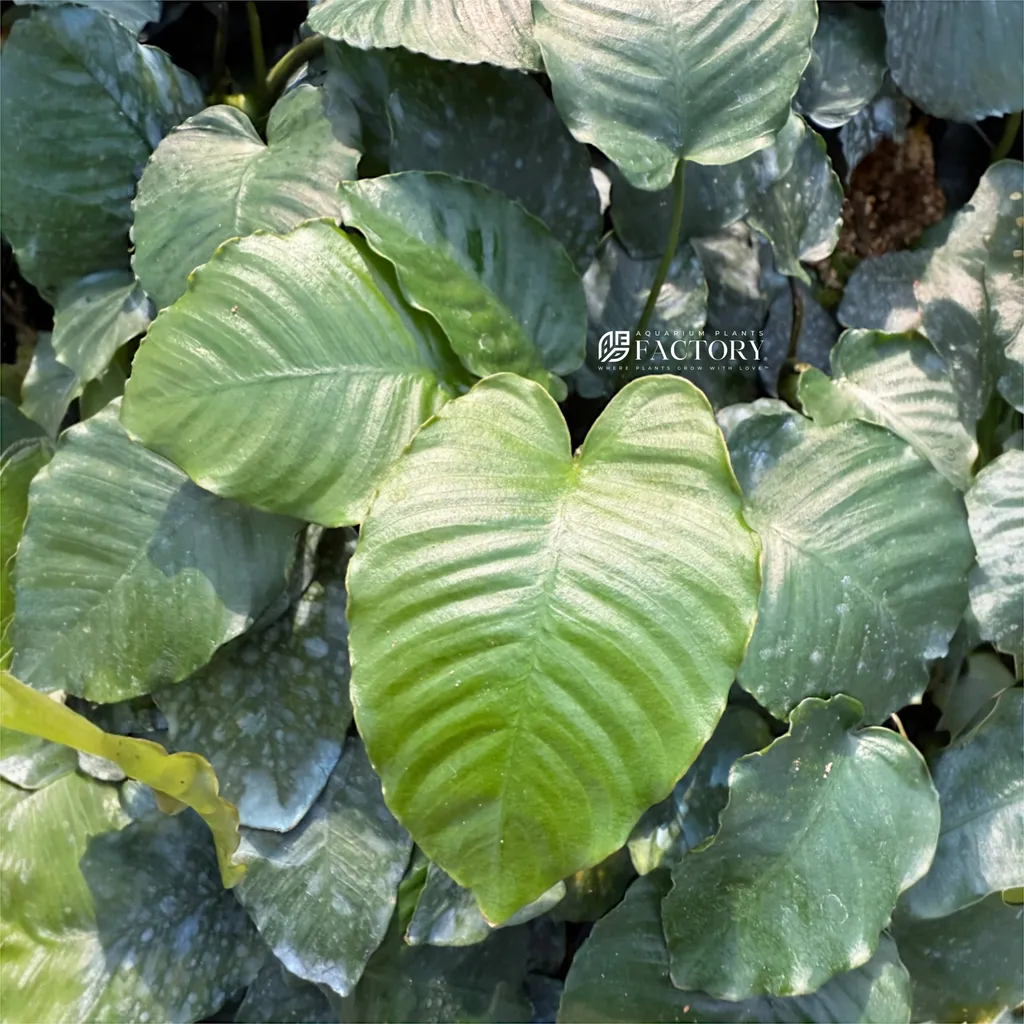
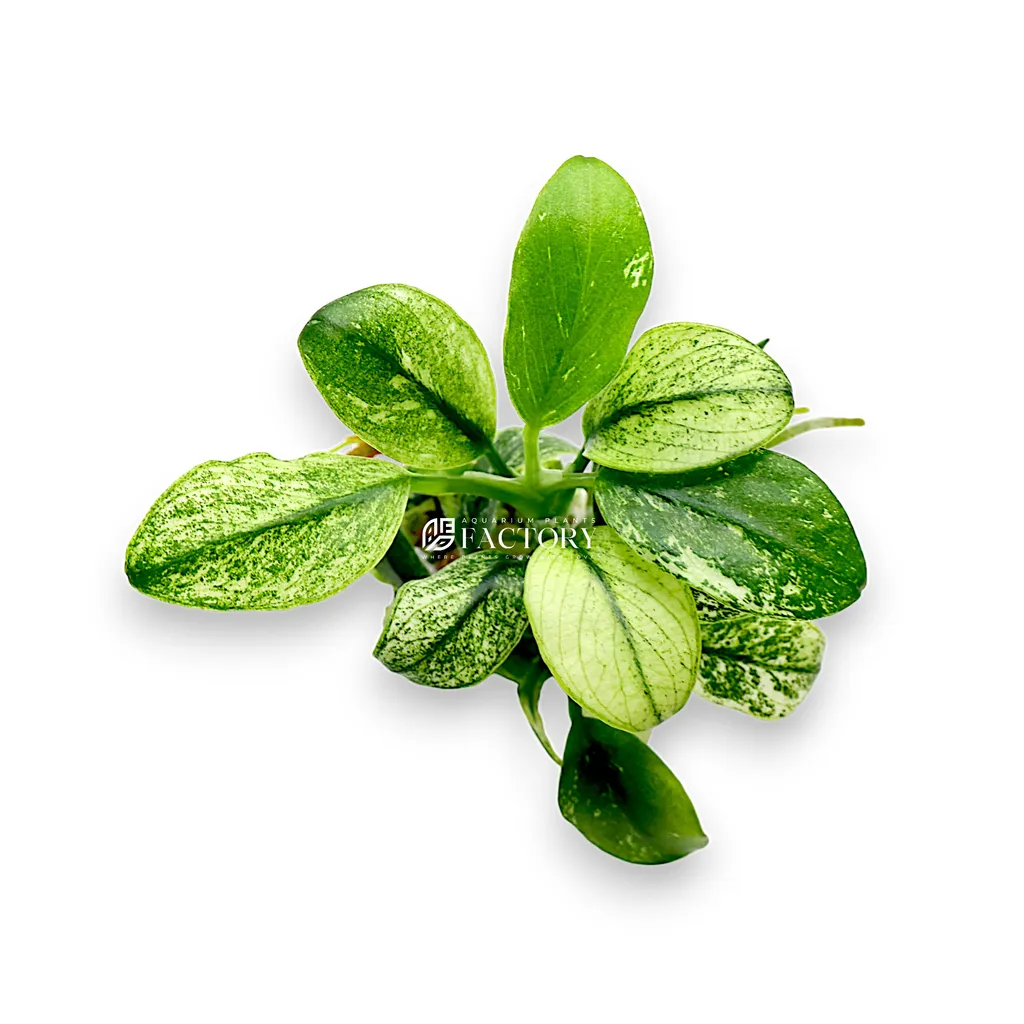
No two Anubias Broad White plants marble alike. The white patterning is a chimera, so each leaf draws its own map.
Caring for Anubias Broad White
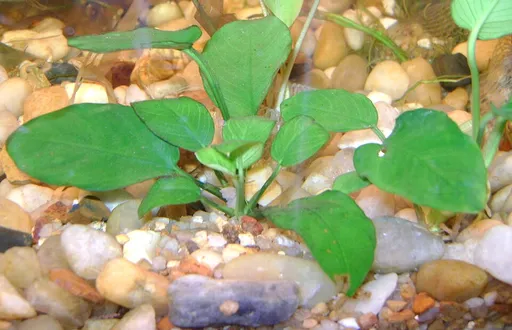
Tie or glue the rhizome to wood or stone and never bury it. Keep it in decent flow, and divide the rhizome into pieces with several leaves each to propagate.
Anubias Broad White wants medium light. The white tissue does not photosynthesize, so the plant runs on its green sectors and grows even slower than plain Broad Leaf. CO2 and a lean liquid fertilizer help it stay ahead of the algae that likes to settle on white leaves. Keep it at 72 to 82°F (22 to 28°C).
Wipe the leaves when spot algae shows. Watch for reversion, since shoots that come through solid green outgrow the marbled ones. Cut those green shoots off at the rhizome to keep the white. A plant that stops making white leaves has reverted to ordinary Broad Leaf.
Good to know
Anubias Broad White belongs to the family Araceae. Anubias barteri is named after Charles Barter, the botanist on the 1857 Niger expedition, and var. barteri is the broad-leaved typical variety. Broad White layers a chimeric variegation over the Broad Leaf form, with white marbling where the leaf tissue lacks chlorophyll. Shops sell it as Broad White or White Broad Leaf, a trade cultivar with no botanical standing.
In the wild
Anubias Broad White is a cultivated selection of the Broad Leaf form and exists only in nurseries and tanks. The parent species grows in and along shaded forest streams in West Africa, attached to rocks and logs. It sits emersed at the margins and submersed at high water.
Common questions
Is Anubias Broad White a different species from Anubias barteri?
No. Anubias Broad White is a form of Anubias barteri. It reaches about 9.8 in (25 cm), against 13.8 in (35 cm) for the species. It wants medium light, where the species wants low. Added CO2 helps it, while the species grows well without. It also differs in difficulty, feeding, pH and spread.
Does Anubias Broad White need to be planted in the substrate?
No. Anubias Broad White grows attached to rock or wood, so tie or glue the rhizome in place. If you plant its roots, keep the rhizome above the substrate, since a buried rhizome rots.
Does Anubias Broad White need CO2?
No, but it helps. Anubias Broad White can grow without injected CO2, and added CO2 makes it grow faster.
How much light does Anubias Broad White need?
Anubias Broad White wants medium light. A light sold for planted tanks covers it.
Does Anubias Broad White need root tabs?
No. Anubias Broad White feeds from the water, so a liquid fertilizer suits it better. Root tabs only help if its roots reach into the substrate.
How do you propagate Anubias Broad White?
Anubias Broad White propagates by rhizome division. Cut the rhizome into pieces with several leaves each, then tie or plant each piece.
How tall does Anubias Broad White grow?
Anubias Broad White grows to about 9.8 in (25 cm) tall. It grows slowly and rarely needs trimming.
Related plants
- Low lightEpiphyte9.8 in (25 cm)
Anubias Frazeri
Anubias 'Frazeri'
Low light · Epiphyte
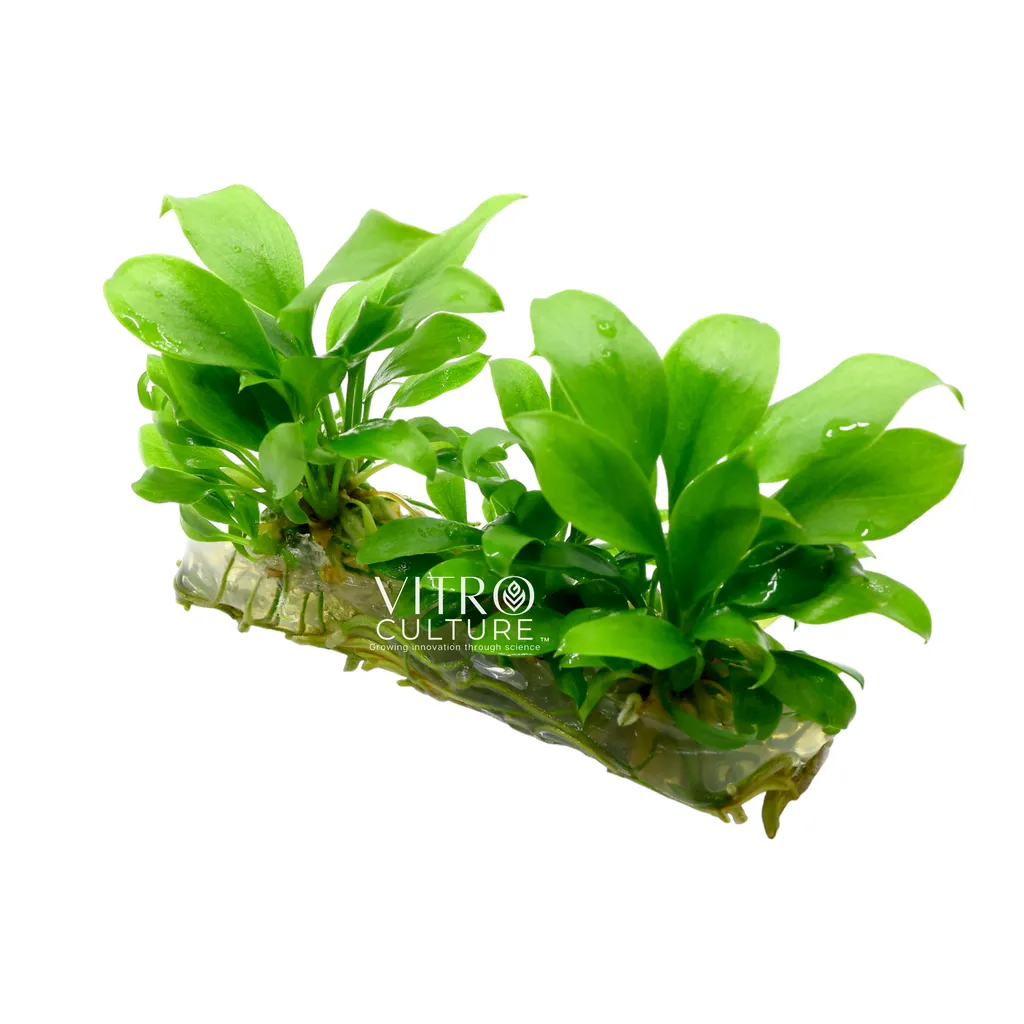 Low lightEpiphyte11.8 in (30 cm)
Anubias gilletii
Low light · Epiphyte
- Low lightEpiphyte7.9 in (20 cm)
Anubias Nangi
Anubias 'Nangi'
Low light · Epiphyte
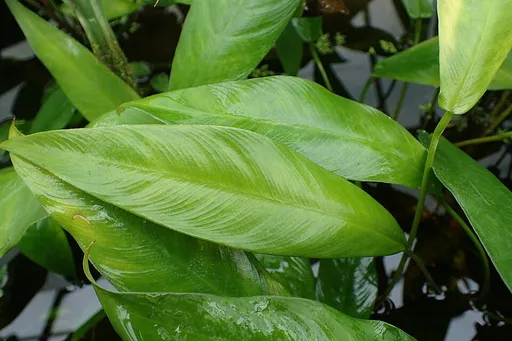 Low lightEpiphyte15.7 in (40 cm)
Anubias gracilis
Low light · Epiphyte
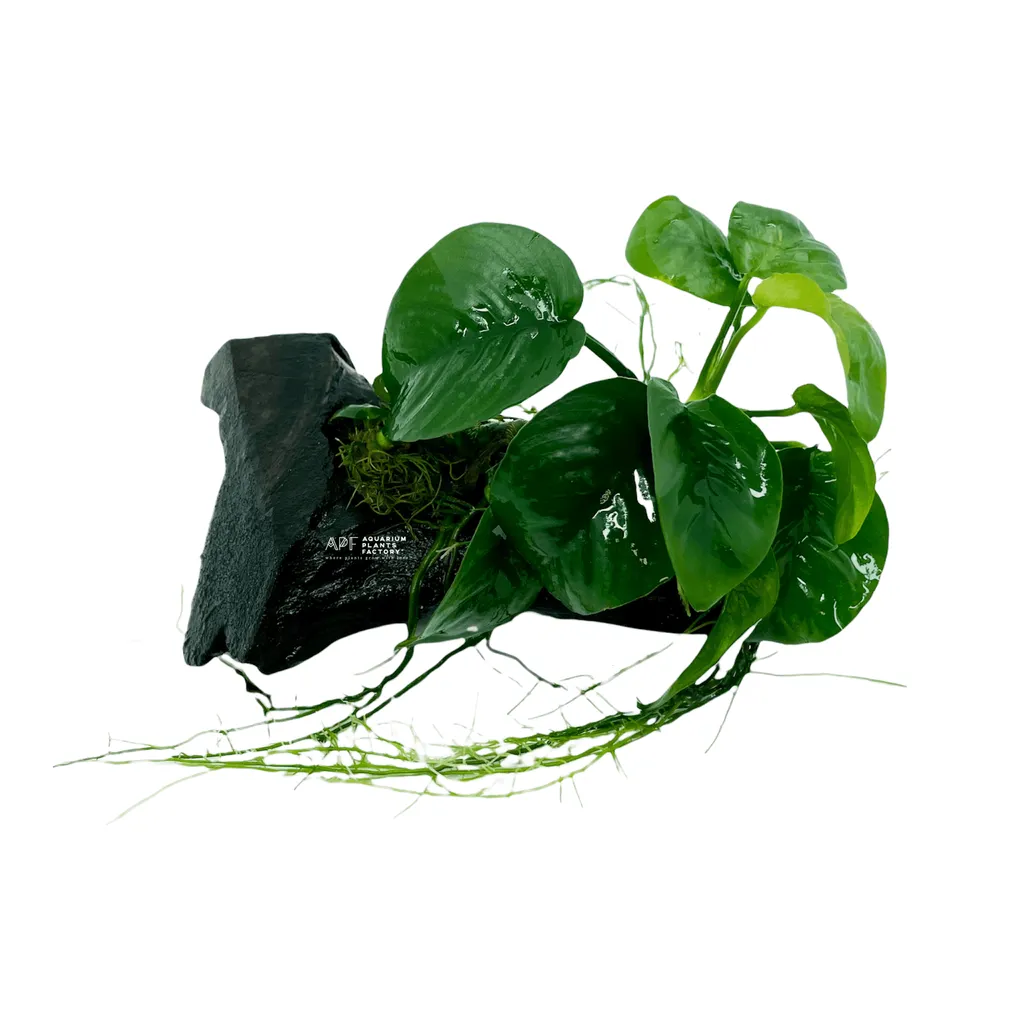 Low lightEpiphyte5.9 in (15 cm)
Anubias Butterfly
Anubias 'Butterfly'
Low light · Epiphyte
 Low lightEpiphyte5.1 in (13 cm)
Anubias congensis Mini
Anubias heterophylla 'Mini'
Low light · Epiphyte