Form of Anubias barteri
Anubias glabra Variegated
Anubias barteri var. glabra 'Variegated'
One of 29 forms of Anubias barteri · See all forms →
Also known as Anubias minima Variegated, Anubias glabra Variegata, Anubias barteri var. glabra 'Variegata'
FreshwaterBrackishRhizomeRhizome division
Forms · Anubias barteri
See all 29 →
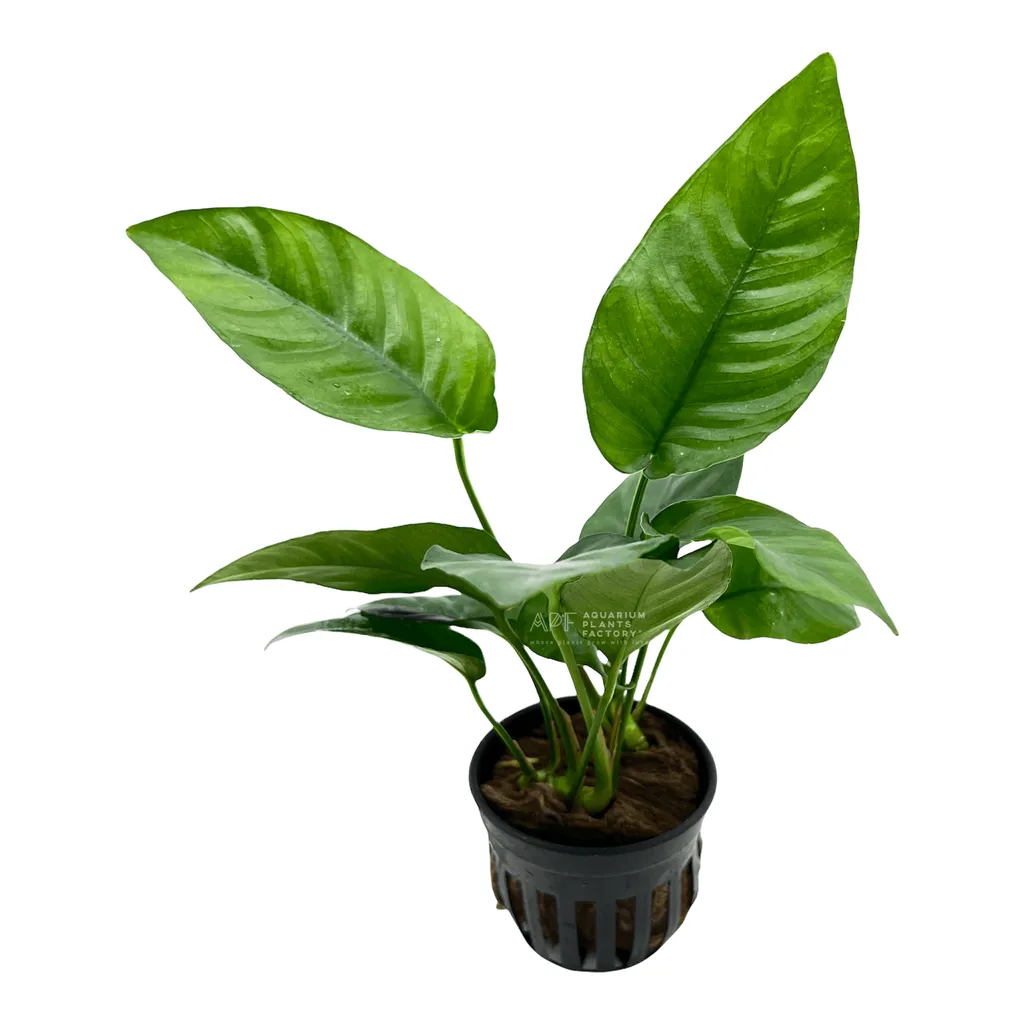
Care at a glance
- Light
- Low light
- CO2
- No CO₂ needed
- Temperature
- 72–82°F
- 22–28°C
- Max height
- 7.9 in
- 20 cm
- Growth rate
- Slow
- Placement
- Epiphyte
- Type
- Rhizome
- pH
- 5.0–8.0
- Hardness
- 2–15 dGH
- Spread
- 5.9 in (15 cm)
- Nutrient uptake
- Root + water column
- Growth region
- Submersed or emersed
- Difficulty
- Easy
- Family
- Araceae
- Origin
- Cultivar (parent variety native to West Africa, Guinea to Gabon)
Overview
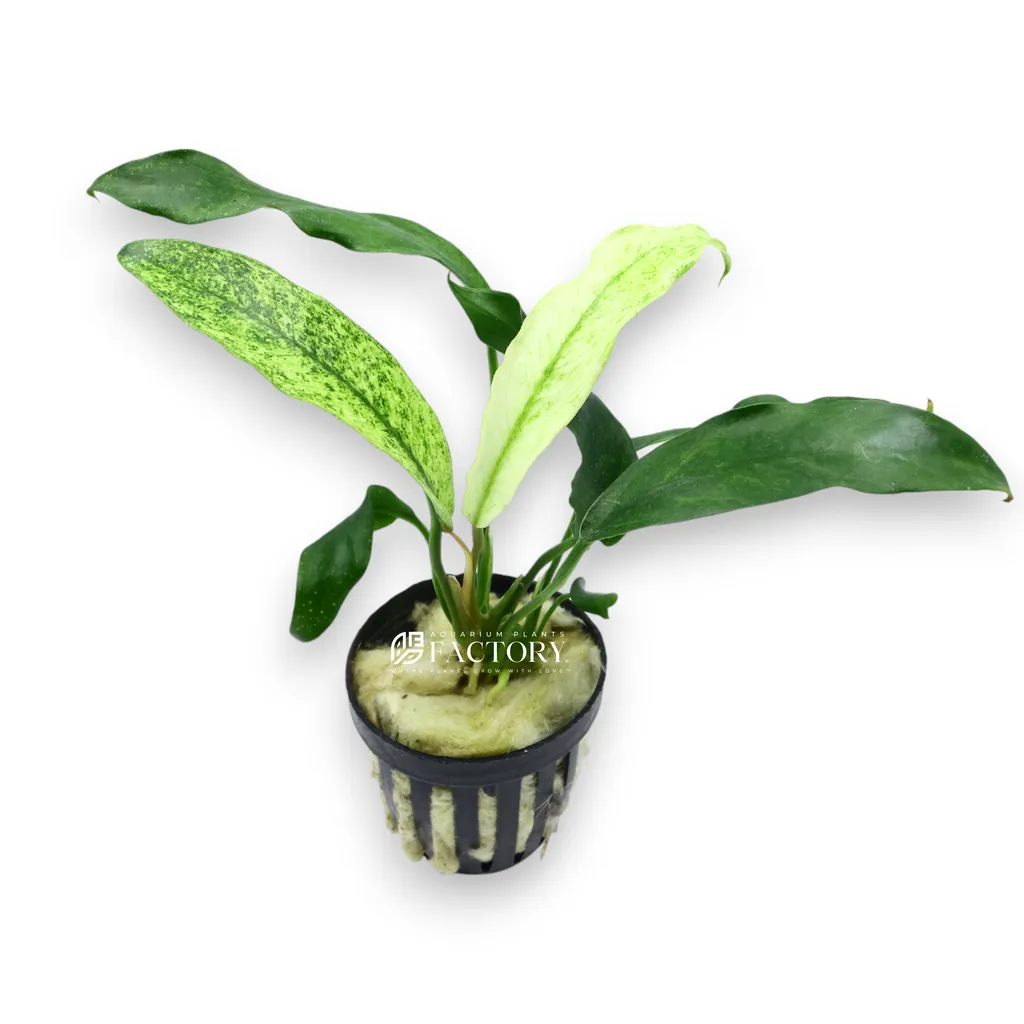
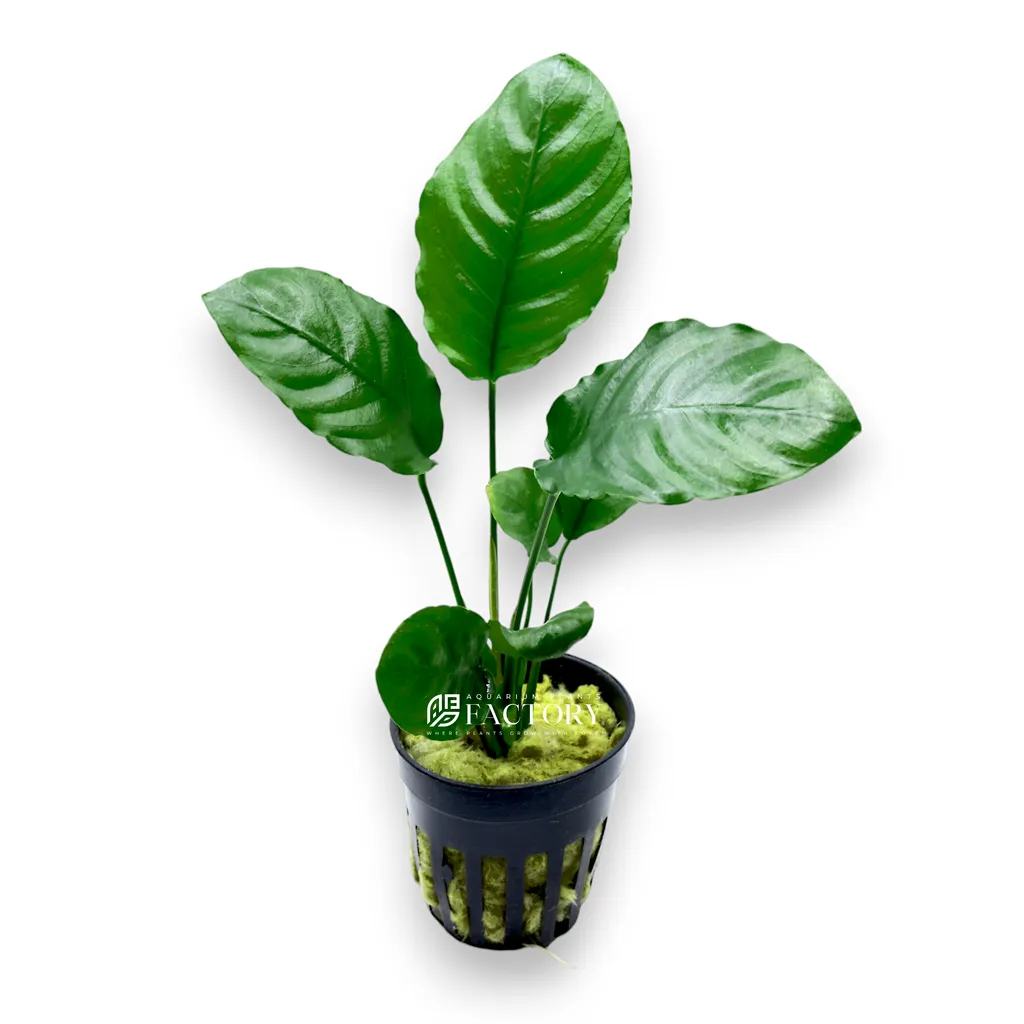
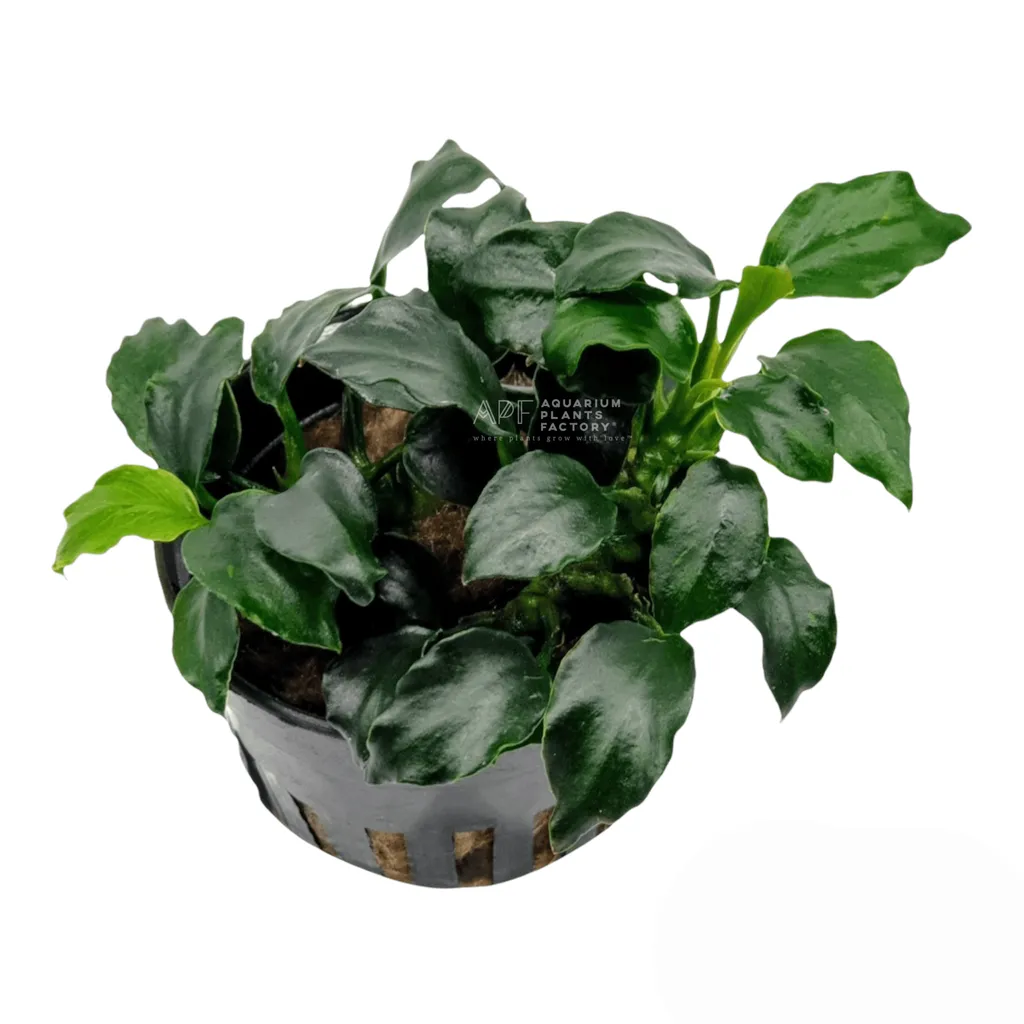
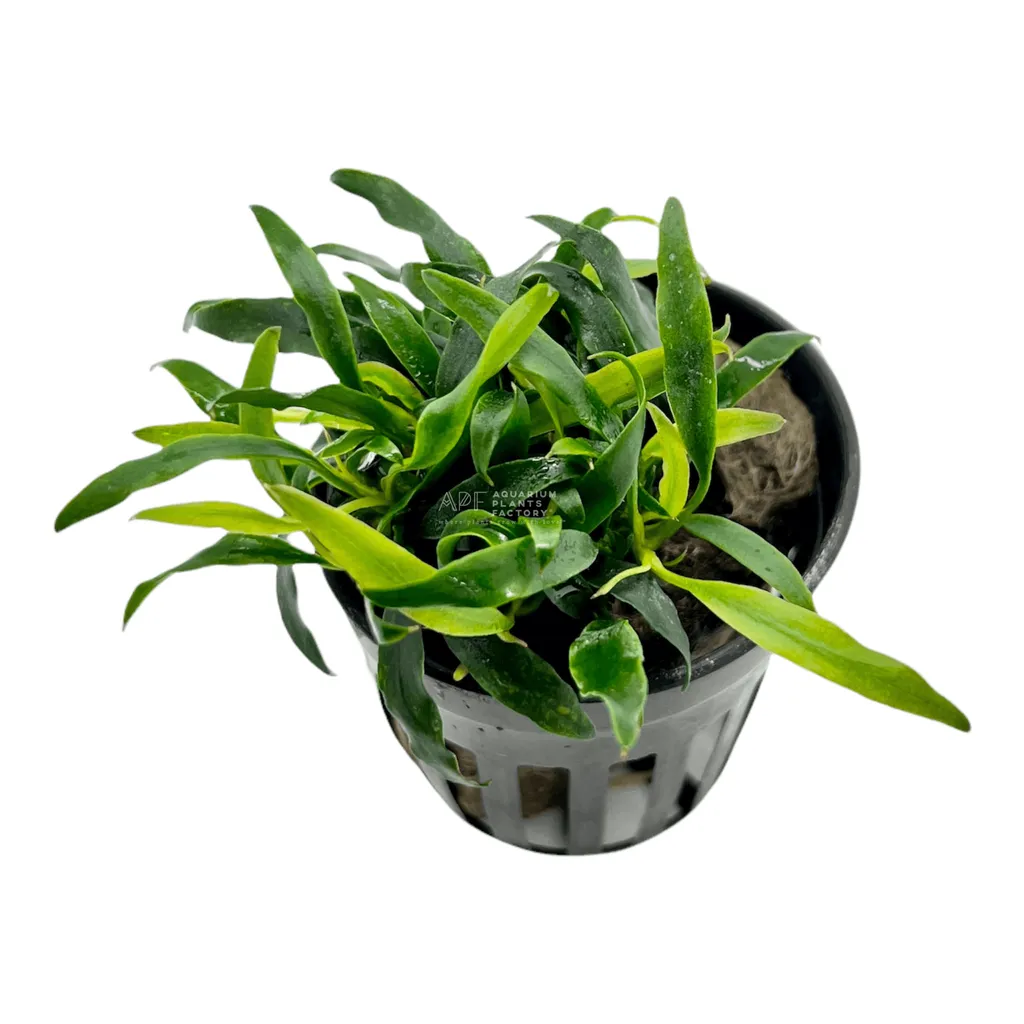
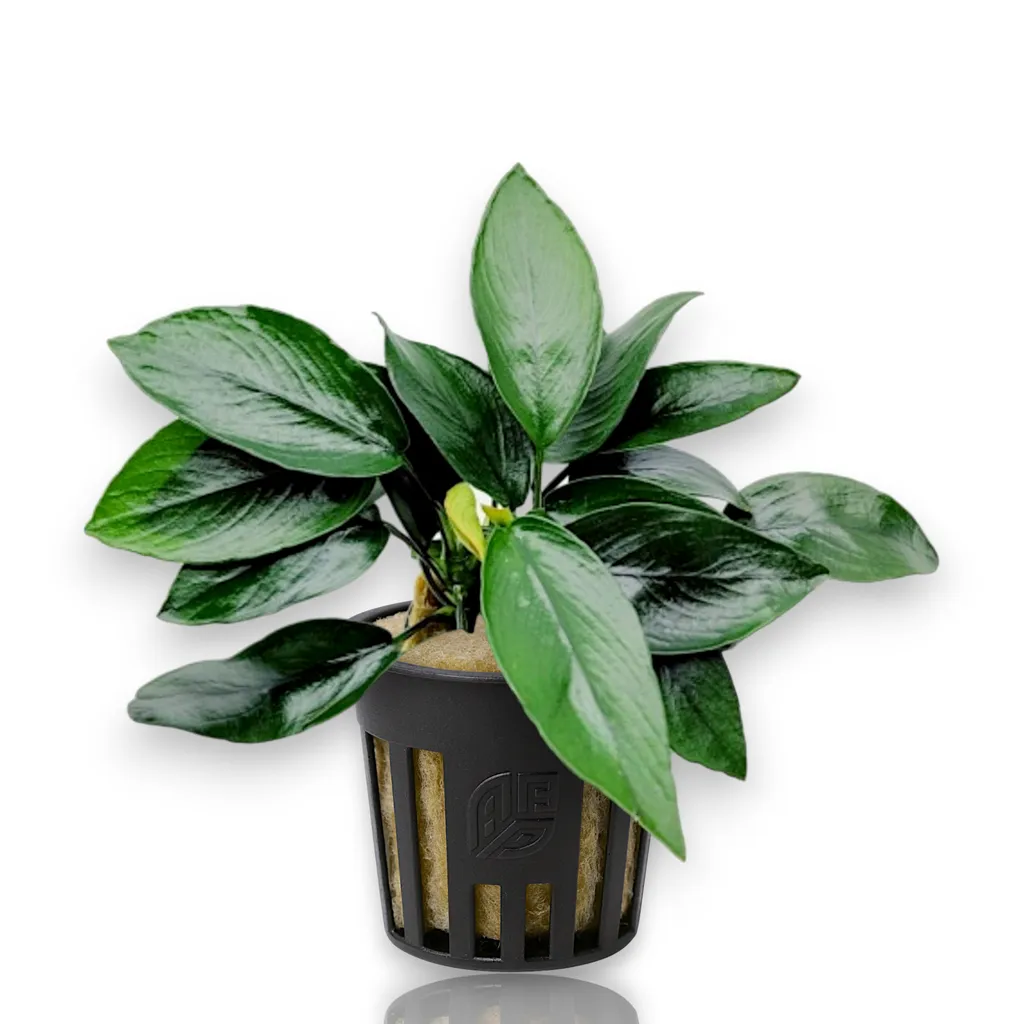
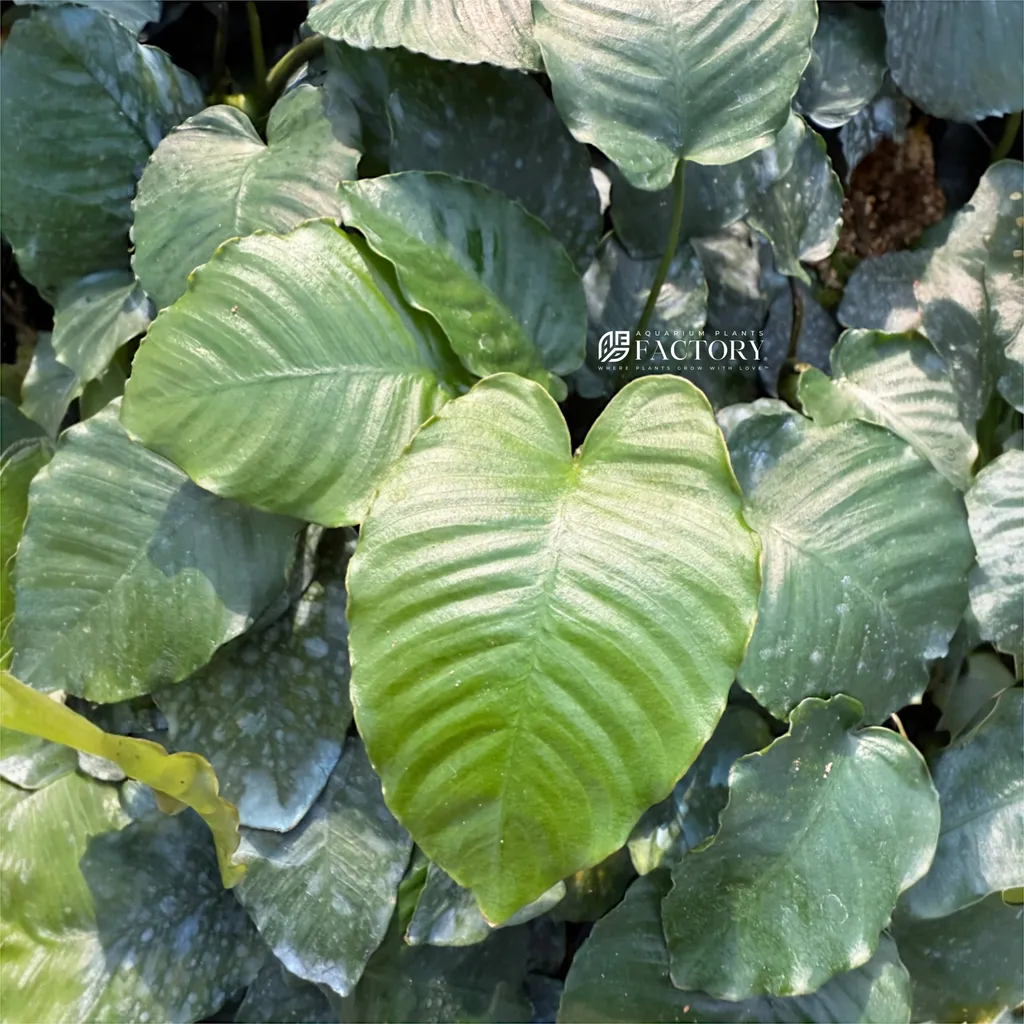
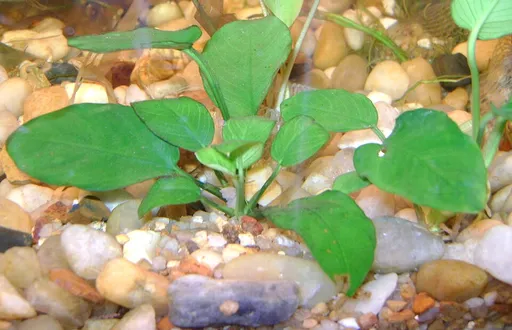
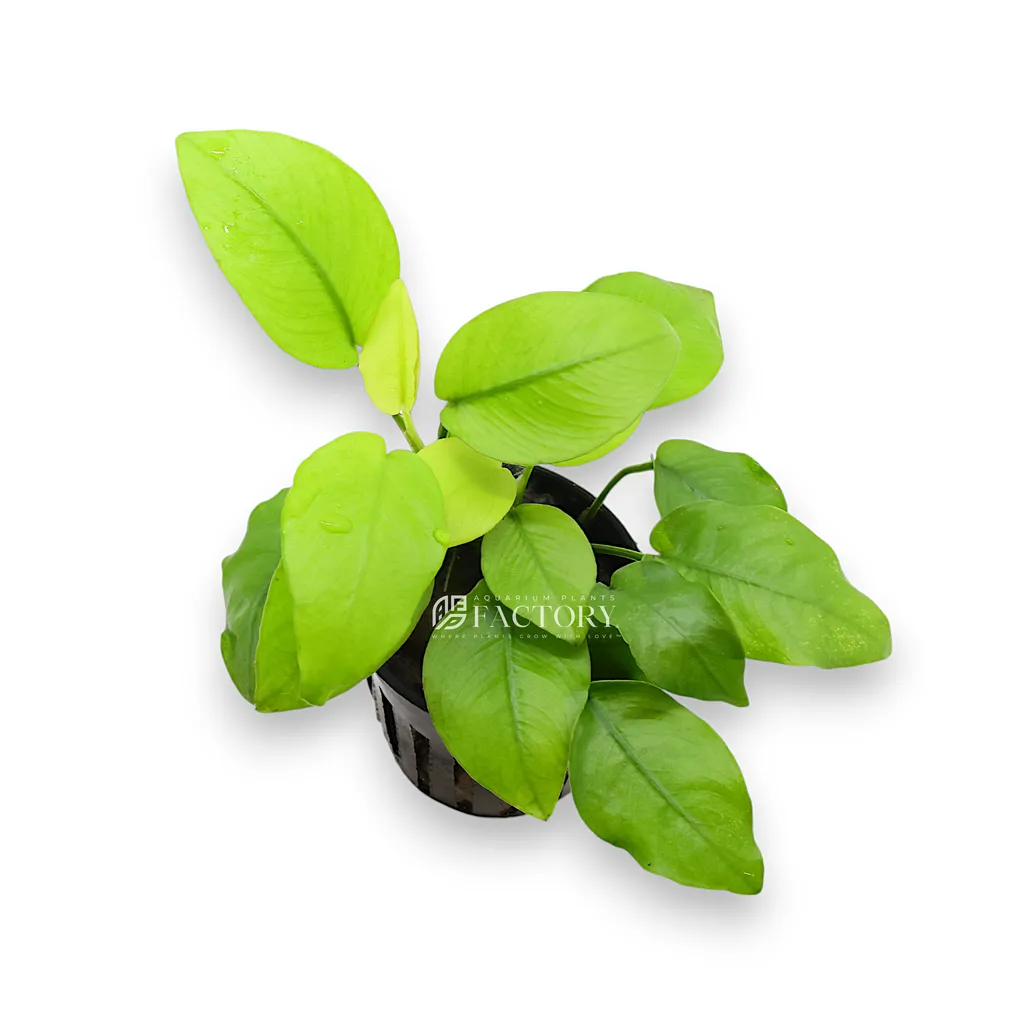
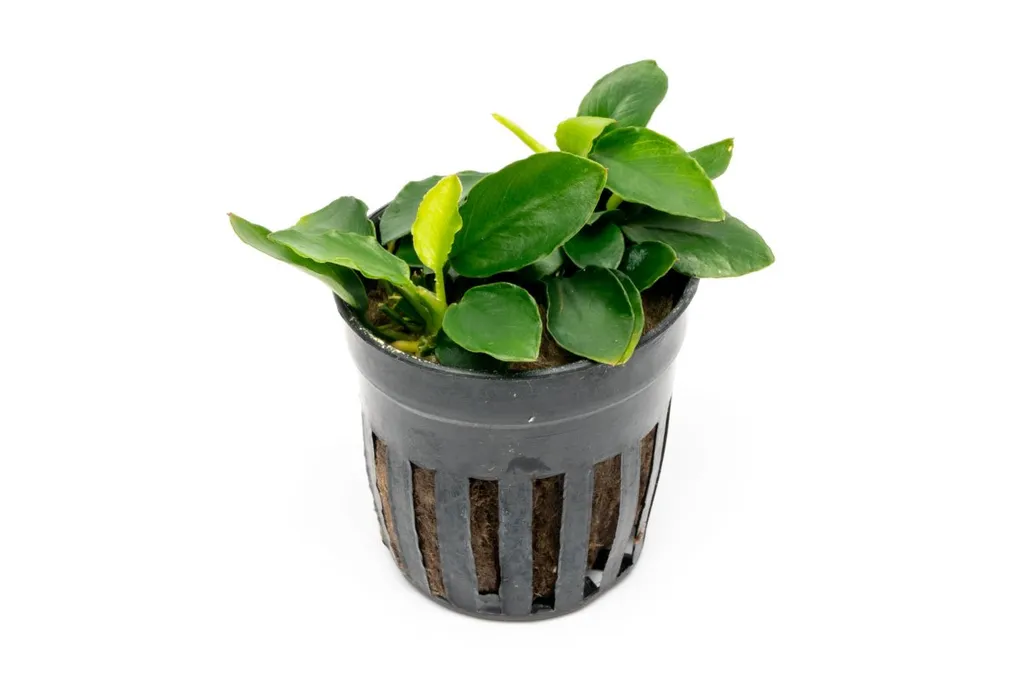
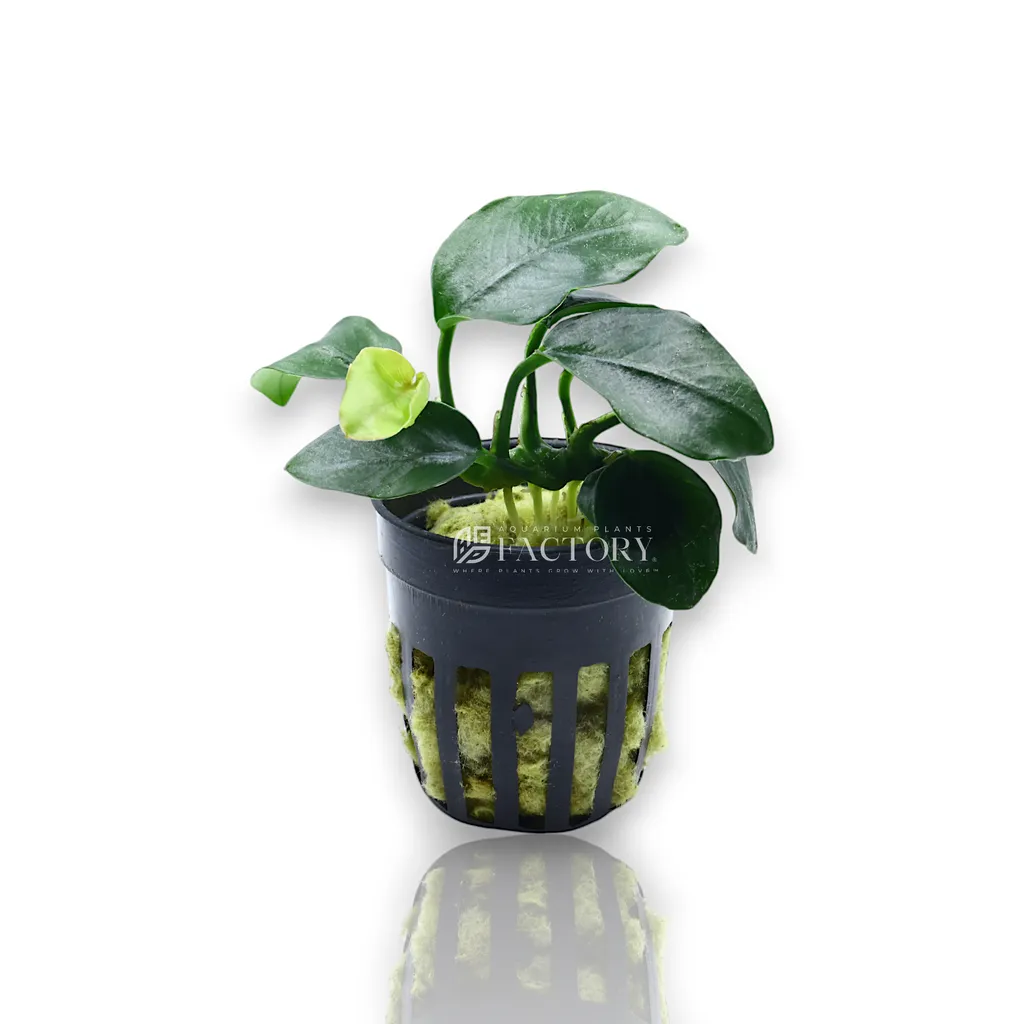
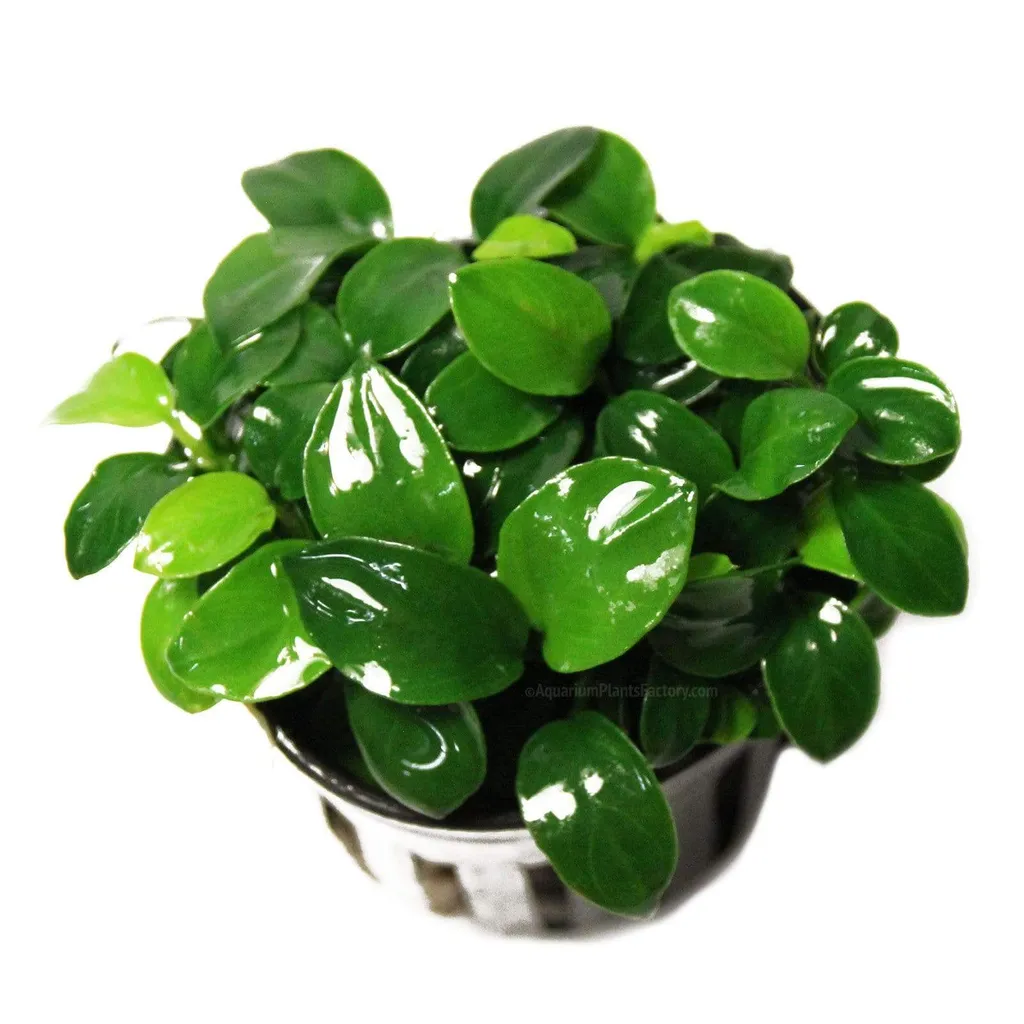
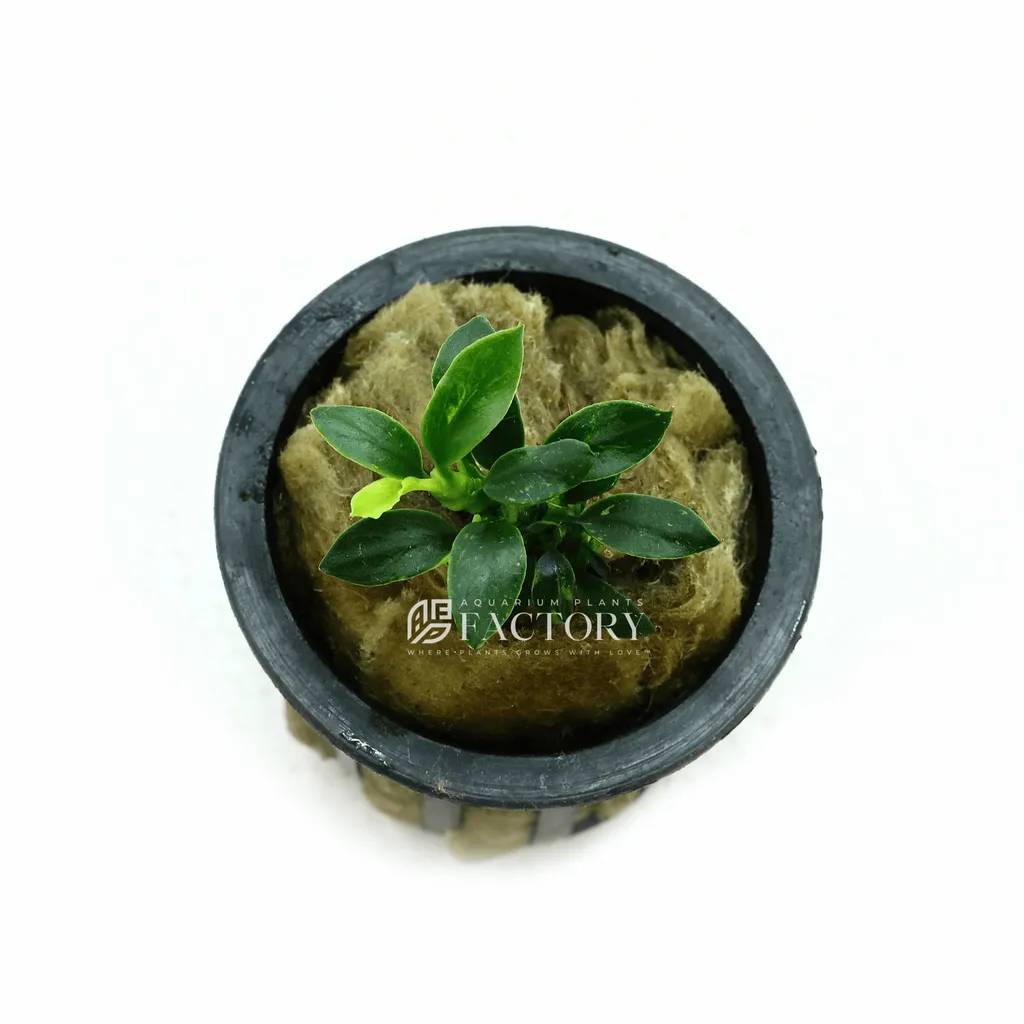
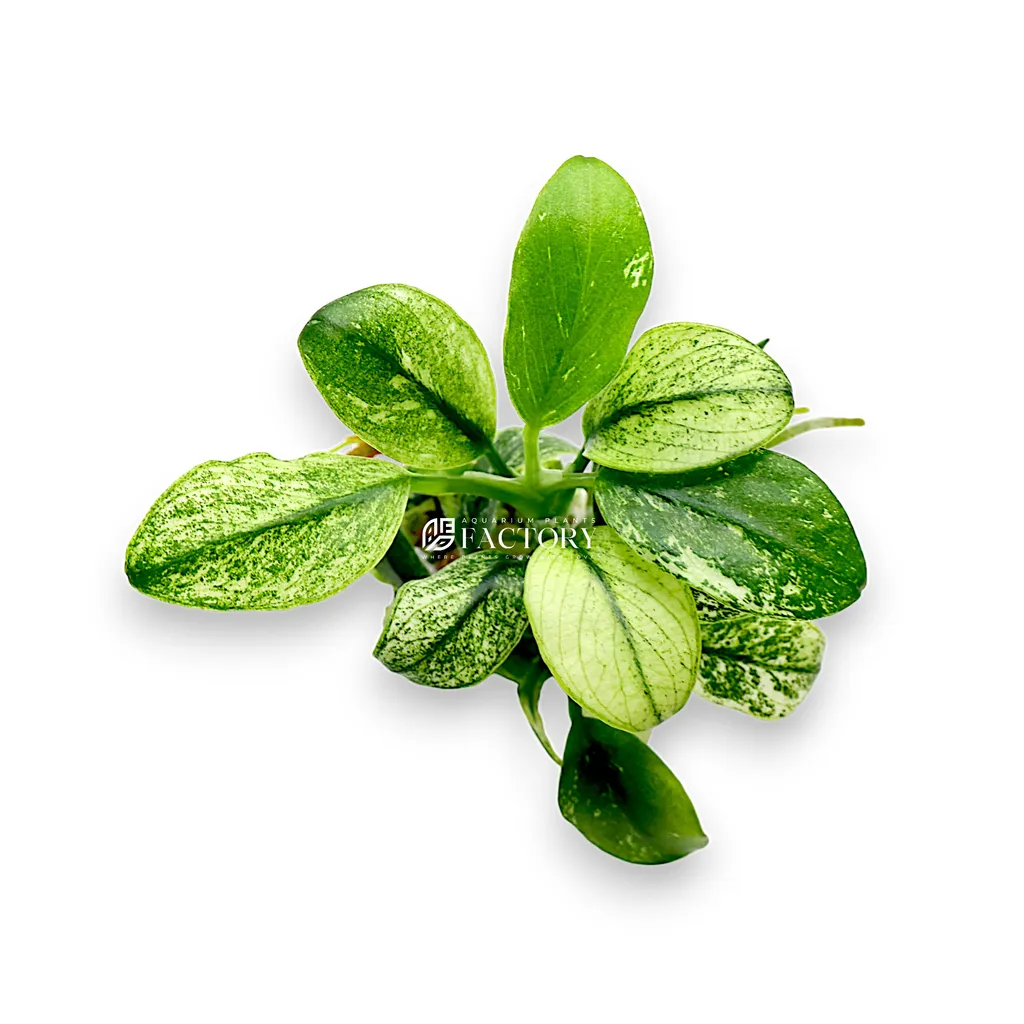
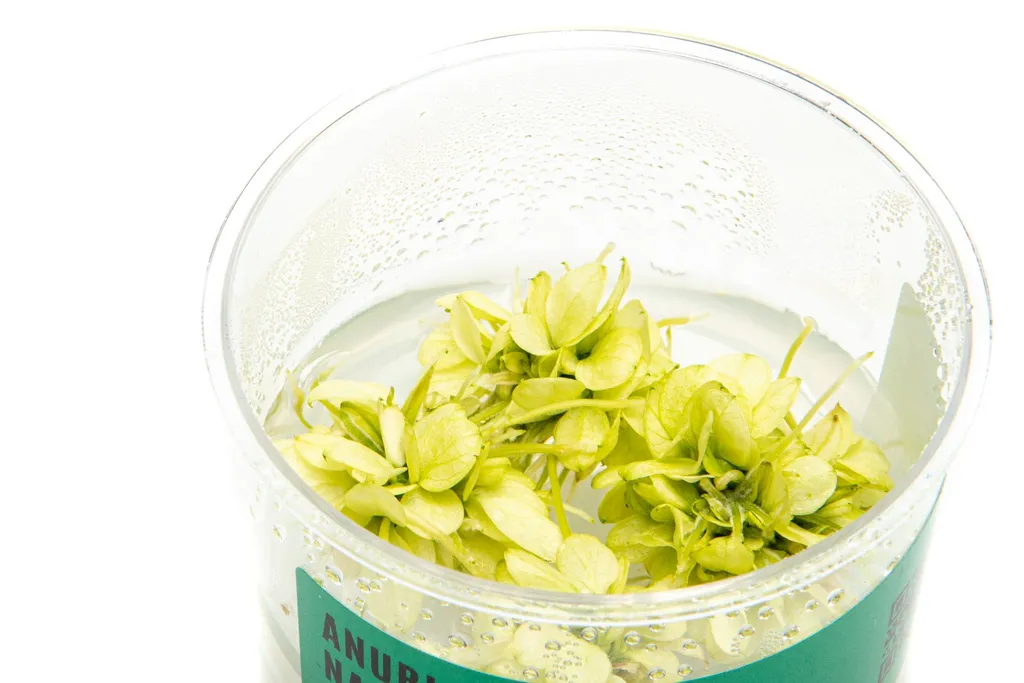
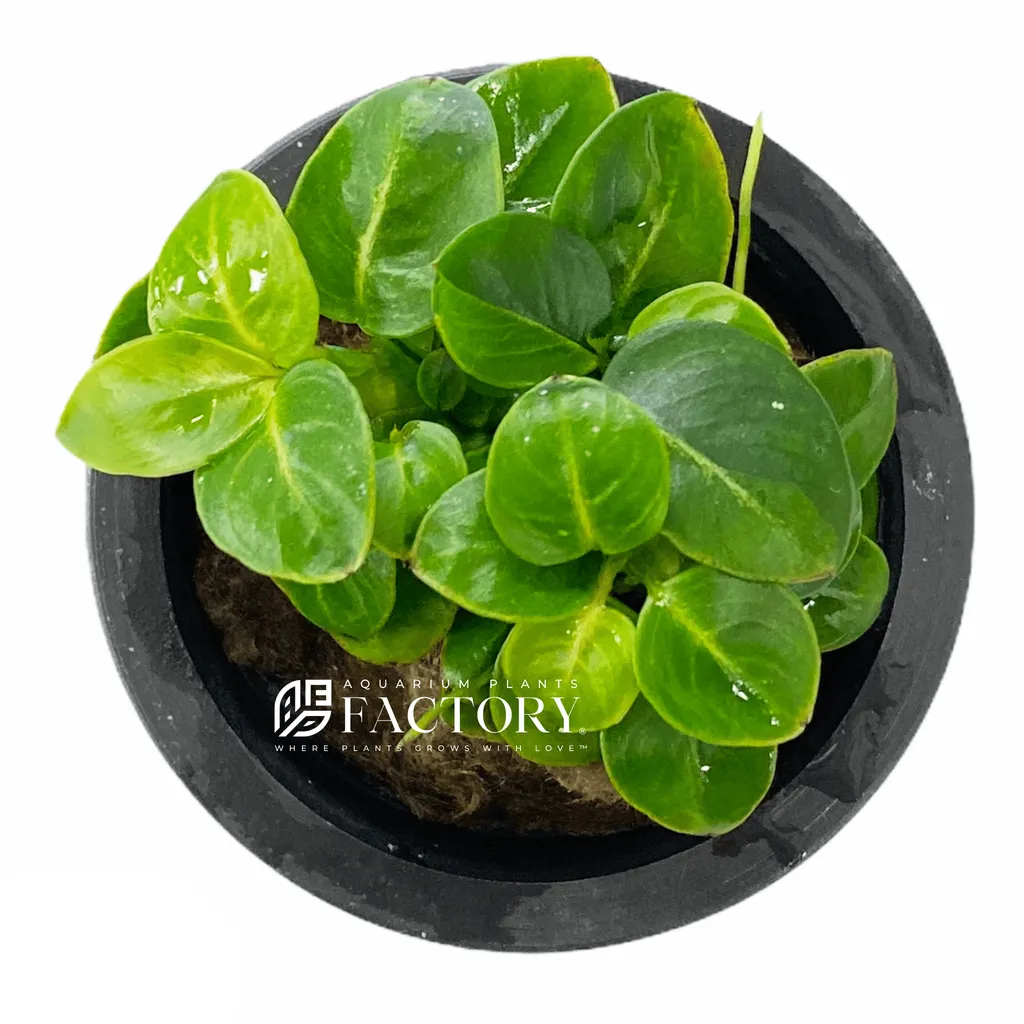
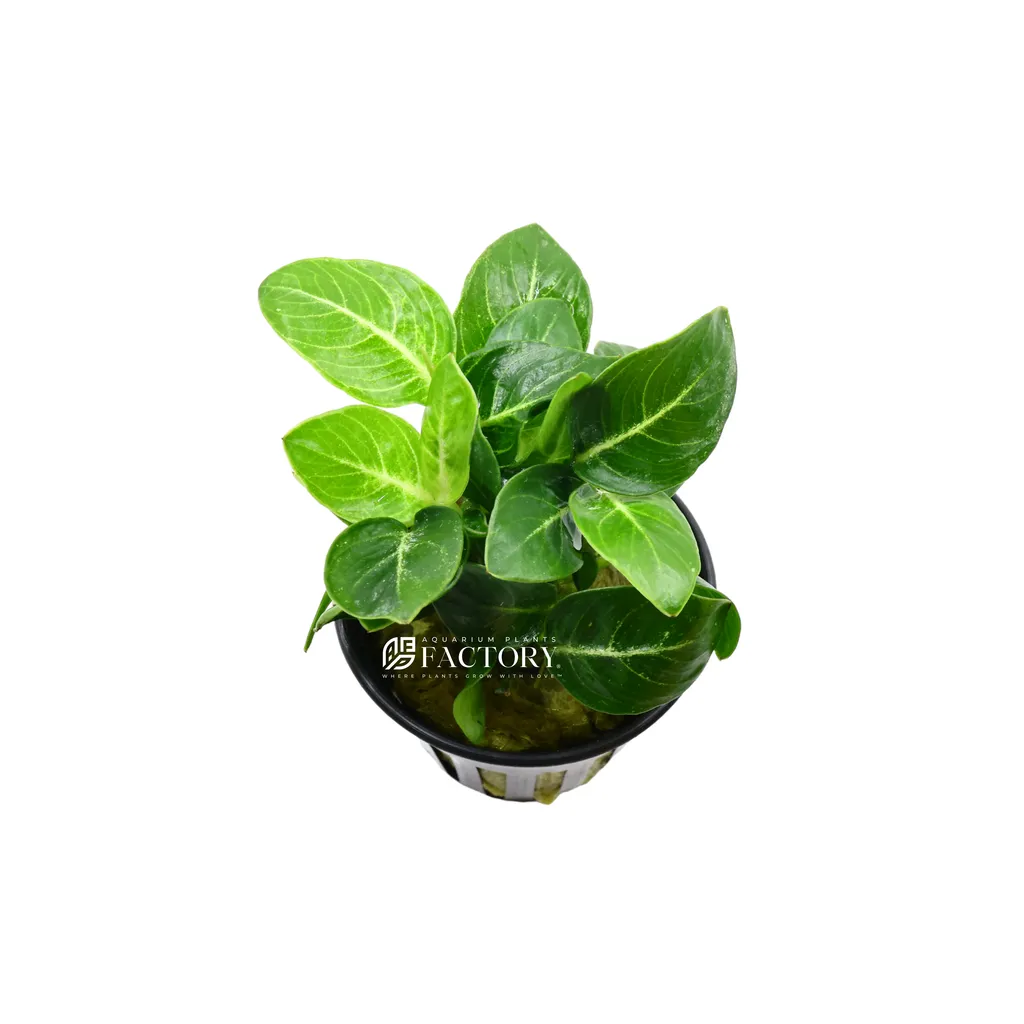
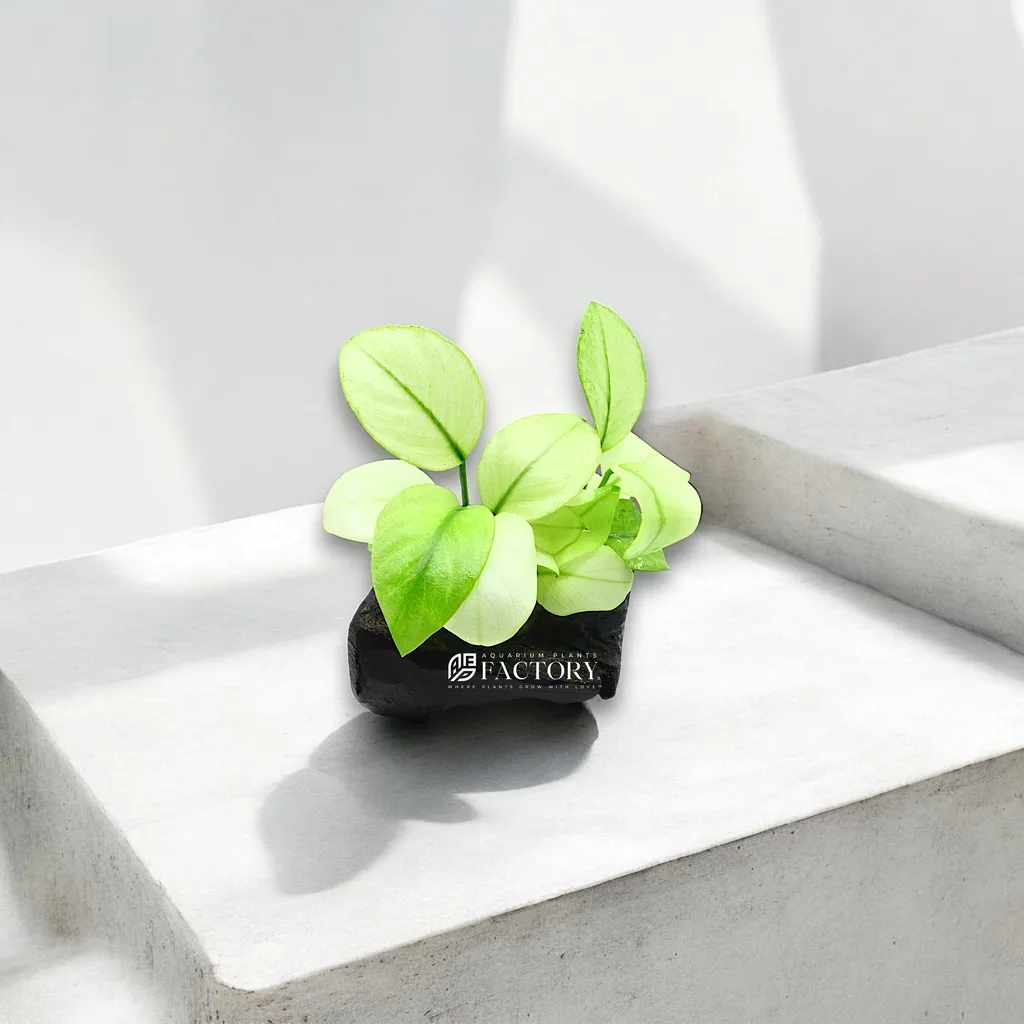
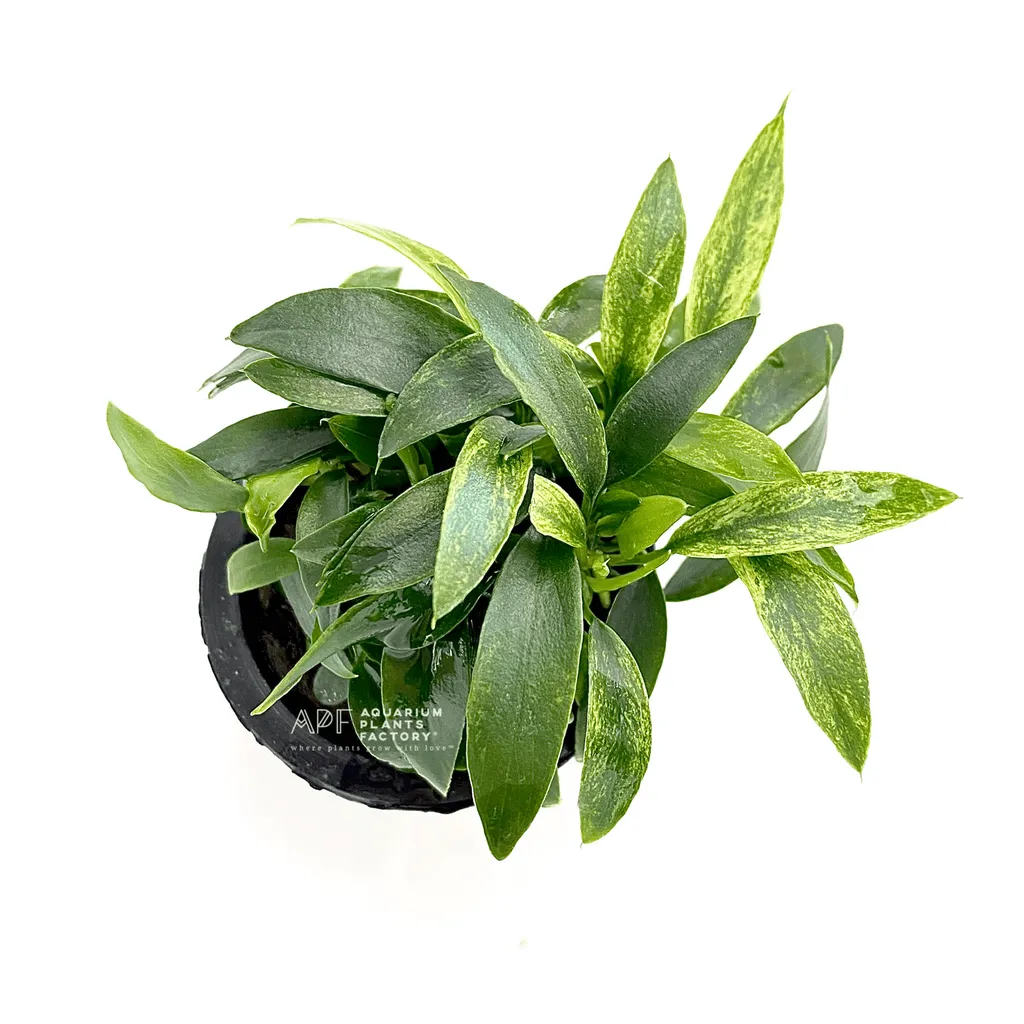
Anubias glabra Variegated is a narrow-leaved anubias with white patches on its green leaves. It lives on wood or rock rather than in the substrate, and it is easy to keep, if very slow.
Did you know
The white on Anubias glabra Variegated is not guaranteed to stay. The same rhizome can throw heavily white leaves one month and plain green ones the next, and the pattern can disappear entirely.
Caring for Anubias glabra Variegated
Glue or tie the rhizome to wood or rock, and never bury it in the substrate. Once it is fixed in place, the roots grip the hardscape and the plant asks little else of you.
Anubias glabra Variegated grows in low light with no added CO2. Keep it that way, since strong light mostly grows algae on its slow leaves. It feeds through its roots and from the water, so a liquid fertilizer covers it. It is comfortable at 72 to 82°F (22 to 28°C).
Growth is very slow even by anubias standards, because the pale tissue does no photosynthesis. The variegation also wanders, and some new leaves come through pure green. Trim those green shoots out early, before the faster green tissue takes the plant back over, and the white share stays up. To propagate, cut the rhizome into pieces of a few leaves each.
Good to know
Anubias glabra Variegated is an aroid in the family Araceae. The variety name glabra means smooth or hairless. That variety is the catch-all for the narrow-leaved barteri forms also sold as minima, angustifolia and lanceolata. The Variegated name marks a horticultural selection rather than a botanical taxon, and shops also sell it as Anubias minima Variegated. Sectors of the leaf lack chlorophyll and come through cream to white, and because the pattern is chimeric it varies from leaf to leaf.
In the wild
Anubias glabra Variegated exists only in cultivation and has no wild population. Its parent variety grows along rainforest streams in West Africa, from Guinea down to Gabon. There it roots to rock and wood on the banks, emersed in the splash zone and underwater when levels rise.
Common questions
Is Anubias glabra Variegated a different species from Anubias barteri?
No. Anubias glabra Variegated is a form of Anubias barteri. It reaches about 7.9 in (20 cm), against 13.8 in (35 cm) for the species. It also differs in difficulty, hardness, feeding, pH and spread.
Does Anubias glabra Variegated need to be planted in the substrate?
No. Anubias glabra Variegated grows attached to rock or wood, so tie or glue the rhizome in place. If you plant its roots, keep the rhizome above the substrate, since a buried rhizome rots.
Does Anubias glabra Variegated need CO2?
No. Anubias glabra Variegated grows well without added CO2 and suits a low-tech tank.
How much light does Anubias glabra Variegated need?
Anubias glabra Variegated is a low-light plant, and the light that comes with a standard tank kit is enough for it.
Does Anubias glabra Variegated need root tabs?
No. Anubias glabra Variegated feeds from the water, so a liquid fertilizer suits it better. Root tabs only help if its roots reach into the substrate.
How do you propagate Anubias glabra Variegated?
Anubias glabra Variegated propagates by rhizome division. Cut the rhizome into pieces with several leaves each, then tie or plant each piece.
How tall does Anubias glabra Variegated grow?
Anubias glabra Variegated grows to about 7.9 in (20 cm) tall. It grows slowly and rarely needs trimming.
Related plants
- Low lightEpiphyte7.9 in (20 cm)
Anubias Nangi
Anubias 'Nangi'
Low light · Epiphyte
- Low lightEpiphyte9.8 in (25 cm)
Anubias Frazeri
Anubias 'Frazeri'
Low light · Epiphyte
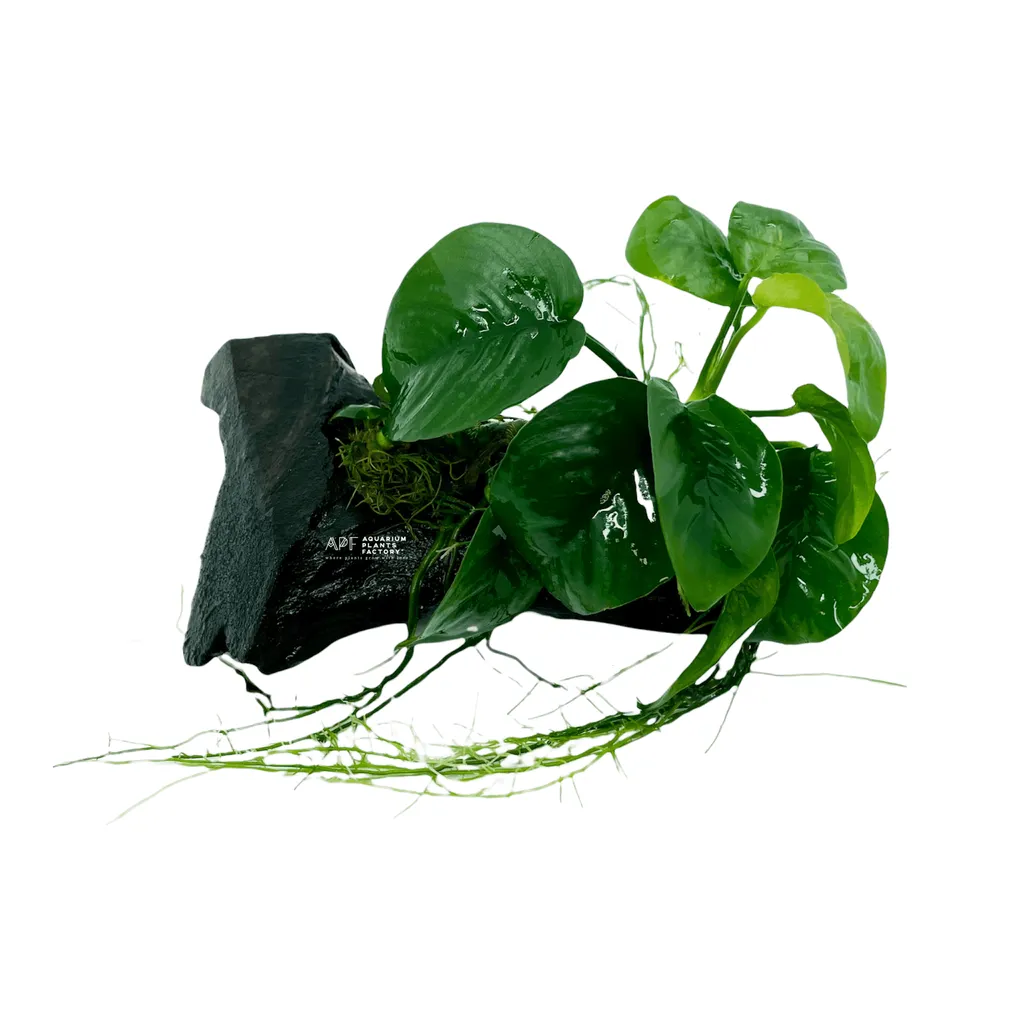 Low lightEpiphyte5.9 in (15 cm)
Anubias Butterfly
Anubias 'Butterfly'
Low light · Epiphyte
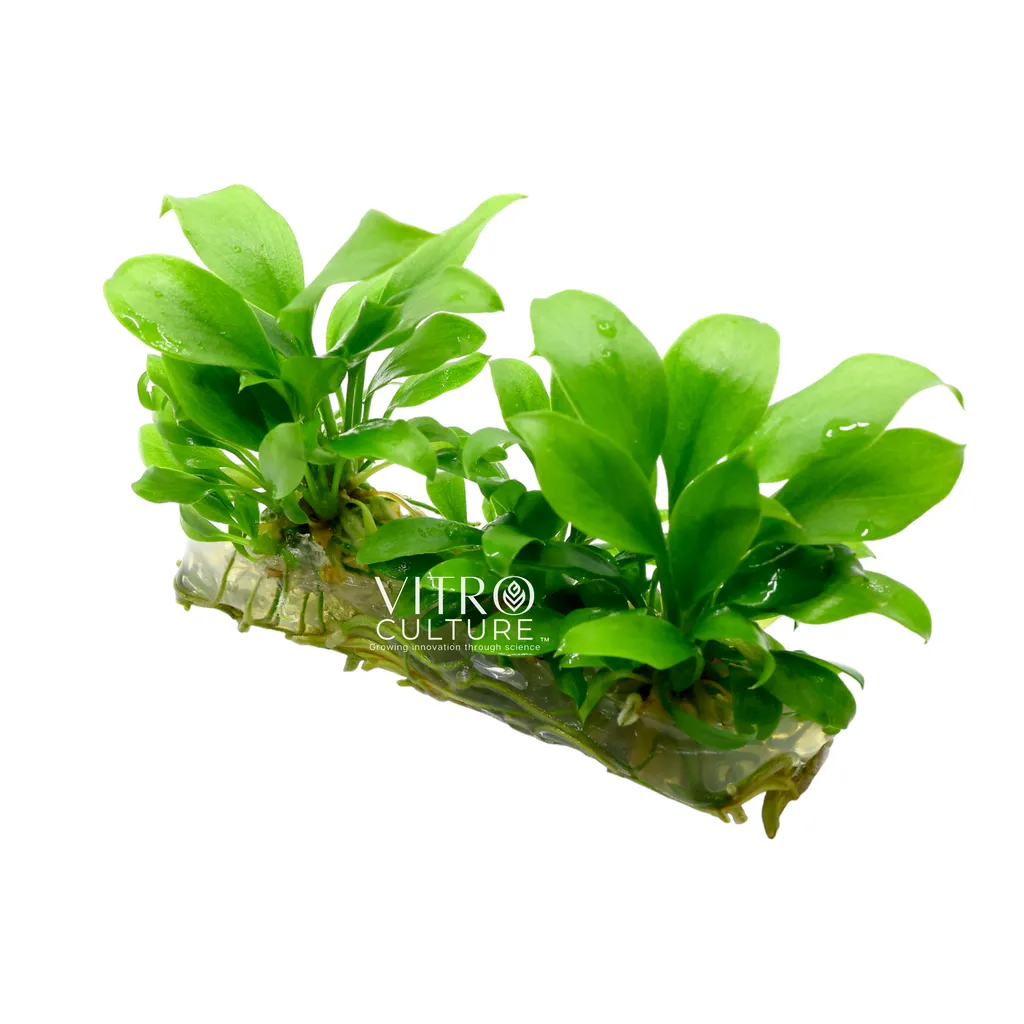 Low lightEpiphyte11.8 in (30 cm)
Anubias gilletii
Low light · Epiphyte
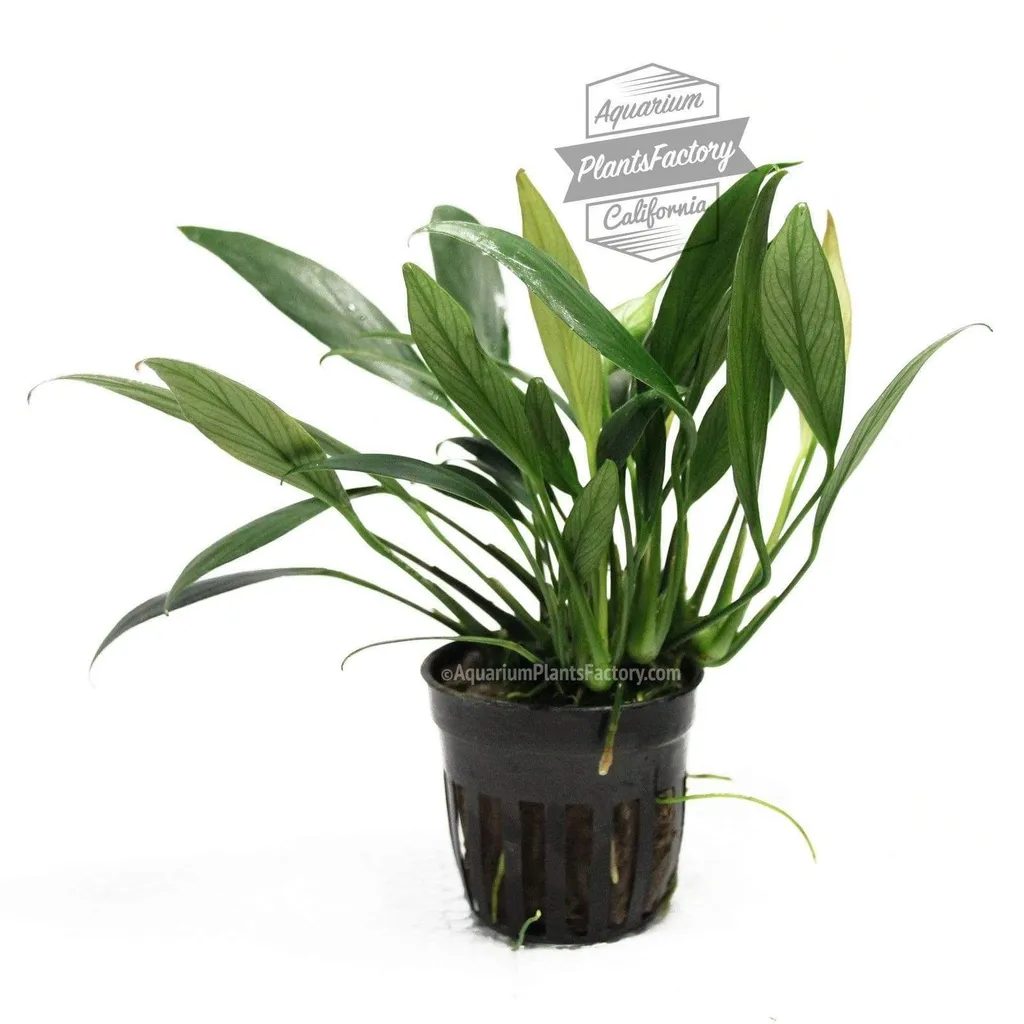 Low lightEpiphyte5.1 in (13 cm)
Anubias congensis Mini
Anubias heterophylla 'Mini'
Low light · Epiphyte
 Low lightEpiphyte3.9 in (10 cm)
Anubias Chili Jalapeno
Anubias 'Chili Jalapeno'
Low light · Epiphyte