Anubias Frazeri
Anubias 'Frazeri'
Also known as Anubias barteri x heterophylla, Frazer's Anubias
FreshwaterRhizomeRhizome division
Care at a glance
- Light
- Low light
- CO2
- CO₂ beneficial
- Temperature
- 72–82°F
- 22–28°C
- Max height
- 9.8 in
- 25 cm
- Growth rate
- Slow
- Placement
- Epiphyte
- Type
- Rhizome
- pH
- 6.0–7.5
- Hardness
- 2–15 dGH
- Spread
- 5.9 in (15 cm)
- Nutrient uptake
- Root + water column
- Growth region
- Submersed or emersed
- Difficulty
- Easy
- Family
- Araceae
- Origin
- Cultivated hybrid (parent species from West/Central Africa)
Overview
Glue or tie the rhizome to driftwood or stone and never bury it, buried rhizomes rot and the plant recedes. It is one of the hardier, faster Anubias and grows well in low light with no CO2, though CO2 and root or column feeding speed it up. Keep it in gentle flow and shaded spots to slow the algae that tends to spot Anubias leaves.
In the wild
Frazeri is not a wild plant, it is a nursery hybrid whose parent species come from the shaded, slow-moving streams and forest floors of tropical West and Central Africa. Like all Anubias it grows attached to rock and wood along the water's edge, with the rhizome creeping across the surface rather than rooting into mud.
Good to know
A member of the arum family (Araceae), Frazeri is a garden hybrid usually credited to Anubias barteri crossed with a taller species (sources disagree between A. congensis and A. heterophylla). Because it is a hybrid, it carries no valid wild-collected species name and is written as the cultivar Anubias 'Frazeri'. It shows the classic Anubias trait of tough, waxy, leathery leaves that resist being eaten by herbivorous fish.
Did you know
Frazeri grows noticeably quicker and taller than most Anubias like nana petite, so it fills a midground or background gap that the tiny Anubias never could.
Related plants
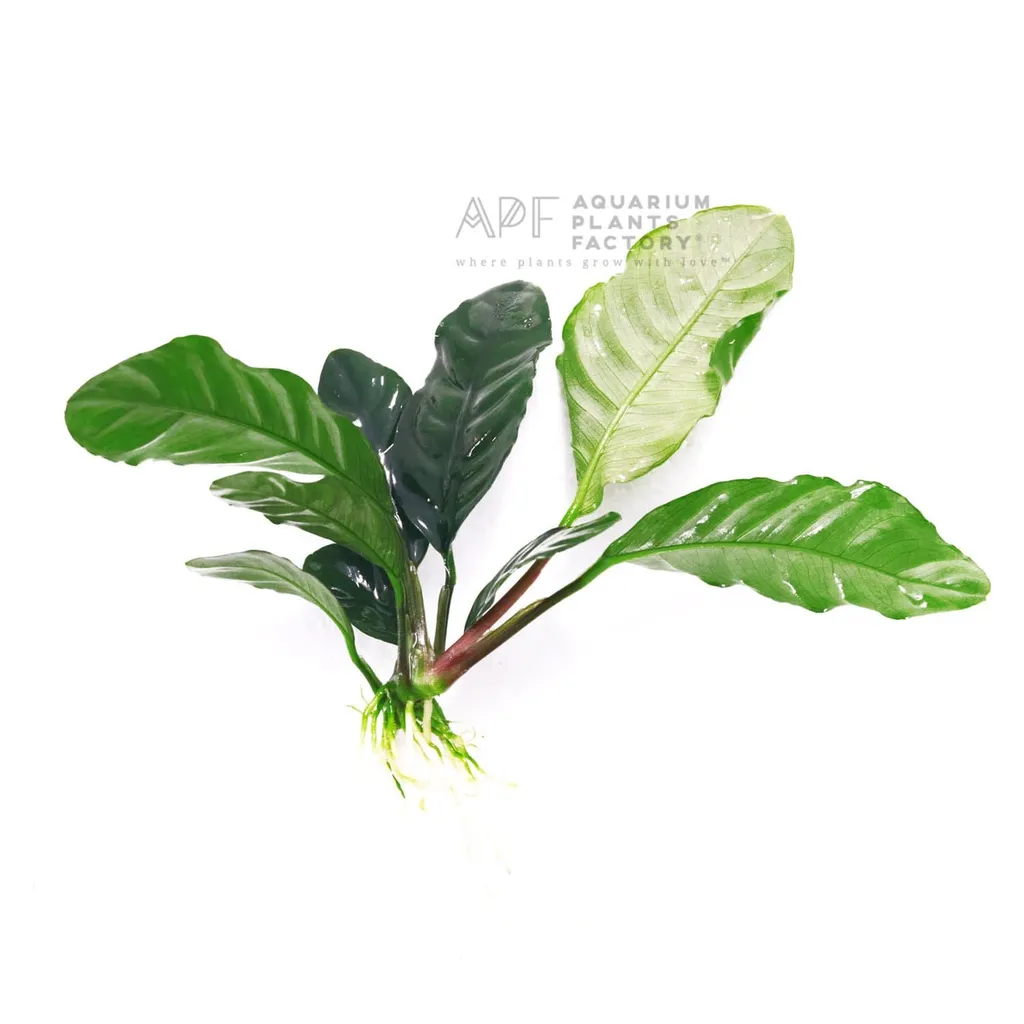 Low lightEpiphyte9.8 in (25 cm)
Anubias coffeefolia
Anubias barteri var. coffeefolia
Low light · Epiphyte
- Medium lightEpiphyte9.8 in (25 cm)
Anubias Broad White
Anubias barteri 'Broad White'
Medium light · Epiphyte
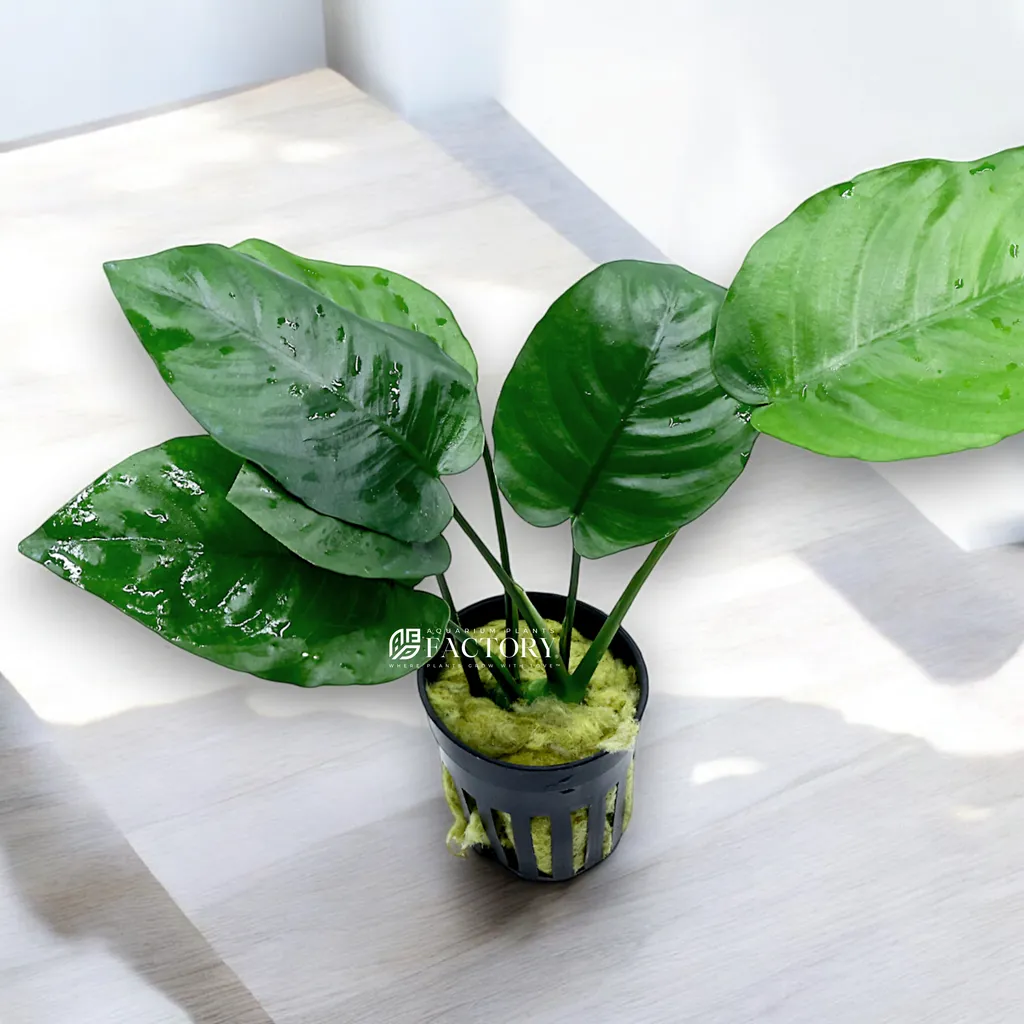 Low lightEpiphyte11.8 in (30 cm)
Anubias Broad Leaf
Anubias barteri var. barteri 'Broad Leaf'
Low light · Epiphyte
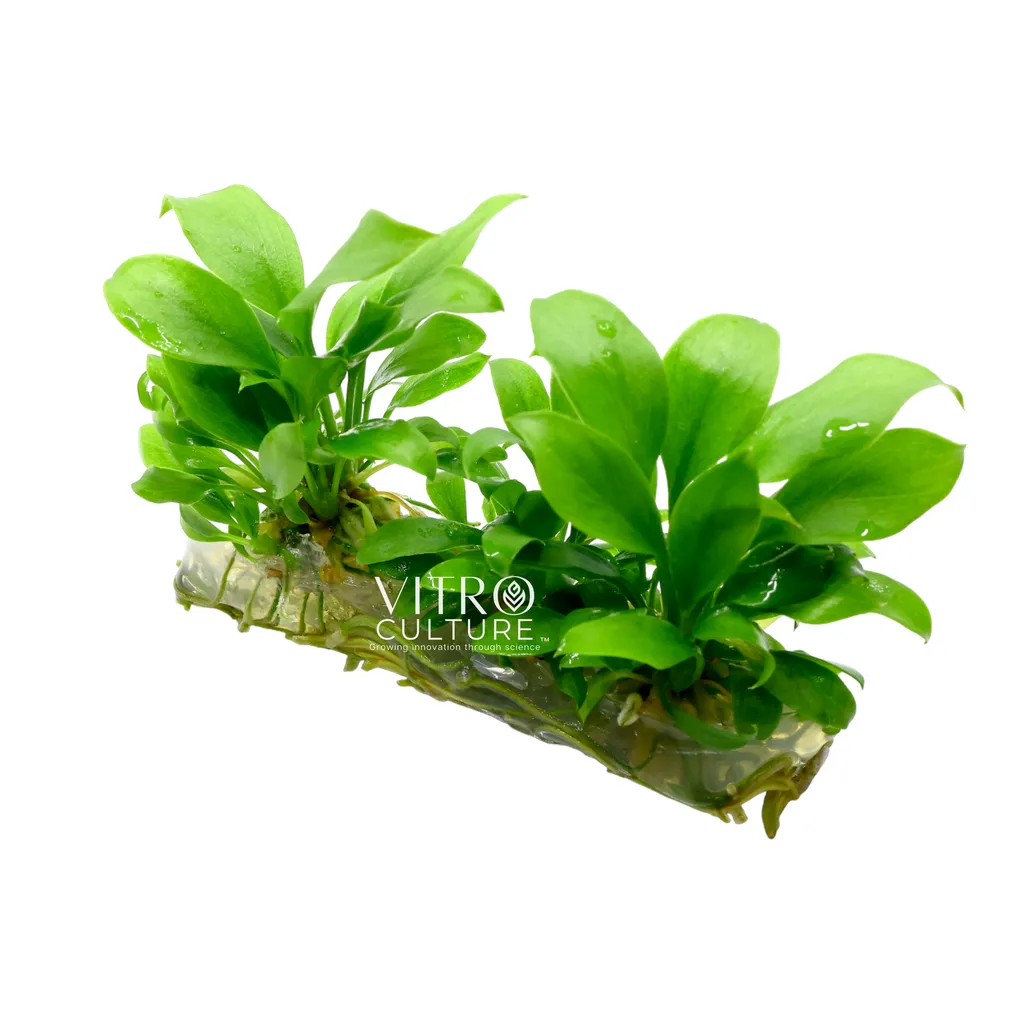 Low lightEpiphyte11.8 in (30 cm)
Anubias gilletii
Low light · Epiphyte
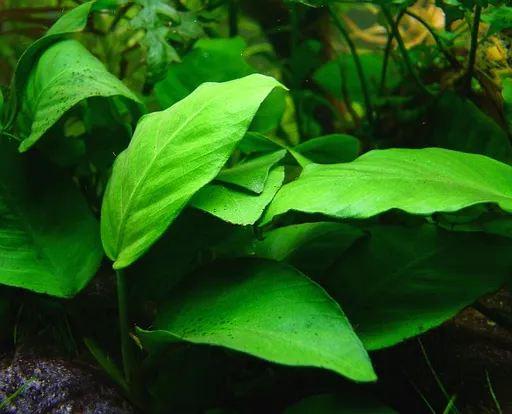 Low lightEpiphyte7.9 in (20 cm)
Anubias minima
Anubias barteri var. glabra
Low light · Epiphyte
- Low lightEpiphyte7.9 in (20 cm)
Anubias barteri Striped
Anubias barteri 'Striped'
Low light · Epiphyte