Form of Anubias barteri
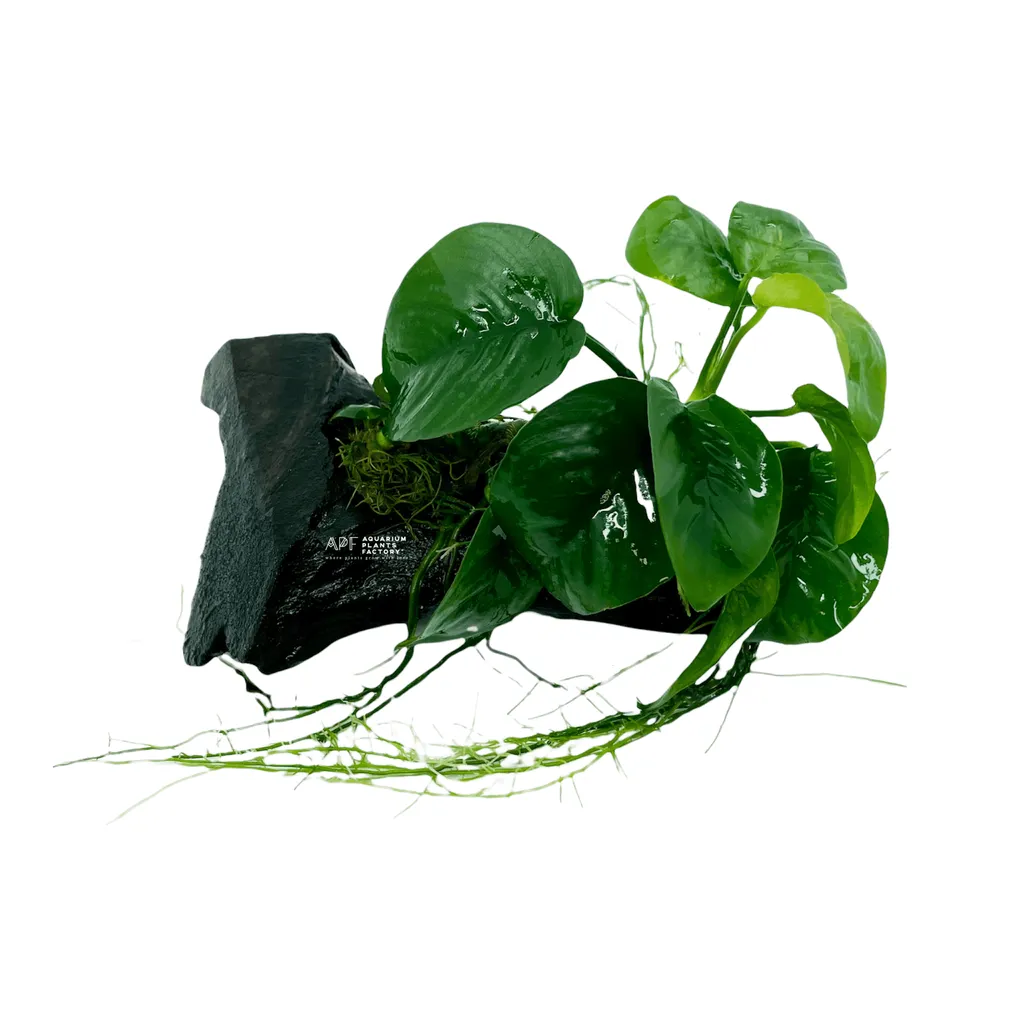
Anubias Broad Leaf
Anubias barteri var. barteri 'Broad Leaf'
One of 24 forms of Anubias barteri · See all forms →
Also known as Anubias barteri 'Broad Leaf', Broadleaf Anubias, Anubias Broadleaf
FreshwaterBrackishRhizomeRhizome division
Forms · Anubias barteri
See all 24 →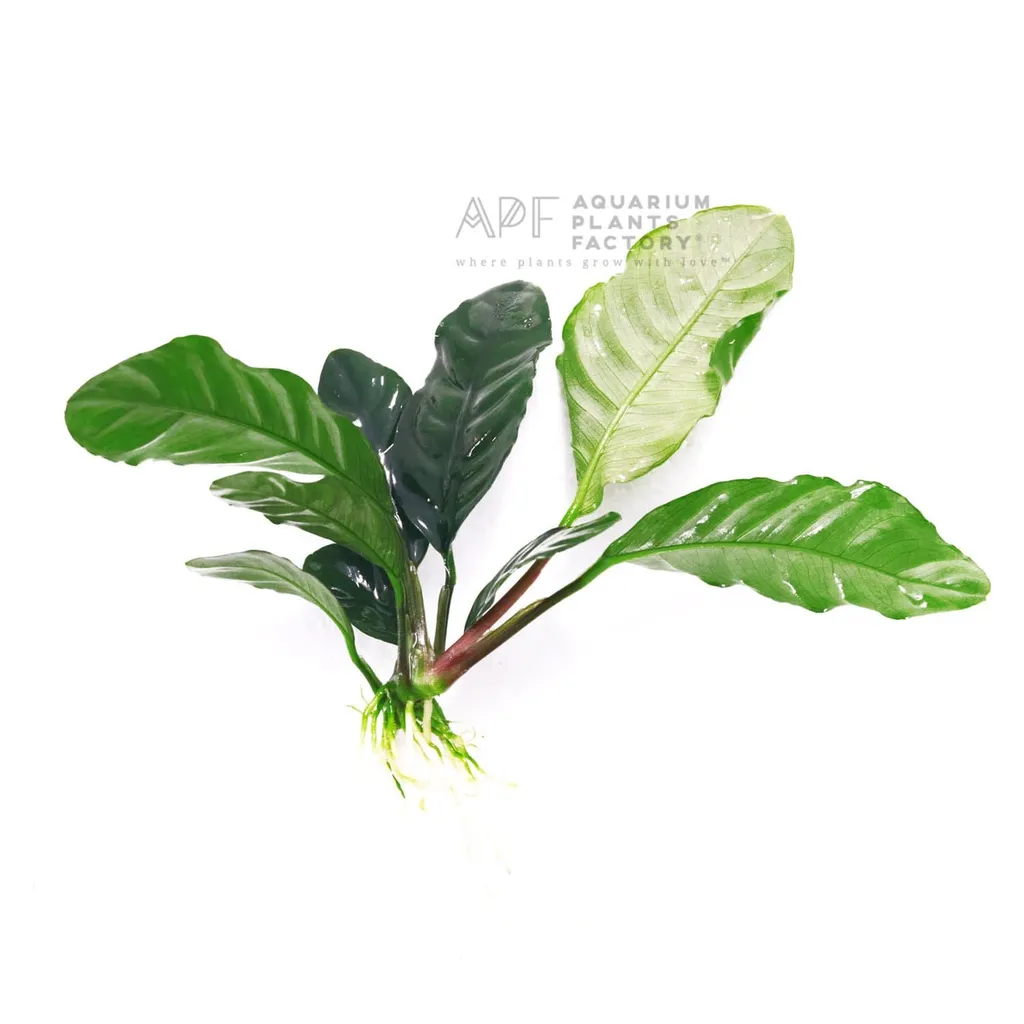
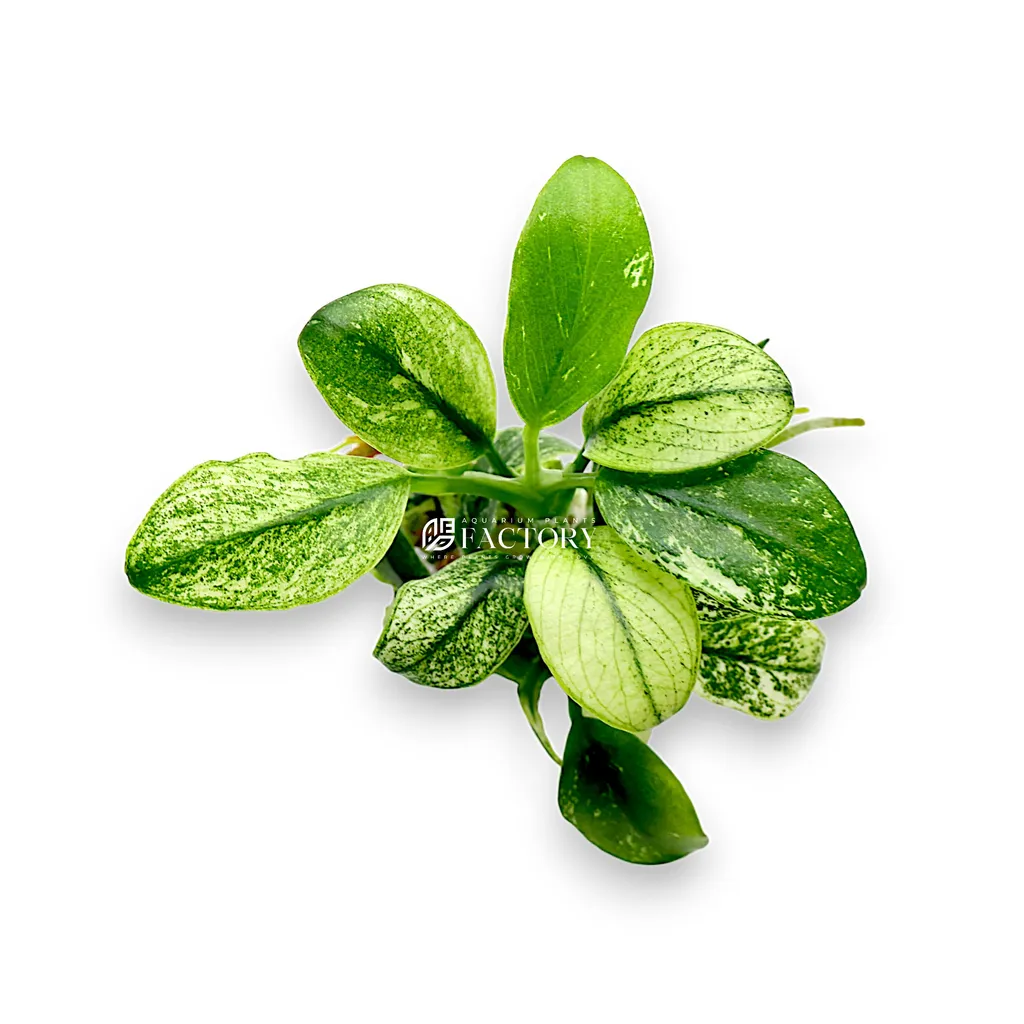
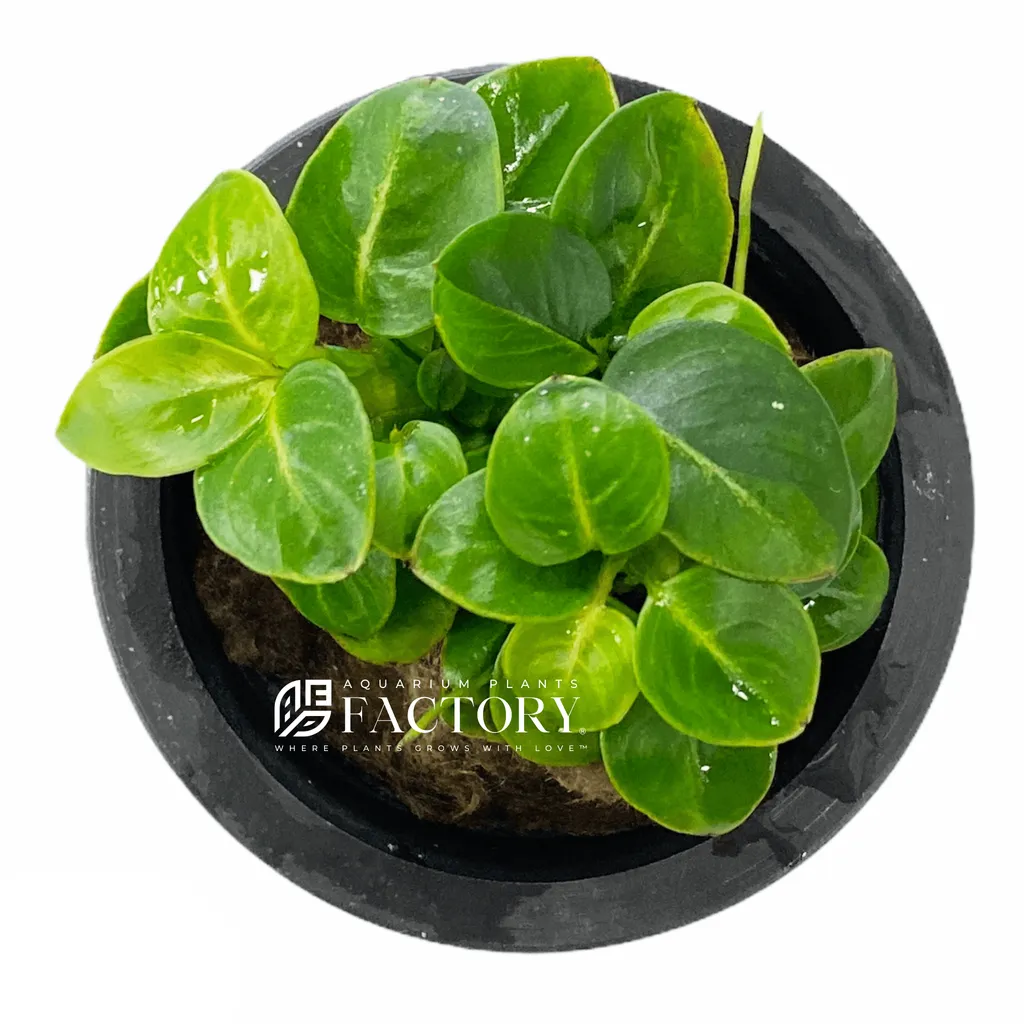
Care at a glance
- Light
- Low light
- CO2
- No CO₂ needed
- Temperature
- 68–82°F
- 20–28°C
- Max height
- 11.8 in
- 30 cm
- Growth rate
- Slow
- Placement
- Epiphyte
- Type
- Rhizome
- pH
- 6.0–7.5
- Hardness
- 2–18 dGH
- Spread
- 9.8 in (25 cm)
- Nutrient uptake
- Root + water column
- Growth region
- Submersed or emersed
- Difficulty
- Beginner
- Family
- Araceae
- Origin
- West Africa
Overview
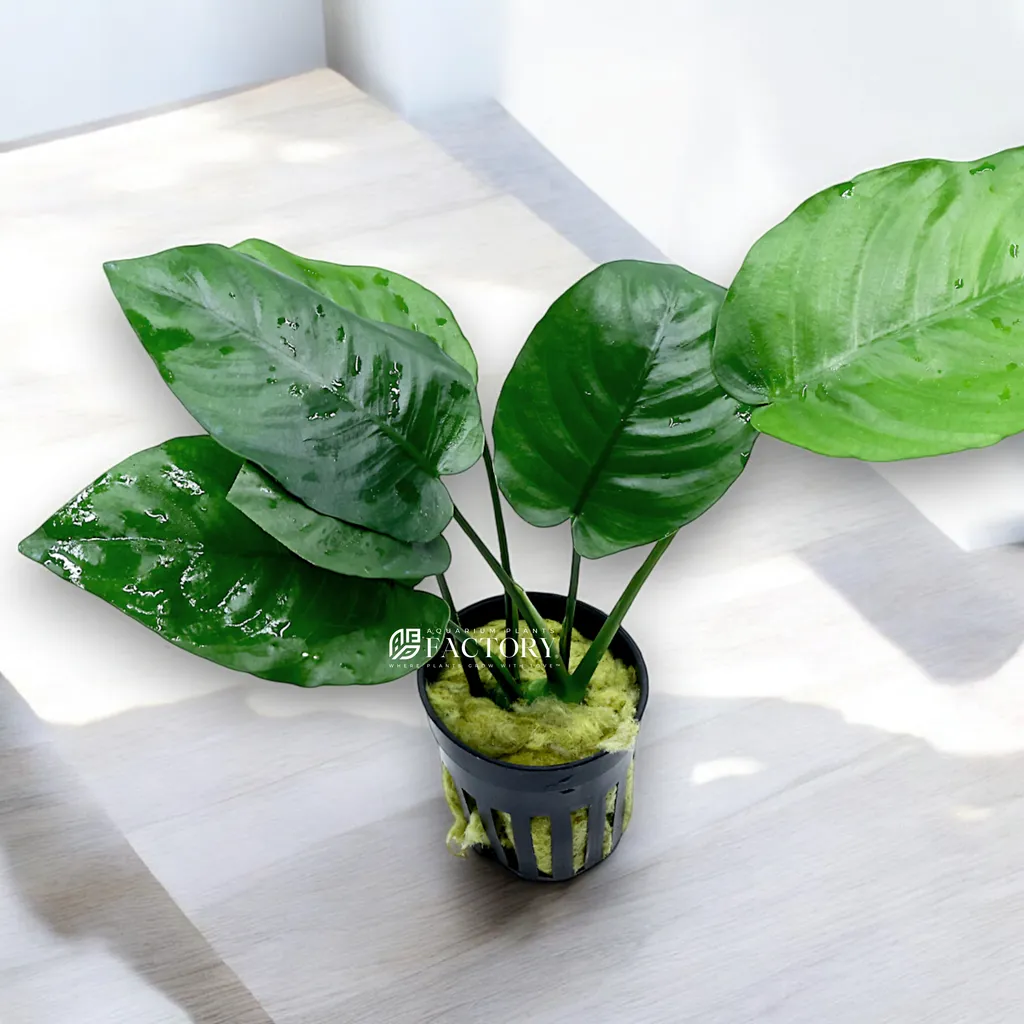
Attach the rhizome to wood or rock with thread or a dab of gel glue and never bury it, since a buried rhizome rots. It is one of the easiest aquarium plants going: low light, no CO2, and hard tap water are all fine. Growth is slow, so keep light modest to avoid algae building up on the tough leaves, and wipe or spot-treat any that appears. Divide the rhizome to make new plants.
In the wild
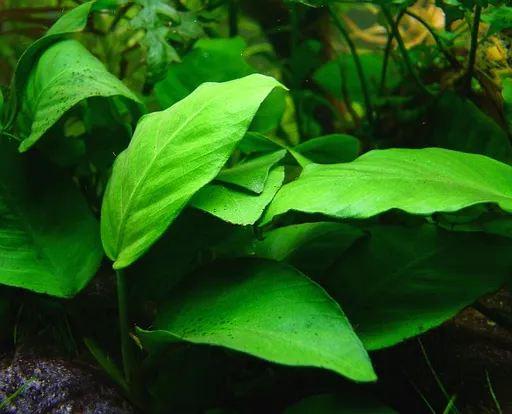
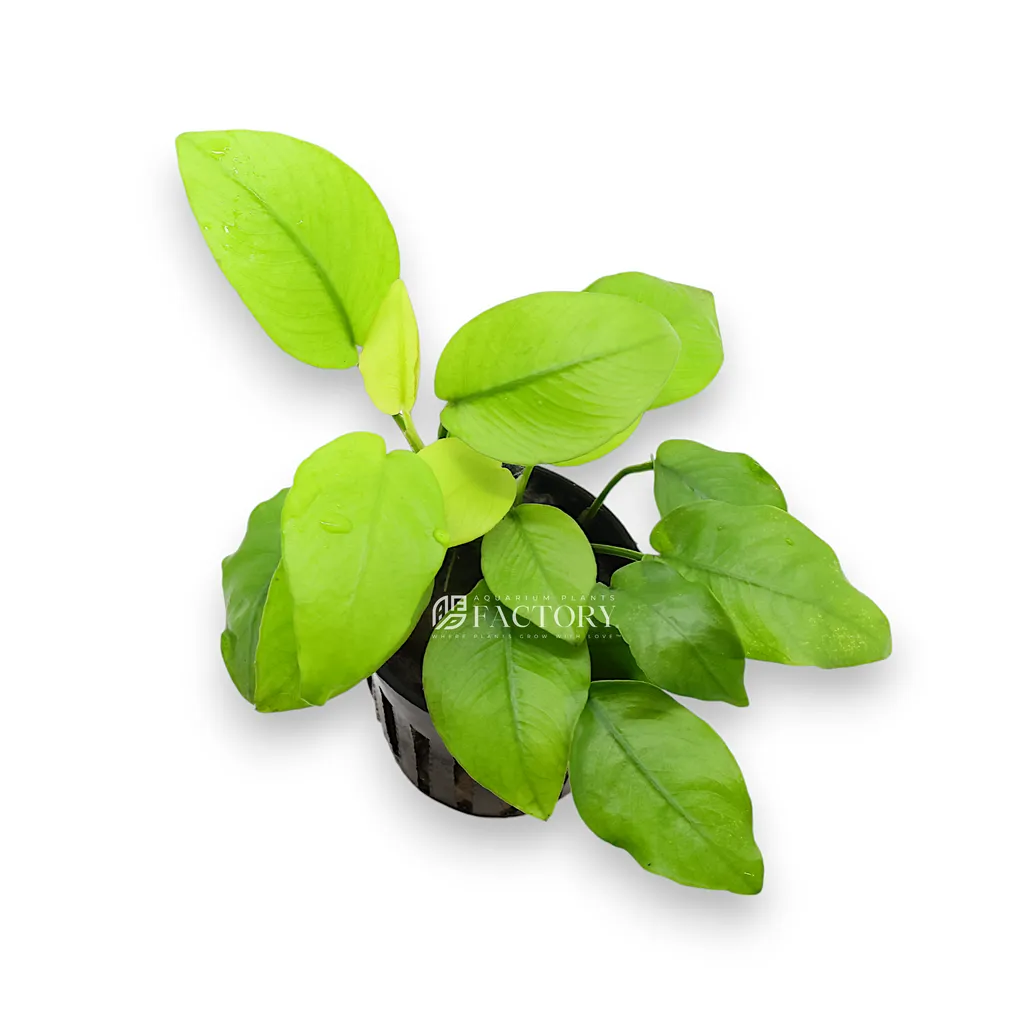
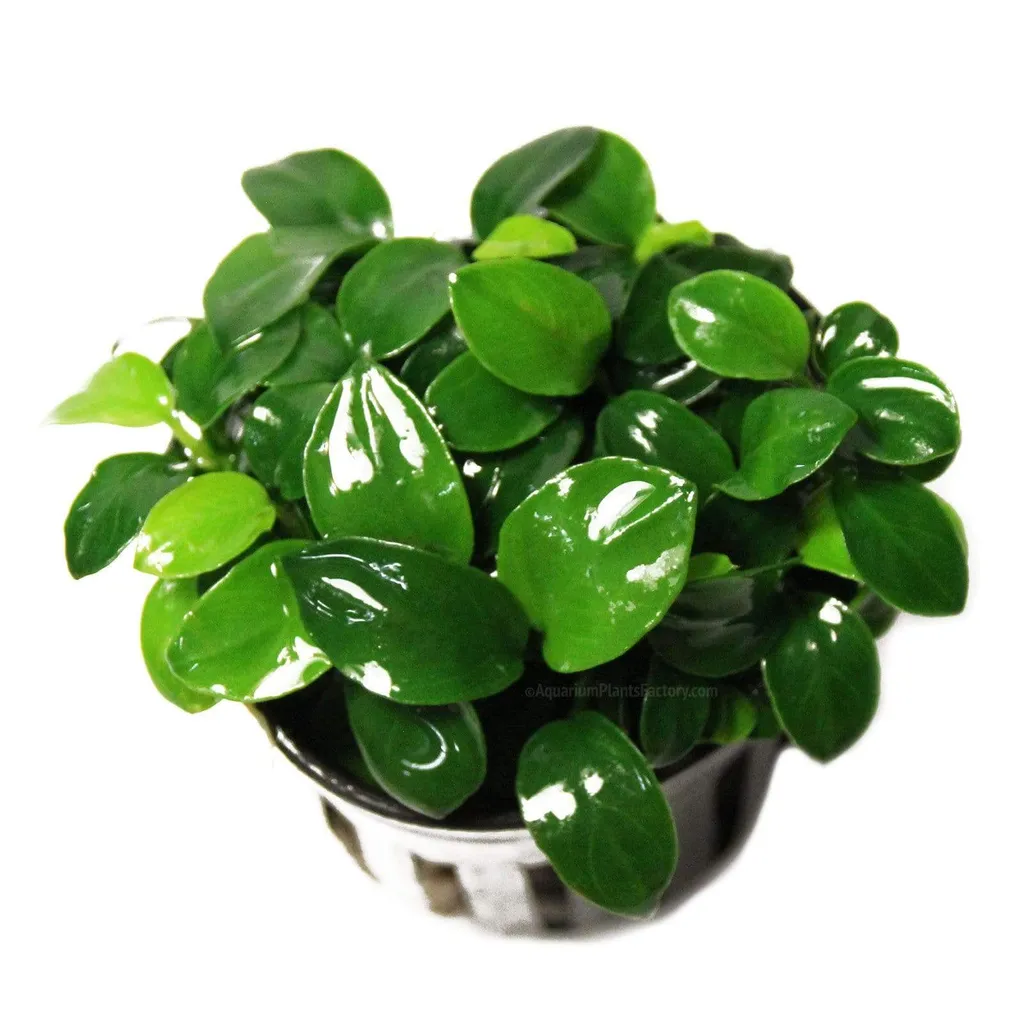
Anubias barteri comes from West and Central Africa, where it grows along shaded streams and rivers, often rooted at the water's edge or clinging to submerged rocks and roots. In the wild it lives as a marsh plant, sitting emersed with roots in water and much of the foliage above the surface. The Broad Leaf form is a selected cultivar of the wild species, chosen for its wide, rounded leaf blades.
Good to know
This is a cultivated selection of Anubias barteri var. barteri in the arum family (Araceae), the same family as philodendron and peace lily. Like all aroids it produces a spadix-and-spathe flower rather than a true blossom, and it will flower underwater without setting seed. The thick horizontal rhizome stores energy and is the point from which both leaves and roots emerge.
Did you know
Because Anubias leaves are so tough and slow to grow, a single leaf can persist for over a year, and hobbyists often see algae colonize a leaf before the plant grows a replacement.
Related plants
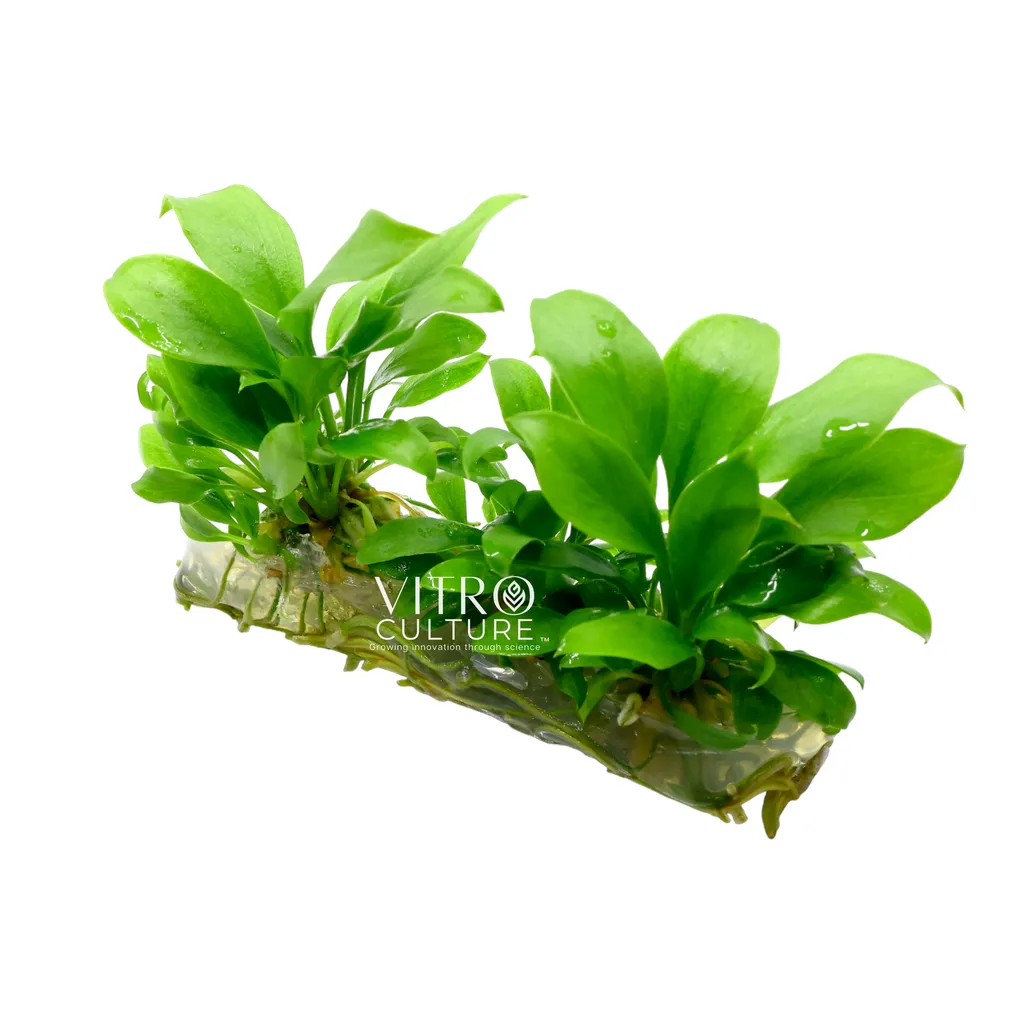 Low lightEpiphyte11.8 in (30 cm)
Anubias gilletii
Low light · Epiphyte
- Low lightEpiphyte9.8 in (25 cm)
Anubias Frazeri
Anubias 'Frazeri'
Low light · Epiphyte
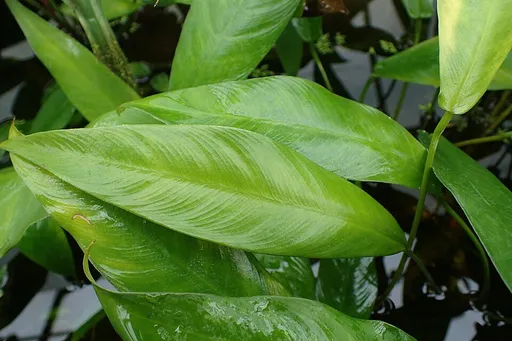 Low lightEpiphyte15.7 in (40 cm)
Anubias gracilis
Low light · Epiphyte
- Low lightEpiphyte7.9 in (20 cm)
Anubias Nangi
Anubias 'Nangi'
Low light · Epiphyte
 Low lightEpiphyte5.9 in (15 cm)
Anubias Butterfly
Anubias 'Butterfly'
Low light · Epiphyte
- Low lightEpiphyte3.9 in (10 cm)
Anubias Chili Jalapeno
Anubias 'Chili Jalapeno'
Low light · Epiphyte