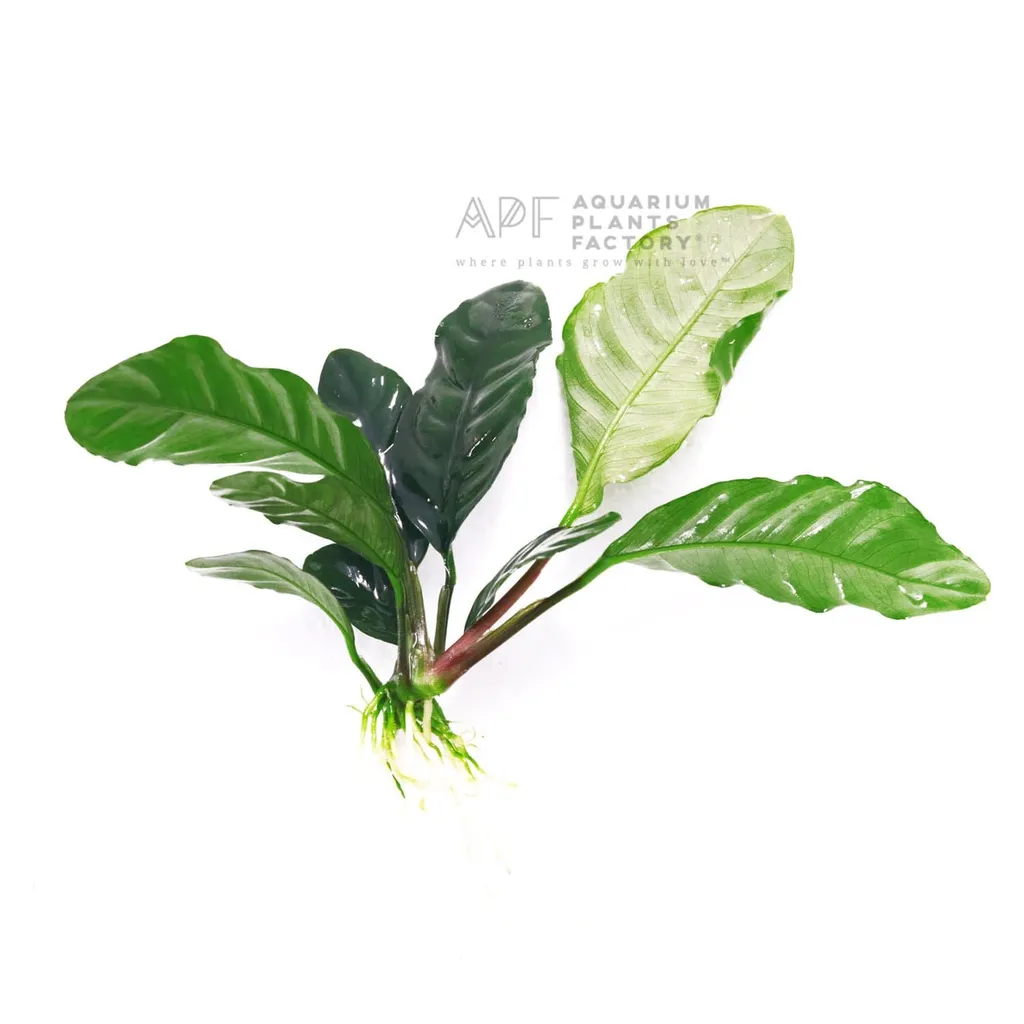
Anubias gracilis
Also known as Spade-Leaf Anubias, Triangle Anubias
FreshwaterRhizomeRhizome division
Care at a glance
- Light
- Low light
- CO2
- CO₂ beneficial
- Temperature
- 72–82°F
- 22–28°C
- Max height
- 15.7 in
- 40 cm
- Growth rate
- Slow
- Placement
- Epiphyte
- Type
- Rhizome
- pH
- 6.0–7.5
- Hardness
- 2–15 dGH
- Spread
- 7.9 in (20 cm)
- Nutrient uptake
- Root + water column
- Growth region
- Submersed or emersed
- Difficulty
- Easy
- Family
- Araceae
- Origin
- West Africa (Guinea, Sierra Leone, Liberia)
Overview
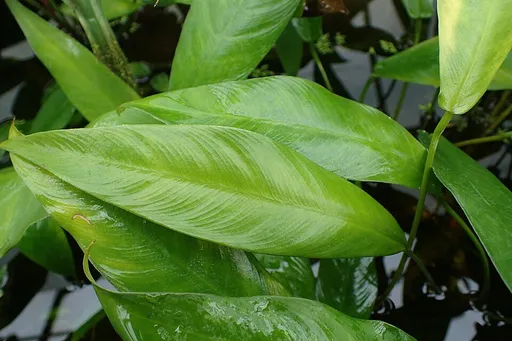
Attach the thick rhizome to hardscape or leave it sitting on the substrate, just do not bury it. Submersed it stays far smaller and slower than its emersed size, so give it time and keep the light low to moderate to avoid leaf algae. It is a sturdy, undemanding plant that suits beginner tanks and even holds up in African cichlid setups.
In the wild
Anubias gracilis grows in the wet forests of West Africa, along stream banks and in seasonally flooded ground in countries like Guinea, Sierra Leone and Liberia. It lives as a marsh plant, often emersed, with the rhizome anchored to soil, rock or wood and the leaves held up on long, slim stalks.
Good to know
This is an accepted Anubias species (not a barteri form, despite some shops labelling it Anubias barteri gracilis). It is easily told apart by its triangular to arrowhead-shaped leaf blades, roughly 7 to 12 cm long, carried on unusually long petioles that can stretch 30 to 60 cm when grown emersed.
Did you know
The spade-shaped leaves make gracilis one of the few Anubias with a genuinely distinctive silhouette, most others share the same rounded oval leaf, so it stands out on a driftwood scape.
Related plants
 Low lightEpiphyte13.8 in (35 cm)
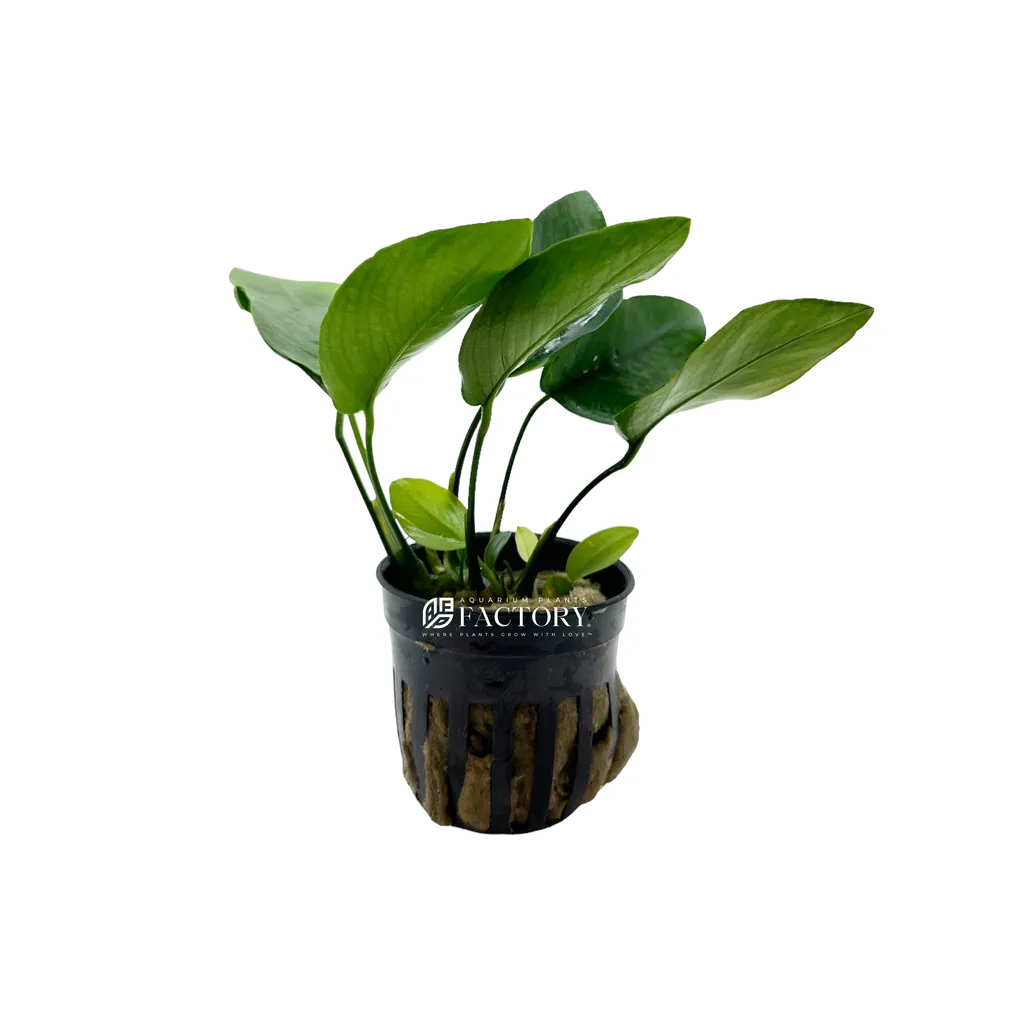
Anubias barteri
Low light · Epiphyte
 Low lightEpiphyte11.8 in (30 cm)
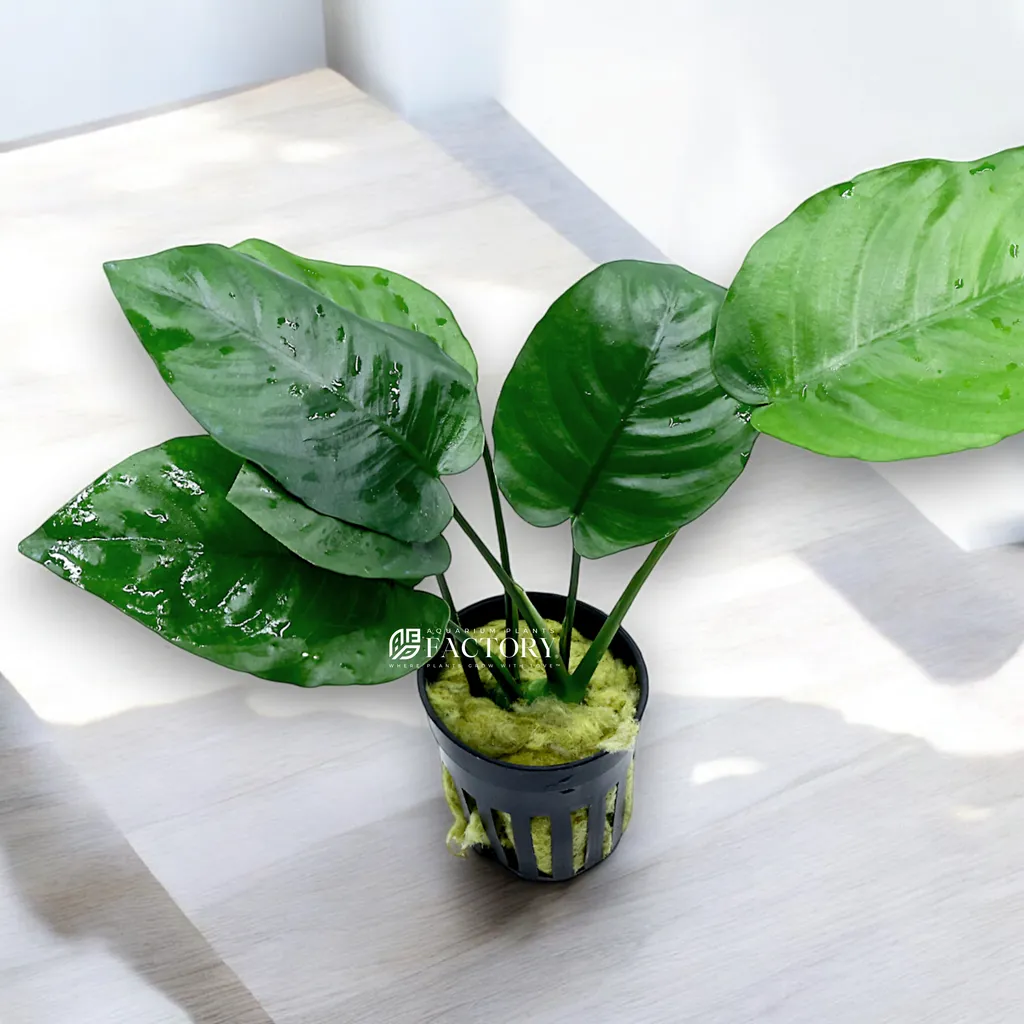
Anubias Broad Leaf
Anubias barteri var. barteri 'Broad Leaf'
Low light · Epiphyte
 Low lightEpiphyte11.8 in (30 cm)
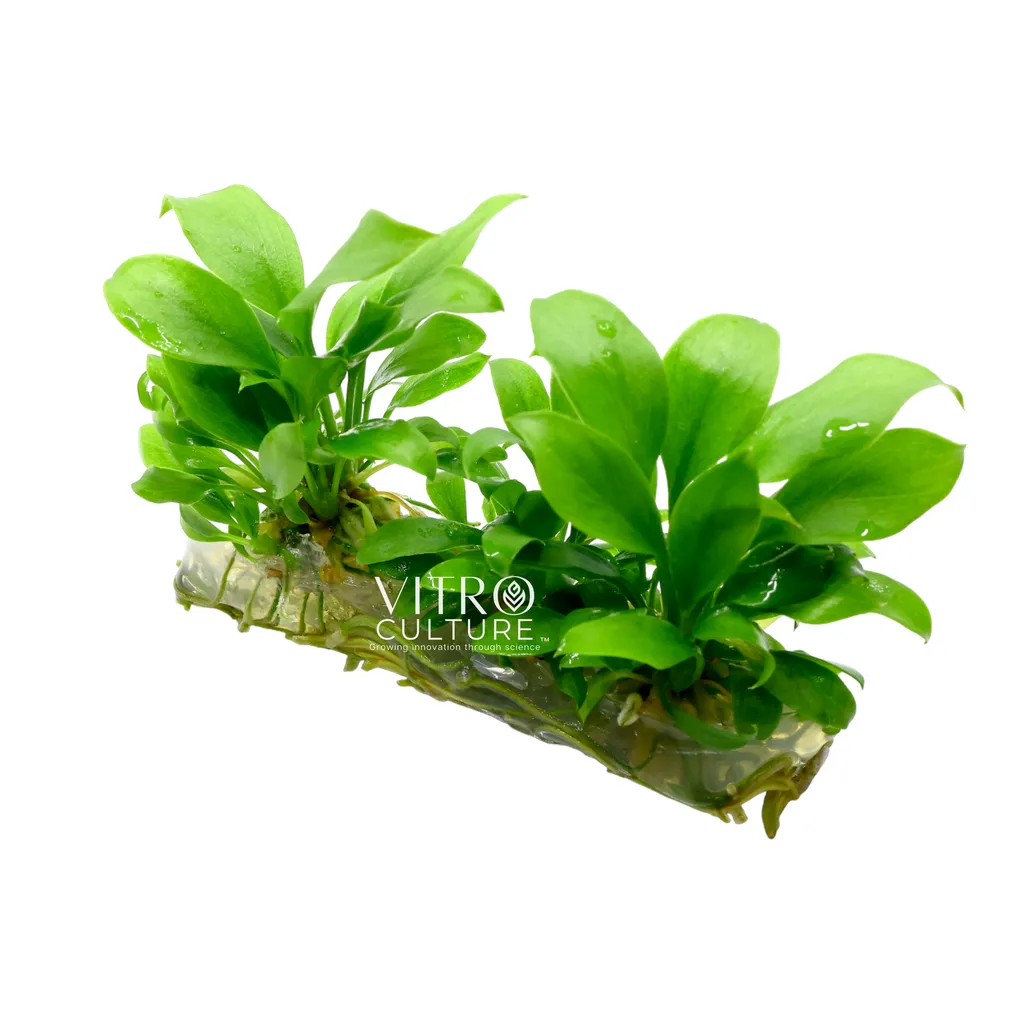
Anubias gilletii
Low light · Epiphyte
 Low lightEpiphyte9.8 in (25 cm)
Anubias coffeefolia
Anubias barteri var. coffeefolia
Low light · Epiphyte
- Medium lightEpiphyte9.8 in (25 cm)
Anubias Broad White
Anubias barteri 'Broad White'
Medium light · Epiphyte
- Low lightEpiphyte9.8 in (25 cm)
Anubias Frazeri
Anubias 'Frazeri'
Low light · Epiphyte