Form of Anubias barteri
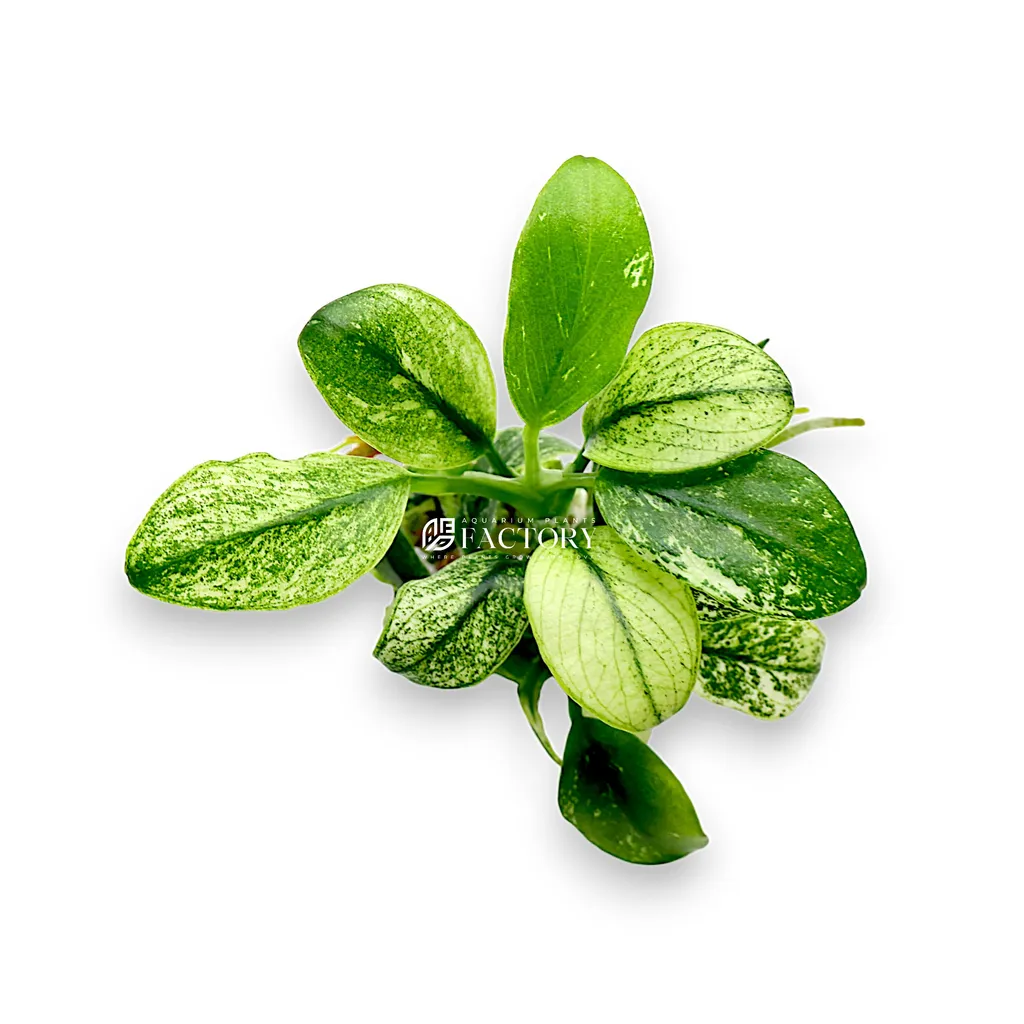
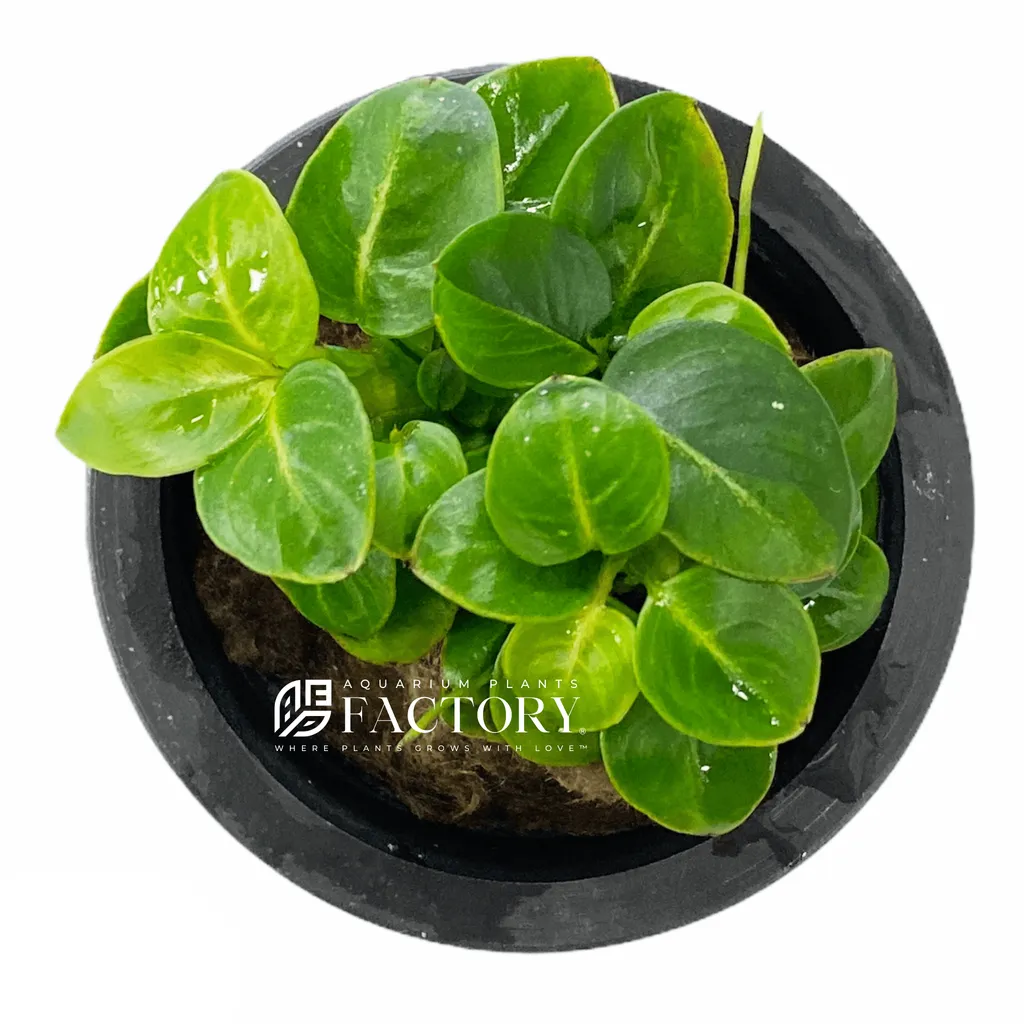
Anubias Pangolino
Anubias barteri var. nana 'Pangolino'
One of 24 forms of Anubias barteri · See all forms →
Also known as Anubias sp. 'Pangolino', Pangolino Anubias
FreshwaterBrackishRhizomeRhizome division
Forms · Anubias barteri
See all 24 →
Care at a glance
- Light
- Low light
- CO2
- No CO₂ needed
- Temperature
- 72–82°F
- 22–28°C
- Max height
- 0.8 in
- 2 cm
- Growth rate
- Slow
- Placement
- Epiphyte
- Type
- Rhizome
- pH
- 6.0–8.0
- Hardness
- 2–18 dGH
- Spread
- 1.6 in (4 cm)
- Nutrient uptake
- Water column
- Growth region
- Submersed or emersed
- Difficulty
- Easy
- Family
- Araceae
- Origin
- A cultivated dwarf form bred in Germany from Anubias nana, whose wild parent species grow along streams and rivers in West and Central Africa.
Overview
Attach the rhizome to a small rock or piece of wood and never bury it, as the base rots easily. Keep light low to moderate because the leaves grow so slowly that algae will settle on them under bright light, and CO2 is optional. Growth is very slow, so buy the size you want and expect only a few new leaves each month.
In the wild
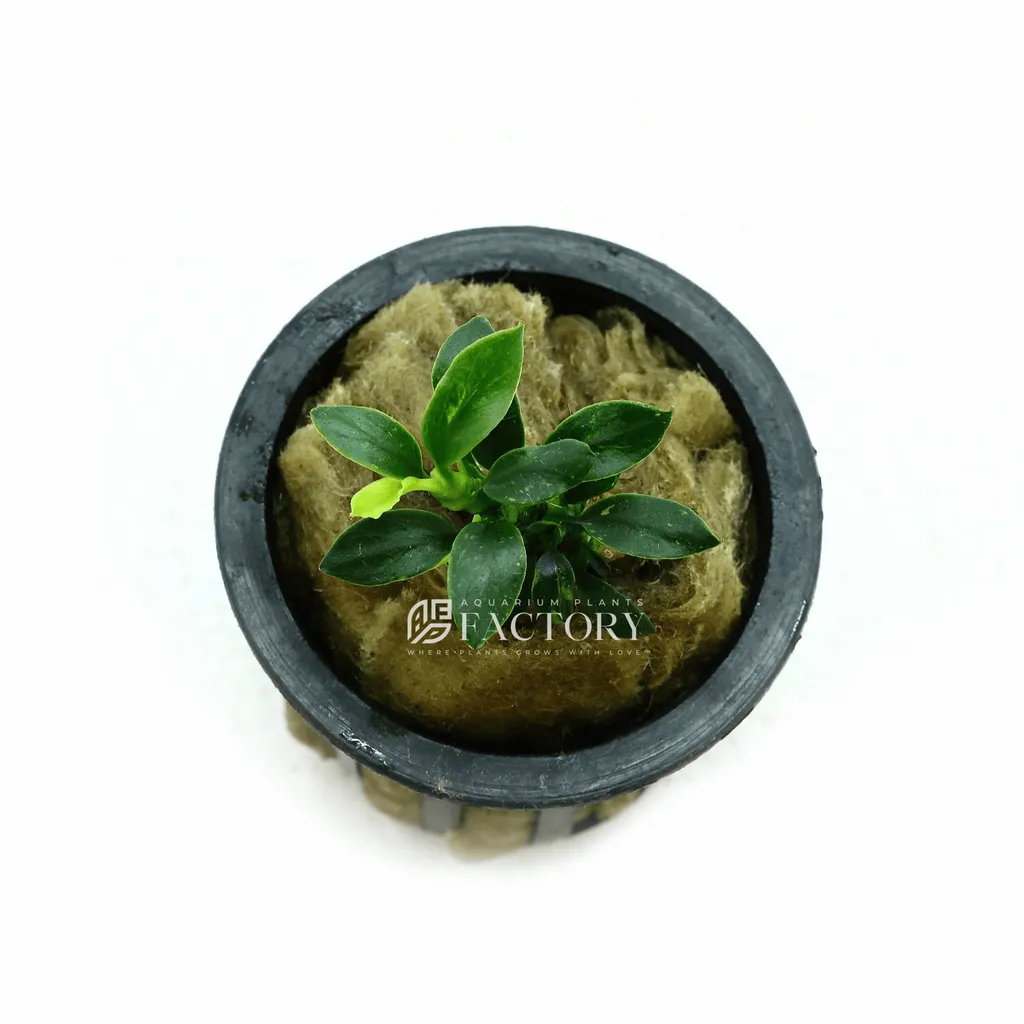
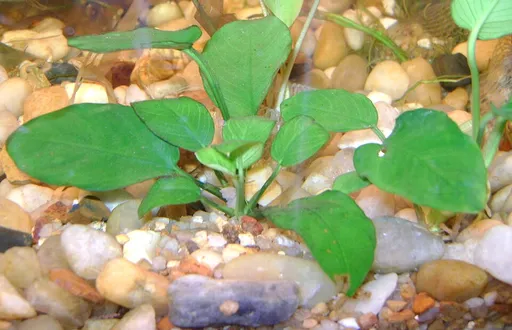
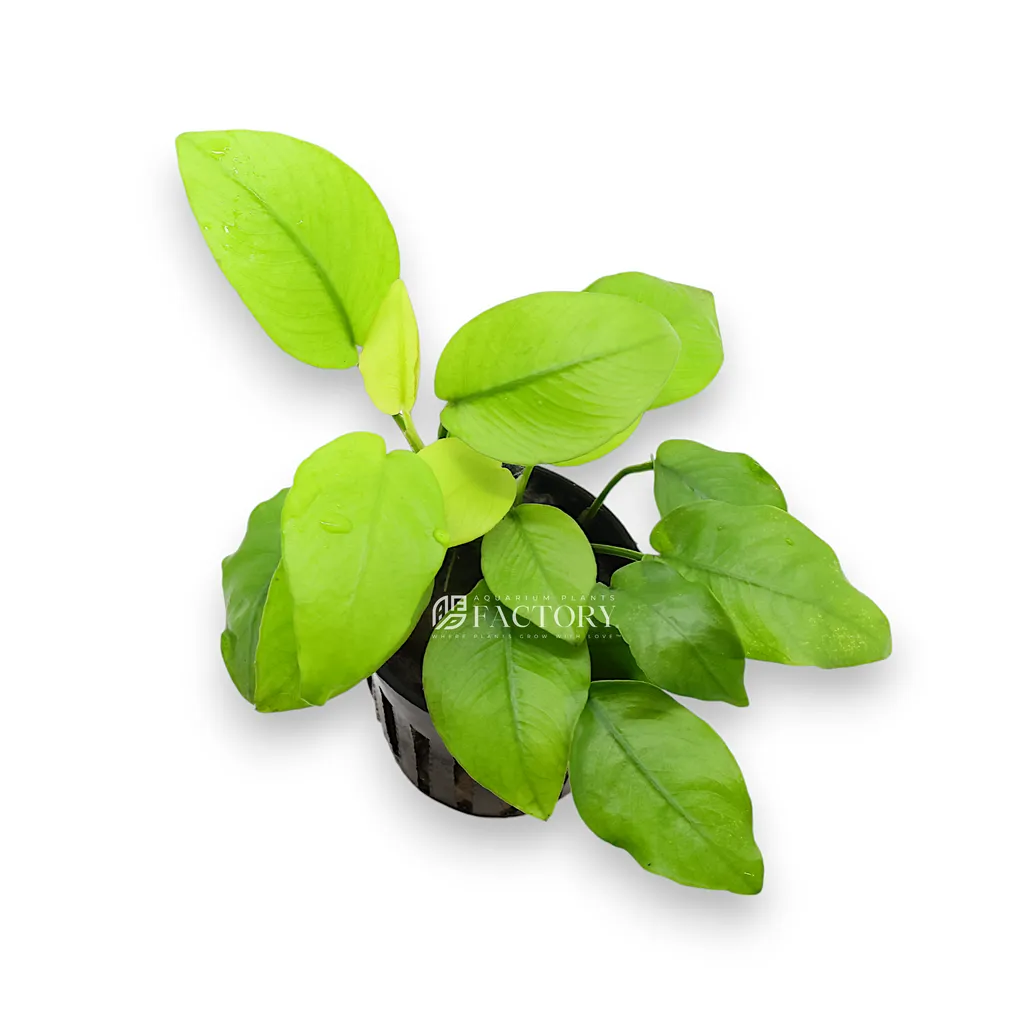
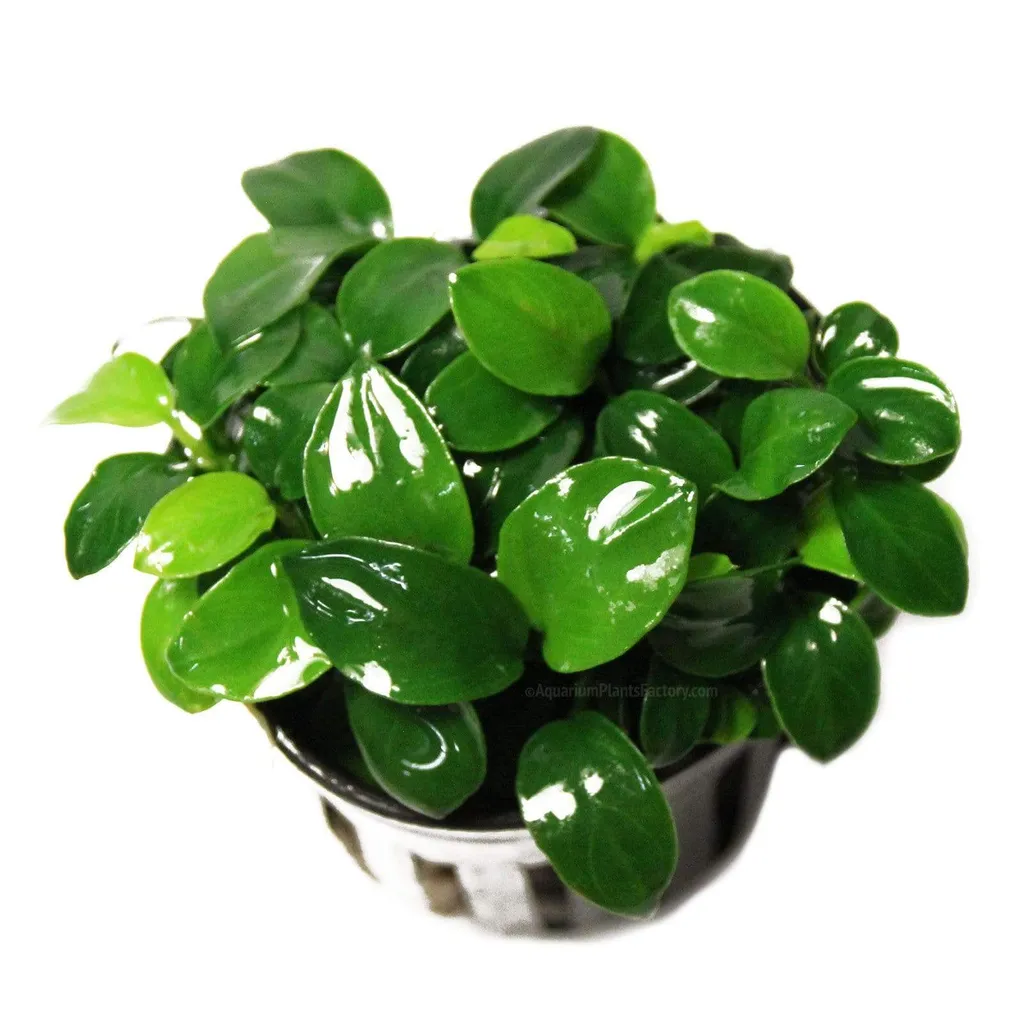
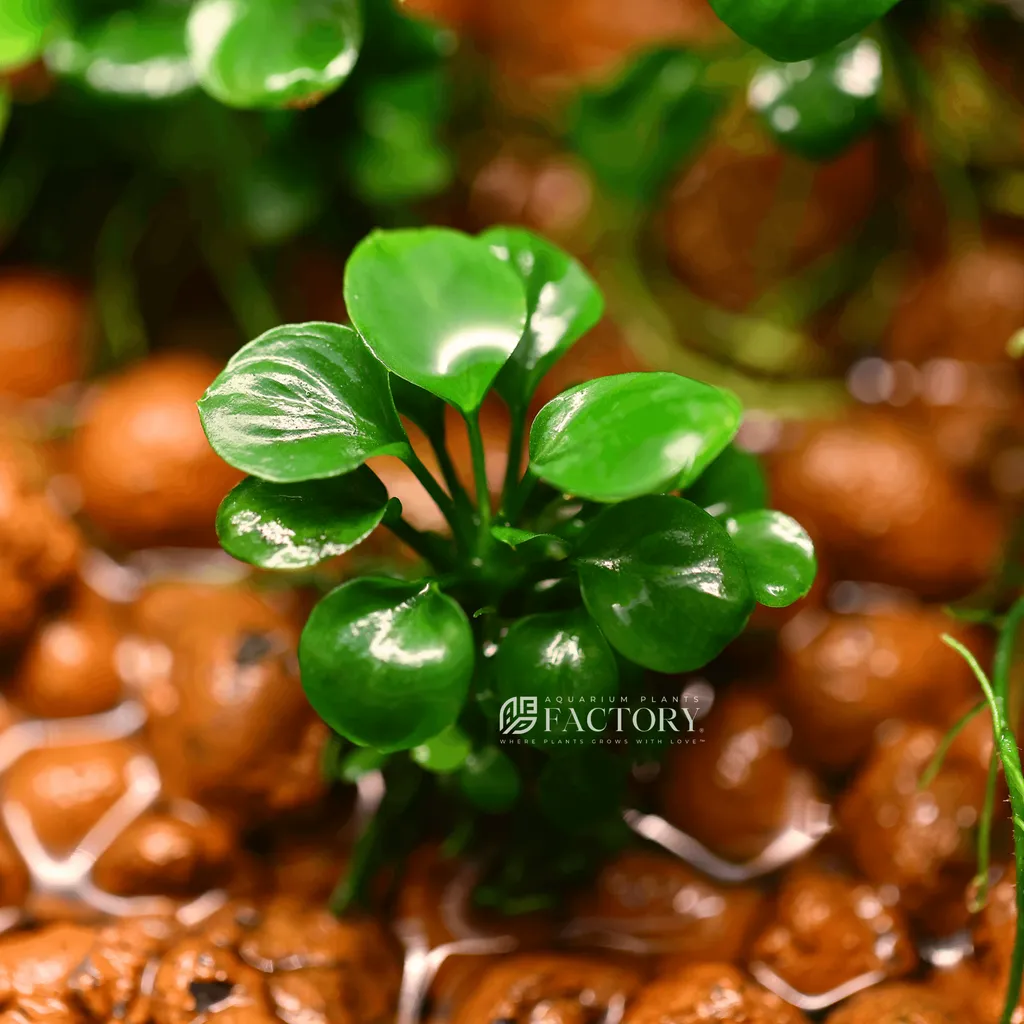
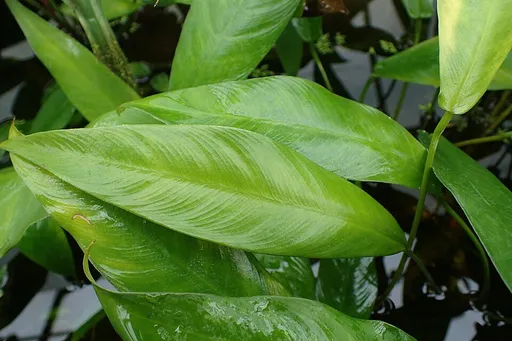
Anubias 'Pangolino' is widely regarded as the smallest anubias in the hobby, with narrow leaves barely a centimeter long on a fine creeping rhizome. It arose in tissue culture from an already tiny nana form and keeps that miniature habit underwater. Its size makes it a jewel for nano tanks and detailed foreground work on small stones.
Good to know
Anubias flower and fruit both underwater and above it, which is unusual among aquarium aroids, and the genus grows from a slow creeping rhizome. Pangolino appeared as a dwarf mutation during meristem culture of a small Anubias nana selection.
Did you know
The name Pangolino comes from the pangolin, since the tiny overlapping leaves were thought to resemble the scaly animal's body.
Related plants
- Low lightEpiphyte3.9 in (10 cm)
Anubias Chili Jalapeno
Anubias 'Chili Jalapeno'
Low light · Epiphyte
 Low lightEpiphyte5.9 in (15 cm)
Anubias Butterfly
Anubias 'Butterfly'
Low light · Epiphyte
- Low lightEpiphyte7.9 in (20 cm)
Anubias Nangi
Anubias 'Nangi'
Low light · Epiphyte
- Low lightEpiphyte9.8 in (25 cm)
Anubias Frazeri
Anubias 'Frazeri'
Low light · Epiphyte
 Low lightEpiphyte11.8 in (30 cm)
Anubias gilletii
Low light · Epiphyte
 Low lightEpiphyte15.7 in (40 cm)
Anubias gracilis
Low light · Epiphyte