Form of Anubias barteri
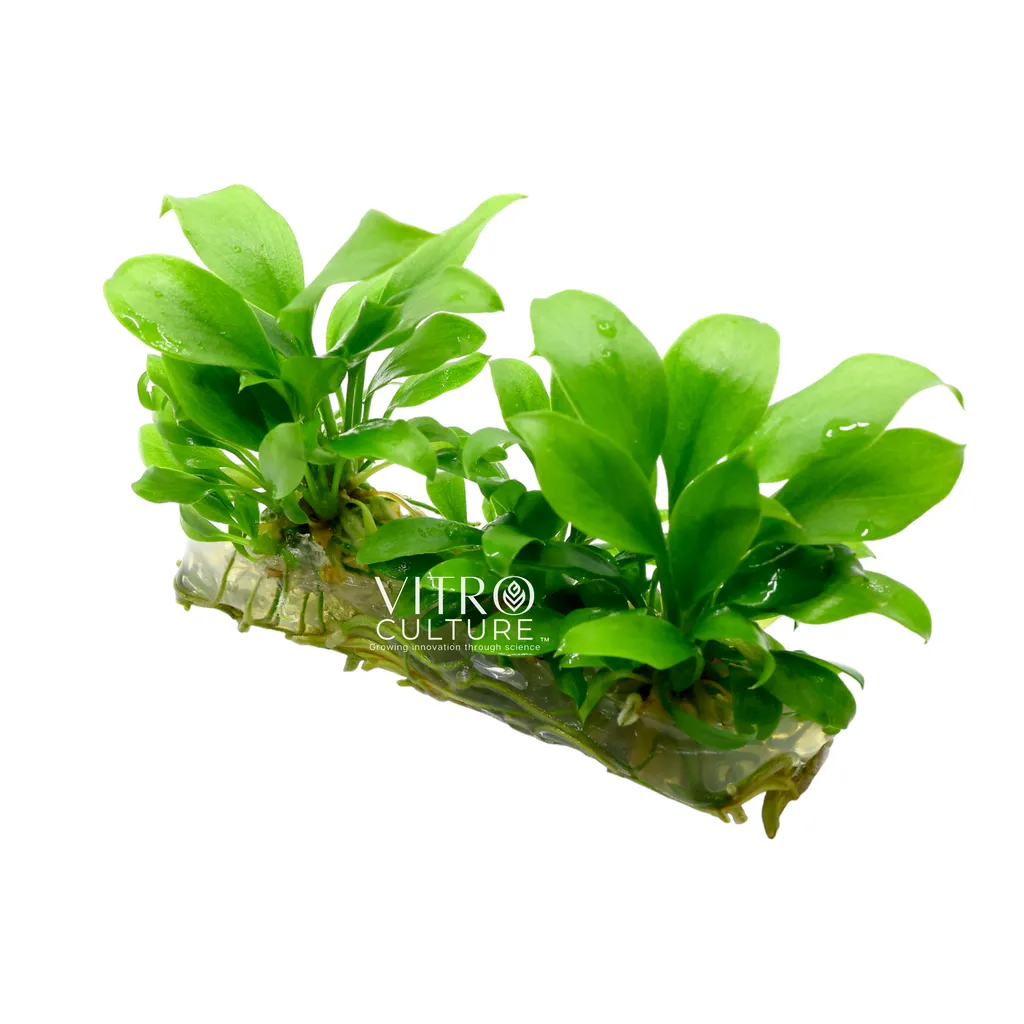
Anubias Peacock
Anubias barteri var. nana 'Peacock'
One of 29 forms of Anubias barteri · See all forms →
Also known as Anubias Nana Peacock, Anubias barteri nana 'Peacock'
FreshwaterBrackishRhizomeRhizome division
Forms · Anubias barteri
See all 29 →
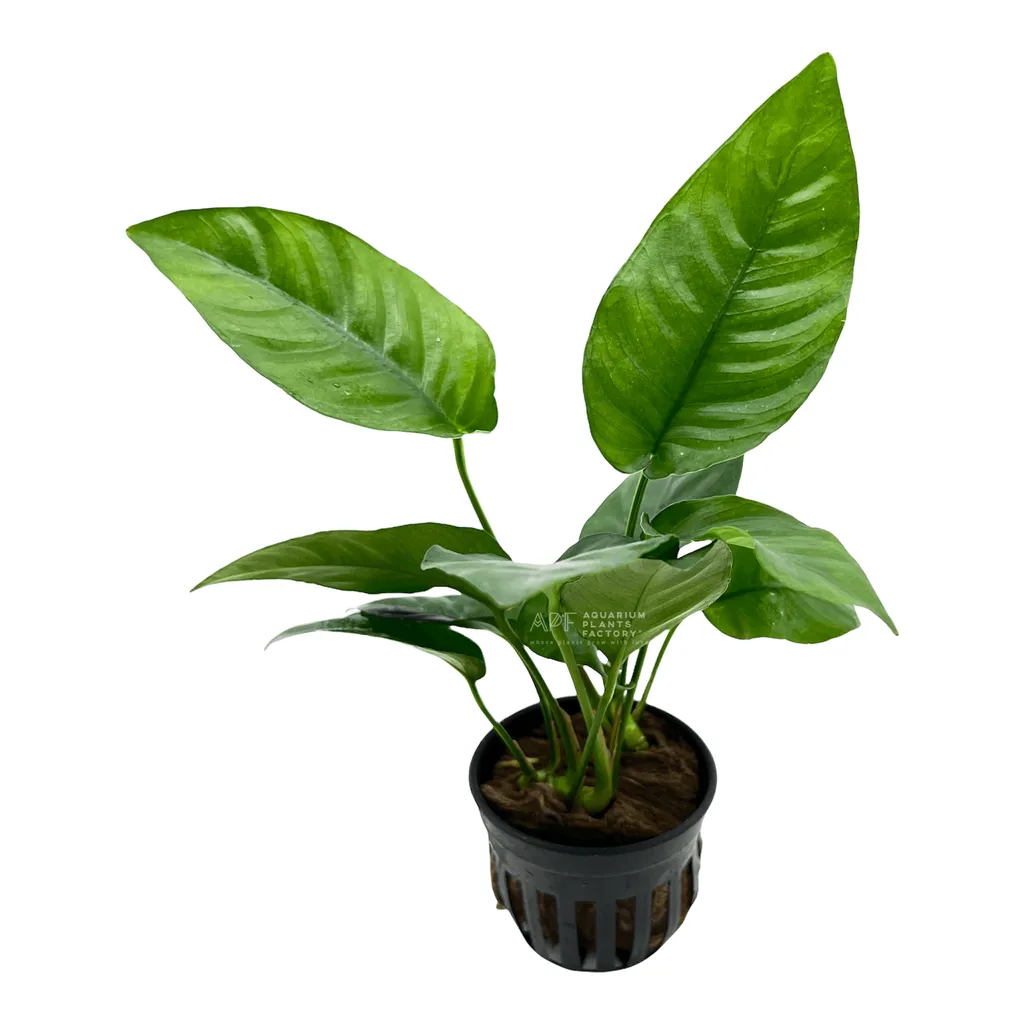
Care at a glance
- Light
- Low light
- CO2
- No CO₂ needed
- Temperature
- 68–82°F
- 20–28°C
- Max height
- 4.7 in
- 12 cm
- Growth rate
- Slow
- Placement
- Epiphyte
- Type
- Rhizome
- pH
- 6.0–7.5
- Hardness
- 2–18 dGH
- Spread
- 4.7 in (12 cm)
- Nutrient uptake
- Root + water column
- Growth region
- Submersed or emersed
- Difficulty
- Easy
- Family
- Araceae
- Origin
- Cultivar (parent variety native to Cameroon, West Africa)
Overview
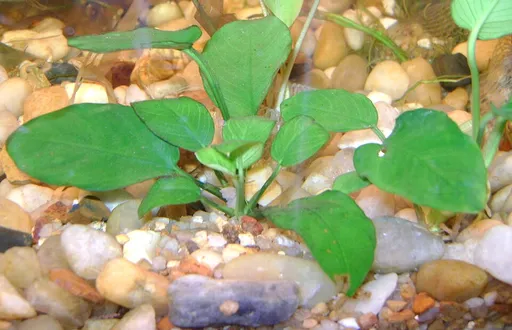
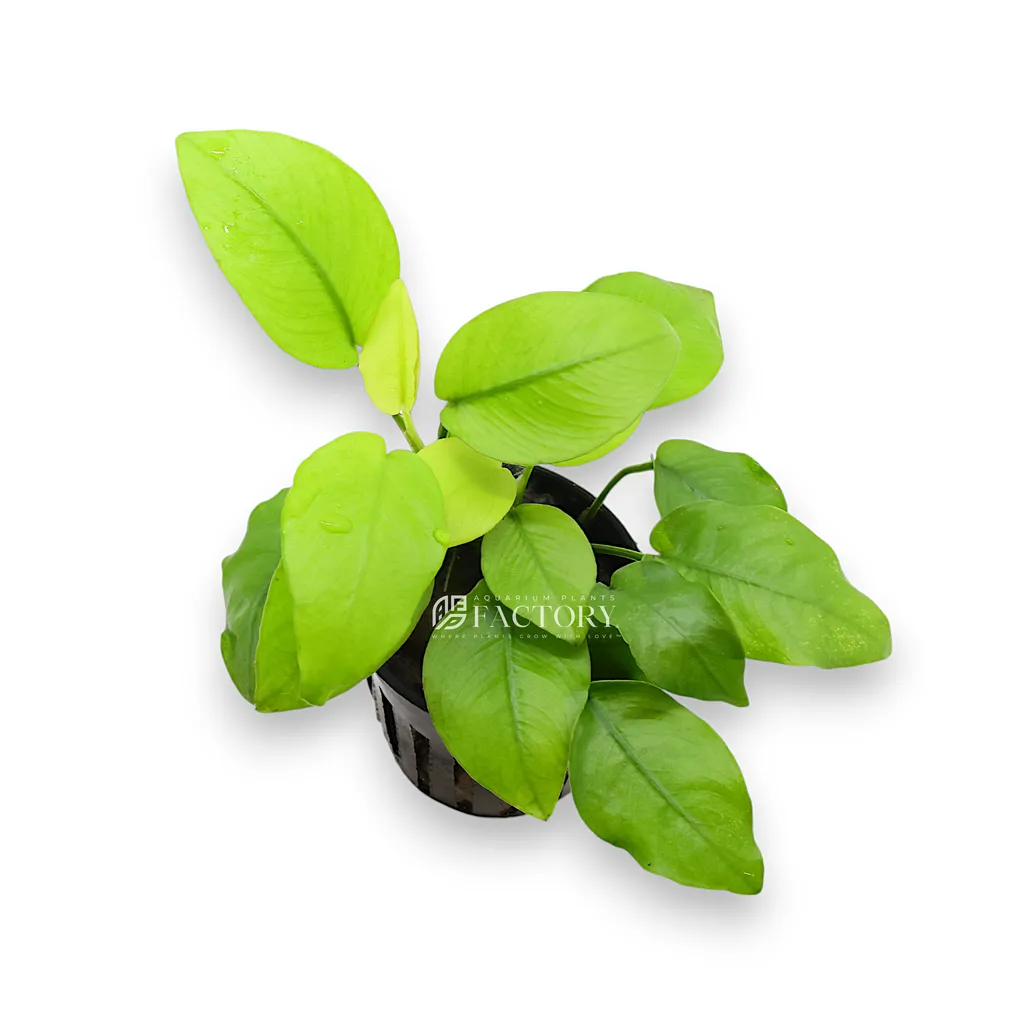
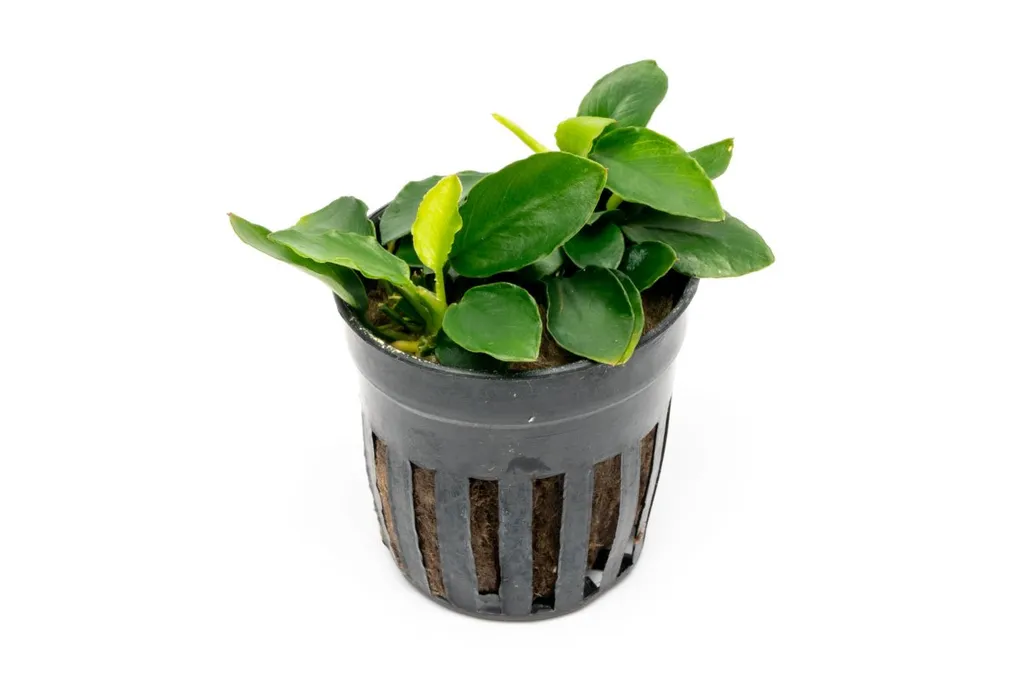
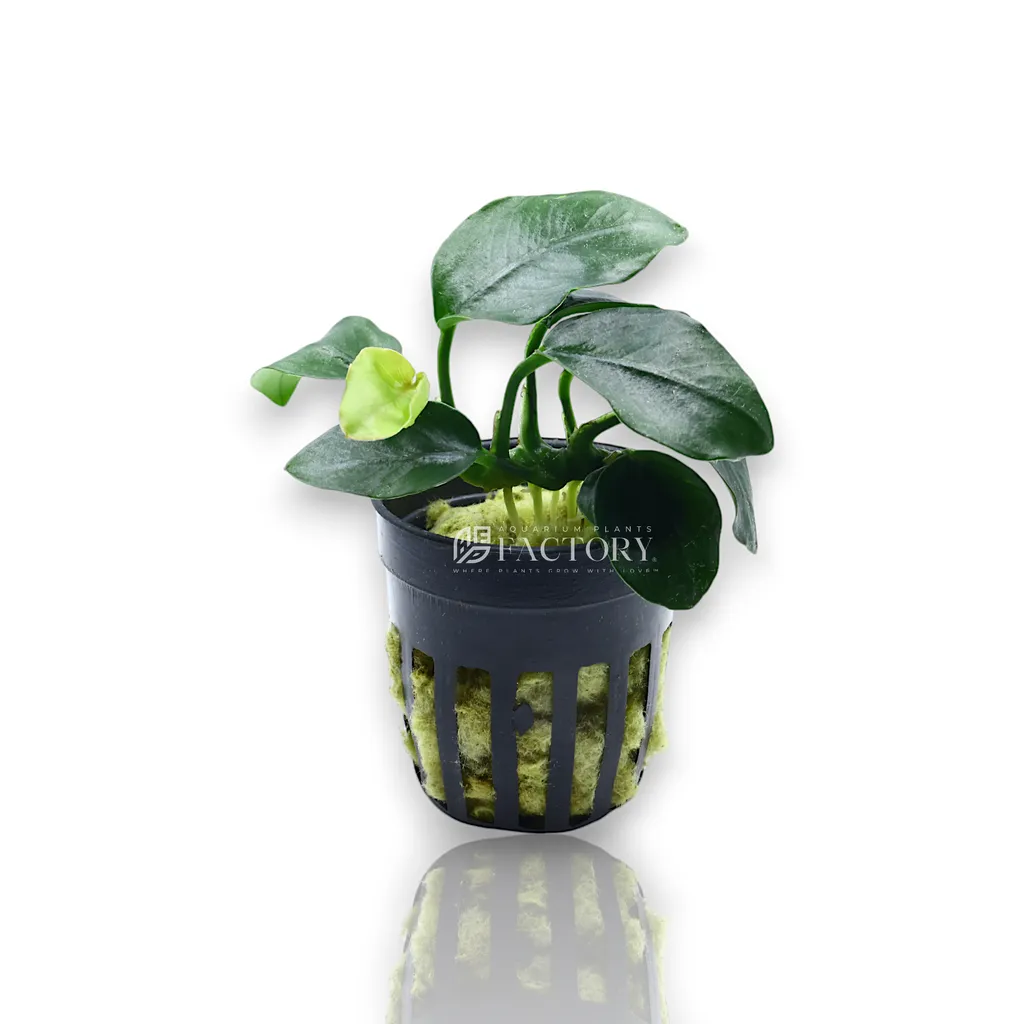
Anubias Peacock is an easy dwarf anubias for the foreground, or for tucking into midground crevices. It takes the same care as plain Anubias nana.
Did you know
Nobody outside the farms seems to know exactly what Anubias Peacock is. Vendors disagree on whether it is a pure nana selection or a cross with another barteri form. Its parentage was never recorded, which is common for anubias cultivars that surface first in Southeast Asian nurseries.
Caring for Anubias Peacock
Attach the rhizome to driftwood or rock, and never bury it. Decent flow across the leaves helps, and the tough leaves hold up in tanks with grazers.
Anubias Peacock needs no added CO2 and grows in low light. Too much light just grows algae on the old leaves. It feeds through its roots and from the water, so a liquid fertilizer covers it. It takes 68 to 82°F (20 to 28°C).
Growth is slow, about a new leaf every few weeks. Propagate by rhizome division, keeping roots and at least one leaf on each cut piece.
Good to know
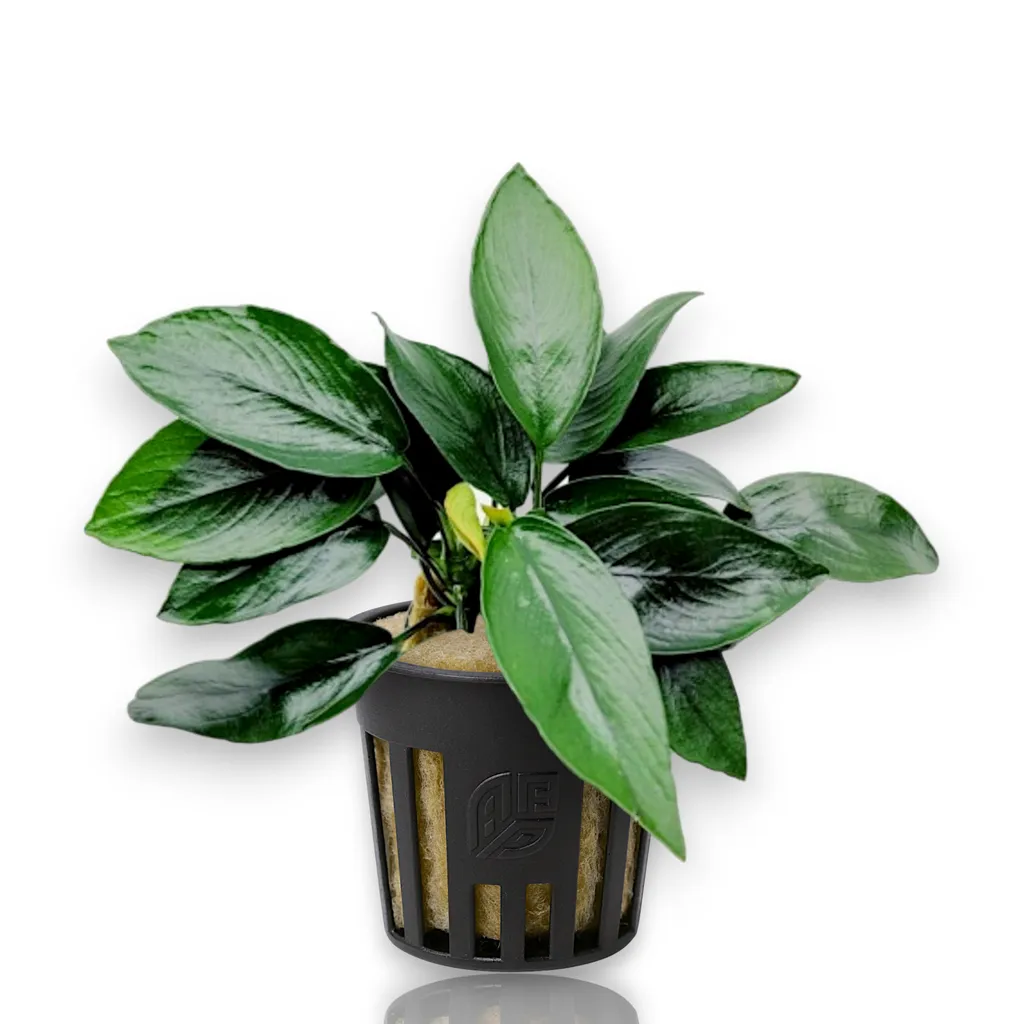
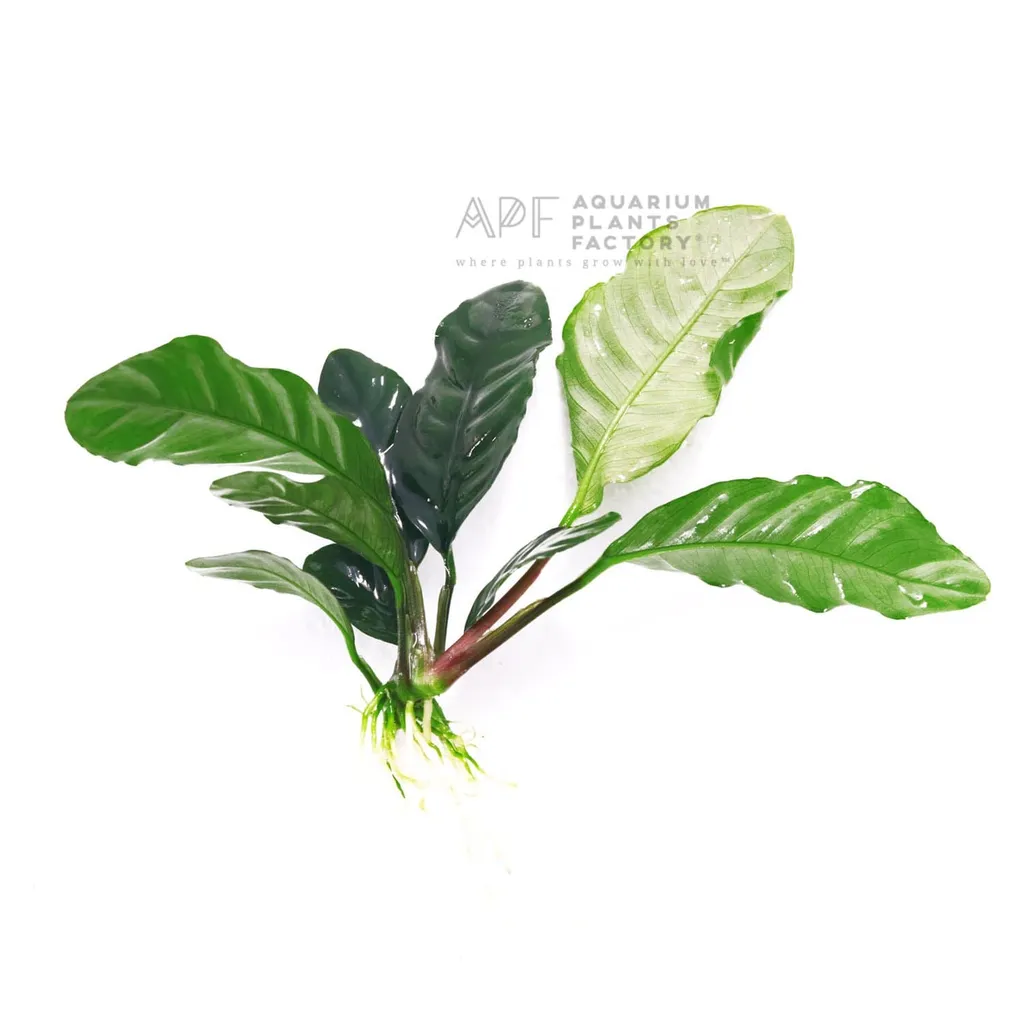
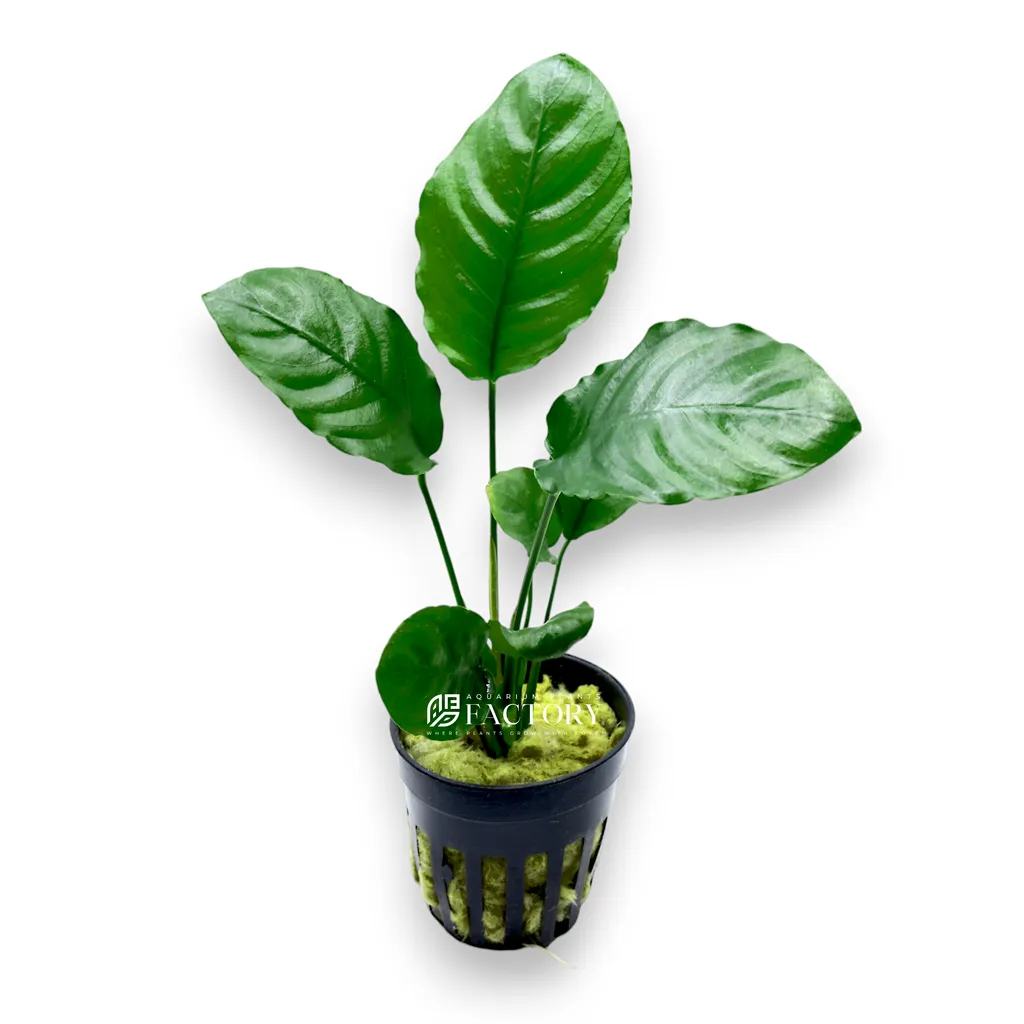
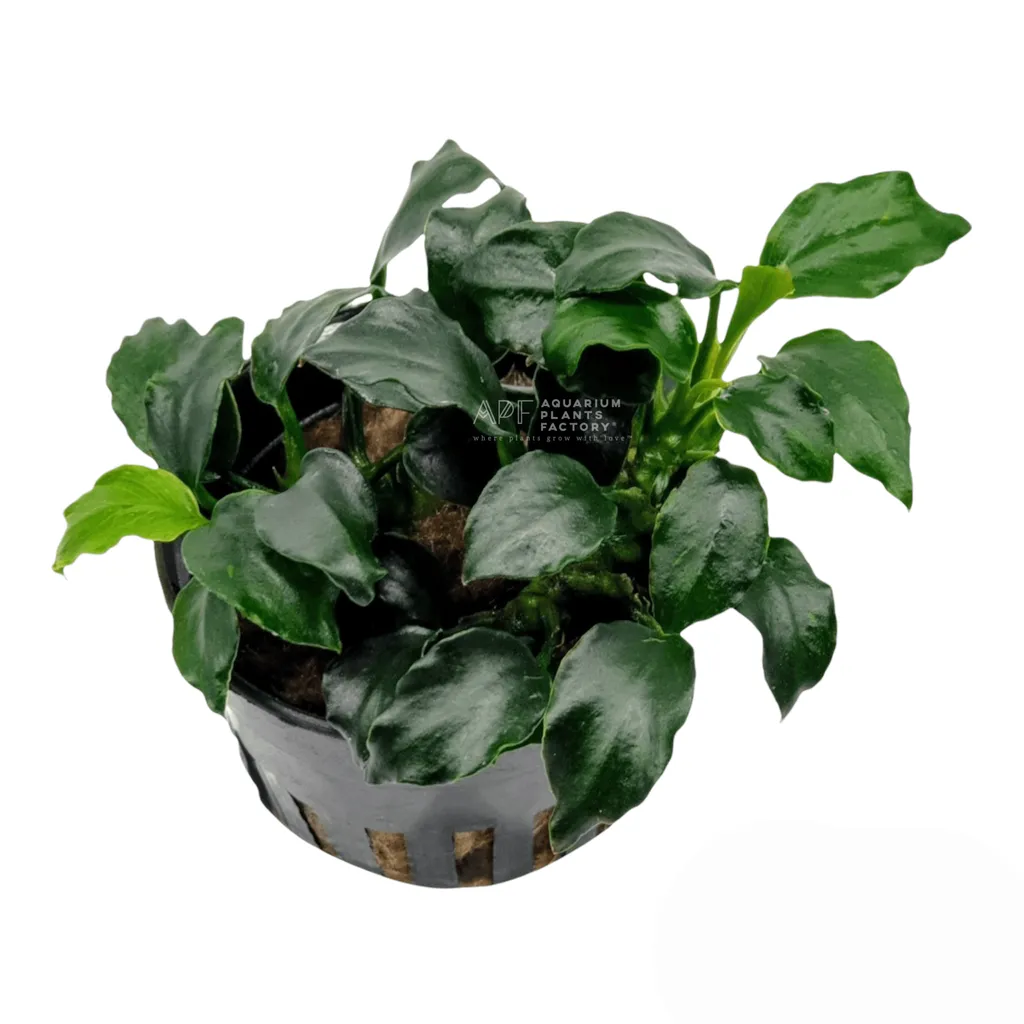
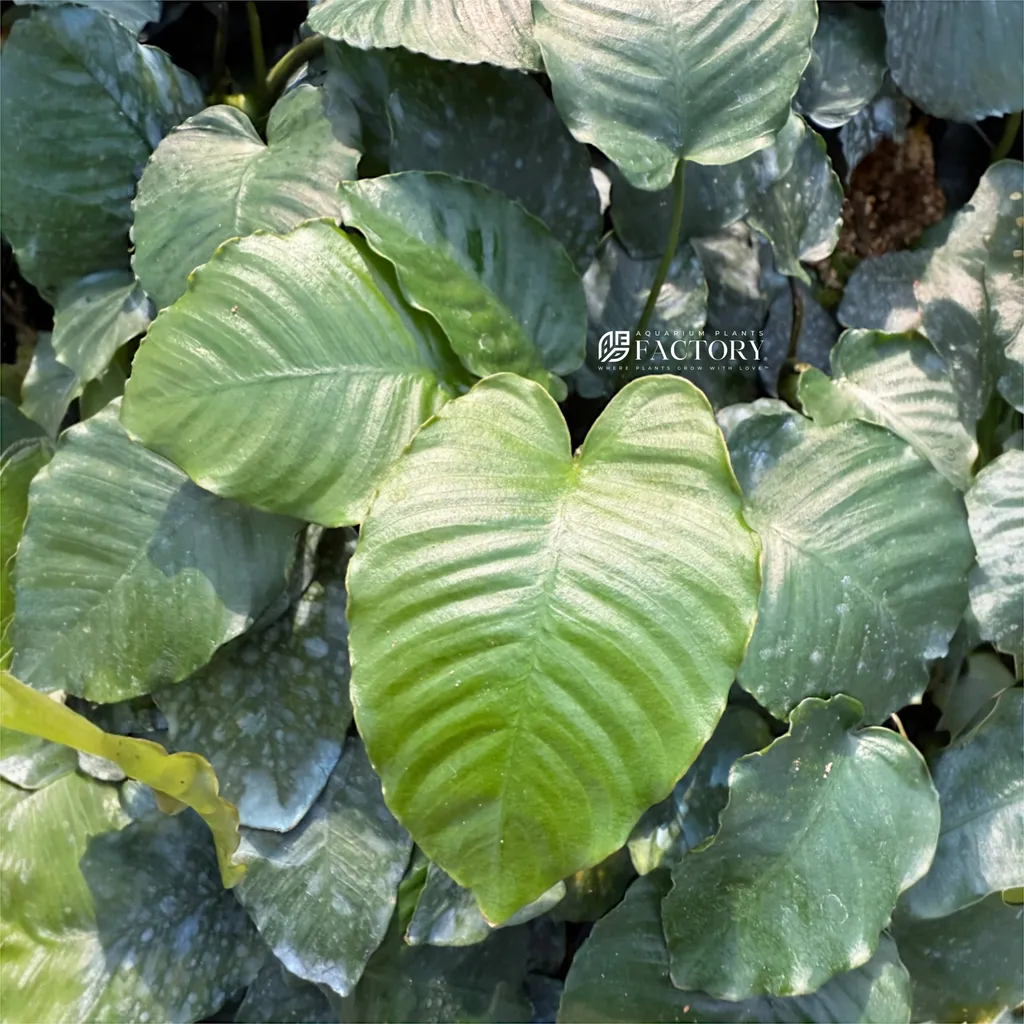
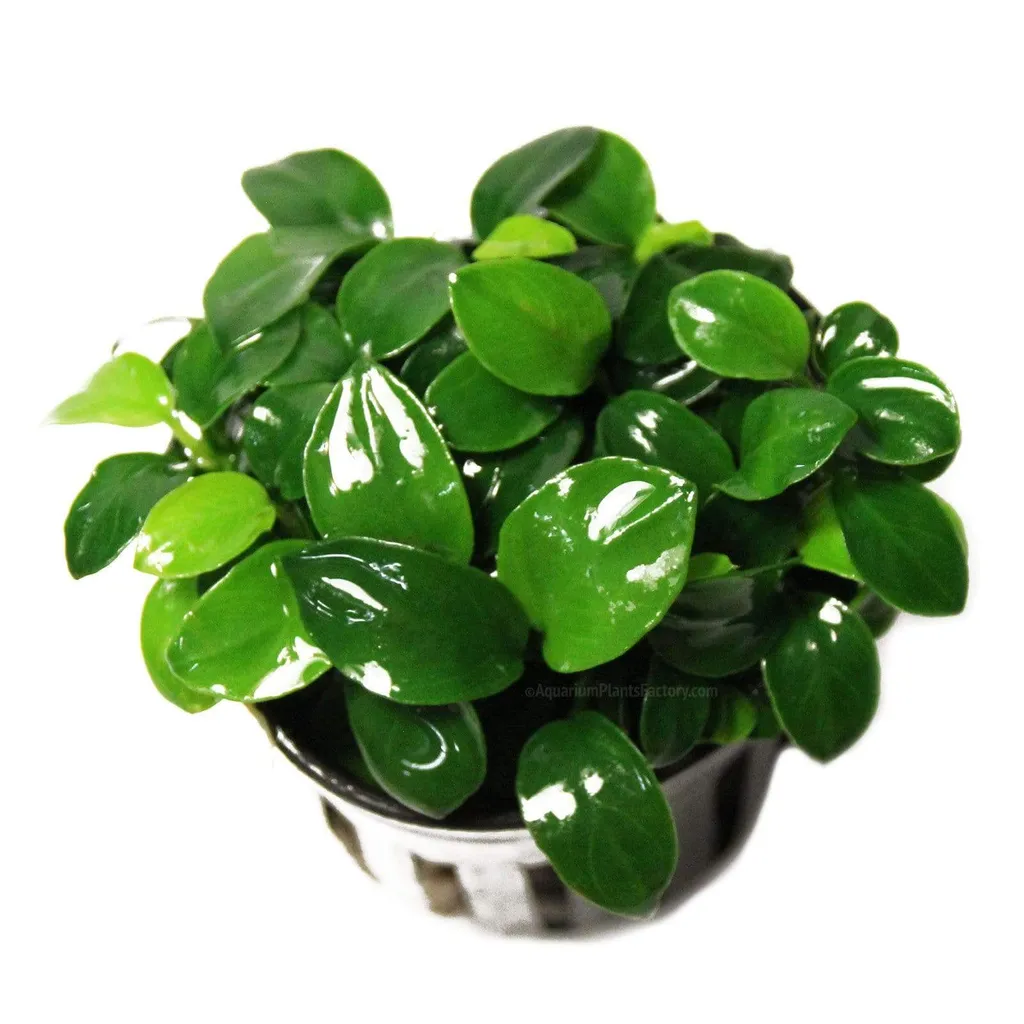
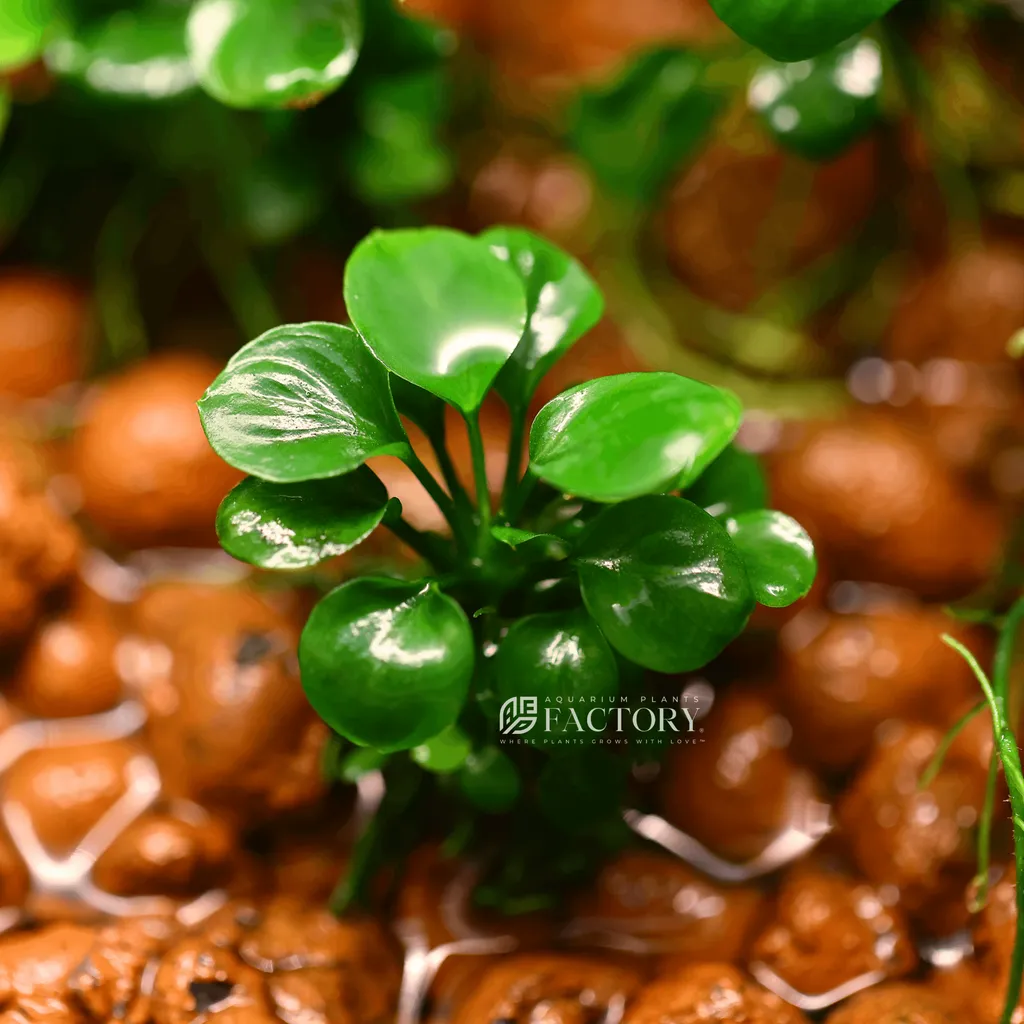
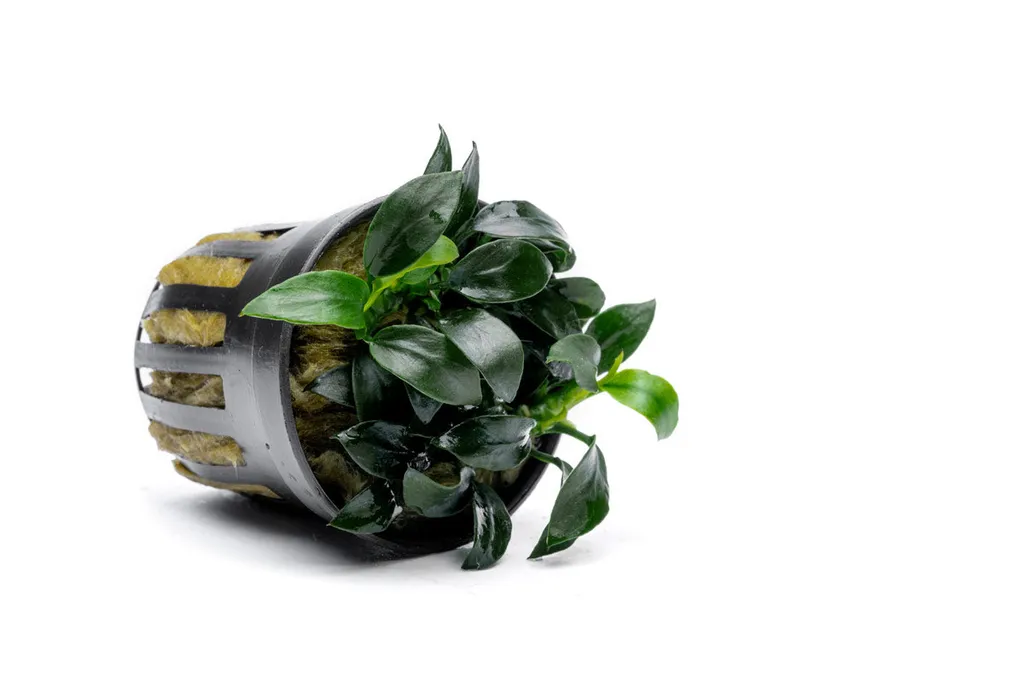
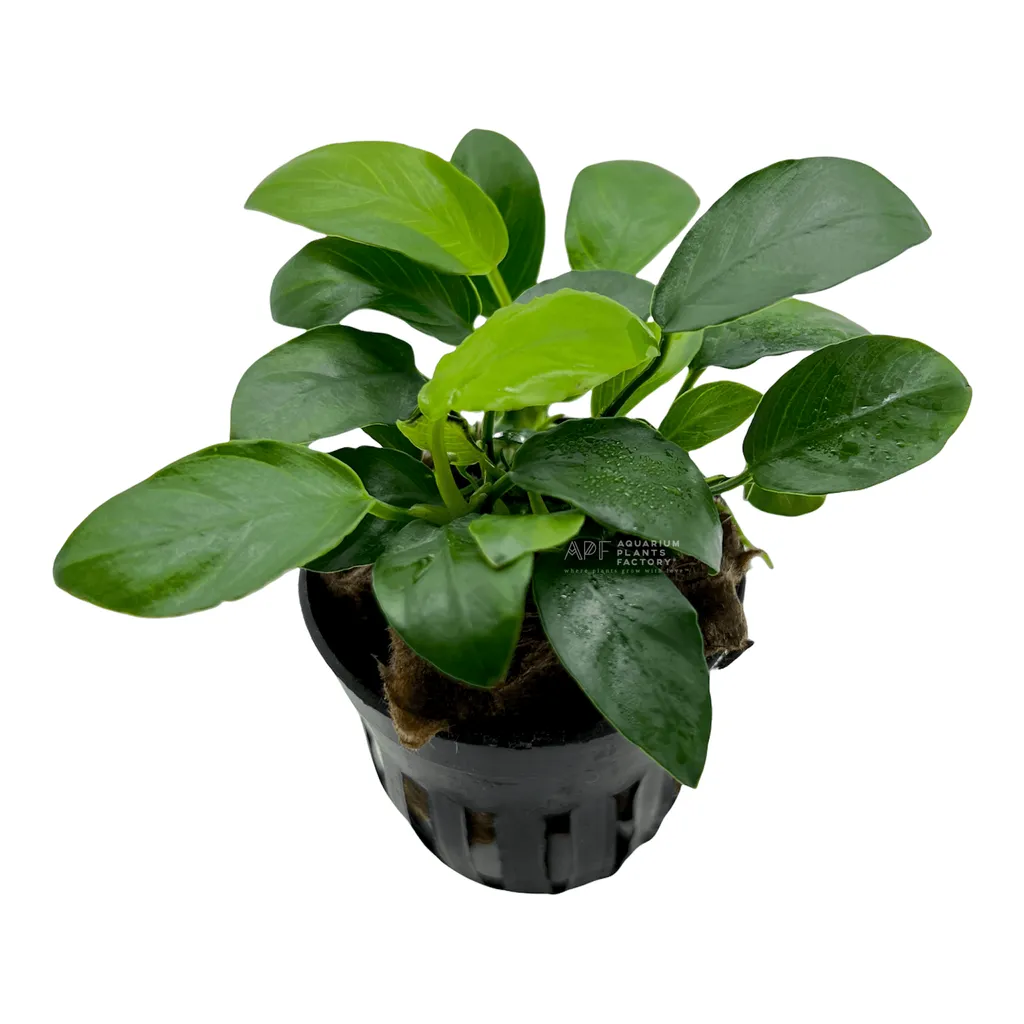
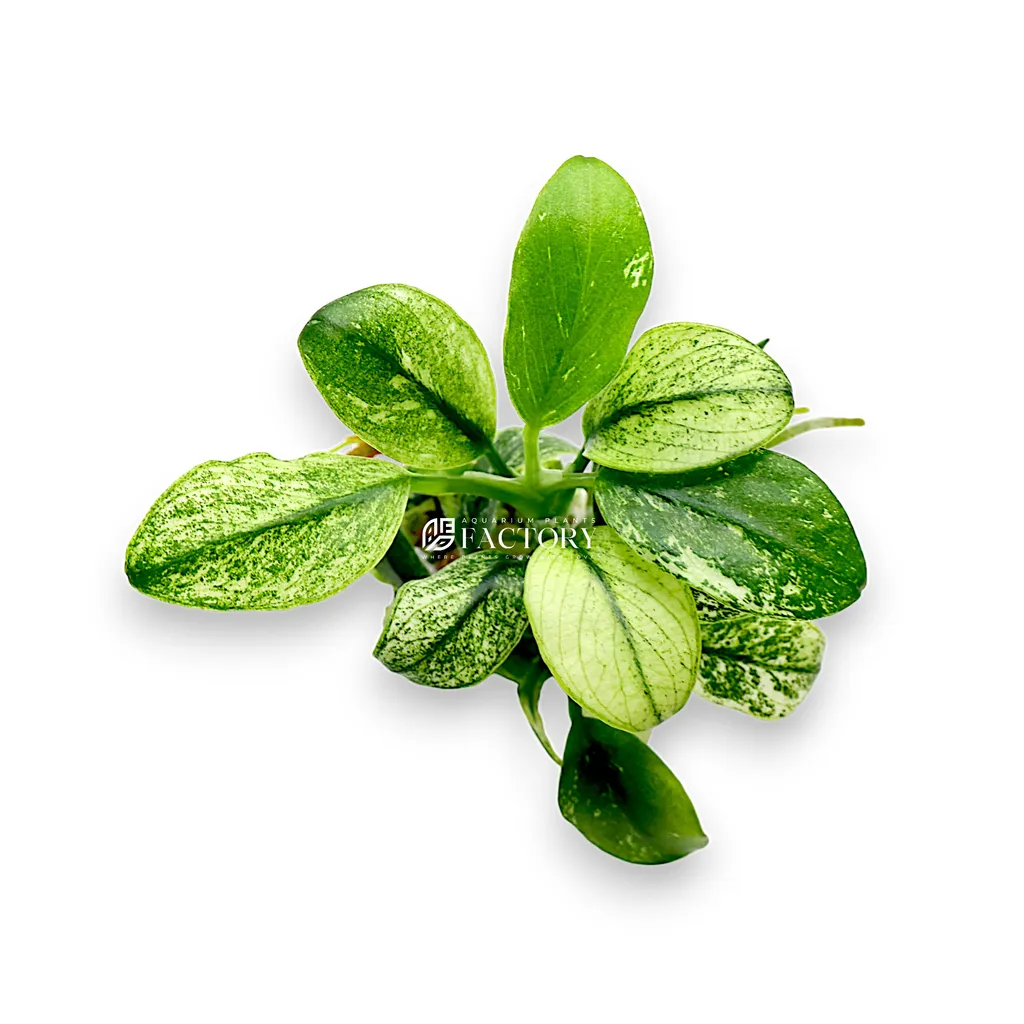
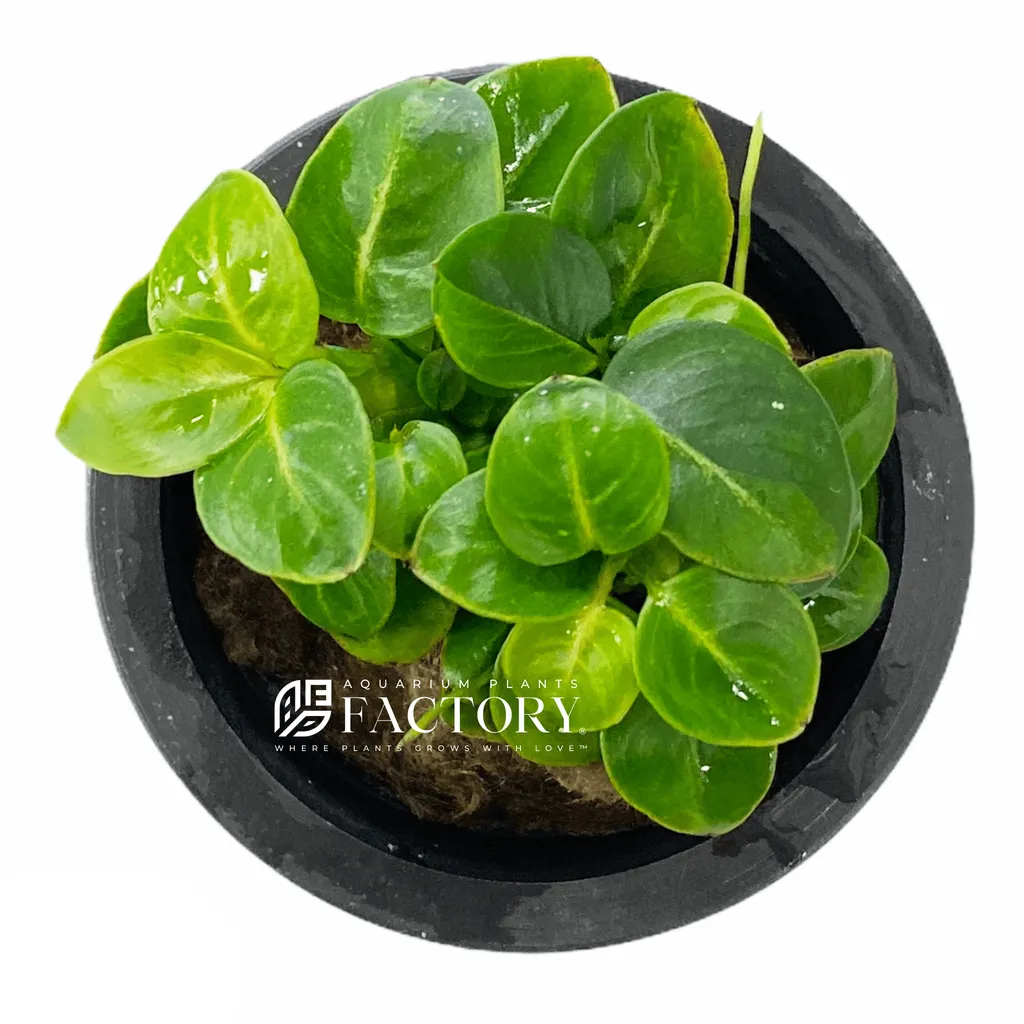
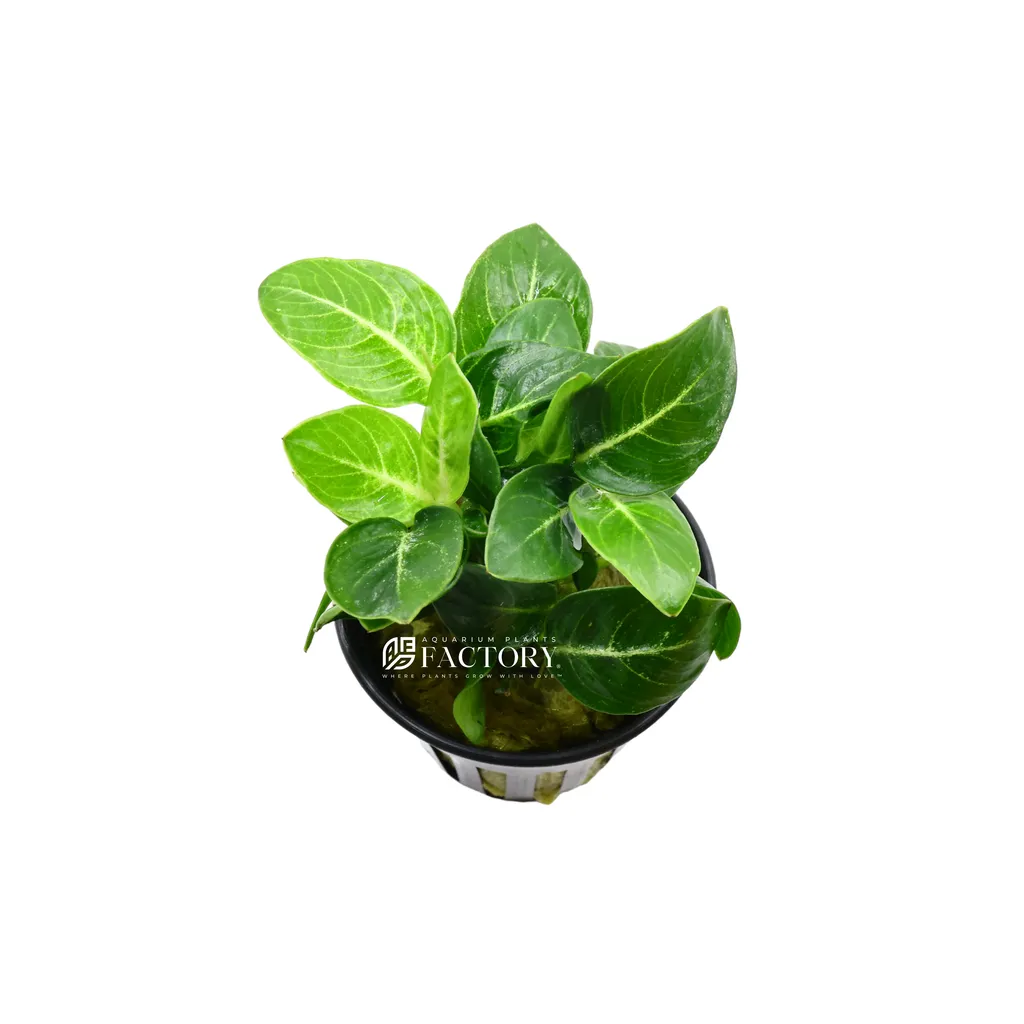
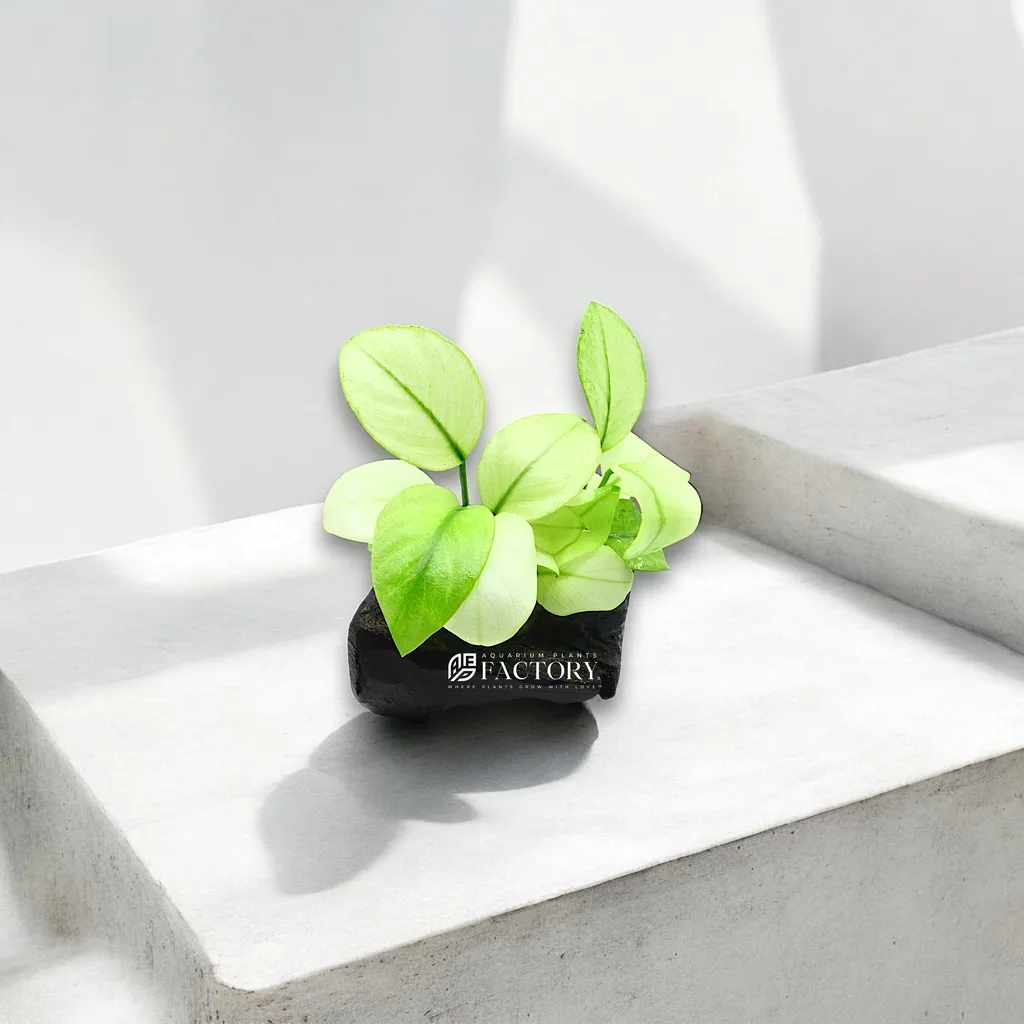
Anubias Peacock belongs to the family Araceae. It is a trade cultivar of Anubias barteri var. nana, the dwarf variety of the species, and no plant database has formalized it. In practice it is a compact nana with deep emerald, thick, leathery leaves, lightly rounded with a pointed tip.
In the wild
Anubias Peacock is a farm selection and does not occur in the wild. Its parent variety comes from shaded streams in southwestern Cameroon. There it grows on rocks and roots at the water's edge, emersed or submersed as levels shift.
Common questions
Is Anubias Peacock a different species from Anubias barteri?
No. Anubias Peacock is a form of Anubias barteri. It reaches about 4.7 in (12 cm), against 13.8 in (35 cm) for the species. It also differs in difficulty, feeding, pH, spread and temperature.
Does Anubias Peacock need to be planted in the substrate?
No. Anubias Peacock grows attached to rock or wood, so tie or glue the rhizome in place. If you plant its roots, keep the rhizome above the substrate, since a buried rhizome rots.
Does Anubias Peacock need CO2?
No. Anubias Peacock grows well without added CO2 and suits a low-tech tank.
How much light does Anubias Peacock need?
Anubias Peacock is a low-light plant, and the light that comes with a standard tank kit is enough for it.
Does Anubias Peacock need root tabs?
No. Anubias Peacock feeds from the water, so a liquid fertilizer suits it better. Root tabs only help if its roots reach into the substrate.
How do you propagate Anubias Peacock?
Anubias Peacock propagates by rhizome division. Cut the rhizome into pieces with several leaves each, then tie or plant each piece.
How tall does Anubias Peacock grow?
Anubias Peacock grows to about 4.7 in (12 cm) tall. It grows slowly and rarely needs trimming.
Related plants
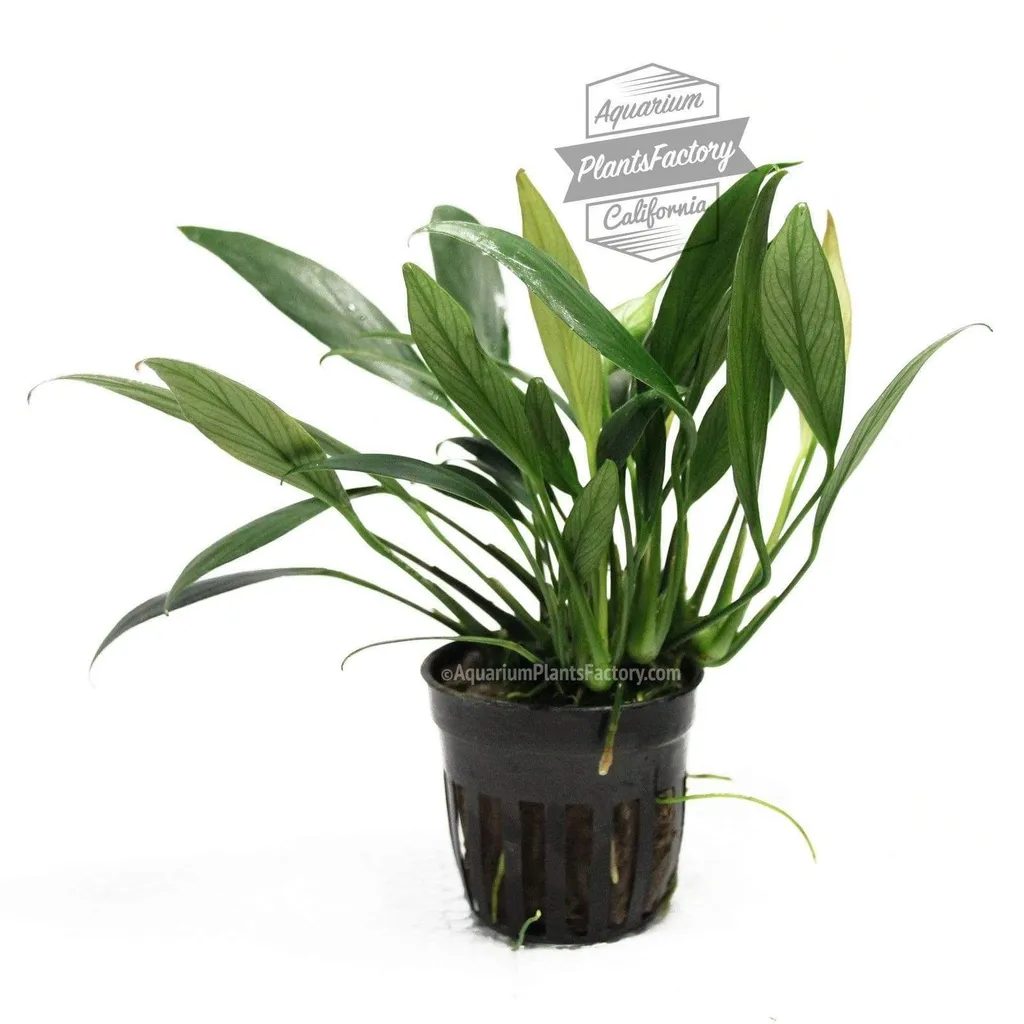 Low lightEpiphyte5.1 in (13 cm)
Anubias congensis Mini
Anubias heterophylla 'Mini'
Low light · Epiphyte
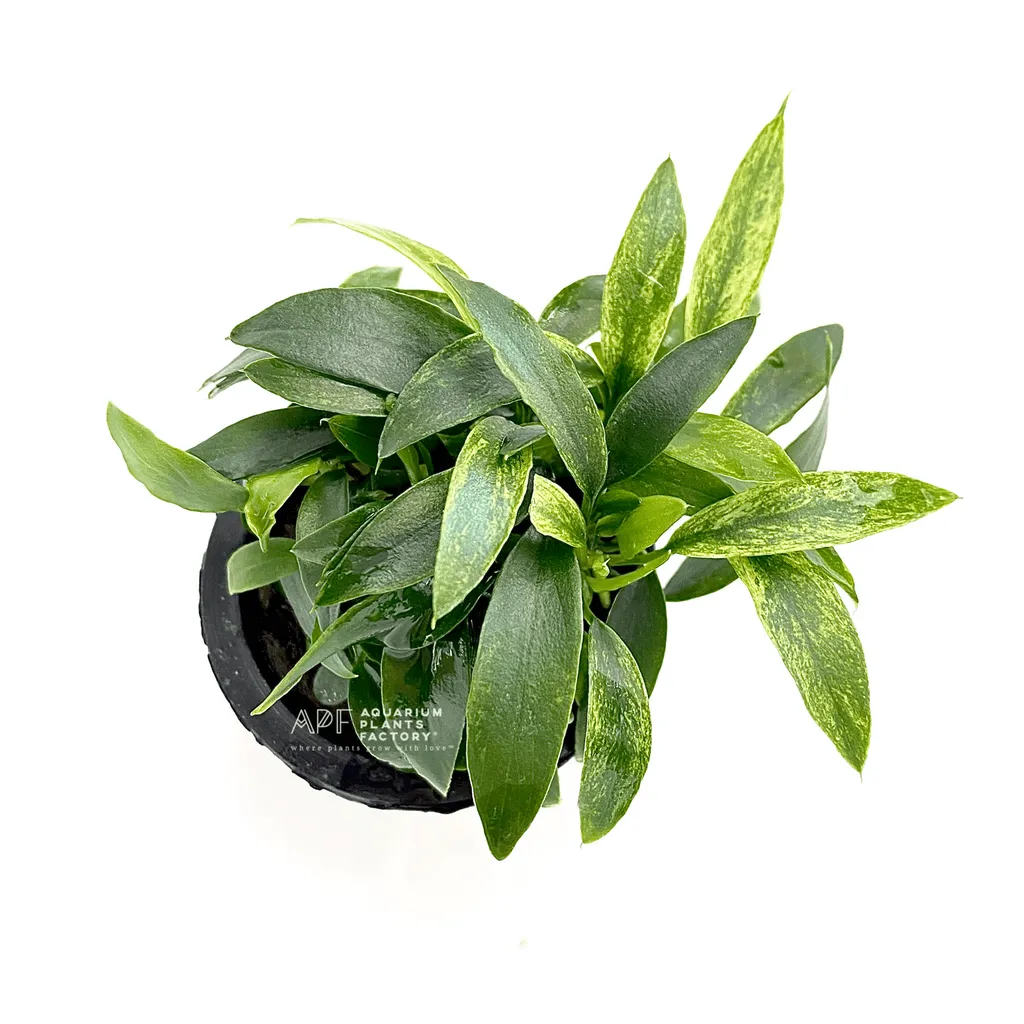 Low lightEpiphyte3.9 in (10 cm)
Anubias Chili Jalapeno
Anubias 'Chili Jalapeno'
Low light · Epiphyte
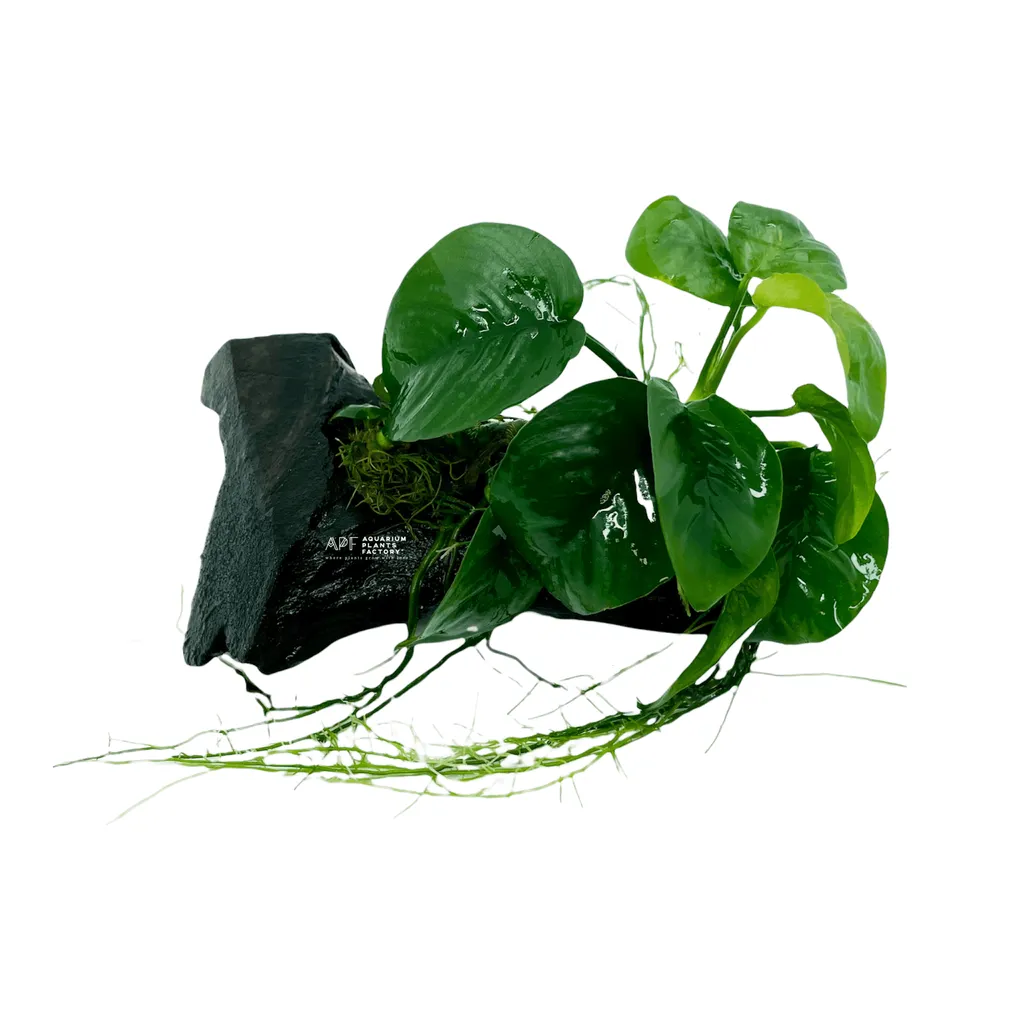 Low lightEpiphyte5.9 in (15 cm)
Anubias Butterfly
Anubias 'Butterfly'
Low light · Epiphyte
- Low lightEpiphyte7.9 in (20 cm)
Anubias Nangi
Anubias 'Nangi'
Low light · Epiphyte
- Low lightEpiphyte9.8 in (25 cm)
Anubias Frazeri
Anubias 'Frazeri'
Low light · Epiphyte
 Low lightEpiphyte11.8 in (30 cm)
Anubias gilletii
Low light · Epiphyte