Anubias Nangi
Anubias 'Nangi'
Also known as Anubias barteri var. nana x Anubias gilletii, Nangi Anubias
FreshwaterRhizomeRhizome division
Care at a glance
- Light
- Low light
- CO2
- No CO₂ needed
- Temperature
- 72–82°F
- 22–28°C
- Max height
- 7.9 in
- 20 cm
- Growth rate
- Slow
- Placement
- Epiphyte
- Type
- Rhizome
- pH
- 5.0–8.0
- Hardness
- 0–20 dGH
- Spread
- 5.9 in (15 cm)
- Nutrient uptake
- Root + water column
- Growth region
- Submersed or emersed
- Difficulty
- Easy
- Family
- Araceae
- Origin
- Hybrid cultivar (parent species from western/central Africa)
Overview
Anubias Nangi is a slow-growing hybrid anubias that lives on wood and rock in the midground. It is extremely hardy and undemanding, which makes it a good beginner plant.
Did you know
Anubias Nangi has been quietly available since 1986, yet it has stayed a bit of a sleeper hybrid for nearly forty years. It is far less famous than its Nana parent, despite its distinctive pointed leaves.
Caring for Anubias Nangi
Tie or glue the rhizome to driftwood or rock, and keep it above the substrate, since a buried rhizome rots. Anubias Nangi grows in low light with no added CO2, and it shows little response when CO2 is added. Keep the light modest, because brighter light mostly grows algae on its slow leaves.
It feeds through its roots and from the water, so a liquid fertilizer does more for it than root tabs. It tolerates a very wide range of water, from pH 5 to 8 and a hardness of 0 to 20 dGH. Keep it at 72 to 82°F (22 to 28°C).
Growth is slow, so it rarely needs trimming. To propagate it, cut the rhizome into pieces with several leaves each and tie each piece to hardscape. Its tough leaves hold up well in a cichlid tank.
Good to know
Anubias Nangi is a cultivar in the family Araceae. American aquarist Robert A. Gasser first raised it by crossing Anubias barteri var. nana with Anubias gilletii. Its broad, lance-shaped leaves are pointed, dark green and slightly bullous, a shape that reflects the larger gilletii parent. Submerged blades run about 8 to 11 cm long on stalks of 5 to 10 cm.
In the wild
Anubias Nangi is a man-made hybrid and does not occur in the wild. Its parent species come from the shaded streams and rivers of western and central Africa. There, Anubias grow as epiphytes on rock and wood, and Nangi inherits their tough, slow, creeping rhizome.
Common questions
Does Anubias Nangi need to be planted in the substrate?
No. Anubias Nangi grows attached to rock or wood, so tie or glue the rhizome in place. If you plant its roots, keep the rhizome above the substrate, since a buried rhizome rots.
Does Anubias Nangi need CO2?
No. Anubias Nangi grows well without added CO2 and suits a low-tech tank.
How much light does Anubias Nangi need?
Anubias Nangi is a low-light plant, and the light that comes with a standard tank kit is enough for it.
Does Anubias Nangi need root tabs?
No. Anubias Nangi feeds from the water, so a liquid fertilizer suits it better. Root tabs only help if its roots reach into the substrate.
How do you propagate Anubias Nangi?
Anubias Nangi propagates by rhizome division. Cut the rhizome into pieces with several leaves each, then tie or plant each piece.
How tall does Anubias Nangi grow?
Anubias Nangi grows to about 7.9 in (20 cm) tall. It grows slowly and rarely needs trimming.
Related plants
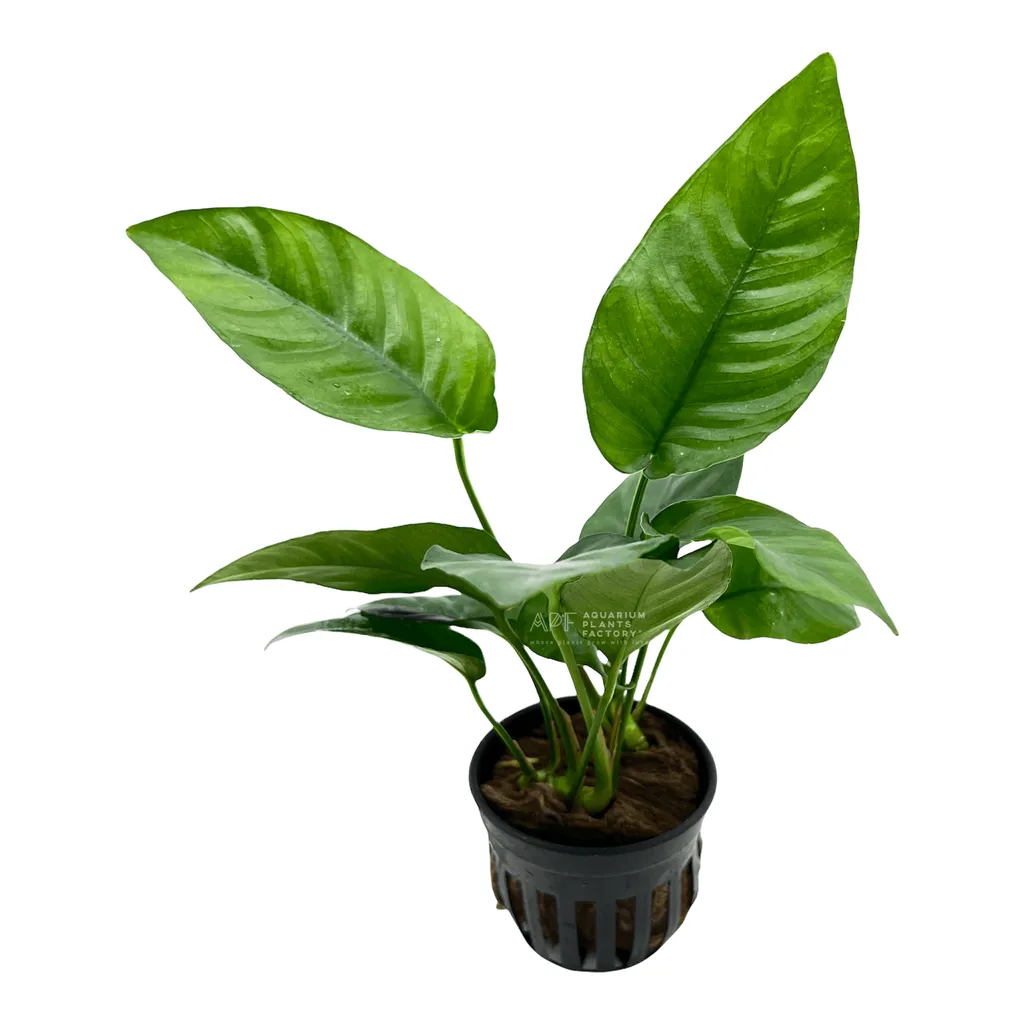 Low lightEpiphyte7.9 in (20 cm)
Anubias barteri Striped
Anubias barteri 'Striped'
Low light · Epiphyte
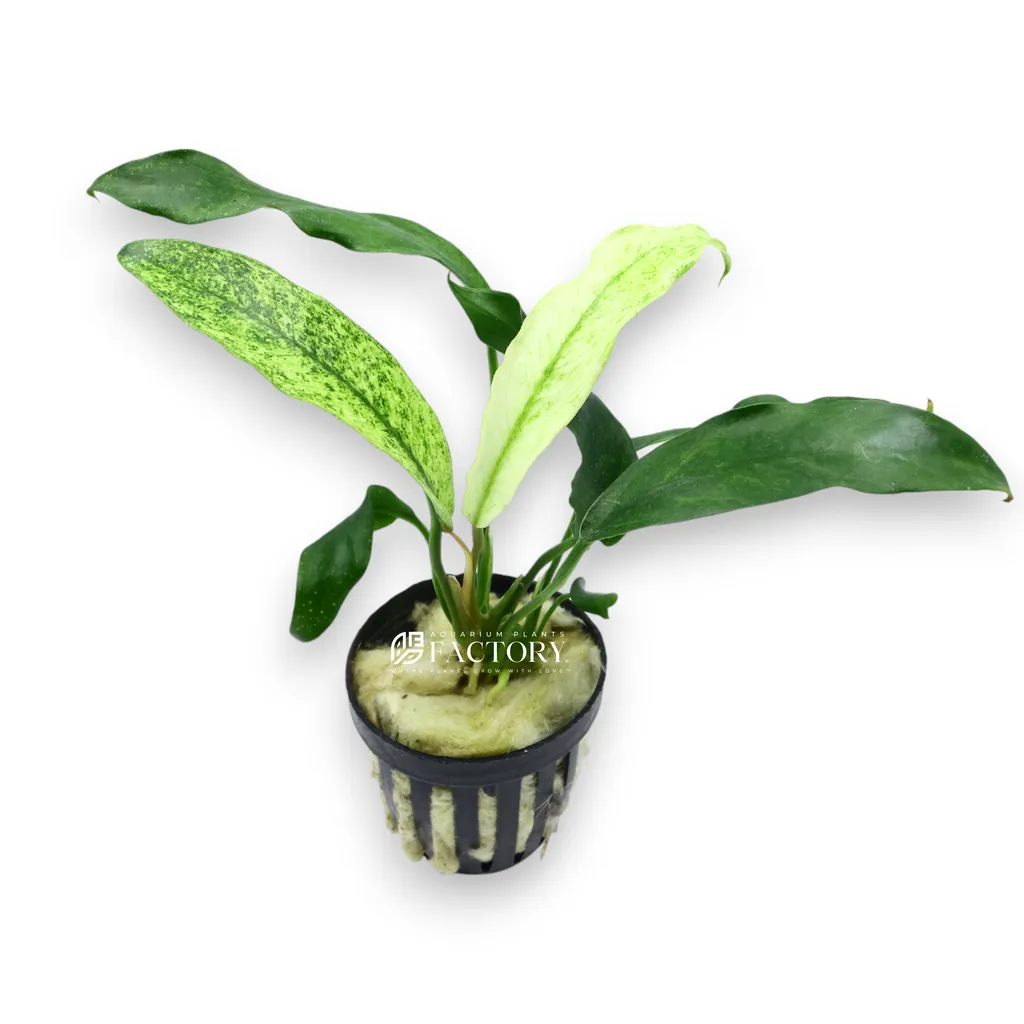 Low lightEpiphyte7.9 in (20 cm)
Anubias glabra Variegated
Anubias barteri var. glabra 'Variegated'
Low light · Epiphyte
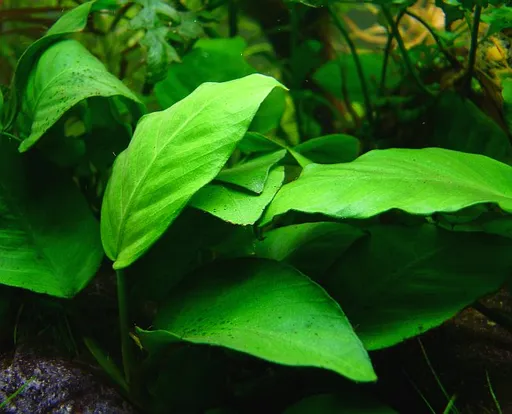 Low lightEpiphyte7.9 in (20 cm)
Anubias minima
Anubias barteri var. glabra
Low light · Epiphyte
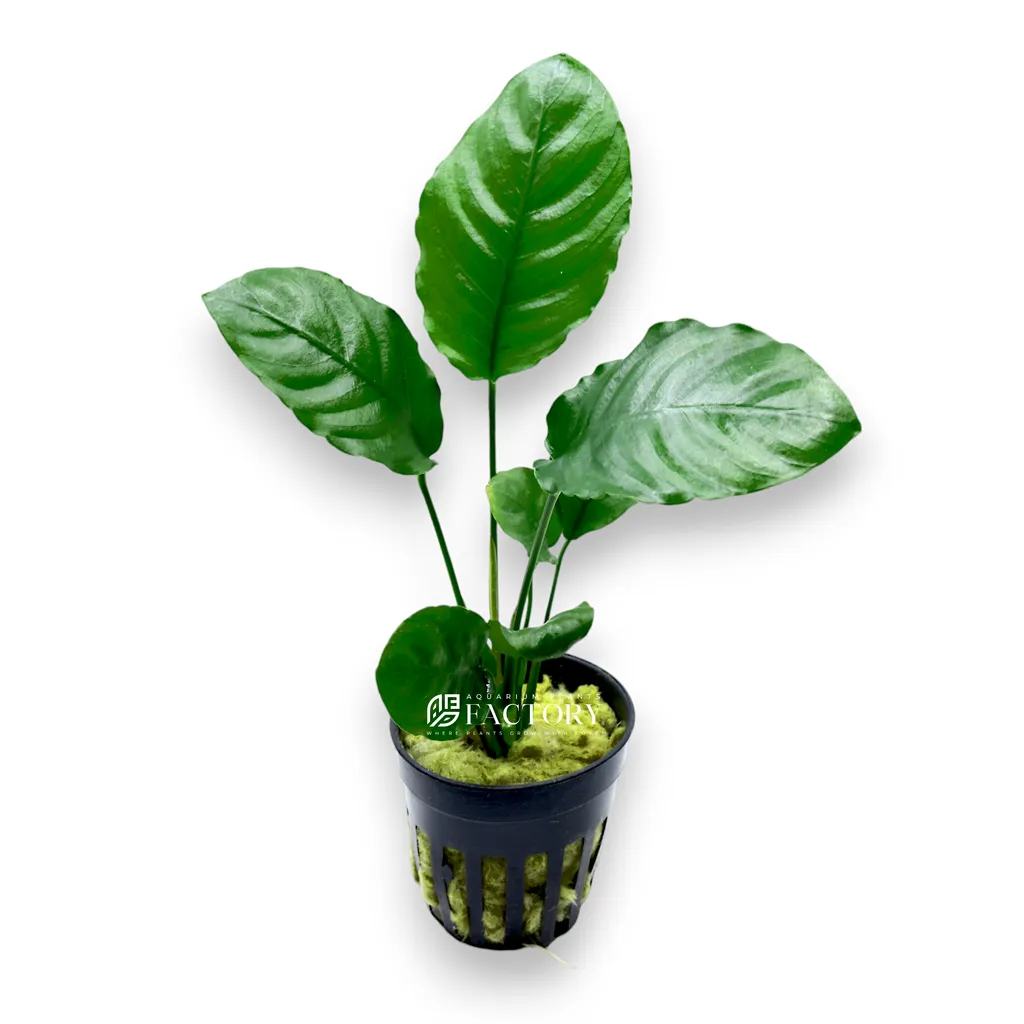 Low lightEpiphyte7.9 in (20 cm)
Anubias Wrinkle Leaf
Anubias barteri 'Wrinkle Leaf'
Low light · Epiphyte
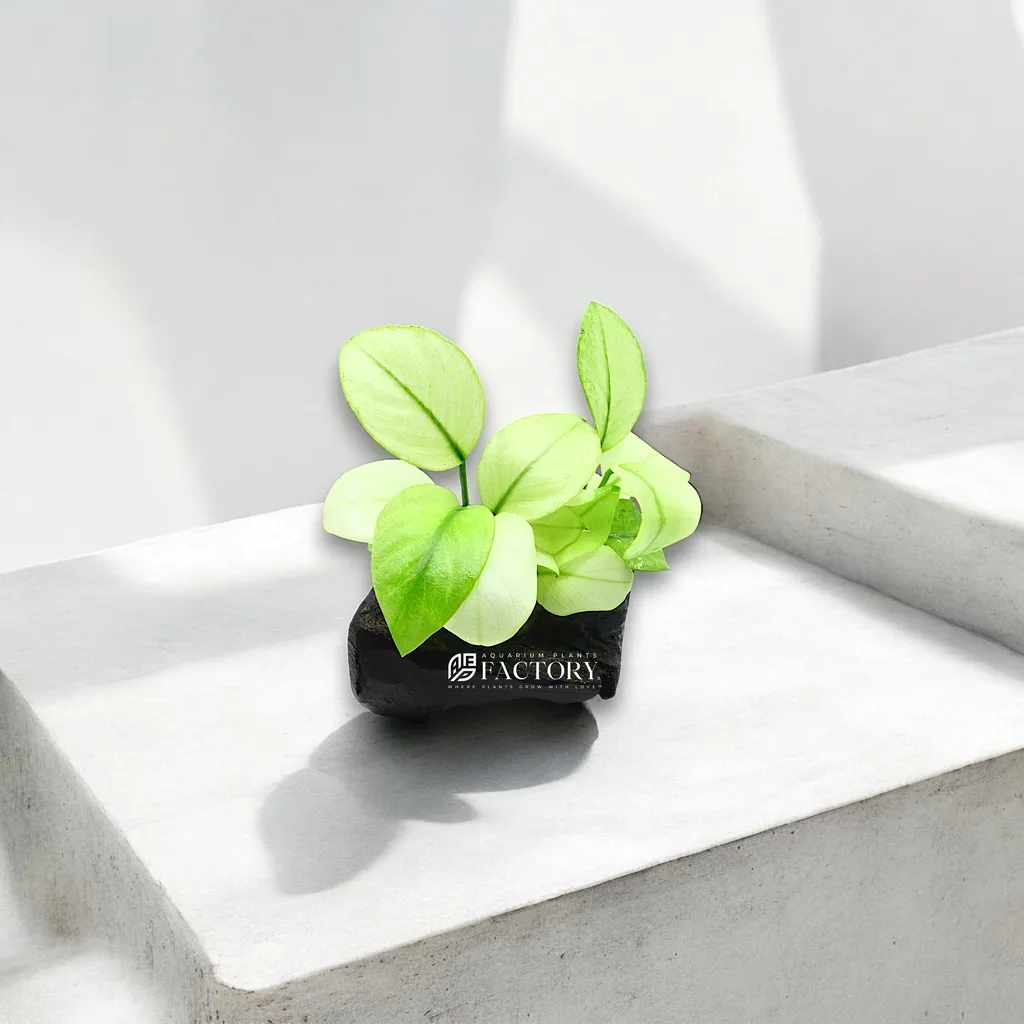 Medium lightEpiphyte9.8 in (25 cm)
Anubias Broad White
Anubias barteri 'Broad White'
Medium light · Epiphyte
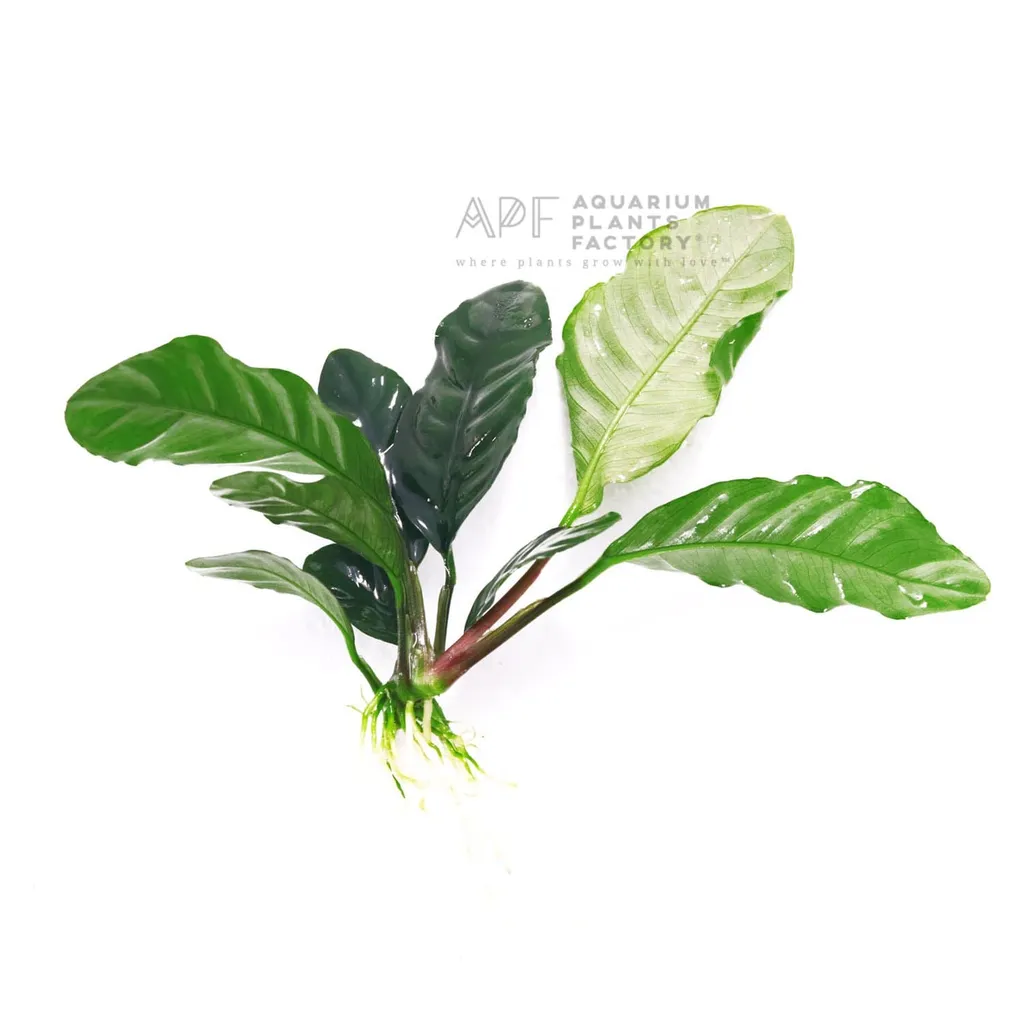 Low lightEpiphyte9.8 in (25 cm)
Anubias coffeefolia
Anubias barteri var. coffeefolia
Low light · Epiphyte