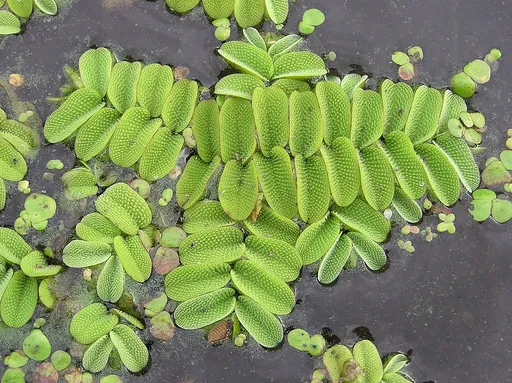
Salvinia natans
Also known as Floating fern, Floating watermoss, Floating moss
FreshwaterFloatingSide shootsPlantlets
Invasive. Salvinia species are regulated as noxious weeds in some areas. Never release into the wild; dispose of in the trash.
Care at a glance
- Light
- Medium light
- CO2
- No CO₂ needed
- Temperature
- 64–82°F
- 18–28°C
- Max height
- 1.2 in
- 3 cm
- Growth rate
- Fast
- Placement
- Floating
- Type
- Floating
- pH
- 6.0–8.0
- Hardness
- 2–15 dGH
- Spread
- 3.9 in (10 cm)
- Nutrient uptake
- Water column
- Growth region
- Submersed or emersed
- Difficulty
- Beginner
- Family
- Salviniaceae
- Origin
- Central/Eastern Europe and Asia
Overview
Float it on the surface and it grows fast under medium light with no CO2 or substrate, pulling nutrients straight from the water column to help starve out algae and shade the tank. It branches and divides on its own, so you keep it going simply by removing excess, and it stays low and small unlike taller floaters. The main pitfalls are heavy surface agitation and overhead condensation, which both rot the floating leaves, and very low light, which makes it pale and stringy, so give it calm water and a bright source overhead.
In the wild
Salvinia natans is a free-floating fern native to standing and slow fresh water across central and eastern Europe and much of temperate to subtropical Asia. It grows in ponds, ditches, lakes and quiet river edges with still water, plenty of sunlight and humid air. Unlike most aquarium floaters it is an annual that dies back in cold weather and overwinters as spores in its native range.
Good to know
It is a true floating fern in the family Salviniaceae and is rootless. What looks like a pair of leaves and a hanging root is actually three leaves per node, two oval floating leaves that sit on the surface and a third finely divided submerged leaf that dangles down and does the job of a root. The floating leaves are covered in tiny water-repellent hairs that trap a film of air and keep the plant from getting waterlogged.
Did you know
Those hairs on the floating leaves are some of the most water-repellent structures known in nature, with whisk-shaped tips that hold a permanent layer of air, an effect studied by engineers for drag-reducing and self-cleaning surfaces.
Related plants
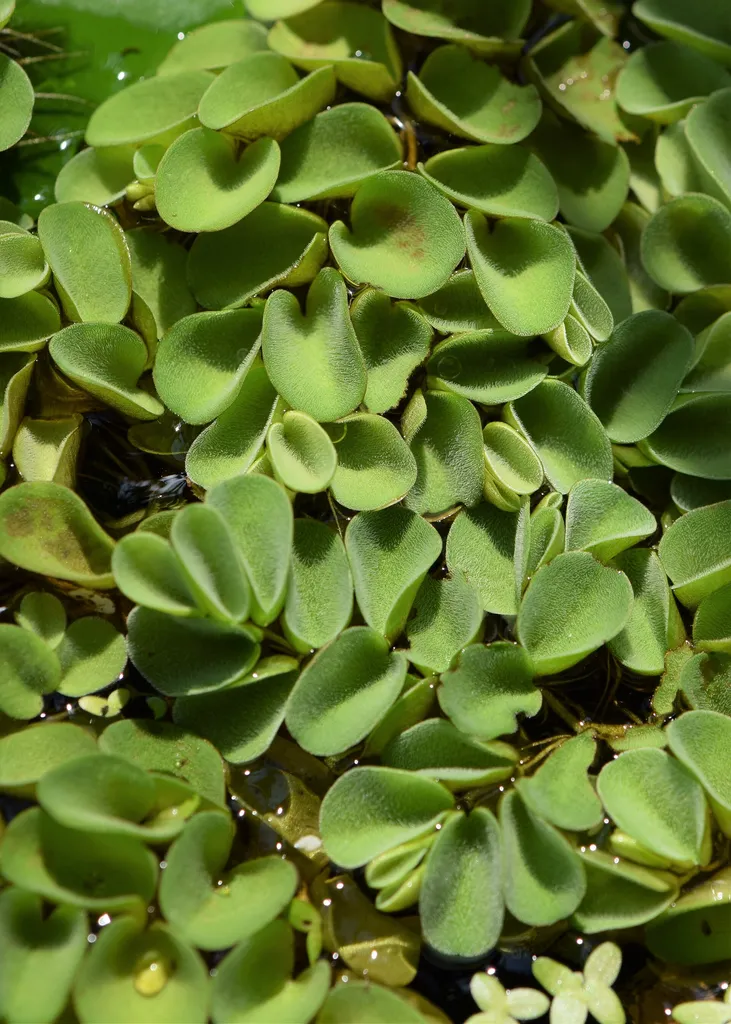 Medium lightFloating1.2 in (3 cm)
Salvinia cucullata
Medium light · Floating
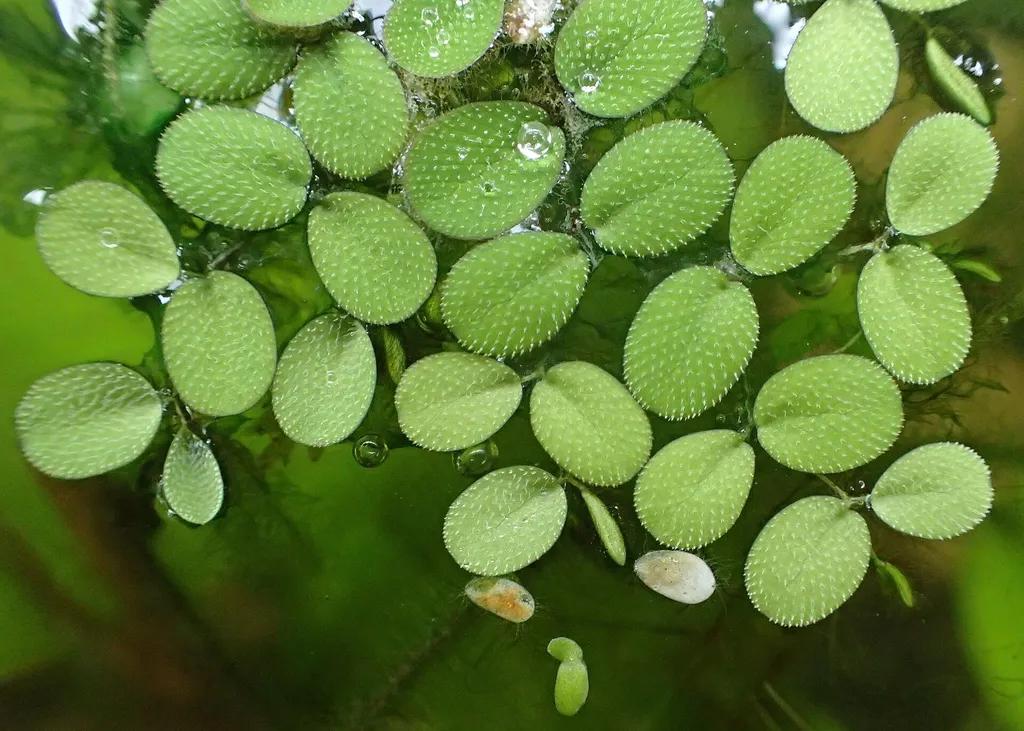 Medium lightFloating1.2 in (3 cm)
Water spangles
Salvinia minima
Medium light · Floating
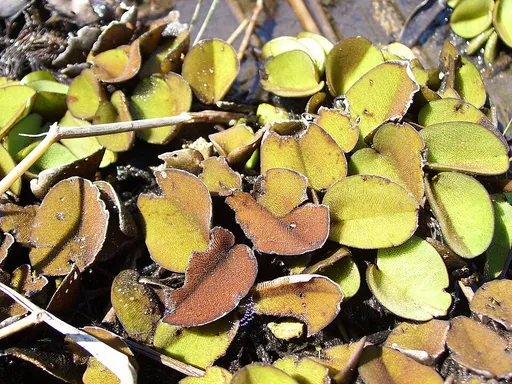 Medium lightFloating1.6 in (4 cm)
Butterfly fern
Salvinia auriculata
Medium light · Floating
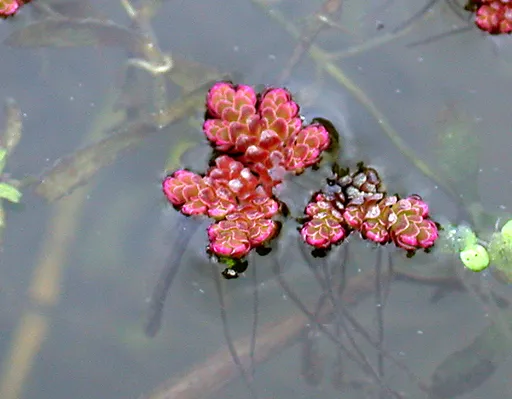 Medium lightFloating0.8 in (2 cm)
Fairy moss
Azolla filiculoides
Medium light · Floating
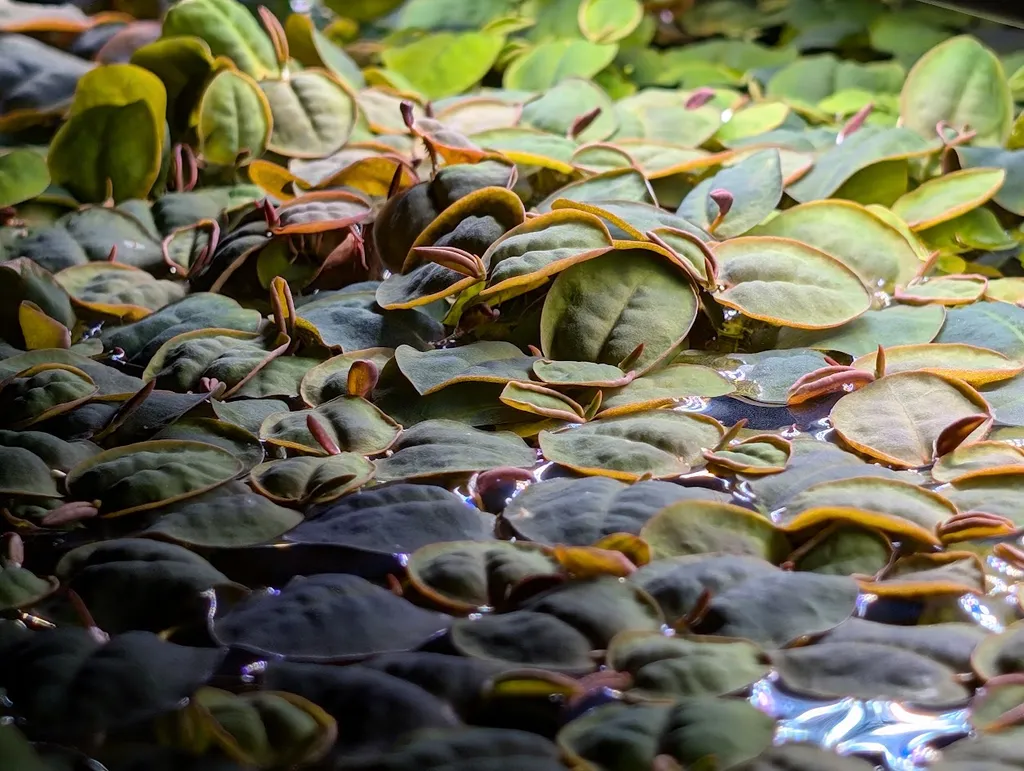 High lightFloating1.2 in (3 cm)
Red root floater
Phyllanthus fluitans
High light · Floating
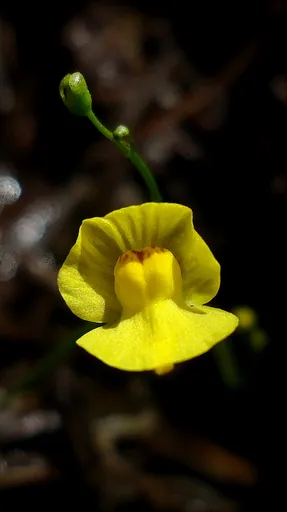 Medium lightFloating0.8 in (2 cm)
Floating bladderwort
Utricularia gibba
Medium light · Floating