Water spangles
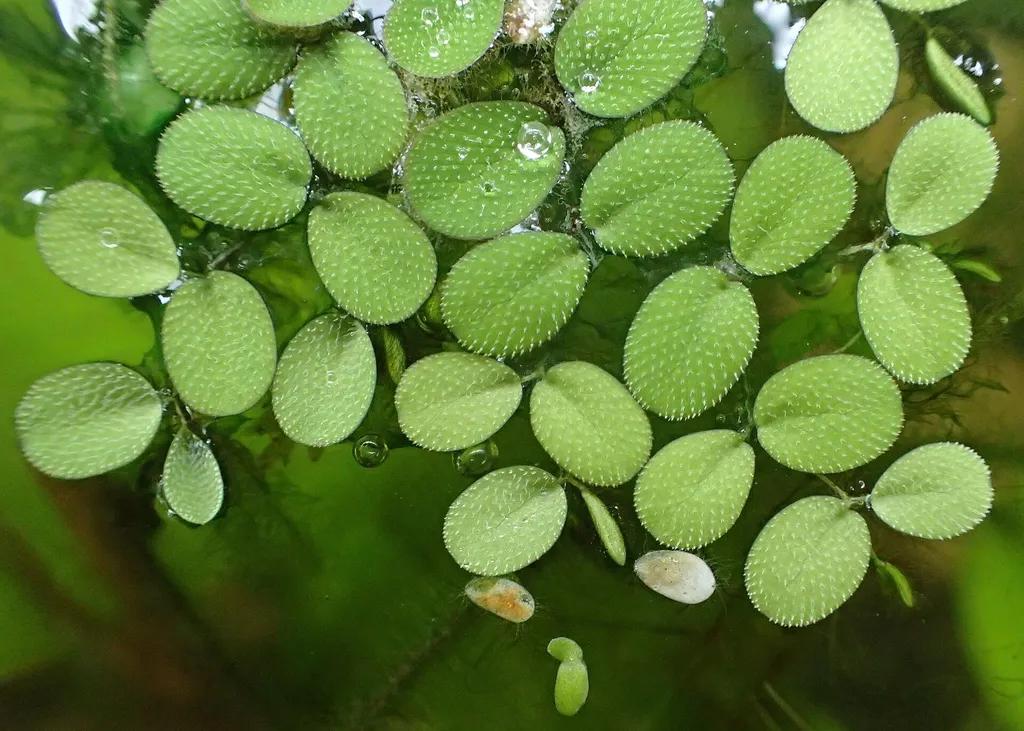
Salvinia minima
Also known as Common salvinia, Floating fern, Water fern
FreshwaterFloatingRhizome divisionSide shoots
Invasive. A fast-spreading floating fern that is regulated as a noxious weed in some states (e.g. Texas). Never release into the wild; dispose of in the trash.
Care at a glance
- Light
- Medium light
- CO2
- No CO₂ needed
- Temperature
- 64–82°F
- 18–28°C
- Max height
- 1.2 in
- 3 cm
- Growth rate
- Fast
- Placement
- Floating
- Type
- Floating
- pH
- 6.0–8.0
- Hardness
- 2–20 dGH
- Spread
- 1.6 in (4 cm)
- Nutrient uptake
- Water column
- Growth region
- Submersed or emersed
- Difficulty
- Easy
- Family
- Salviniaceae
- Origin
- South America, Mesoamerica and the West Indies
Overview
An easy, undemanding floater for the surface that does well in low to moderate light with no CO2 and minimal fuss. Just scatter it on the surface; it needs still water and will rot or sink under heavy spray and surface flow, so keep filter agitation low. It multiplies quickly and shades the tank below, so skim out excess regularly. Be aware it is a recognized invasive species and is listed as a prohibited noxious plant in Texas (and regulated in several other states), so never release it and bin all trimmings.
In the wild
A small floating fern native to South America, Mesoamerica, and the West Indies, growing on the surface of still ponds, ditches, and slow streams. Pairs of oval green leaves about half a centimeter to two centimeters across float on the surface while a third, finely divided submerged leaf hangs below and works like a root. Introduced to the southern United States in the 1920s and 1930s, it has spread widely and forms dense surface mats.
Good to know
Salvinia minima is a true fern (family Salviniaceae, order Salviniales), so it reproduces by spores and fragmentation rather than flowers or seeds, and most aquarium-grown plants are sterile and spread only by breaking apart. The upper leaf surfaces are covered in fine water-repelling hairs that branch into four points but do not meet at the tips, distinguishing it from the much more dangerous giant salvinia. It is rootless; the dangling dissected leaf takes the place of true roots.
Did you know
Did you know the tiny eggbeater-shaped hairs on its leaves trap a layer of air that makes the plant nearly impossible to wet? That same trick on its giant relative inspired engineers studying drag-reducing, self-drying surfaces.
Related plants
 Medium lightFloating1.2 in (3 cm)
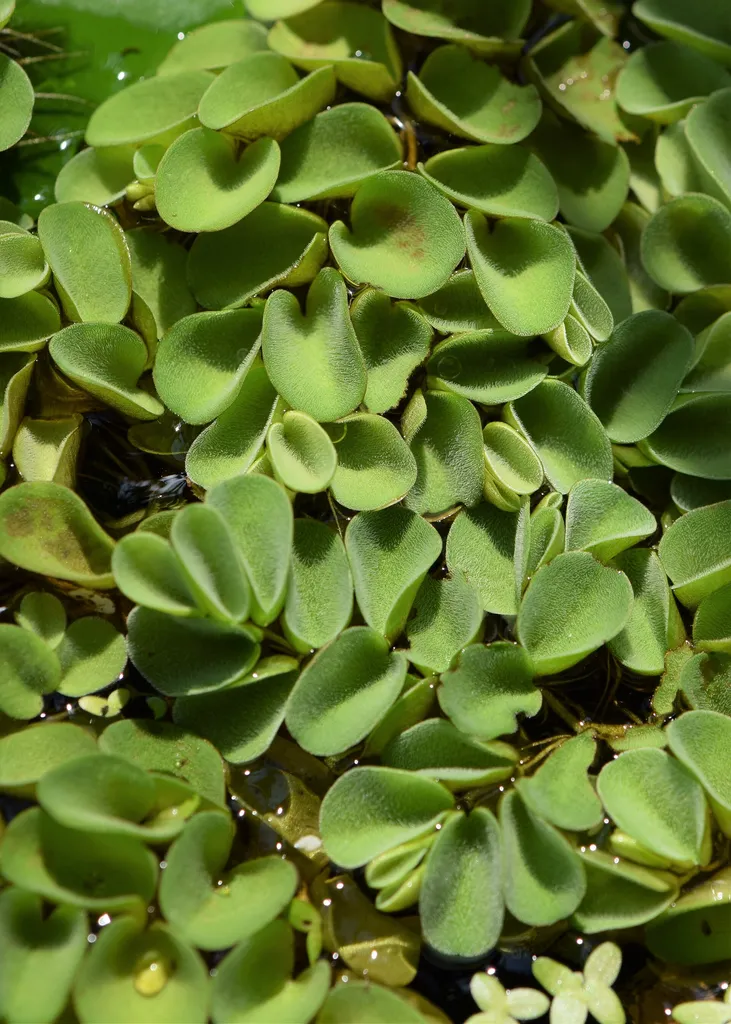
Salvinia cucullata
Medium light · Floating
 Medium lightFloating1.2 in (3 cm)
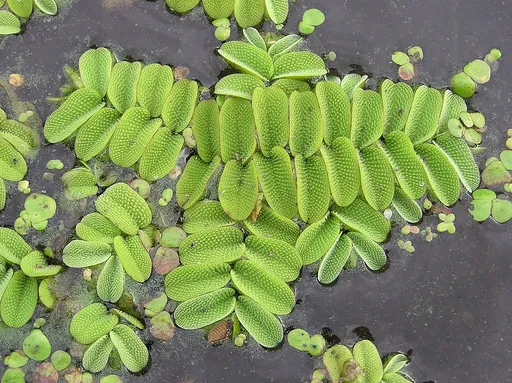
Salvinia natans
Medium light · Floating
 Medium lightFloating1.6 in (4 cm)
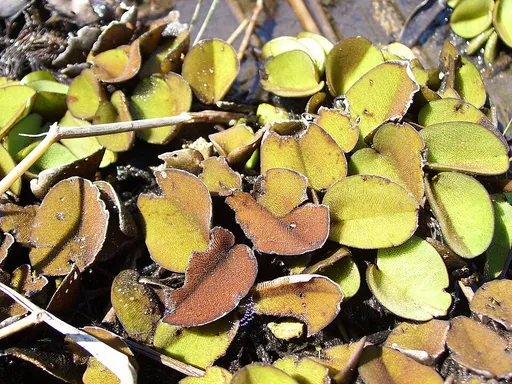
Butterfly fern
Salvinia auriculata
Medium light · Floating
 Medium lightFloating0.8 in (2 cm)
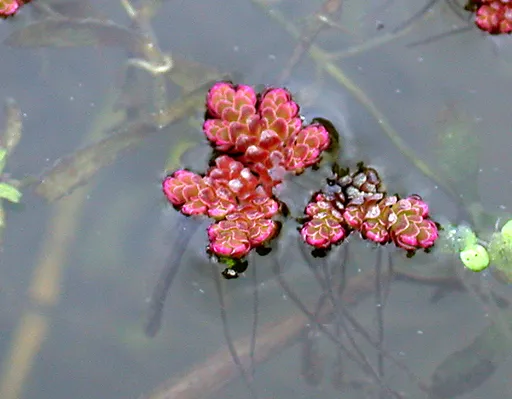
Fairy moss
Azolla filiculoides
Medium light · Floating
 High lightFloating1.2 in (3 cm)
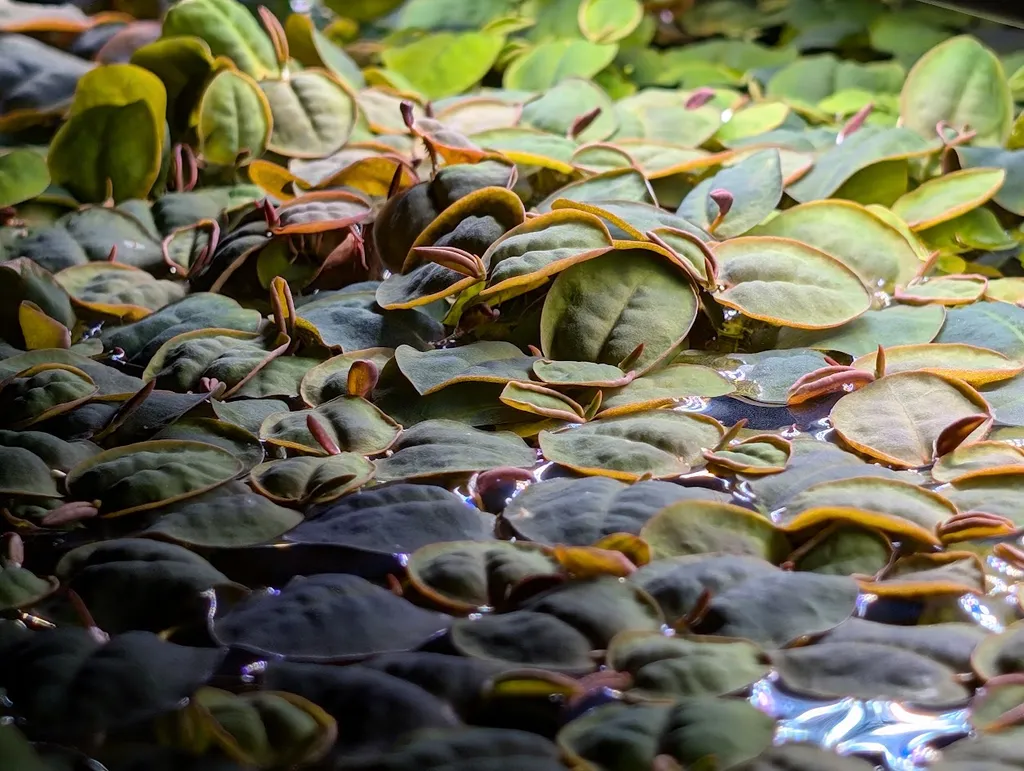
Red root floater
Phyllanthus fluitans
High light · Floating
 Medium lightFloating0.8 in (2 cm)
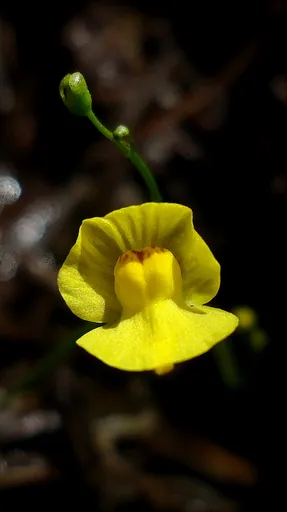
Floating bladderwort
Utricularia gibba
Medium light · Floating