One species · 8 forms
Rotala rotundifolia
Also known as Dwarf Rotala, Roundleaf Toothcup
FreshwaterStemCuttingsSide shoots
Invasive. Regulated as an invasive aquatic plant in California and Louisiana. Never release into the wild; dispose of trimmings in the trash.
Care at a glance
- Light
- Medium light
- CO2
- CO₂ beneficial
- Temperature
- 68–82°F
- 20–28°C
- Max height
- 19.7 in
- 50 cm
- Growth rate
- Fast
- Placement
- Background
- Type
- Stem
- pH
- 6.0–8.0
- Hardness
- 4–15 dGH
- Spread
- 2 in (5 cm)
- Nutrient uptake
- Root + water column
- Growth region
- Submersed or emersed
- Difficulty
- Easy
- Family
- Lythraceae
- Origin
- South, Southeast and East Asia
Pick a form
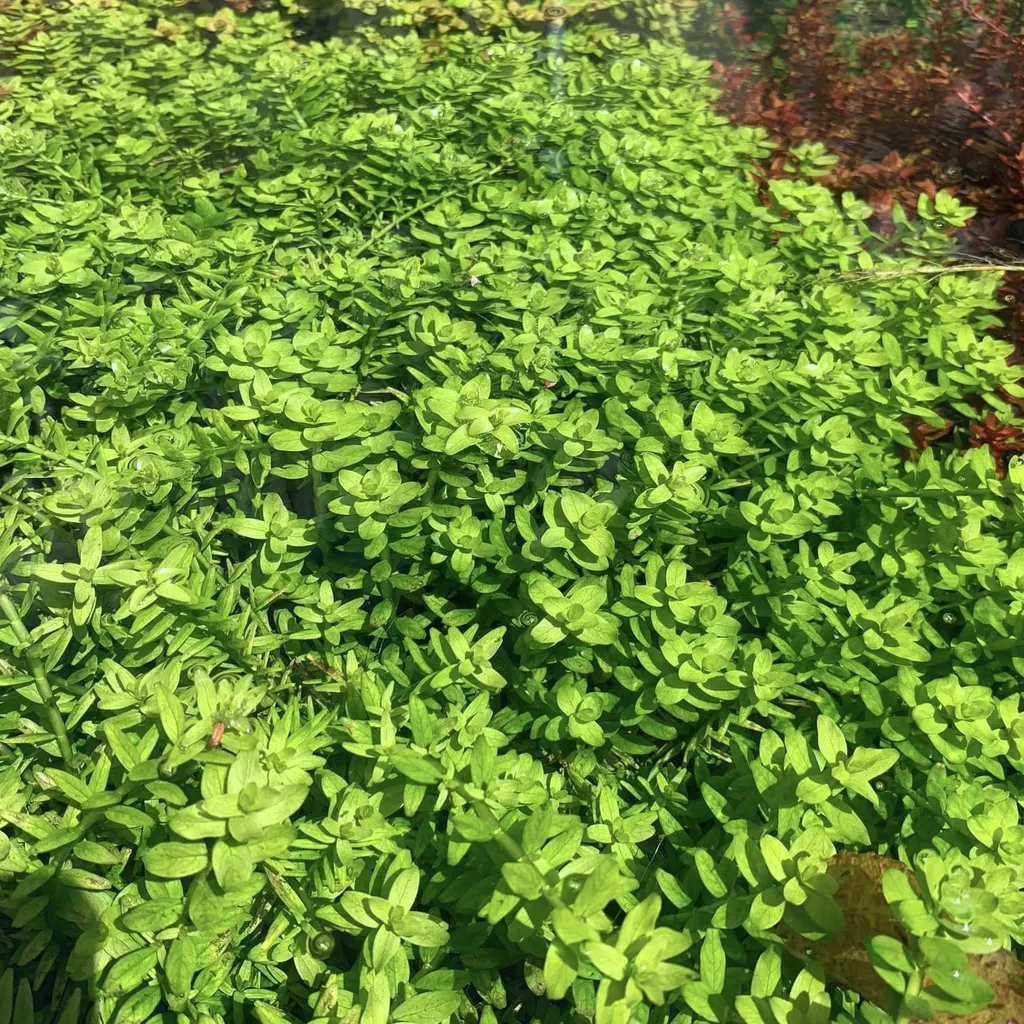
color follows lightEasygoing forms · any planted tank
High-color forms · strong light and regular trimming
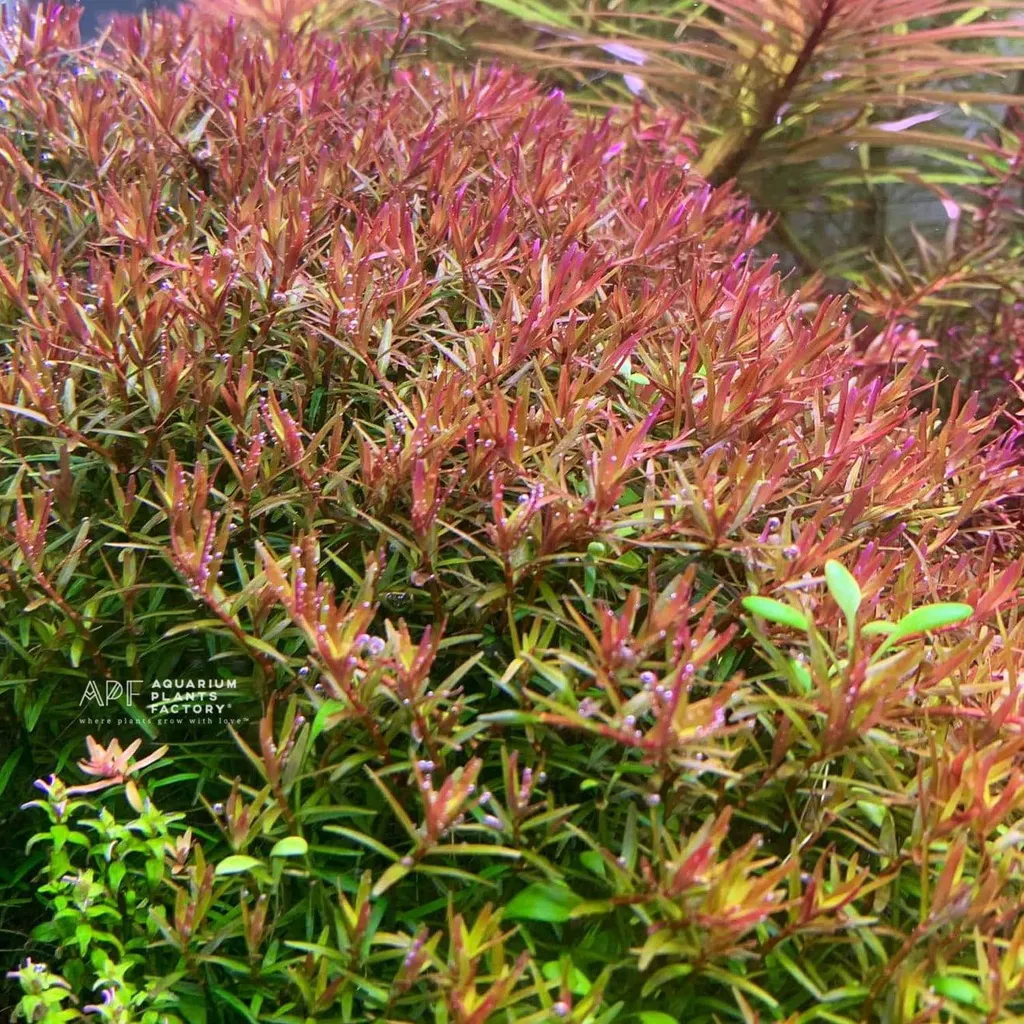
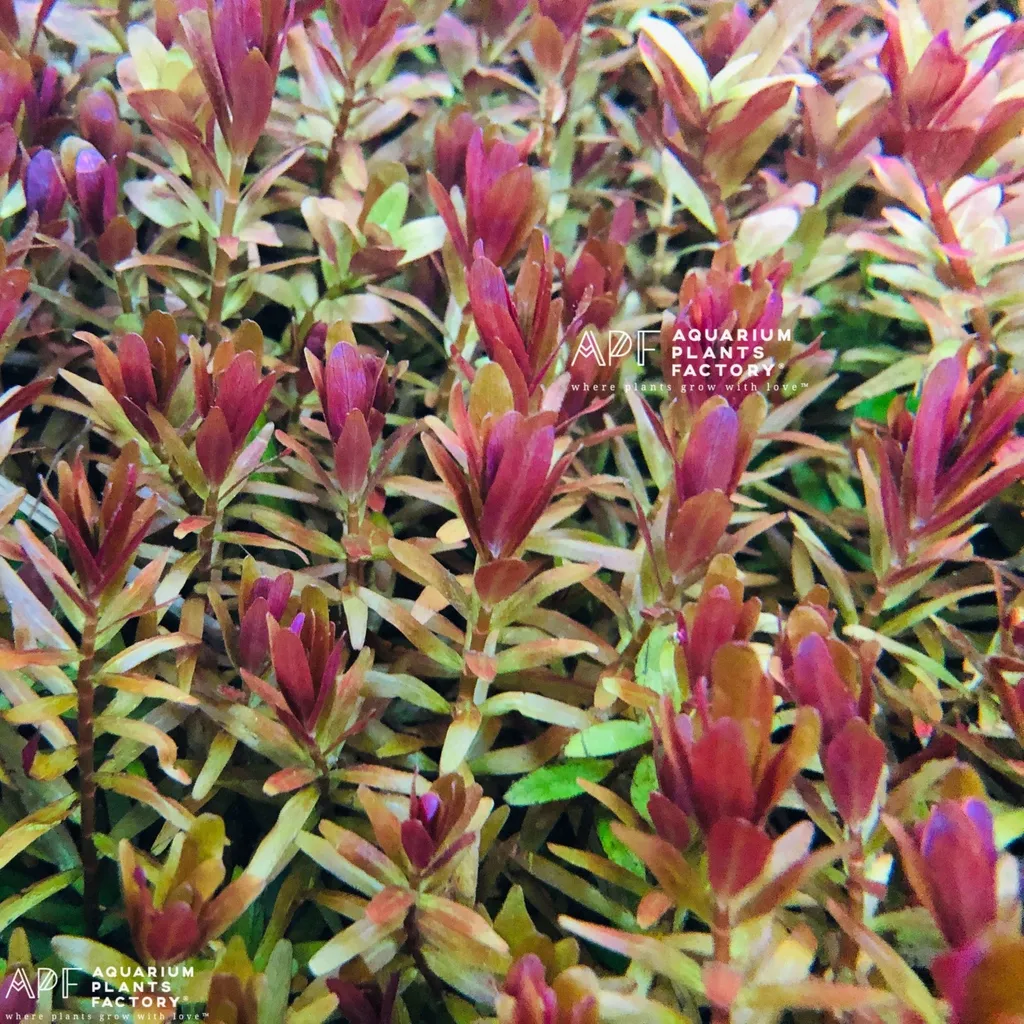
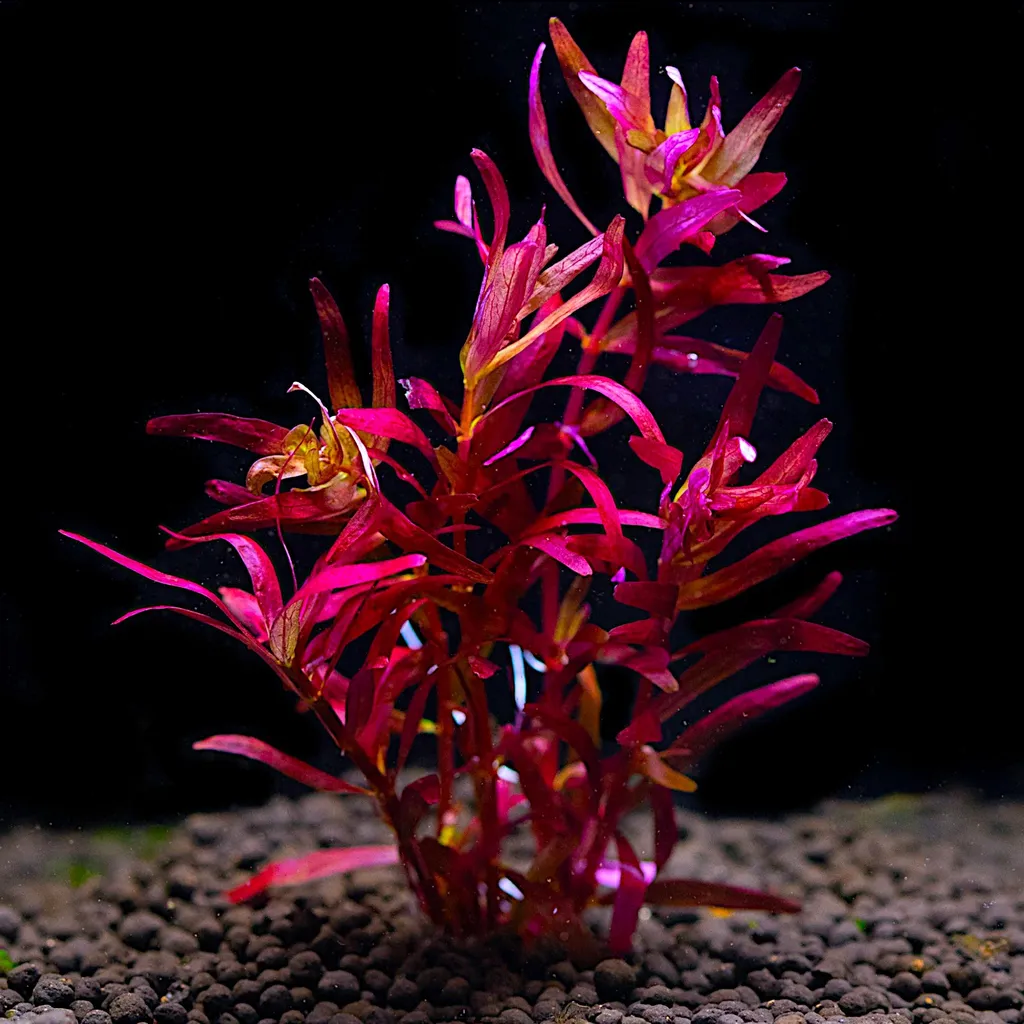
What changes with the high-color forms
Underneath the color they are the same fast, skinny stem. The high-color lines were selected for red that only develops under strong light with iron on tap; in a modest setup they slide back toward green.
Color follows light
All rotundifolia forms decide their color by conditions: light intensity first, then iron and how lean the water is on nitrate. The standard form stays green with pink tips in most tanks, while Colorata, Orange Juice and Blood Red were picked out precisely because they turn orange to crimson once the light is strong enough.
Trim it like a hedge
Rotala grows toward the light and bares its lower stems if left alone. Top the stems every couple of weeks, replant the cuttings in front, and the stand thickens into the dense bush the plant is famous for. It is nearly impossible to over-trim.
Names from everywhere
Ceylon is the old name for Sri Lanka, Wayanad is a district in Kerala, Manipurensis points to Manipur in northeast India, and H'ra came out of Vietnam, where it is also sold as Gia Lai: regional collections of the same species. Colorata, Orange Juice and Blood Red are nursery selections named for their color. All of them are Rotala rotundifolia, whatever the shop tag says.
Overview
A classic background and mid-ground stem plant, planted by pushing individual stems into the substrate a couple centimeters apart. It is forgiving and will grow in low tech tanks once acclimated, but it shows its best density and the pink-to-red tops under stronger light, CO2, and lean nitrate with good iron and micros. Trim and replant the cut tops to bush it out; left untrimmed it grows fast, reaches the surface, and shades out the lower stems.
In the wild
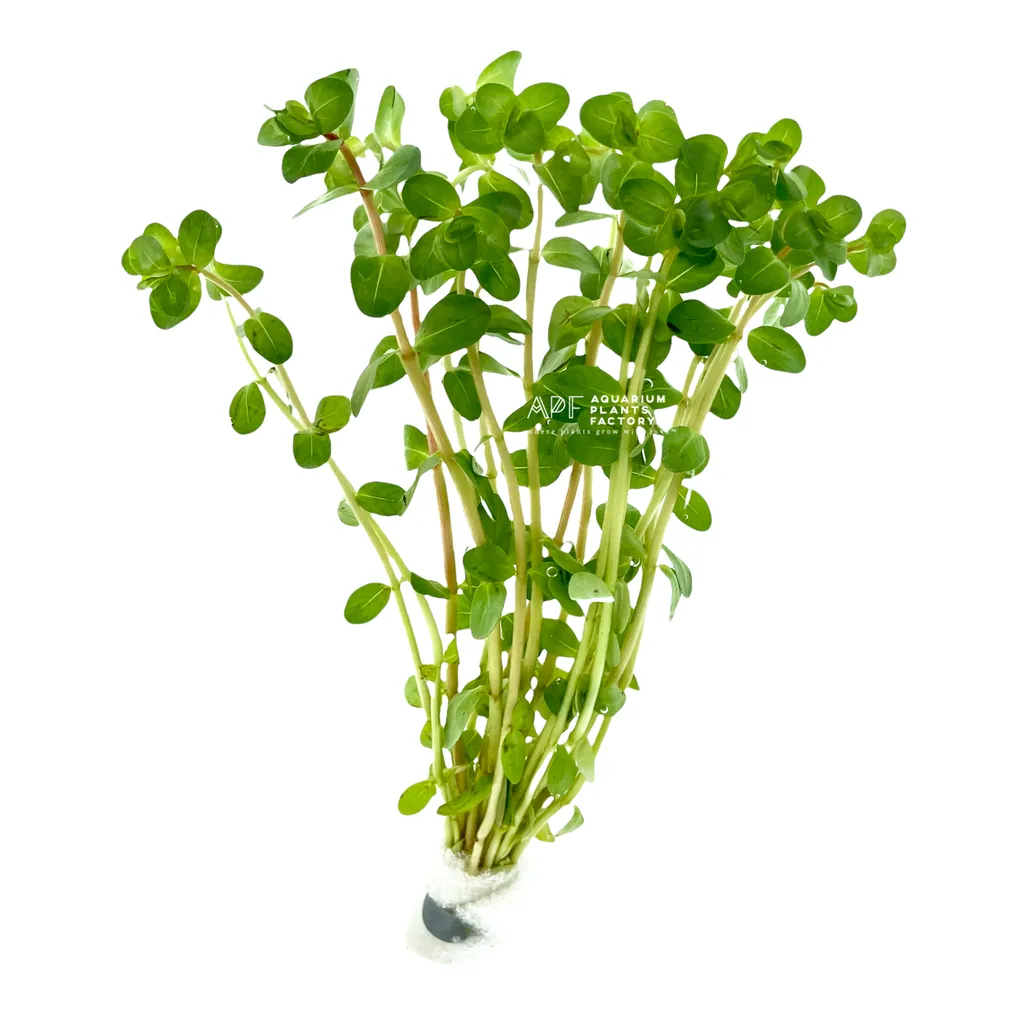
Grows across South, Southeast and East Asia in swamps, ditches, riversides and rice paddies. In the wild it spends much of its life emersed in shallow, often soft to moderately hard water, only becoming fully aquatic when the water rises. The emersed and submersed forms look noticeably different, with the submersed growth producing the narrow green-to-pink leaves hobbyists know.
Good to know
A member of the loosestrife family, Lythraceae. The leaf shape is variable: emersed plants have rounder leaves (the source of the name rotundifolia, meaning round-leaved), while submersed stems put out much narrower leaves. It is frequently confused with and sold as Rotala indica, but the two are distinct species. Grows as upright stems with opposite or whorled leaves rather than from runners.
Did you know
Its color is driven as much by fertilizer balance as by light. Keepers chasing the pinkest tops deliberately run low nitrate with high light, iron, and micronutrients, since rich nitrate keeps the plant green.
Common questions
Which rotala stays red?
None of them is red on its own; the high-color forms hold red only under strong light with iron in the water. Blood Red goes the deepest, and it is also the most demanding of the group.
Why is my rotala green at the bottom?
The lower leaves are shaded by the canopy above. Trim the tops and replant them; the fresh, well-lit growth carries the color.
Is rotala good for beginners?
Rotundifolia, Green and Ceylon are among the best first stem plants there are. The high-color forms are better saved for tanks with strong light and CO2.
Related plants
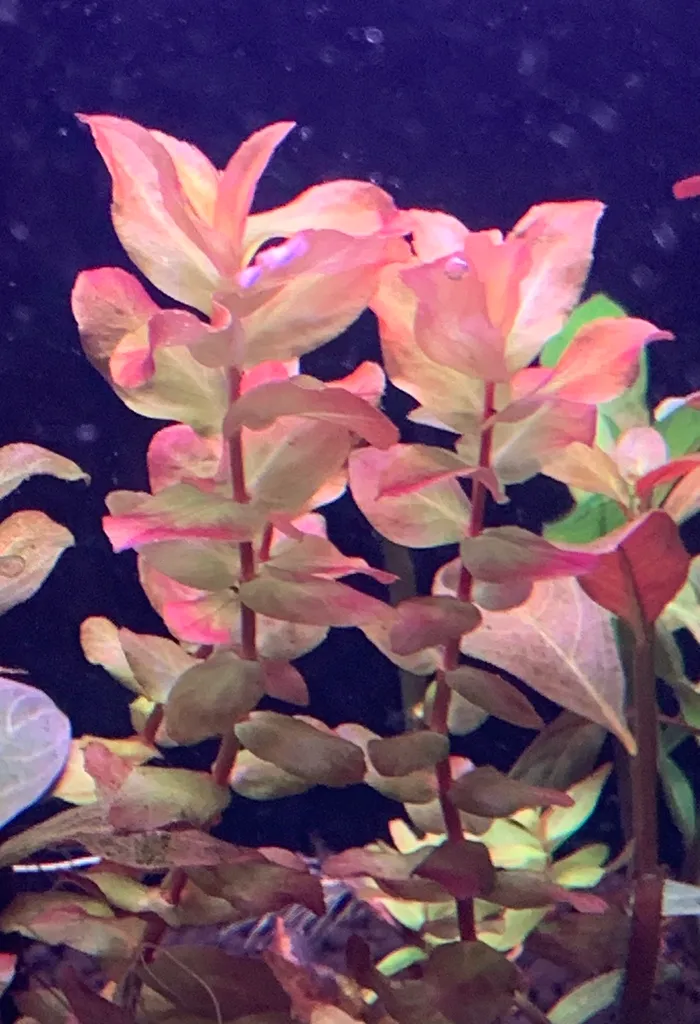 High lightBackground19.7 in (50 cm)
Rotala macrandra
High light · Background
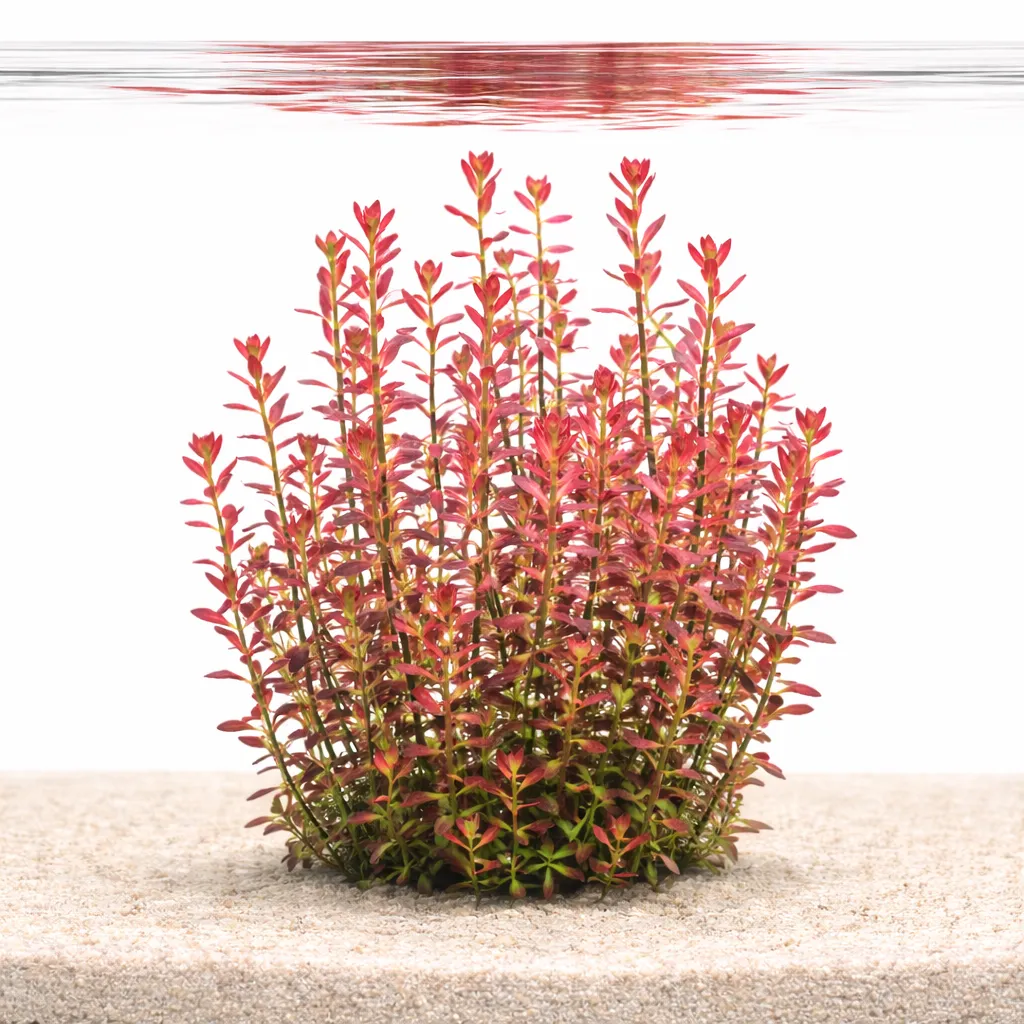 High lightBackground15.7 in (40 cm)
Rotala ramosior
High light · Background
- High lightBackground15.7 in (40 cm)
Rotala macrandra Bangladesh
Rotala macrandra 'Bangladesh'
High light · Background
- High lightBackground15.7 in (40 cm)
Rotala macrandra Green
Rotala macrandra 'Green'
High light · Background
- High lightBackground15.7 in (40 cm)
Rotala macrandra Narrow Leaf
Rotala macrandra 'Narrow Leaf'
High light · Background
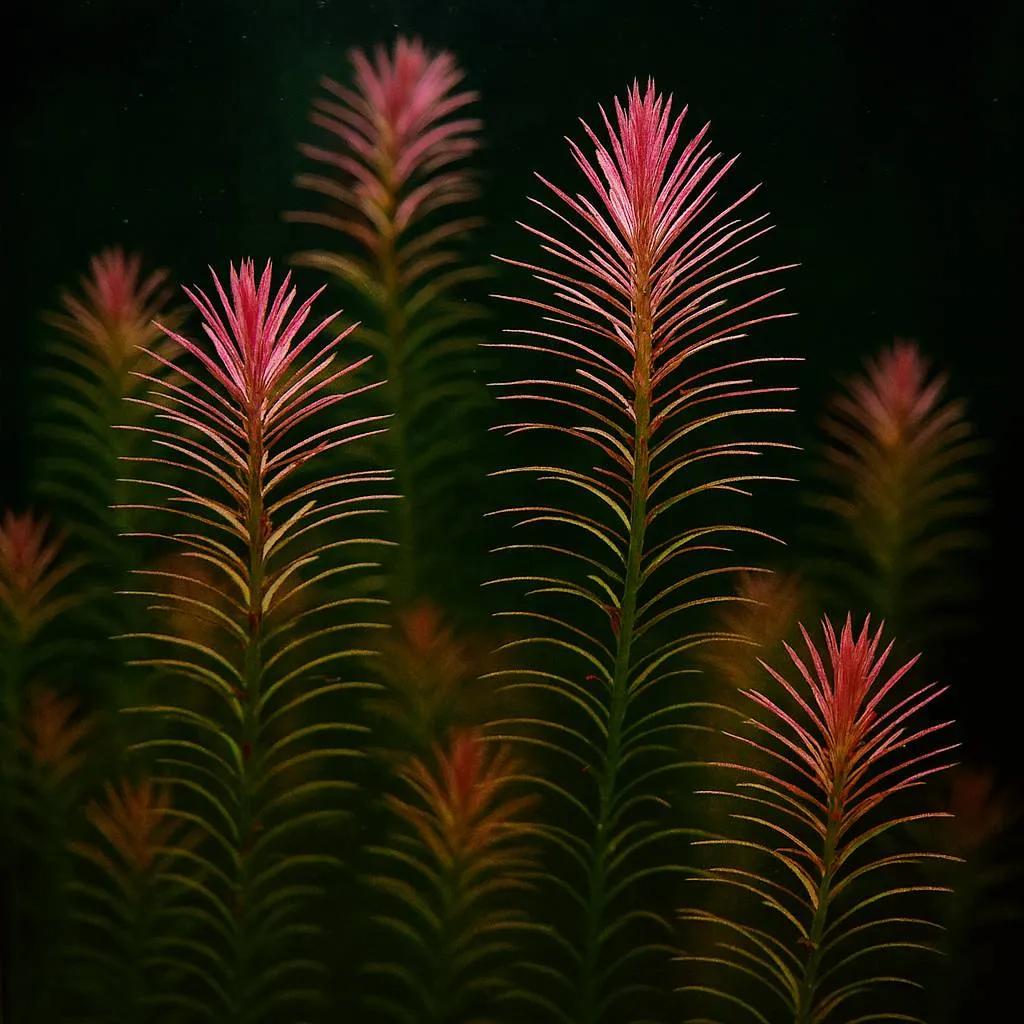 High lightBackground11.8 in (30 cm)
Rotala wallichii
High light · Background