Form of Rotala rotundifolia
Rotala Ceylon
Rotala rotundifolia 'Ceylon'
One of 11 forms of Rotala rotundifolia · See all forms →
Also known as Rotala sp. 'Ceylon', Rotala sp. 'Pink'
FreshwaterStemCuttingsSide shoots
Forms · Rotala rotundifolia
See all 11 →
Care at a glance
- Light
- Medium light
- CO2
- CO₂ beneficial
- Temperature
- 70–86°F
- 21–30°C
- Max height
- 19.7 in
- 50 cm
- Growth rate
- Fast
- Placement
- Background
- Type
- Stem
- pH
- 5.0–8.0
- Hardness
- 4–15 dGH
- Spread
- 2 in (5 cm)
- Nutrient uptake
- Root + water column
- Growth region
- Submersed or emersed
- Difficulty
- Medium
- Family
- Lythraceae
- Origin
- Sri Lanka (formerly Ceylon)
Overview
Rotala Ceylon is a fast-growing stem plant for the background and one of the more forgiving rotalas. It is of medium difficulty.
Did you know
Rotala Ceylon owes much of its popularity to Takashi Amano, the pioneer of nature aquascaping. He featured it in his layouts after it was exported from the island.
Caring for Rotala Ceylon
Plant Rotala Ceylon as single stems in the background. It tolerates a wide range of water parameters, including harder water.
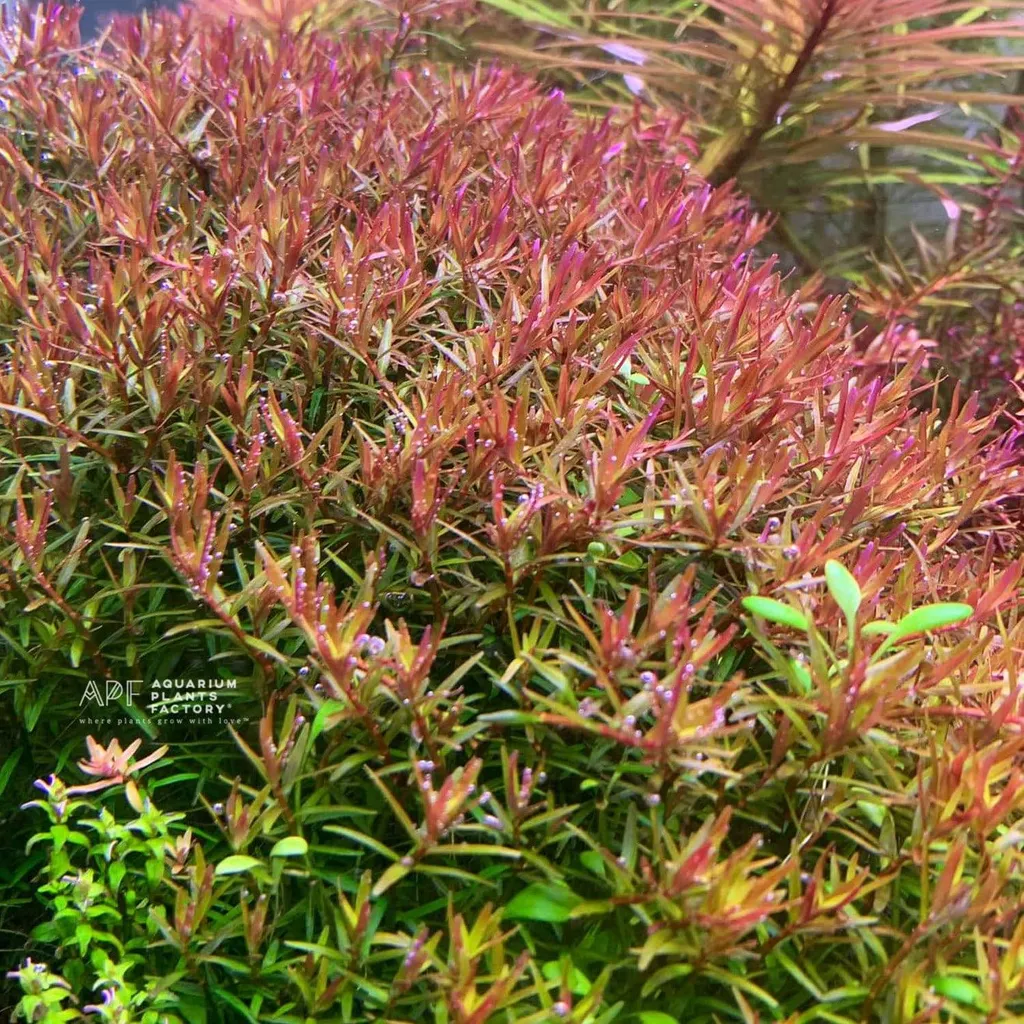
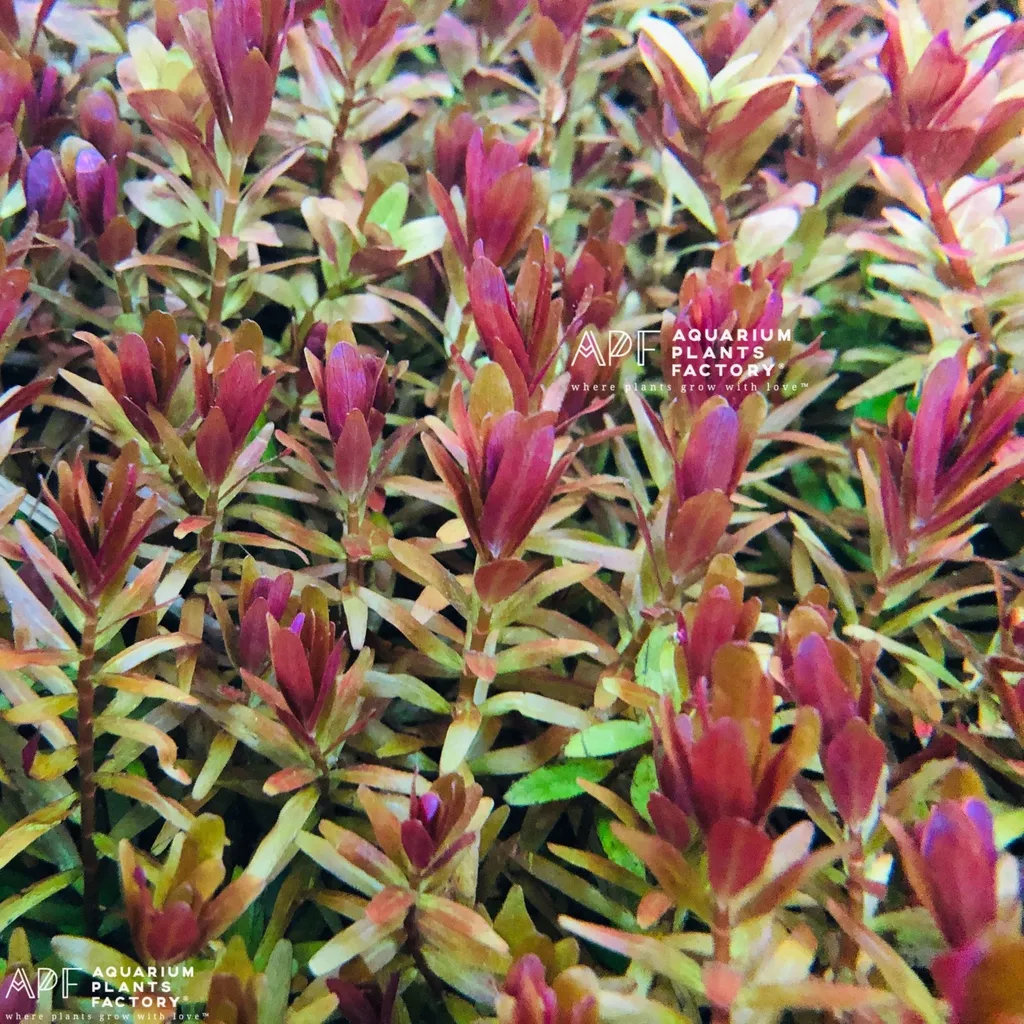
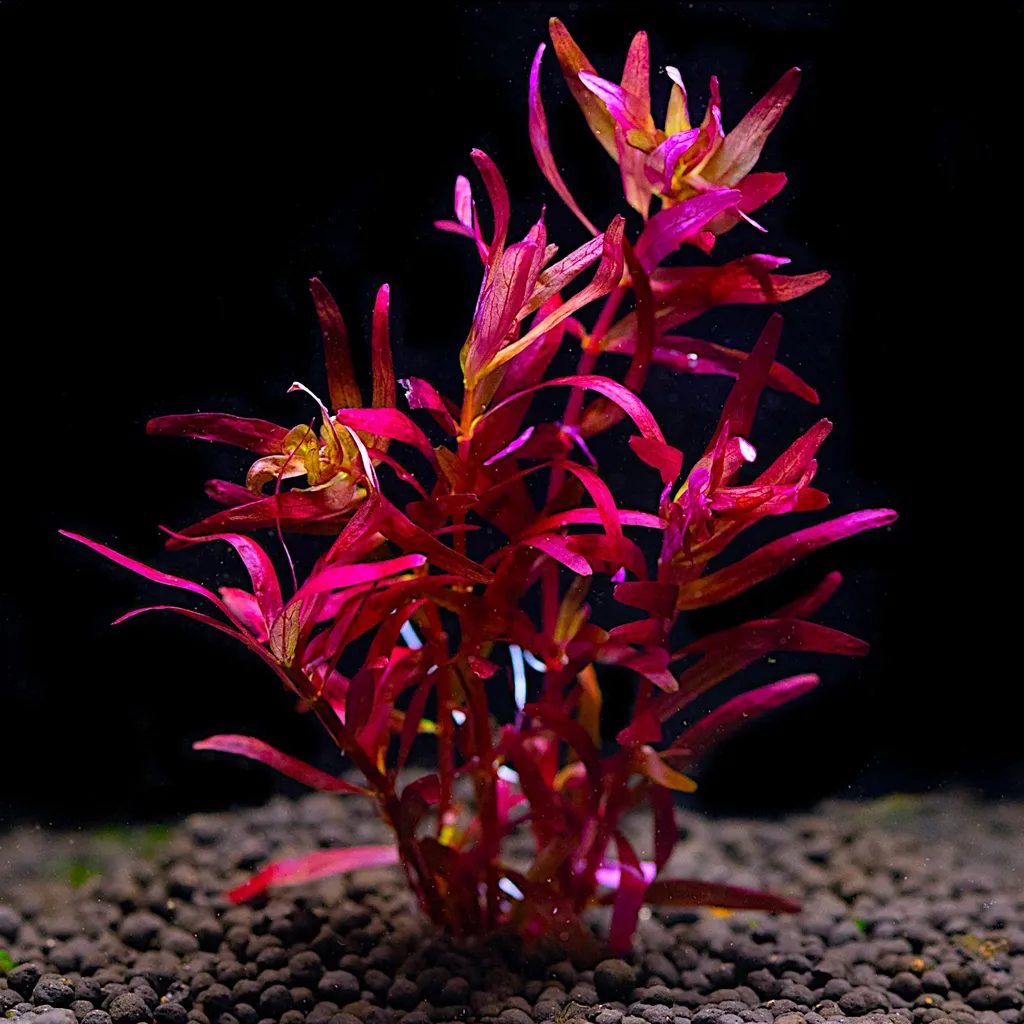
Medium light is enough, and it needs no injected CO2, though CO2 speeds it up. In modest light it stays green and blushes pink at the tips only under strong lighting, so treat the color as a bonus. It feeds through roots and leaves, so use root tabs and a liquid fertilizer. It handles 70 to 86°F (21 to 30°C).
It grows fast and regrows readily after trimming, without needing to be replanted every time. Replant the tops or cut side shoots free when you want more stems.
Good to know
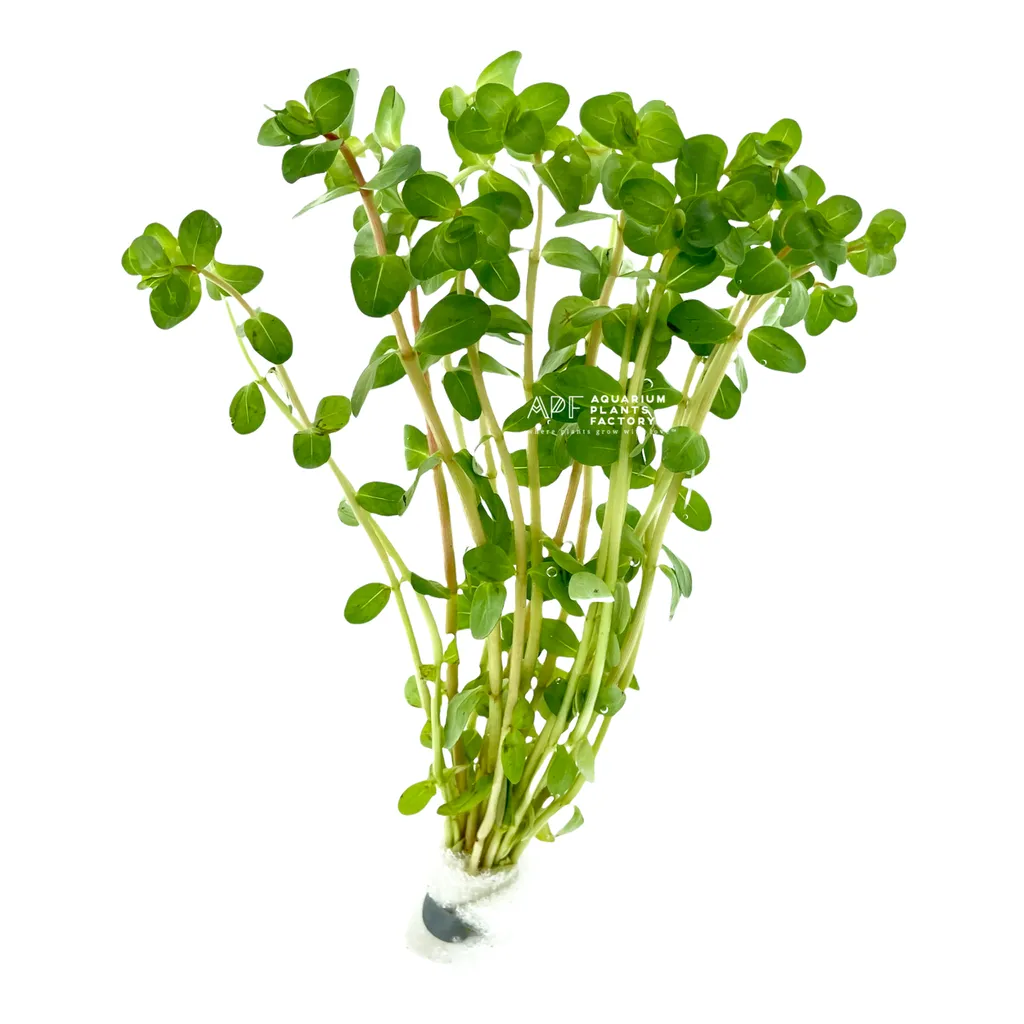
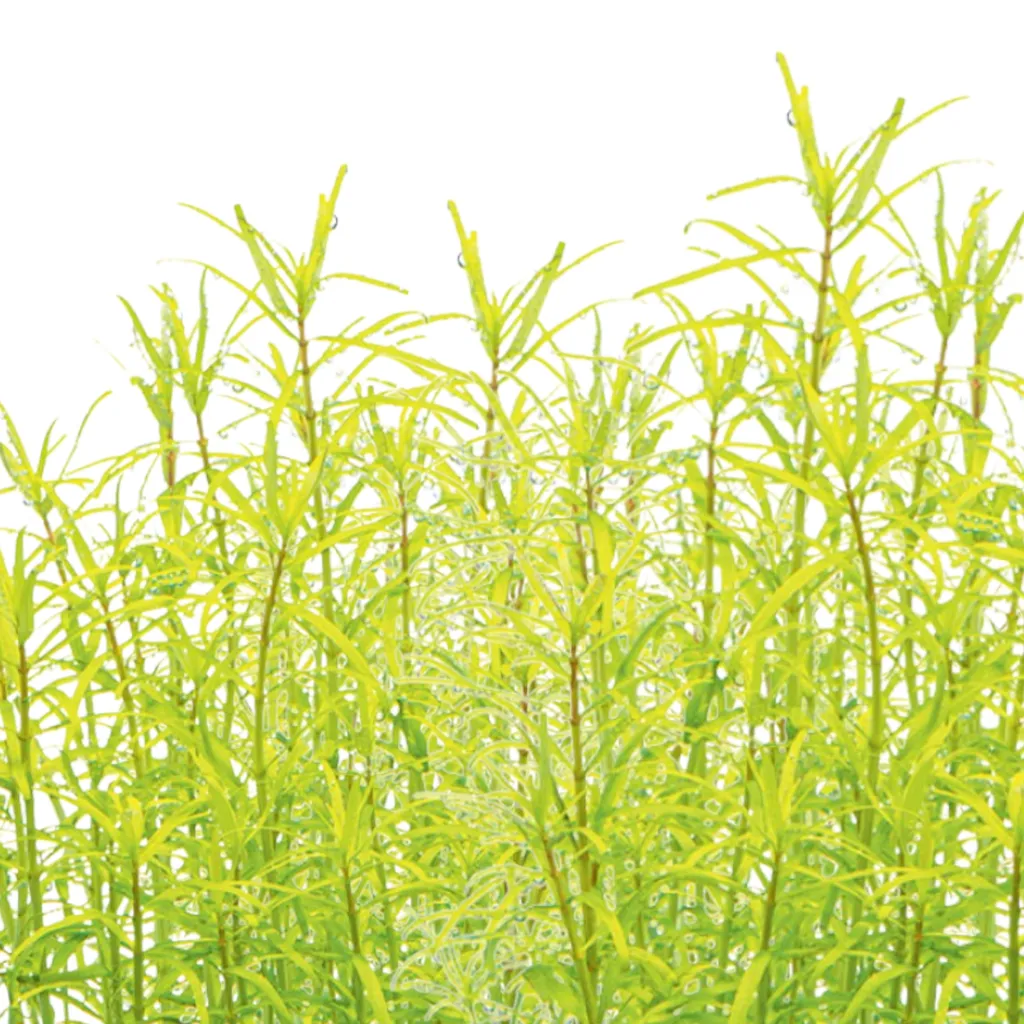
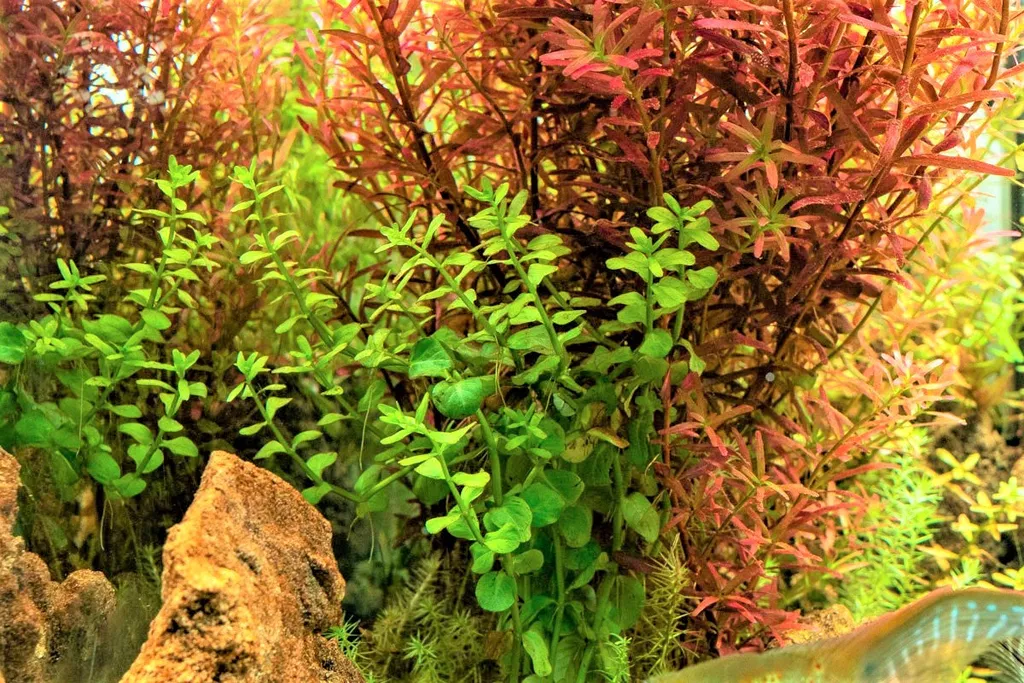
Rotala Ceylon is a regional variant of Rotala rotundifolia in the family Lythraceae, not a separate species. That is why it trades as Rotala sp. 'Ceylon' and sometimes as Rotala sp. 'Pink'. Its submersed growth is looser and more open than typical rotundifolia. The stems are thinner and darker, spiral upward and leave longer gaps between leaf pairs. The leaves are light green with a pinkish underside.
In the wild
Rotala Ceylon is a form of Rotala rotundifolia first exported from Sri Lanka, the island formerly called Ceylon. There it grows in shallow, brightly lit water. The parent species favors marshes, ditches and paddy fields across South and Southeast Asia.
Common questions
Is Rotala Ceylon a different species from Rotala rotundifolia?
No. Rotala Ceylon is a form of Rotala rotundifolia. Added CO2 helps it, while the species grows well without. It also differs in difficulty, pH and temperature.
Does Rotala Ceylon need to be planted in the substrate?
Yes. Strip the leaves from the lower part of each stem, then push the stems into the substrate one at a time, a little apart.
Does Rotala Ceylon need CO2?
No, but it helps. Rotala Ceylon can grow without injected CO2, and added CO2 makes it grow faster.
How much light does Rotala Ceylon need?
Rotala Ceylon wants medium light. A light sold for planted tanks covers it.
Does Rotala Ceylon need root tabs?
They help. Rotala Ceylon takes nutrients through both its roots and its leaves. Root tabs near its roots and a liquid fertilizer cover both.
How do you propagate Rotala Ceylon?
Rotala Ceylon propagates by cuttings and side shoots. Cut off the top of a stem and replant it, and the stump left behind grows new shoots. Cut a side shoot off once it has a few leaves and plant it on its own.
How tall does Rotala Ceylon grow?
Rotala Ceylon grows to about 19.7 in (50 cm) tall. It grows fast, so expect to trim it often.
Related plants
 High lightBackground19.7 in (50 cm)
Rotala macrandra
High light · Background
 High lightBackground15.7 in (40 cm)
Rotala macrandra Green
Rotala macrandra 'Green'
High light · Background
- High lightBackground15.7 in (40 cm)
Rotala macrandra Bangladesh
Rotala macrandra 'Bangladesh'
High light · Background
- High lightBackground15.7 in (40 cm)
Rotala macrandra Narrow Leaf
Rotala macrandra 'Narrow Leaf'
High light · Background
- High lightBackground15.7 in (40 cm)
Rotala ramosior
High light · Background
 High lightBackground11.8 in (30 cm)
Rotala macrandra Yellow
Rotala macrandra 'Yellow'
High light · Background