A demanding background stem plant that needs high light, pressurized CO2 (roughly 20 to 40 mg/L) and stable, nutrient-rich water to do well. Its leaves are fragile and it melts or drops leaves if conditions swing, so consistency matters more than any single parameter. Grows fast once settled, up to several centimeters a week, and is propagated by cutting the tops and replanting, which also triggers side shoots on the base. Space stems apart so light reaches the lower leaves and it does not self-shade.
In the wild
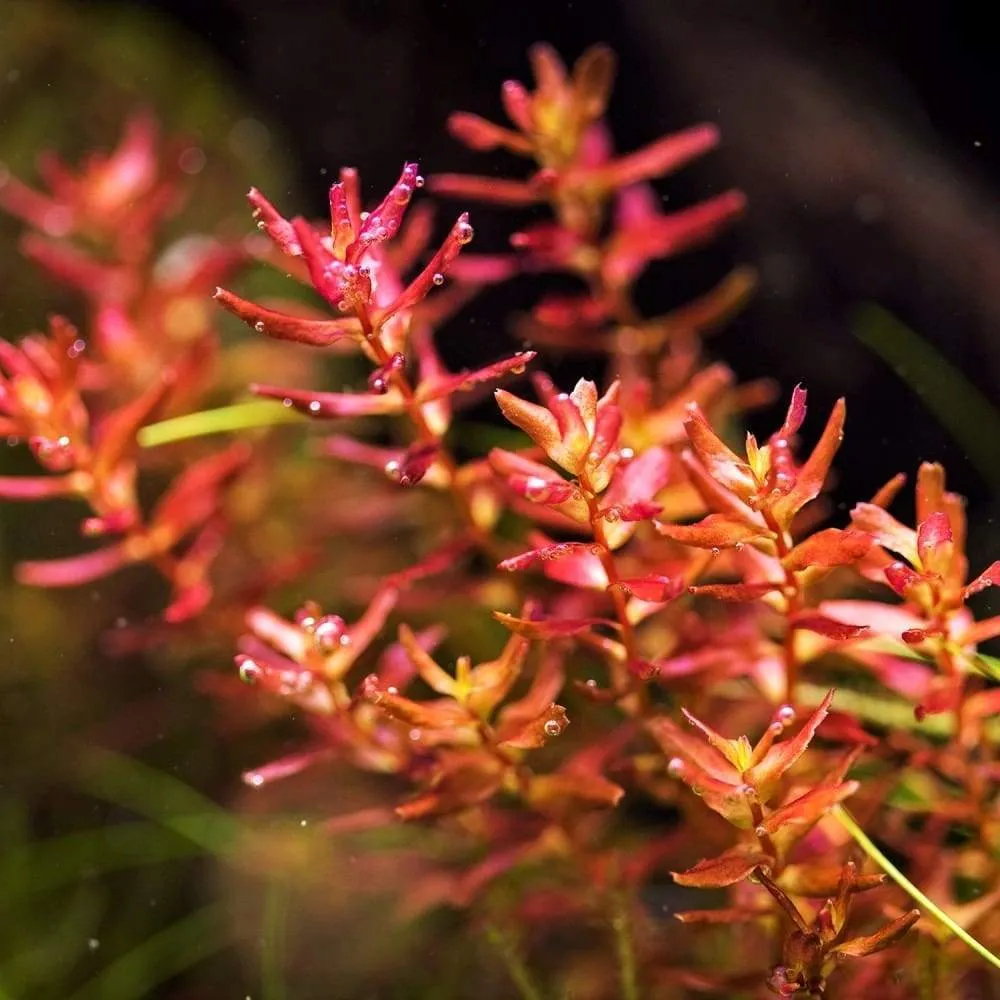
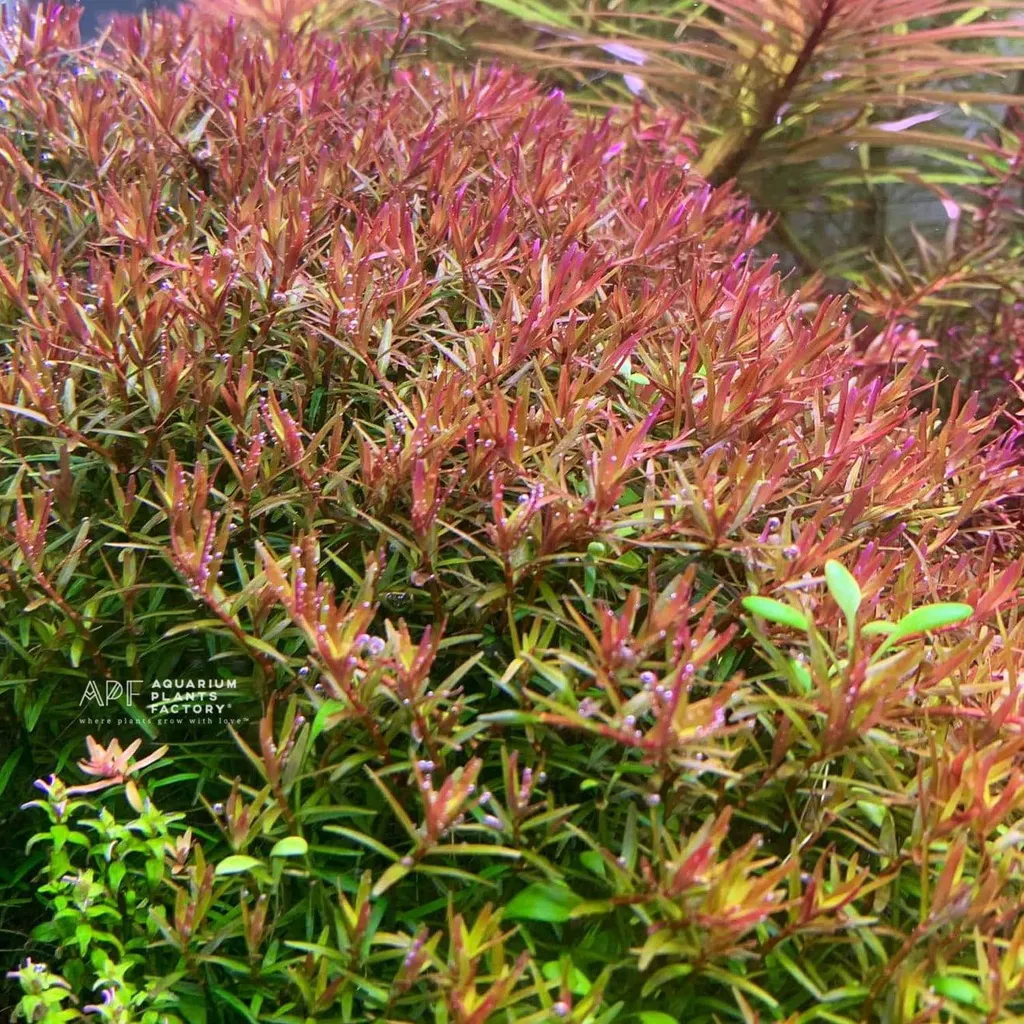
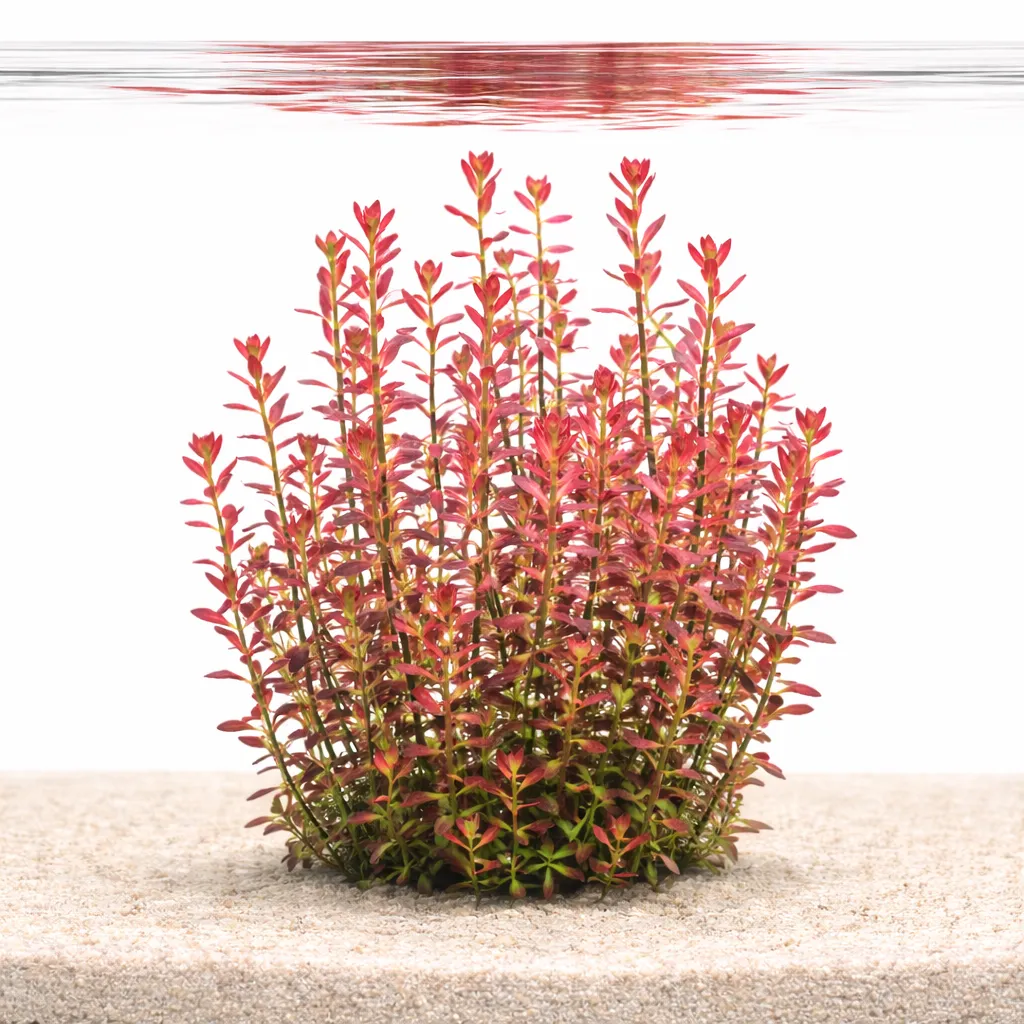
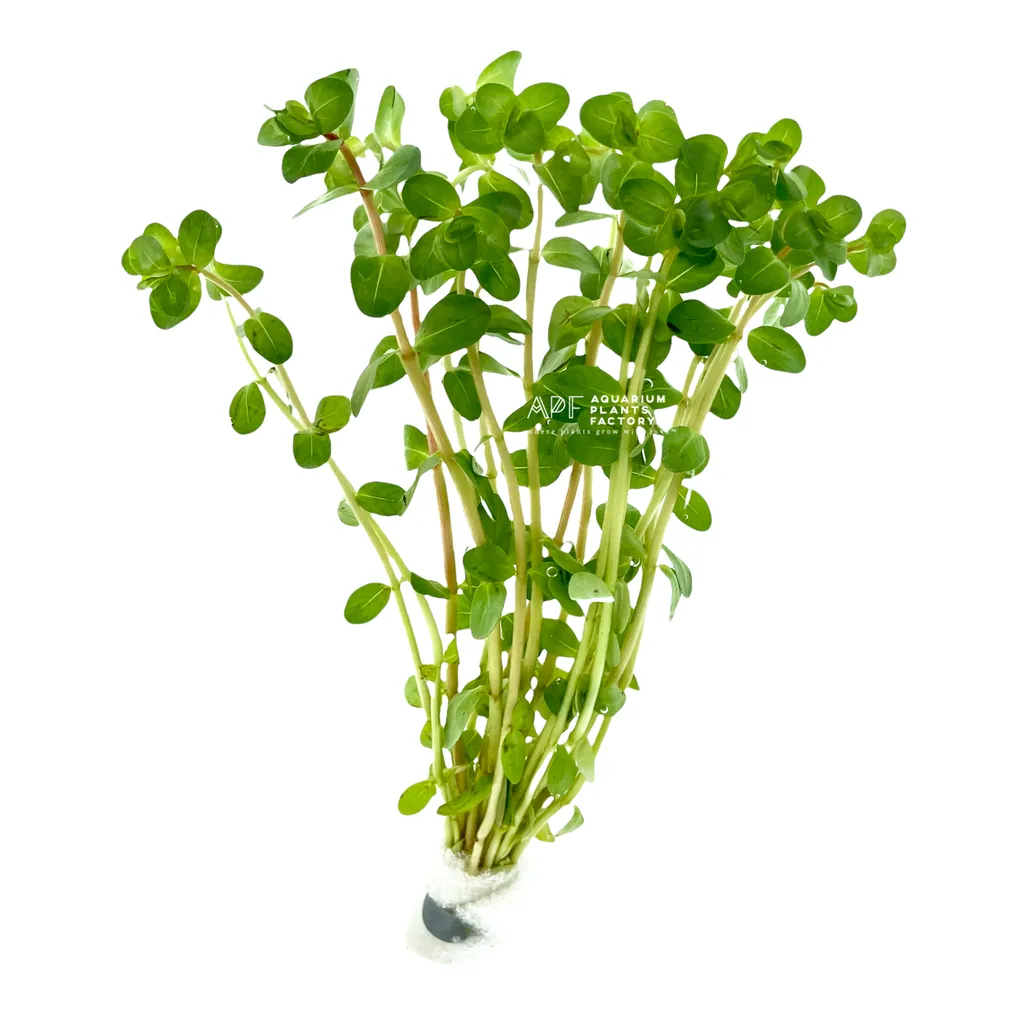
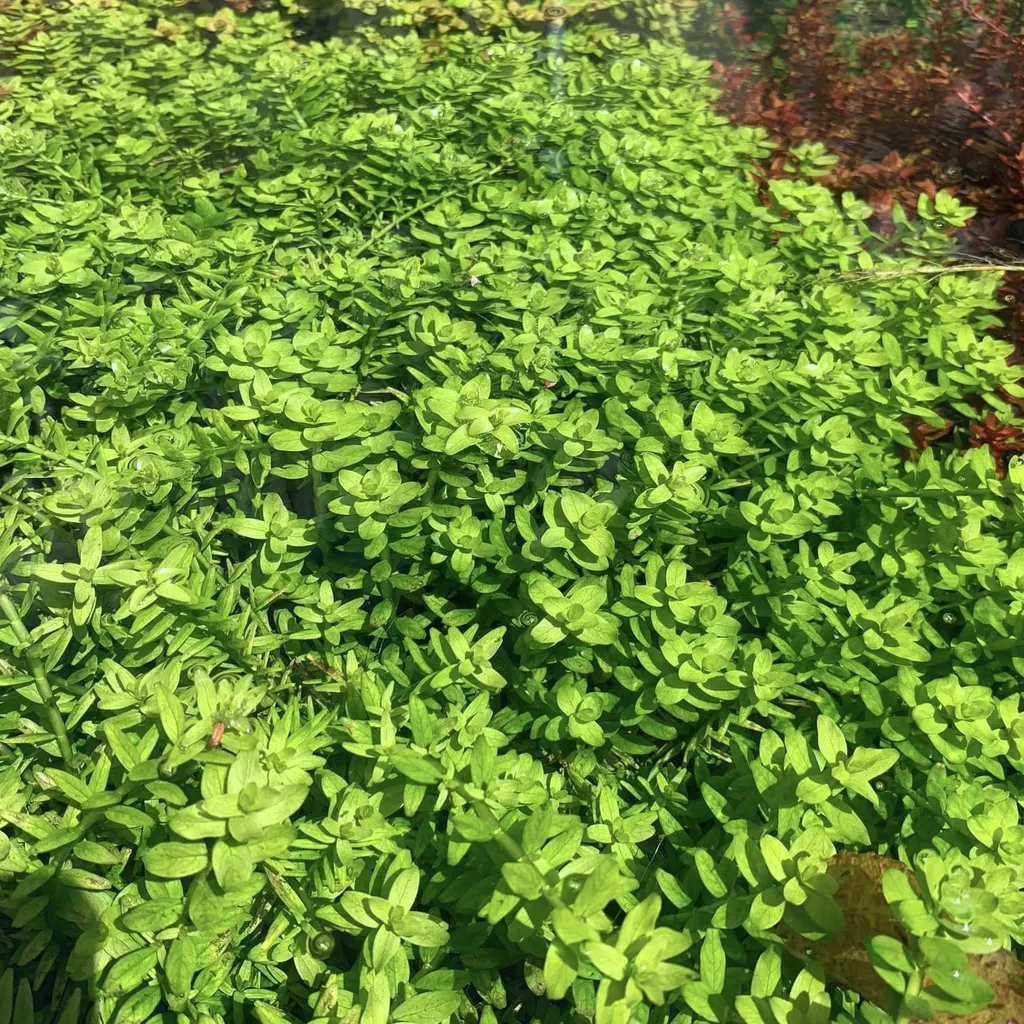
A green-leaved form of the Indian stem plant Rotala macrandra, native to seasonal wetlands, rice paddies and slow waters of the Indian subcontinent. In the wild the genus grows emersed and submersed along water margins that flood and dry with the seasons. This variety lacks the intense red of the standard macrandra, staying bright green with pink or golden tints at the tips under strong light.
Good to know
Rotala macrandra belongs to the loosestrife family Lythraceae. The 'Green' form is a color variant of the same species rather than a separate species, keeping the large soft leaves of true macrandra but without the red pigment load. Like other Rotala it shows heterophylly, with emersed growth producing different leaf shapes than the submersed aquarium form.
Did you know
Despite being the 'Green' variety, it will still blush pink to golden at the growing tips when phosphate is adequate and light is very strong, a milder echo of the vivid red its parent macrandra is famous for.
 High lightBackground15.7 in (40 cm)
 High lightBackground15.7 in (40 cm)
 Medium lightBackground19.7 in (50 cm)
 Medium lightBackground19.7 in (50 cm)