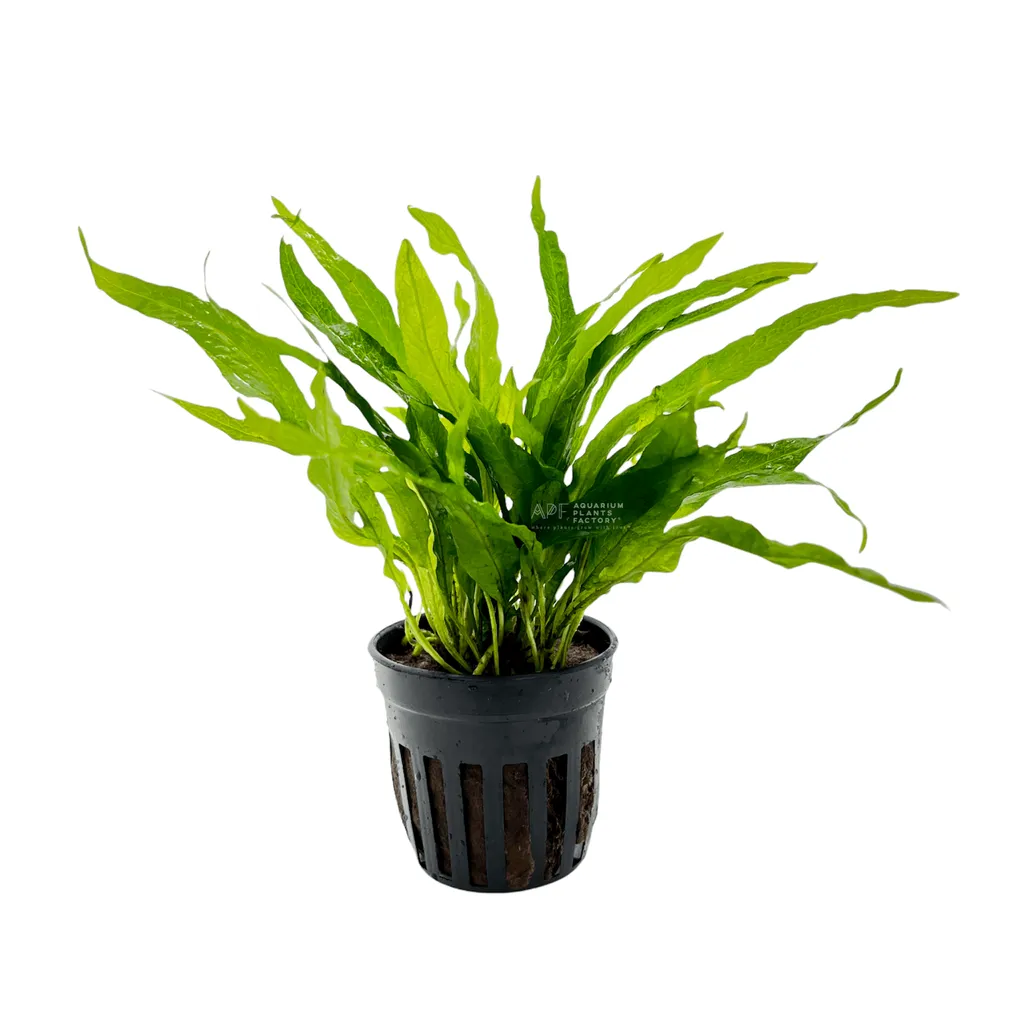
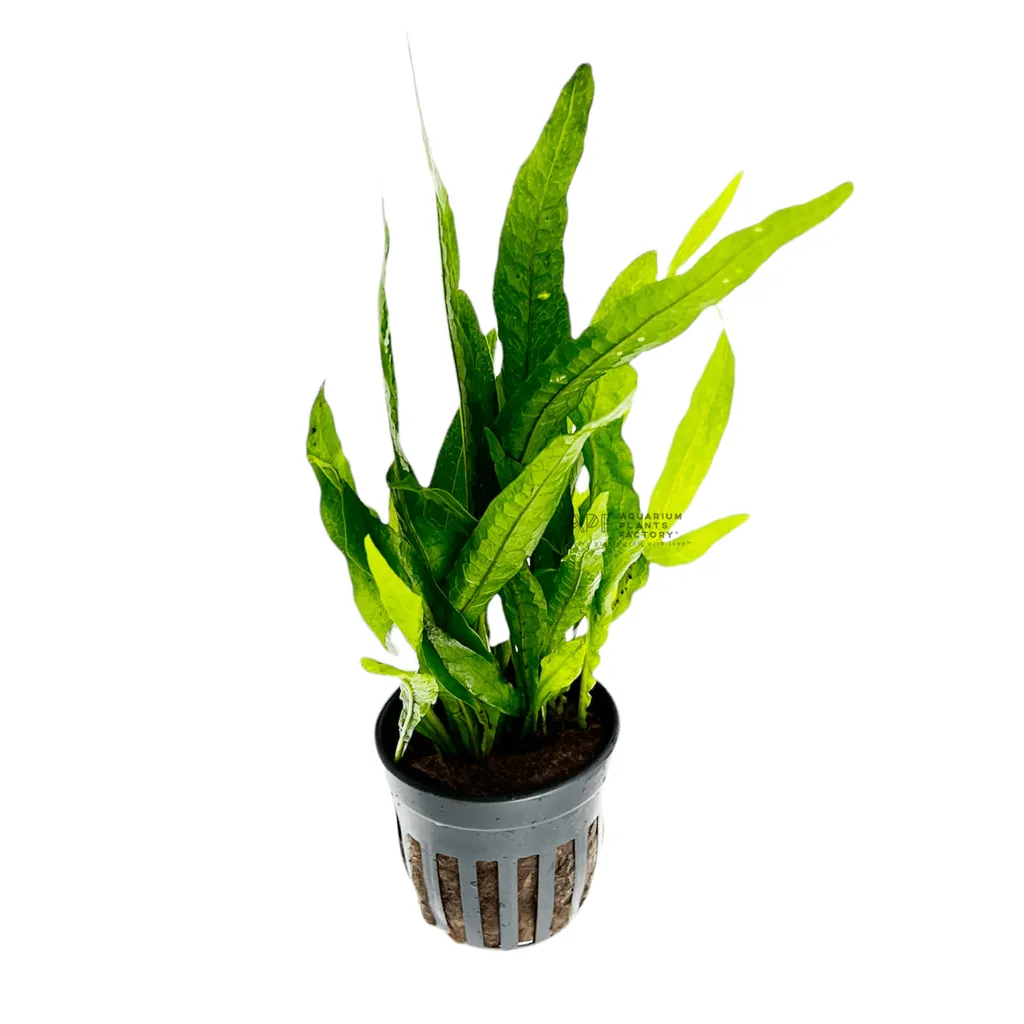
Cultivar (Tropica selection of a Southeast Asian species)
Overview
Glue or tie the rhizome to wood or rock and never bury it in substrate, the same rule as every Java fern. It stays compact at around 15 to 20 cm, making it a tidy midground or foreground-on-hardscape choice. It thrives in low light with no CO2, but the finely branched tips trap detritus, so a little water movement and the occasional gentle blast with a turkey baster keeps the lace looking clean.
In the wild
A cultivated form with no true wild population, derived from the Southeast Asian Java fern that grows along streams and rivers in Malaysia, Thailand and nearby regions. The parent species attaches to rocks, wood and roots and lives both above and below the waterline, traits the cultivar keeps. Windelov exists only because it was selected and propagated in the aquarium trade.
Good to know
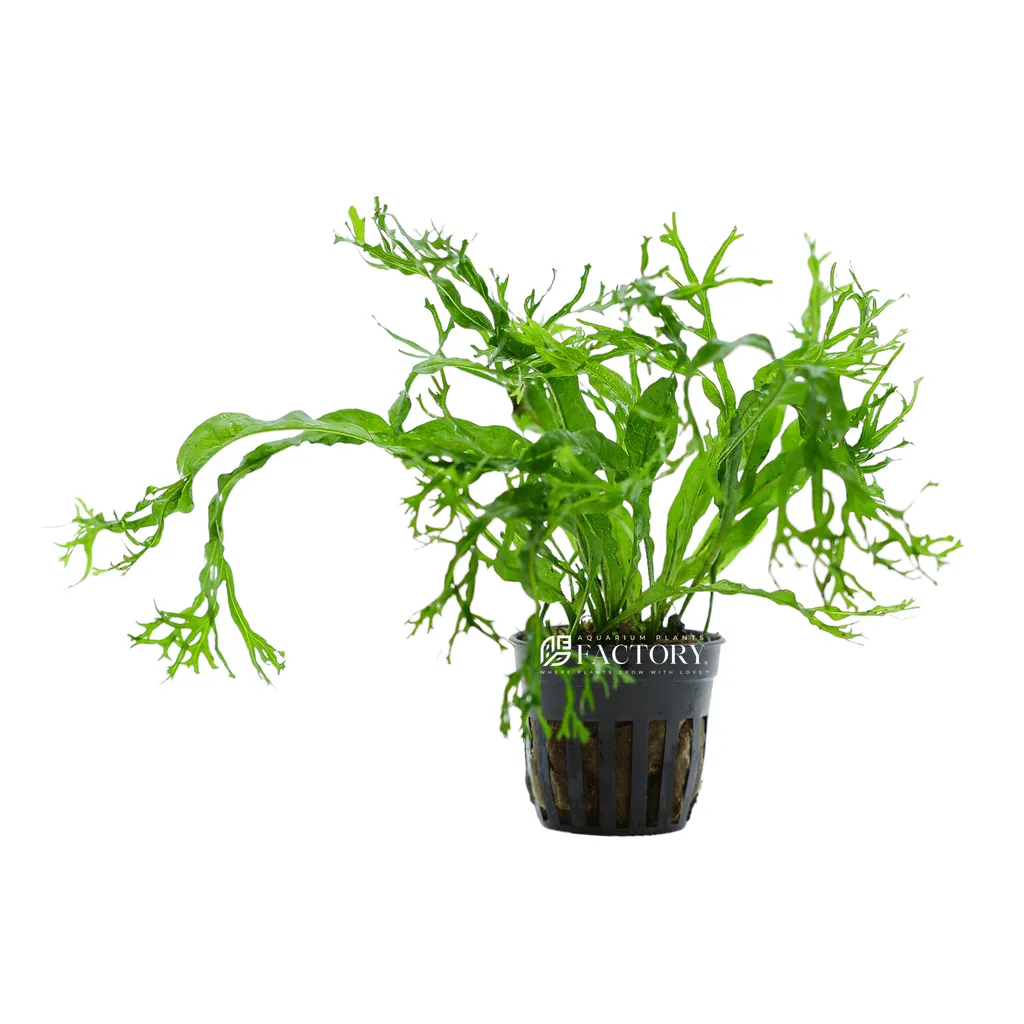
Named after Holger Windeløv of Tropica, this is a crested leaf form of Microsorum pteropus (Polypodiaceae, syn. Leptochilus pteropus) whose fronds finely branch and split at the tips into a lacy, antler-like fan. It is a rhizome plant that spreads by creeping rhizome and clones itself through plantlets on the leaf edges. The crested trait is fixed and reproduces true from those plantlets.
Did you know
It is named after Holger Windeløv, the founder of the Danish plant nursery Tropica, making it one of the few aquarium plants named after a real person in the trade.