Variety of Java fern
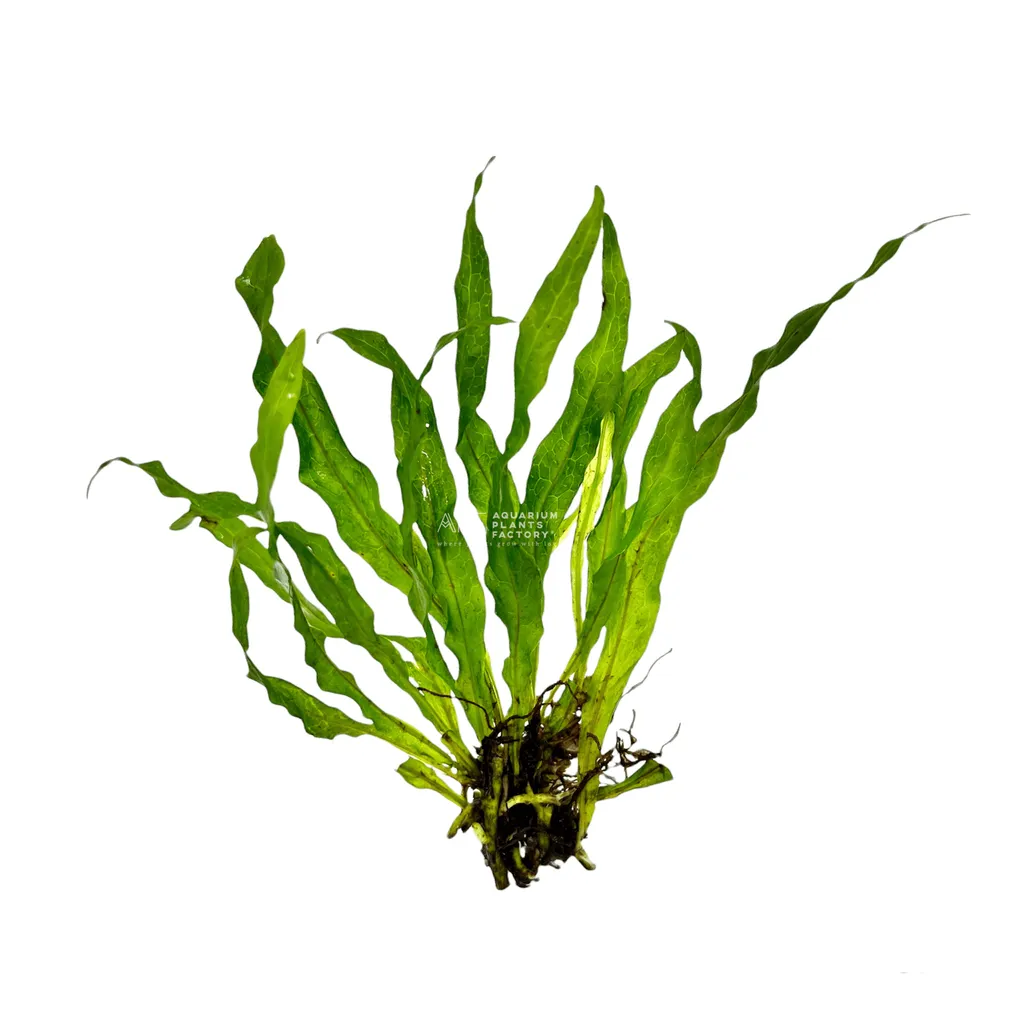
Flaming java fern
Leptochilus pteropus 'Flaming'
One of 15 varieties of Leptochilus pteropus · See all varieties →
Also known as Microsorum pteropus 'Flaming', Microsorum pteropus 'Flame', Java fern Flaming, Java fern Flame
FreshwaterBrackishRhizomeRhizome divisionPlantlets
Varieties · Leptochilus pteropus
See all 15 →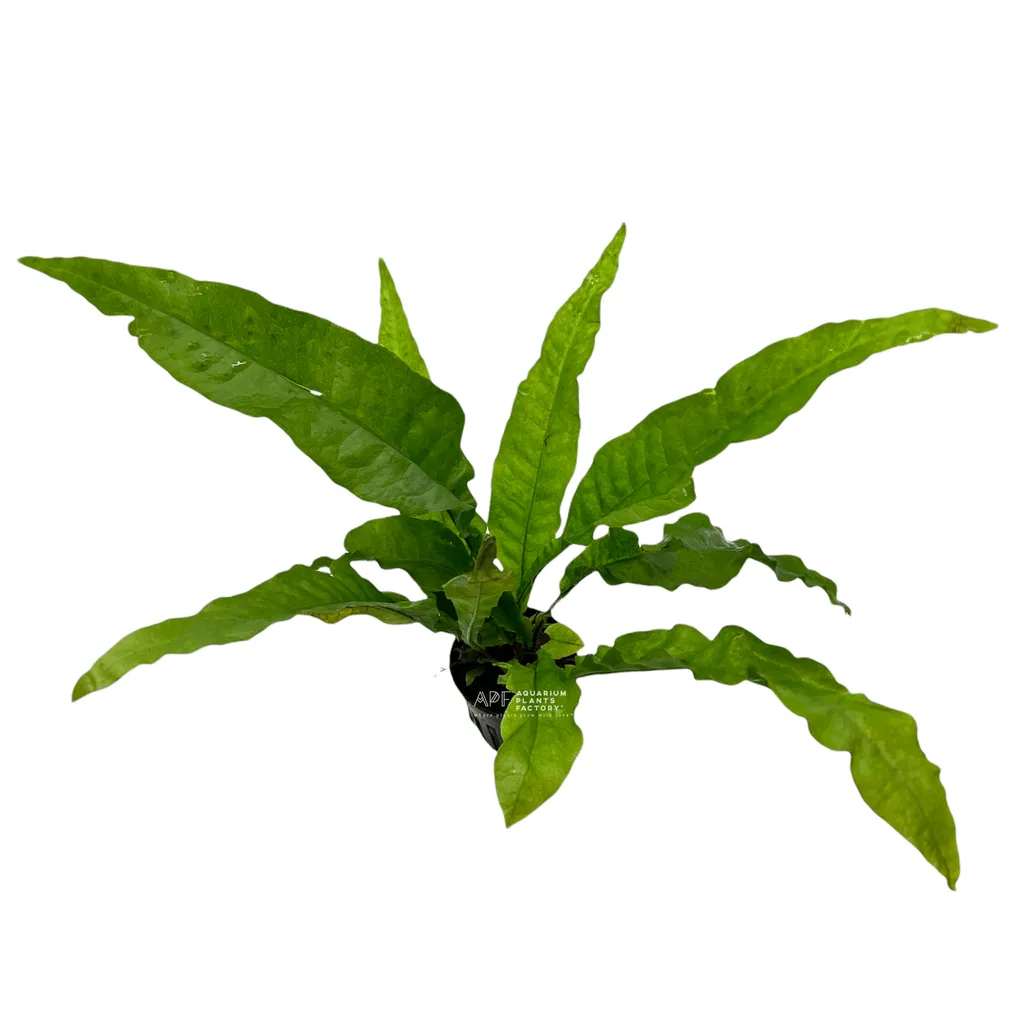
Care at a glance
- Light
- Low light
- CO2
- No CO₂ needed
- Temperature
- 64–82°F
- 18–28°C
- Max height
- 7.9 in
- 20 cm
- Growth rate
- Slow
- Placement
- Epiphyte
- Type
- Rhizome
- pH
- 5.0–7.5
- Hardness
- 2–15 dGH
- Spread
- 7.9 in (20 cm)
- Nutrient uptake
- Water column
- Growth region
- Submersed or emersed
- Difficulty
- Beginner
- Family
- Polypodiaceae
- Origin
- Cultivated form (nursery selection, no wild range)
Overview
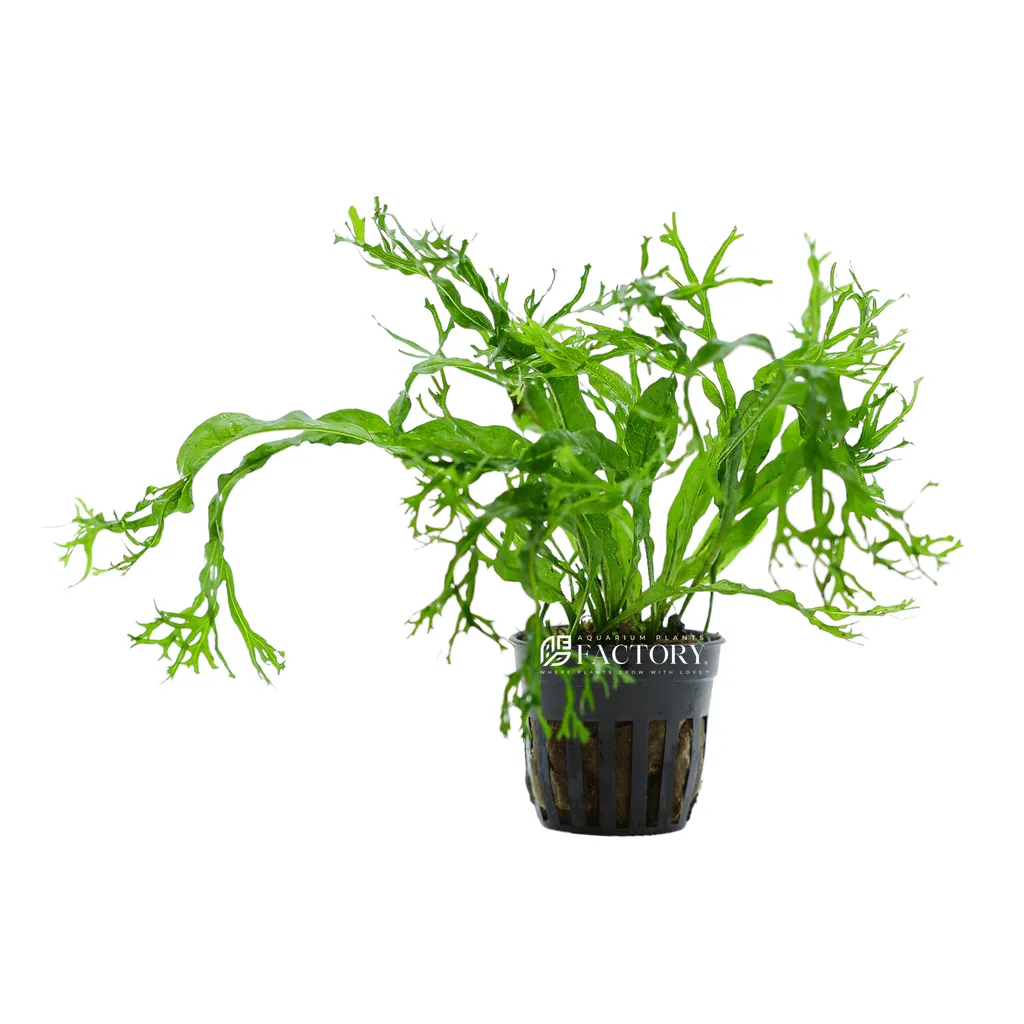
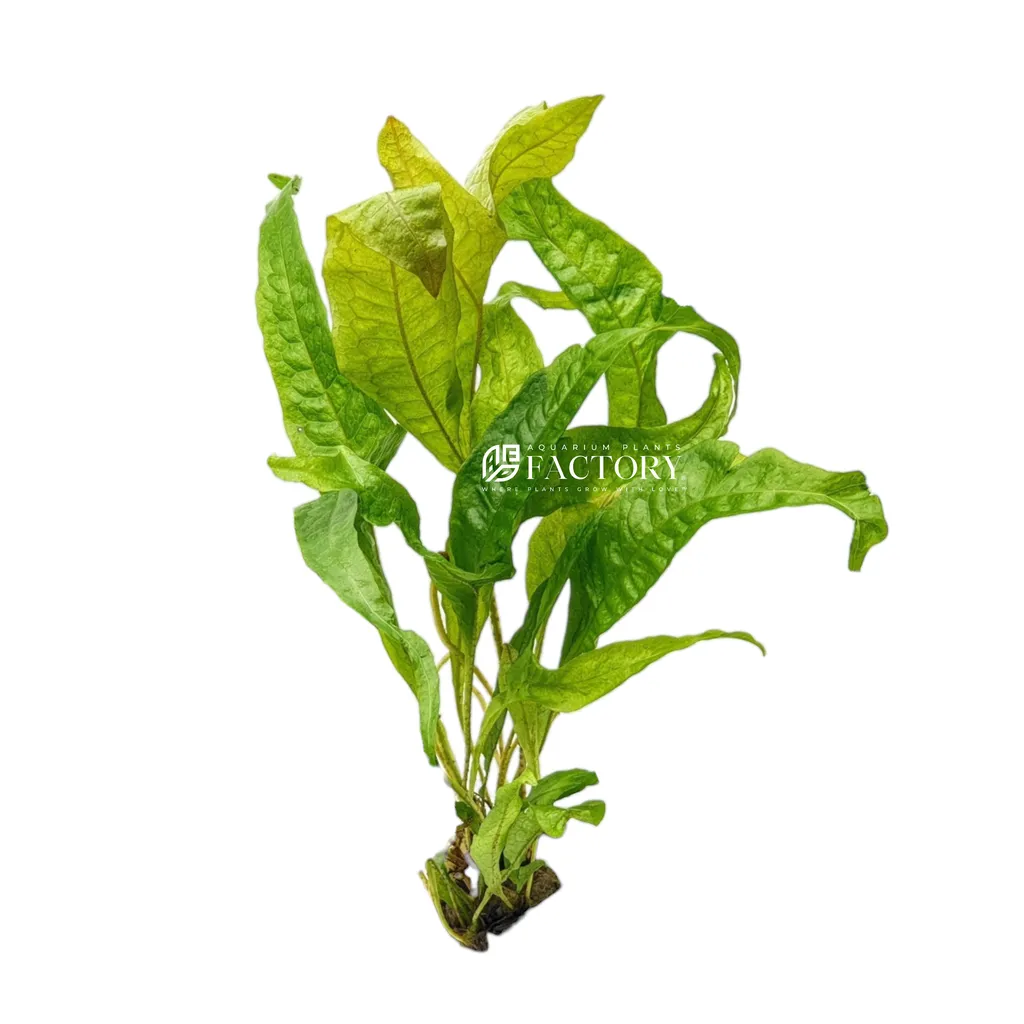
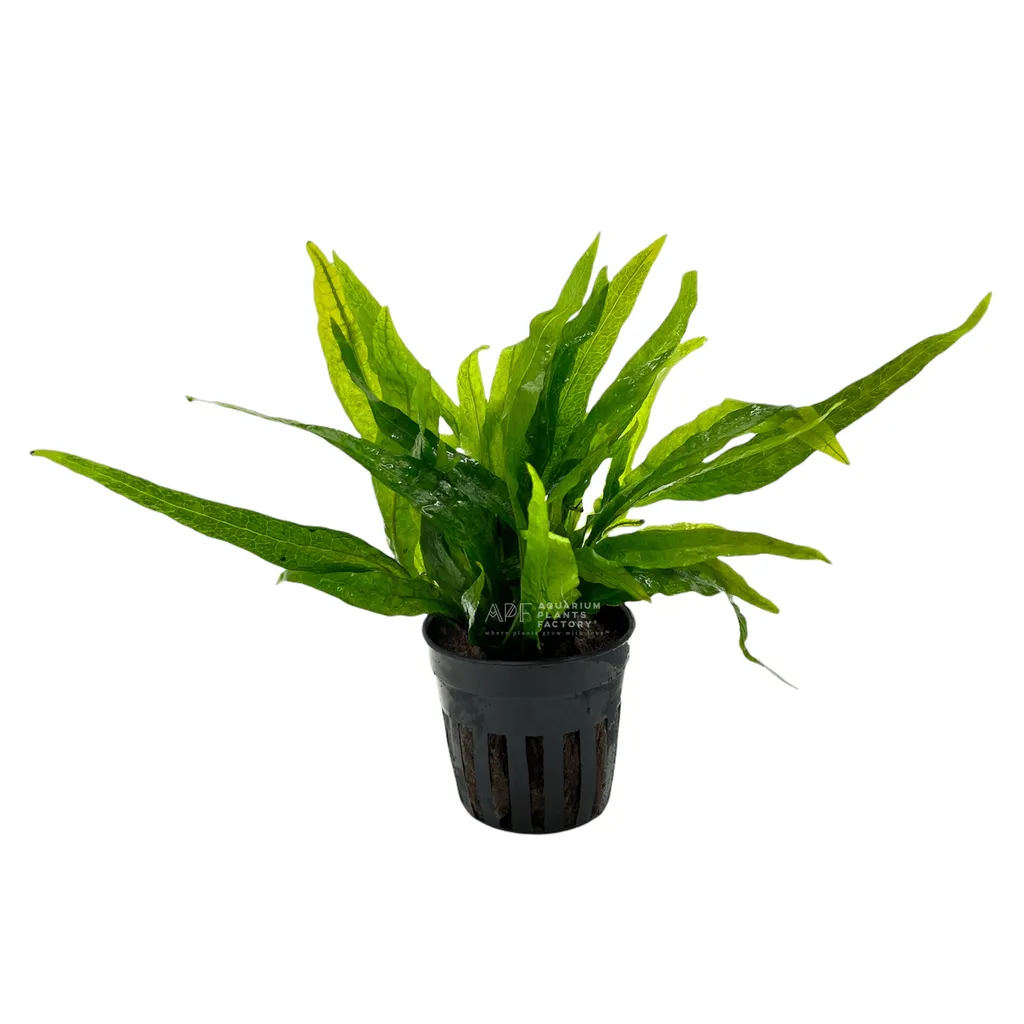
Flaming java fern goes on driftwood or stone with the rhizome left in open water, since a buried rhizome rots. It stays around 20 cm, a little shorter than plain java fern, and fills the midground. Place it in gentle flow so the wavy leaves move. Low light and no CO2 are enough. Extra light mostly grows algae, which is hard to clean out of its ruffled leaves. Propagate it by cutting the rhizome into pieces with a few leaves each, or by moving the plantlets that form on older leaves.
In the wild
Flaming java fern is a trade form with no known wild population. Buce Plant and Glass Aqua both listed it in December 2018, and nursery stock is grown out of water. The parent species grows on rocks, roots and wood along Southeast Asian streams and waterfalls, where water levels rise and fall with the seasons.
Good to know
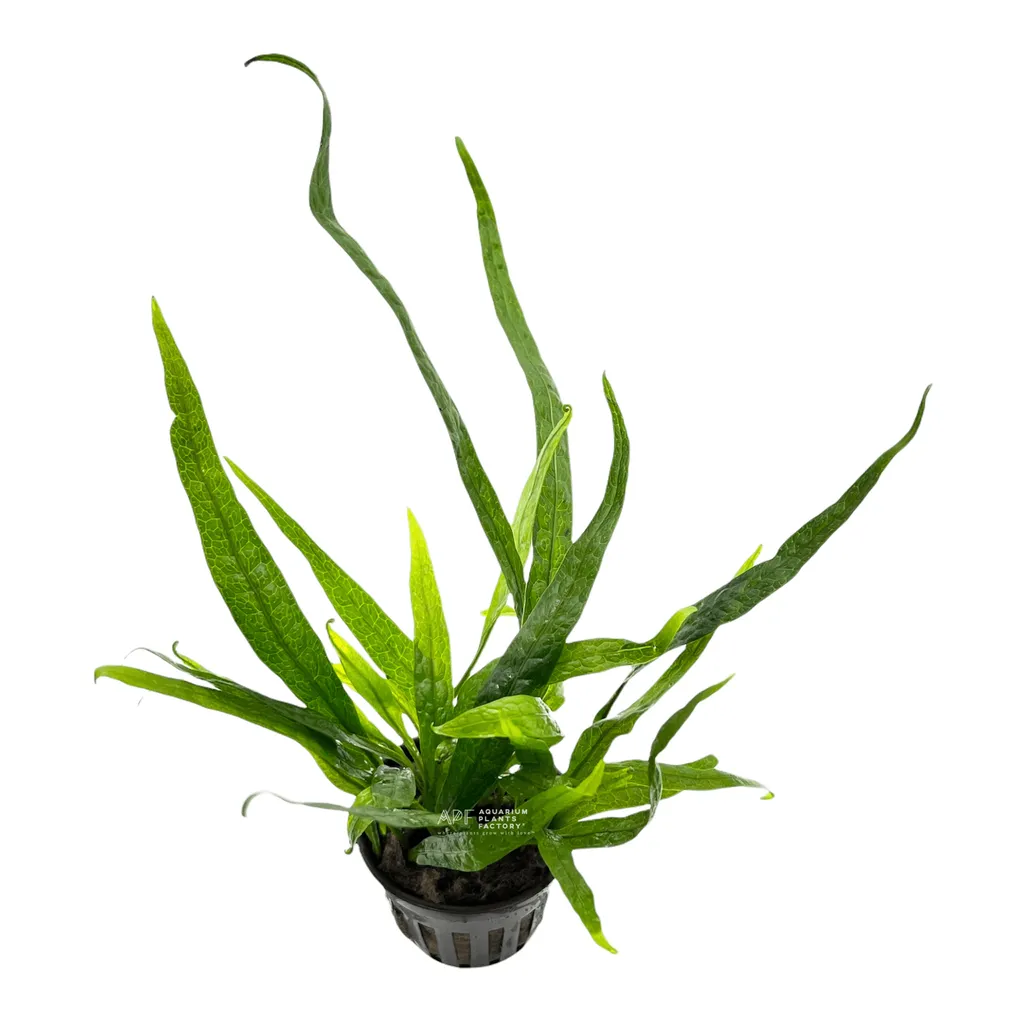
Flaming is a cultivar of Leptochilus pteropus (family Polypodiaceae), also sold as Microsorum pteropus 'Flame'. Its narrow, upright leaves are ruffled and twisted along the whole edge, and a clump looks like a cluster of small green flames, the source of its name. Petite is only slightly wavy and much smaller. Flowgrow's 'Undulata' is a separate wavy java fern, a broad, lettuce-leaved plant from limestone spring pools in Krabi, Thailand.
Did you know
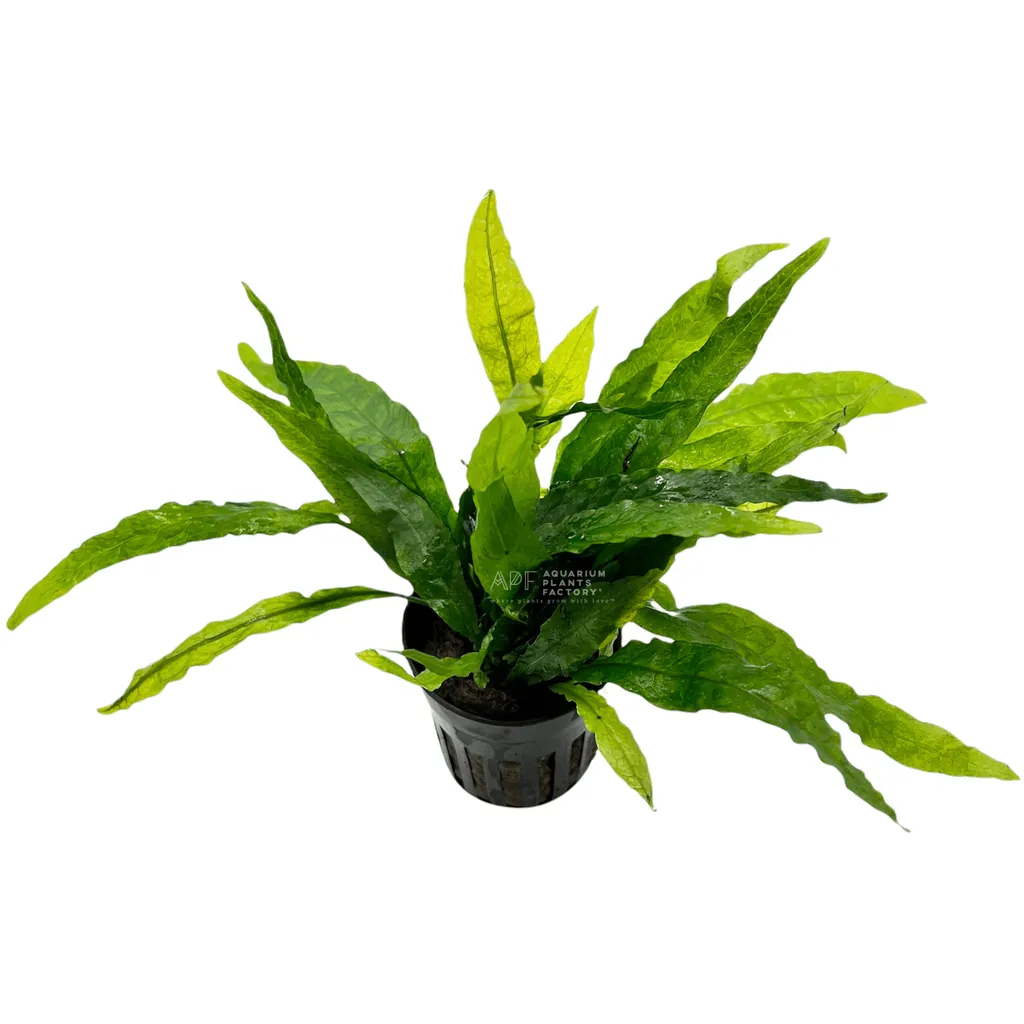
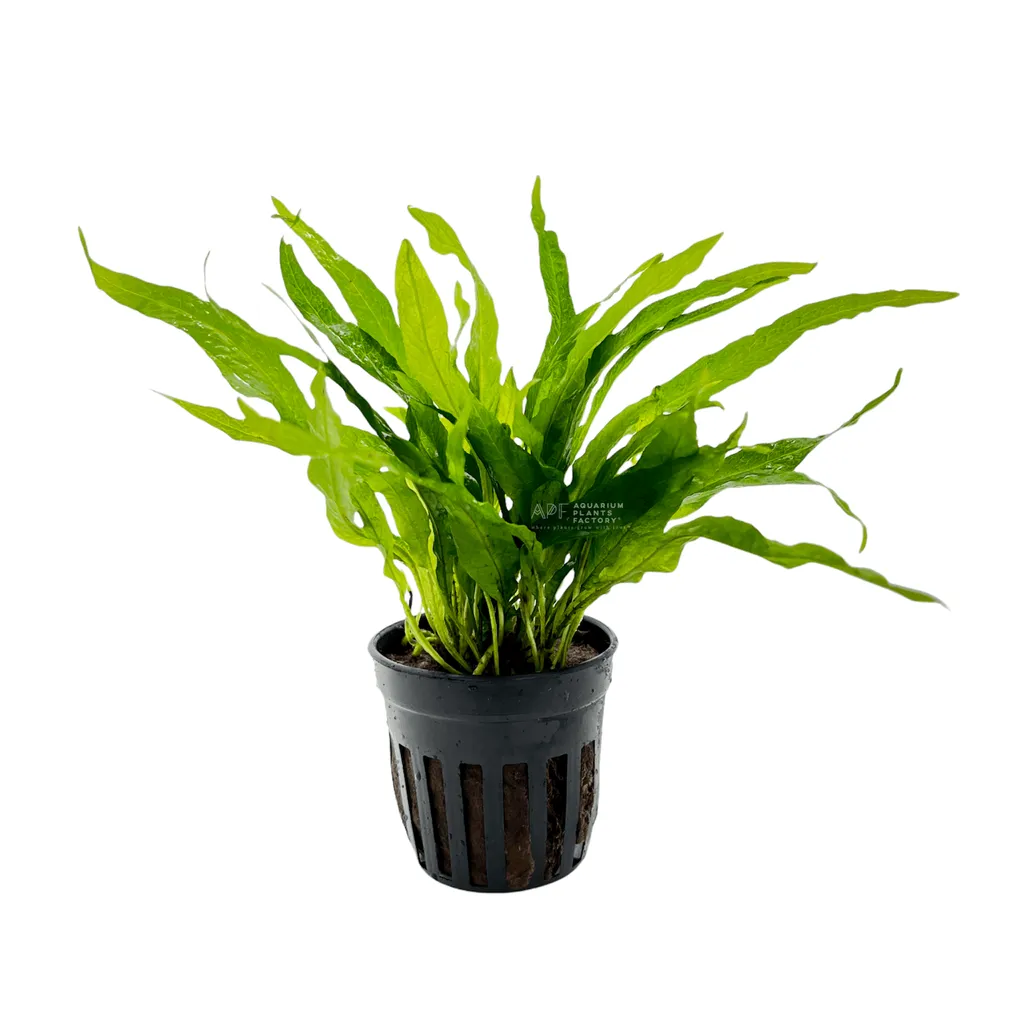
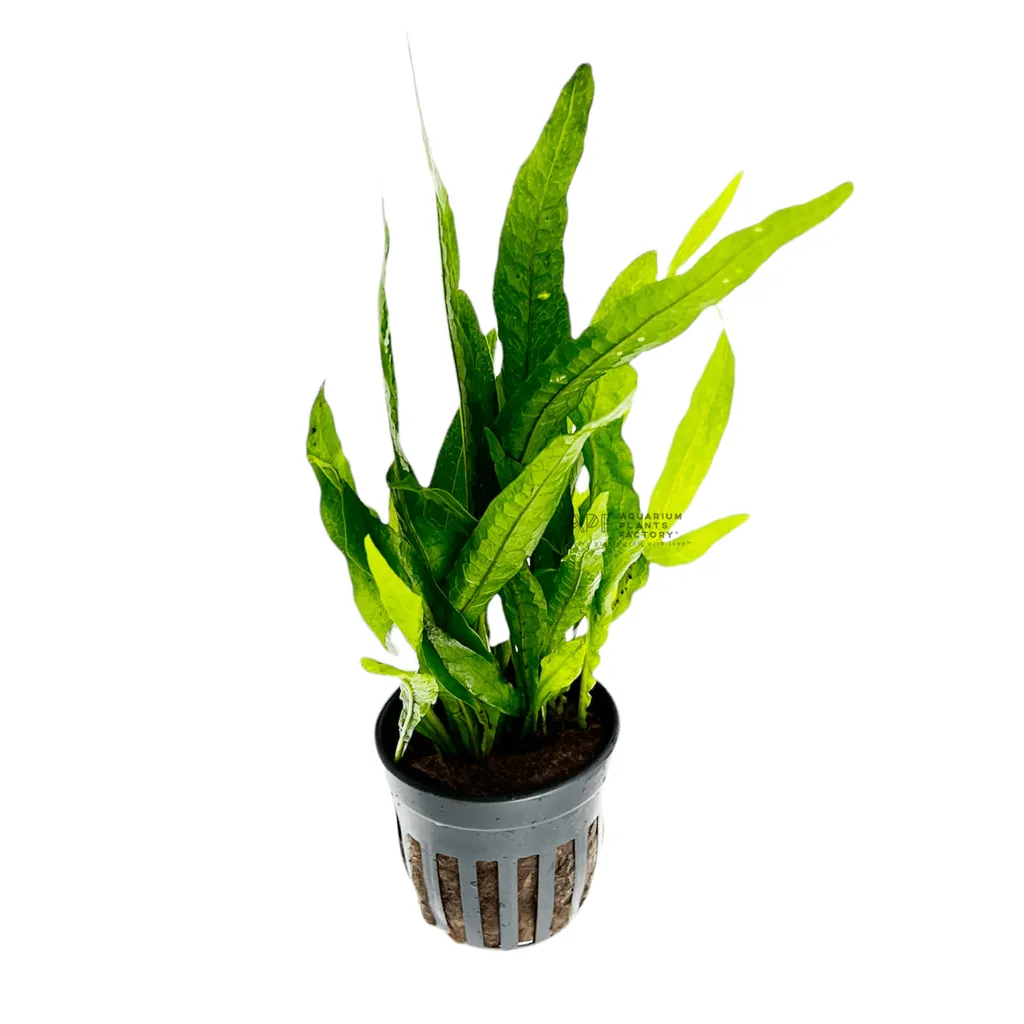
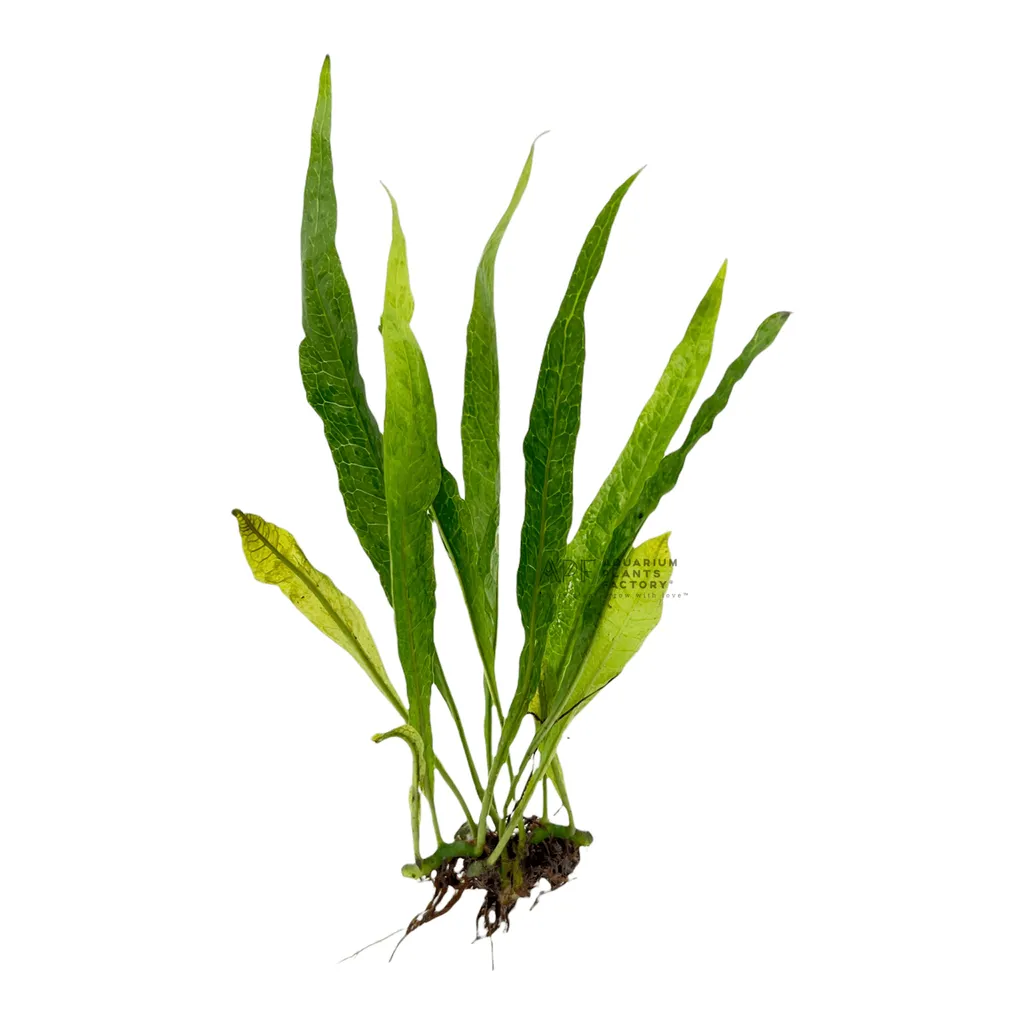
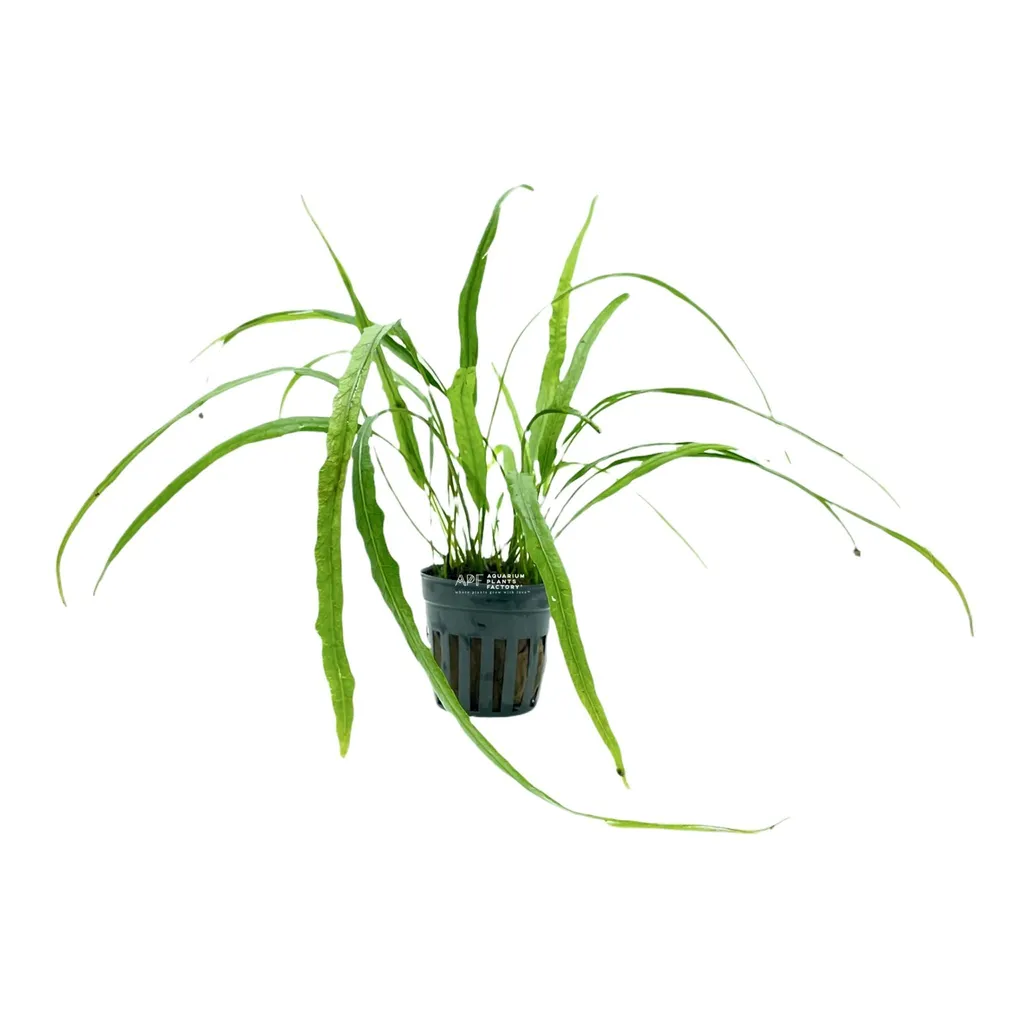
Flaming java fern grown out of water has flat, plain leaves, so a new plant can arrive without its ruffle. The ruffled, twisting edges develop on the leaves it grows underwater over the following weeks.