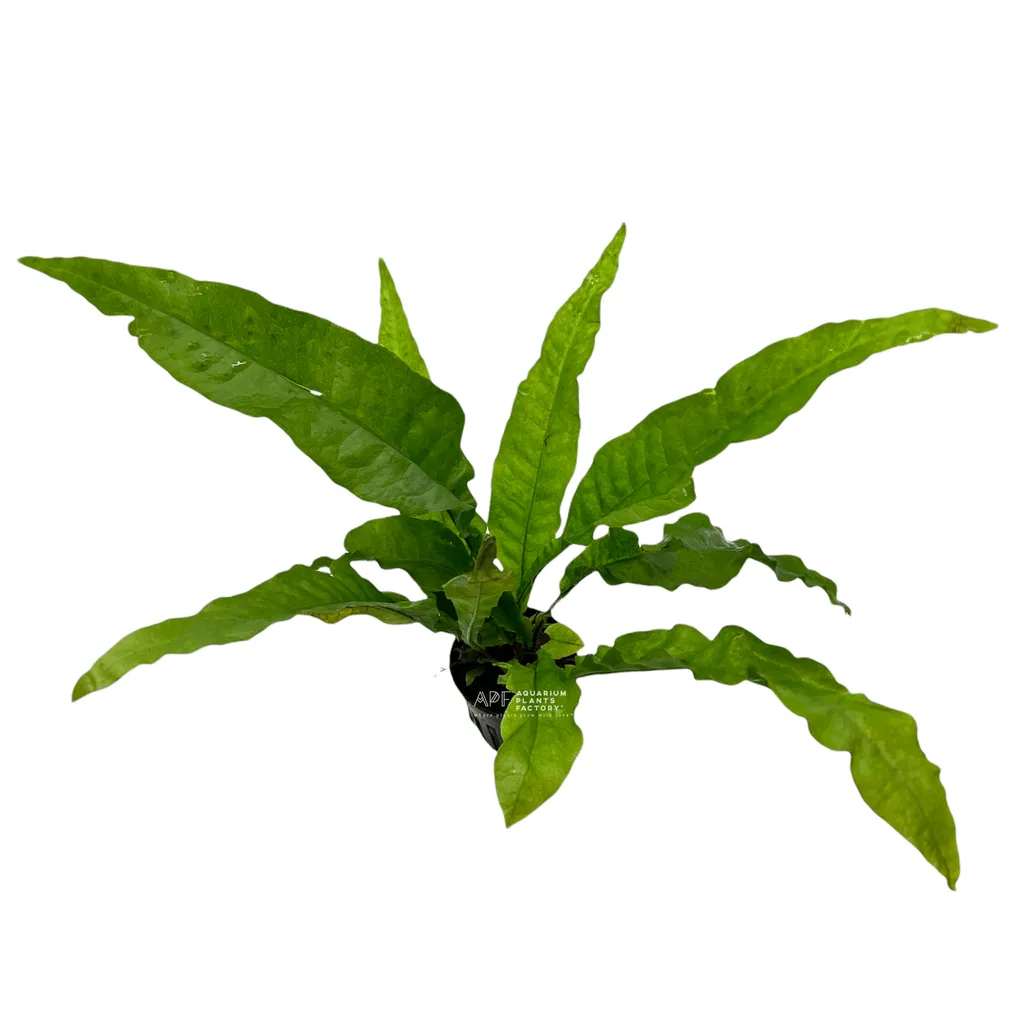
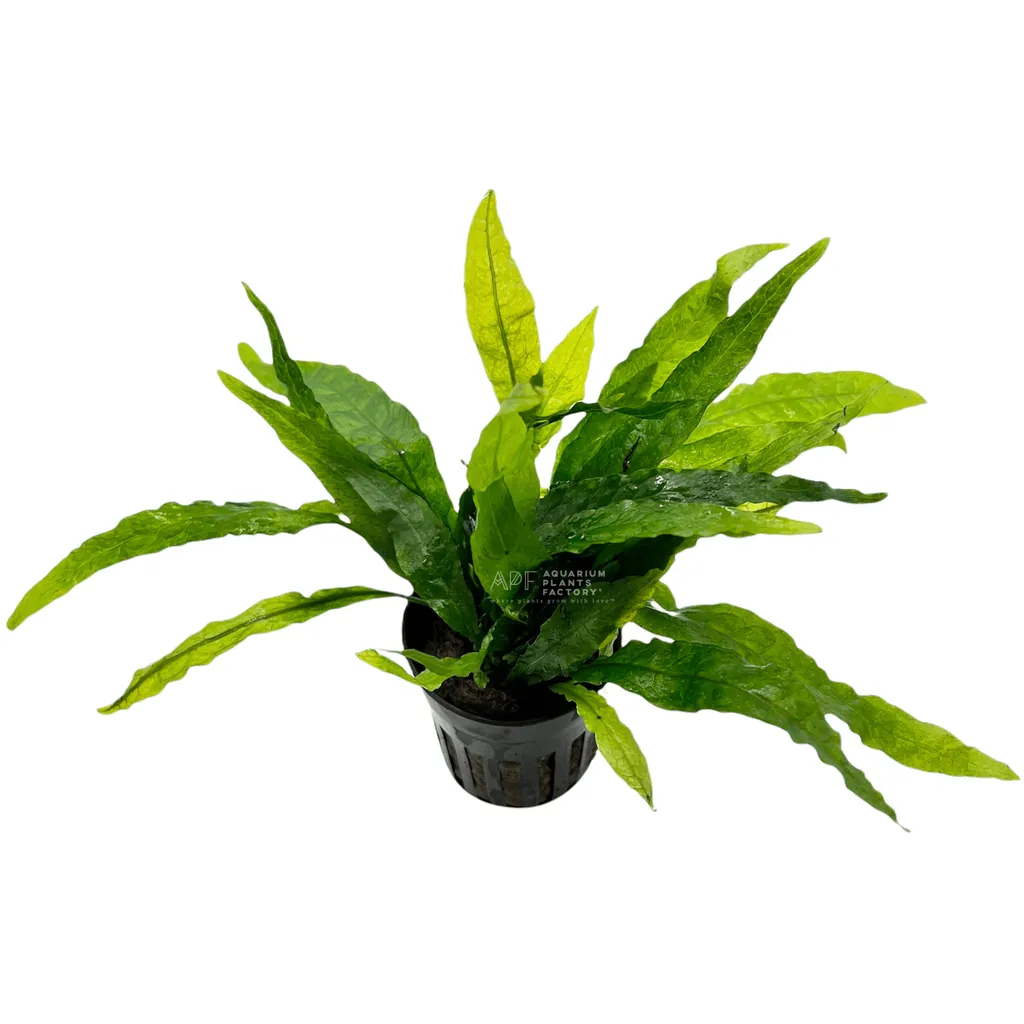
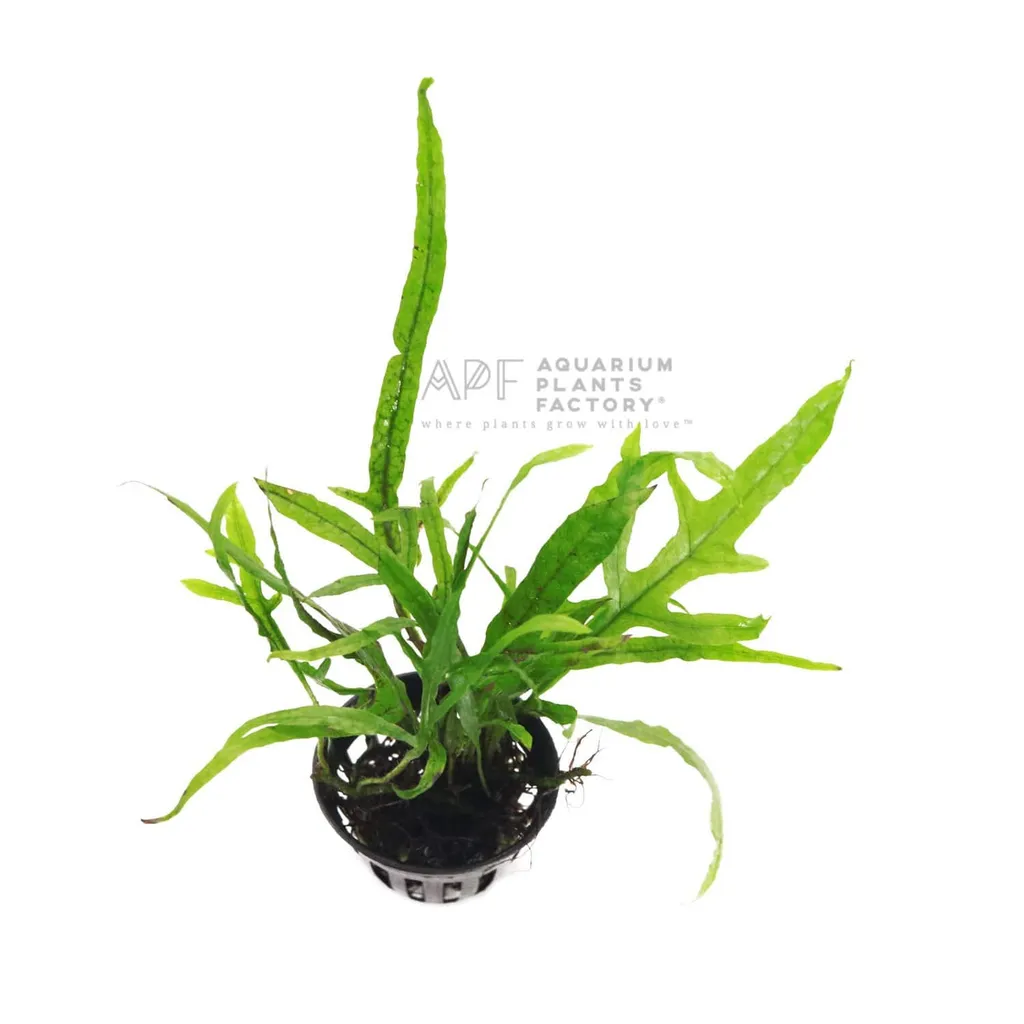
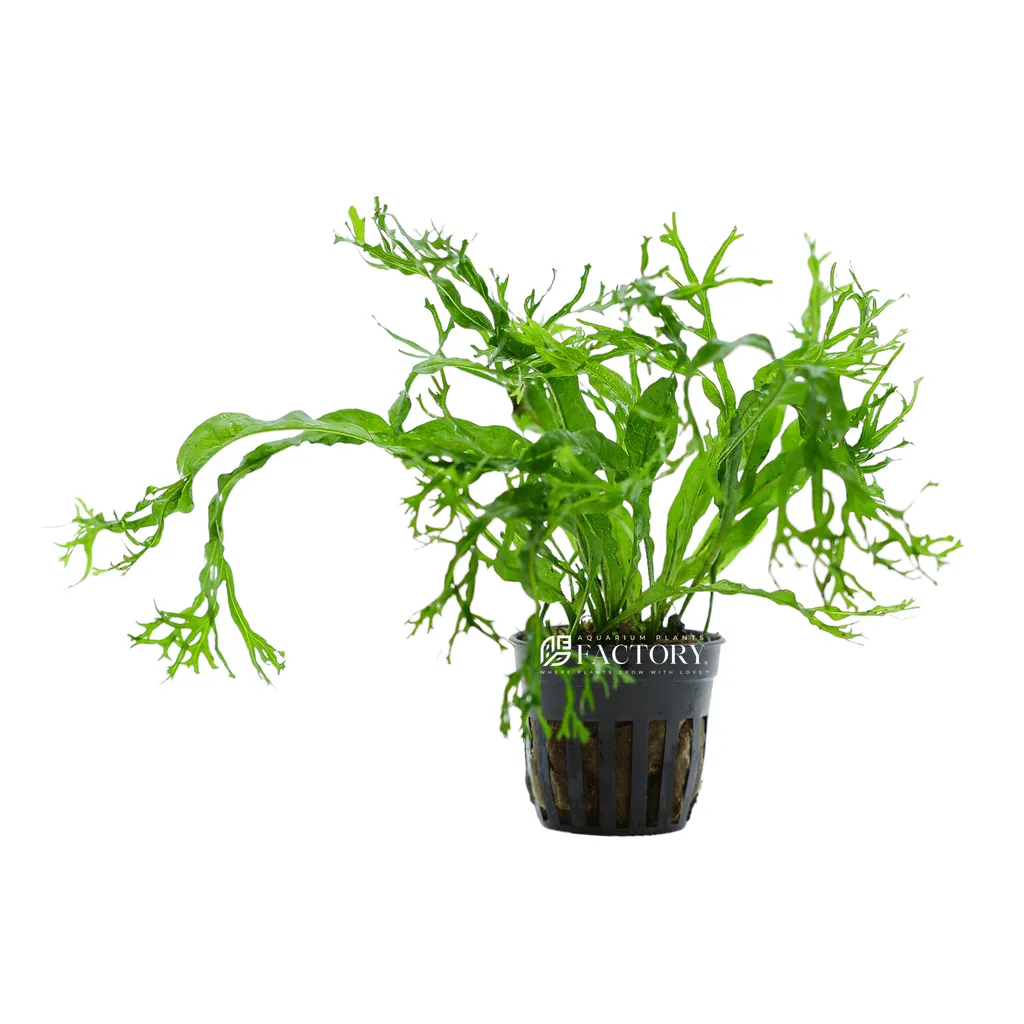
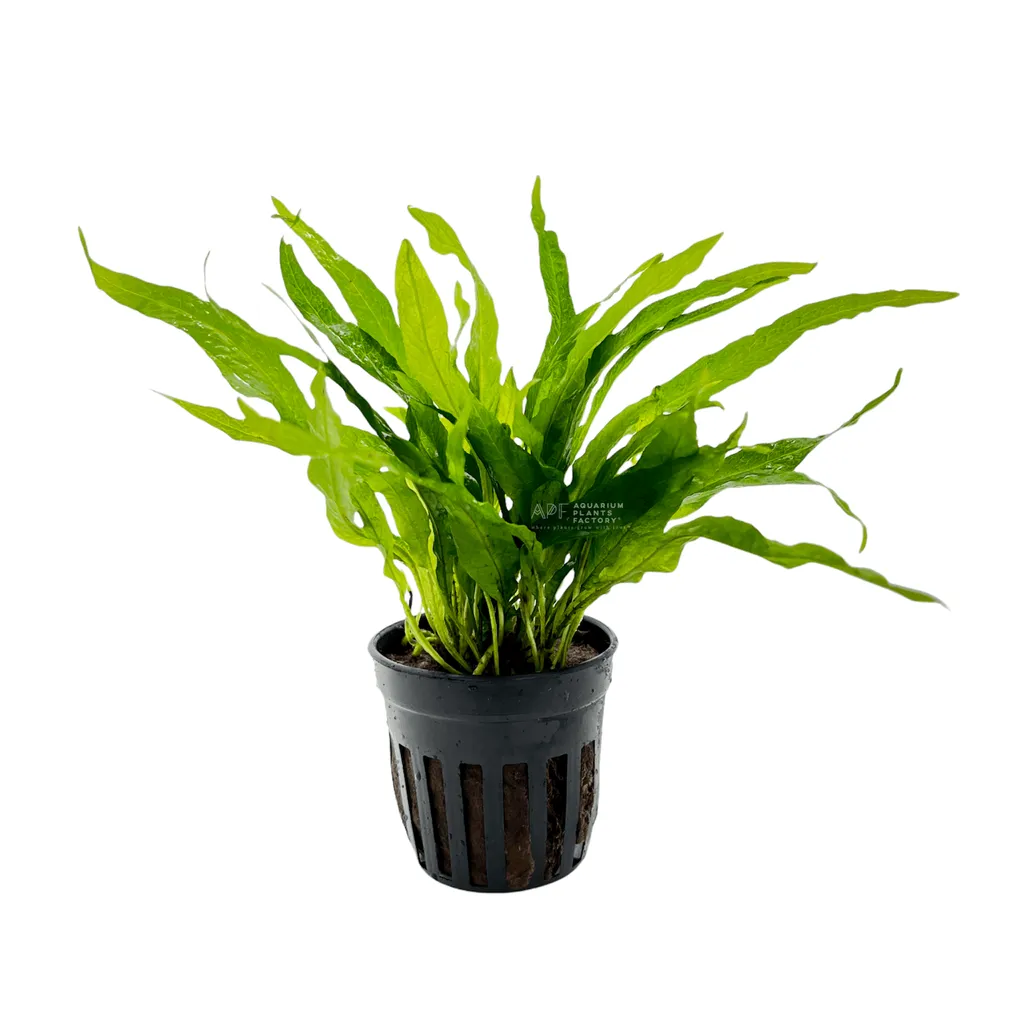
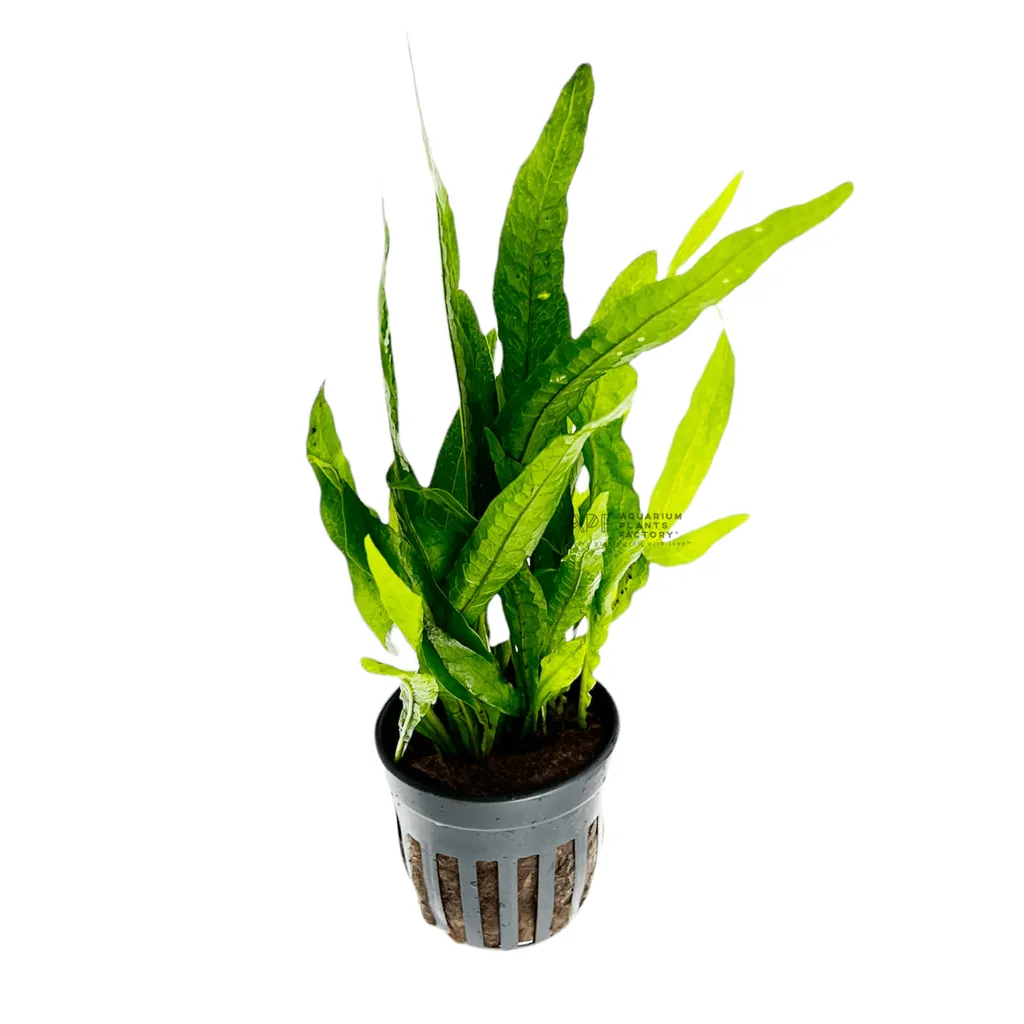
Attach the rhizome to hardscape with thread or gel glue and keep it above the substrate, because a buried rhizome will rot. The skinnier leaves give it a bushier, more upright look than standard Java fern, which works well as a midground or background accent on wood. It needs no CO2 and only low light, pulls its food from the water column, and grows slowly, so just leave it alone and let plantlets form on the older fronds.
In the wild
A selected narrow-leaved form of the Southeast Asian Java fern, which grows wild along streams and riverbanks across Malaysia, Thailand and neighboring regions. Like the parent it attaches to rocks, wood and roots rather than rooting in mud, and lives both submersed and emersed where water levels rise and fall. The narrow form is a trade cultivar rather than a distinct wild population.
Good to know
Botanically identical to Microsorum pteropus (family Polypodiaceae, syn. Leptochilus pteropus), this is a cultivated leaf form with long, slender, lanceolate fronds roughly 1 to 2 cm wide. It grows from a creeping rhizome and reproduces by adventitious plantlets and by rhizome division, never from substrate roots. The narrow leaf trait is stable in cultivation and grows in tighter than the broad regular form.
Did you know
Despite the delicate look, the narrow leaf form is the tallest of the Java ferns, sending its slender fronds up well past the broad-leaved original, which is why aquascapers reach for it when they want a fuller, more upright fern bush without wide, sail-like leaves taking over.