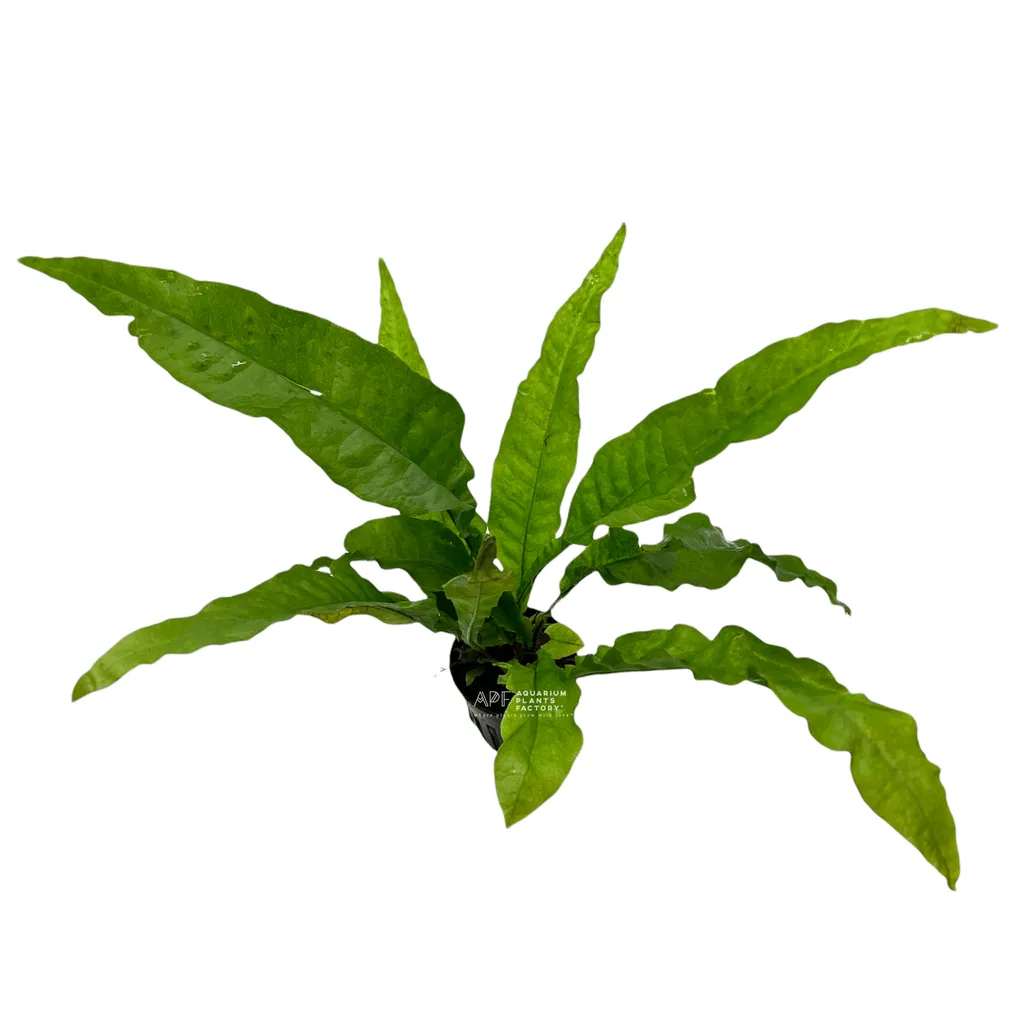
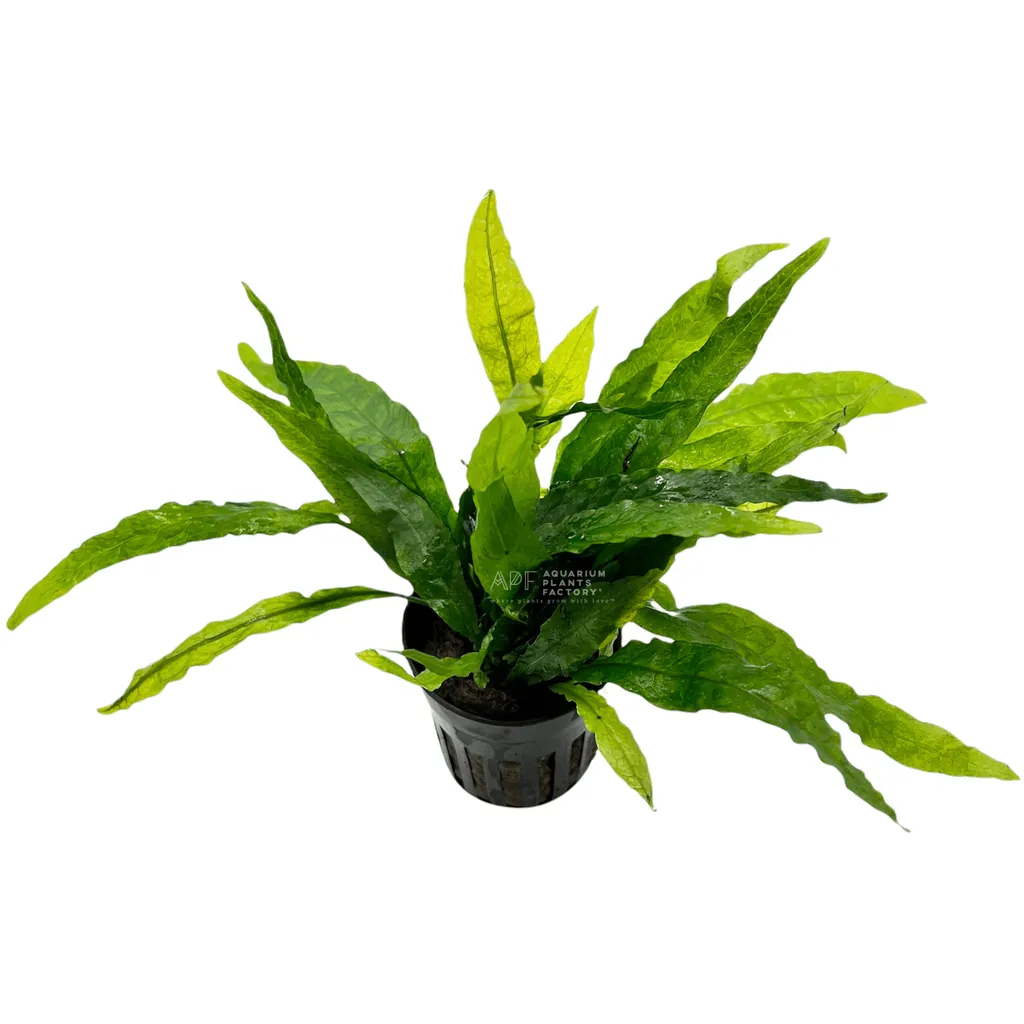
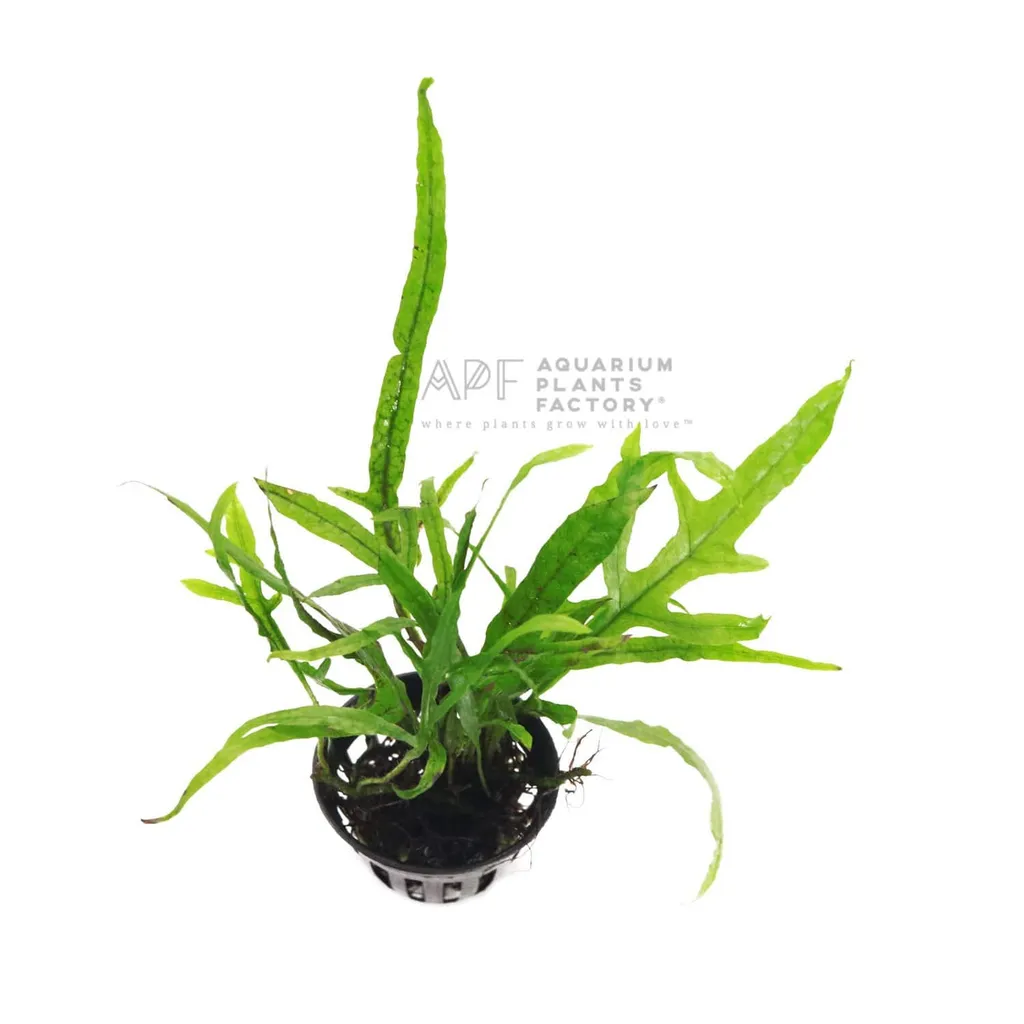
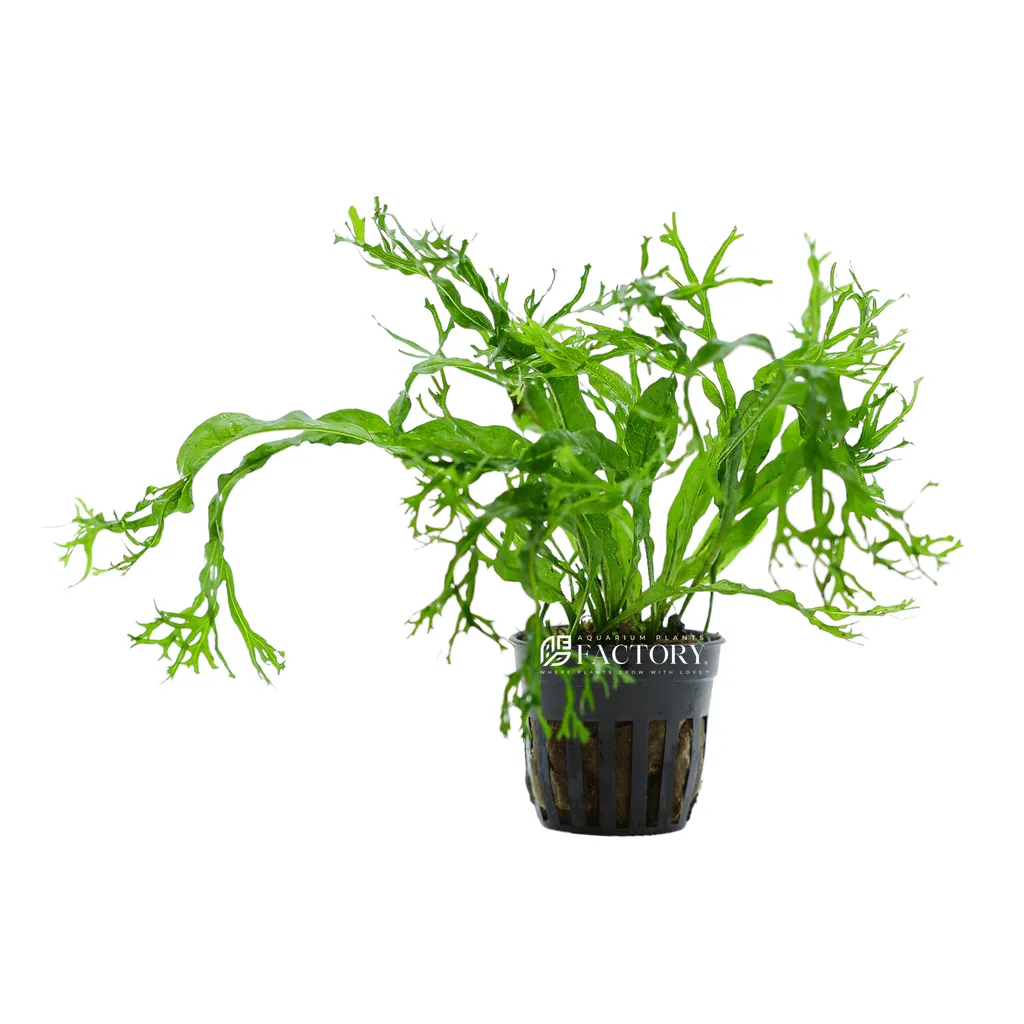
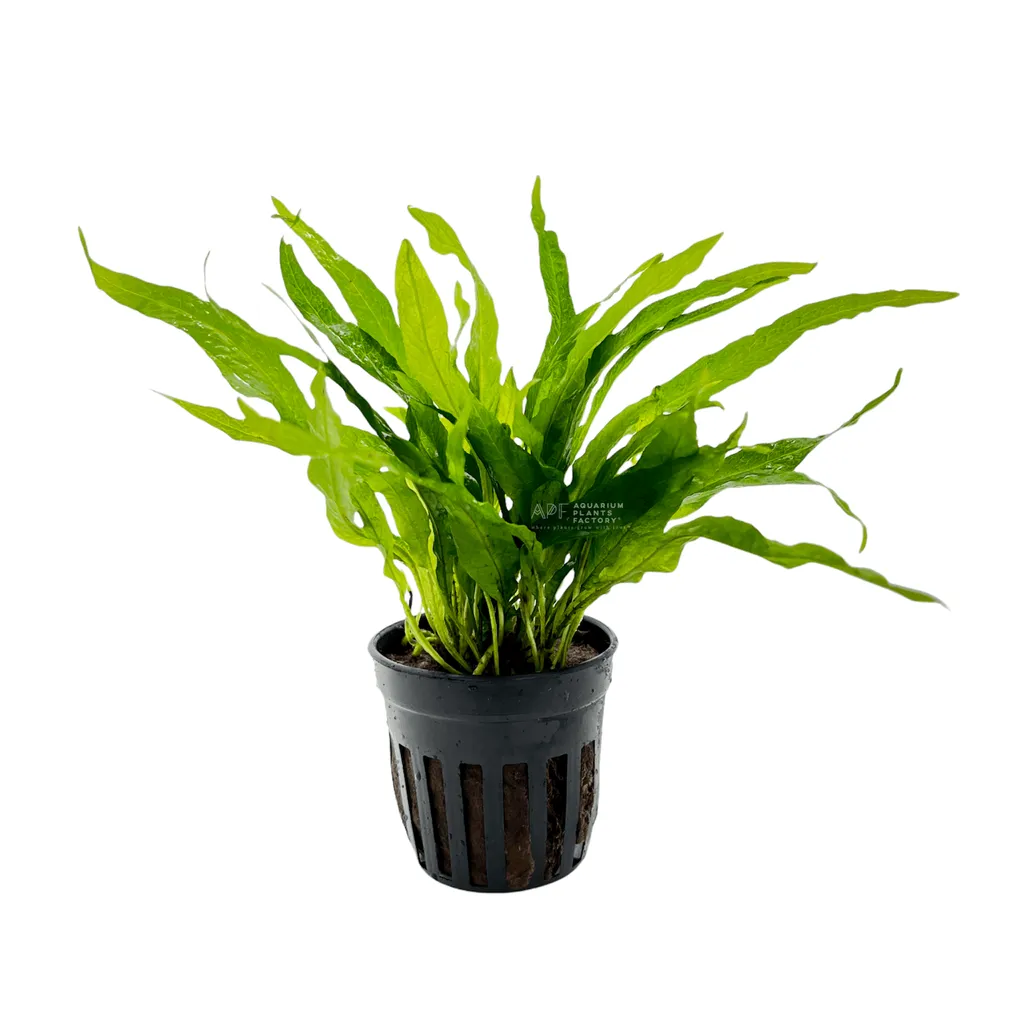
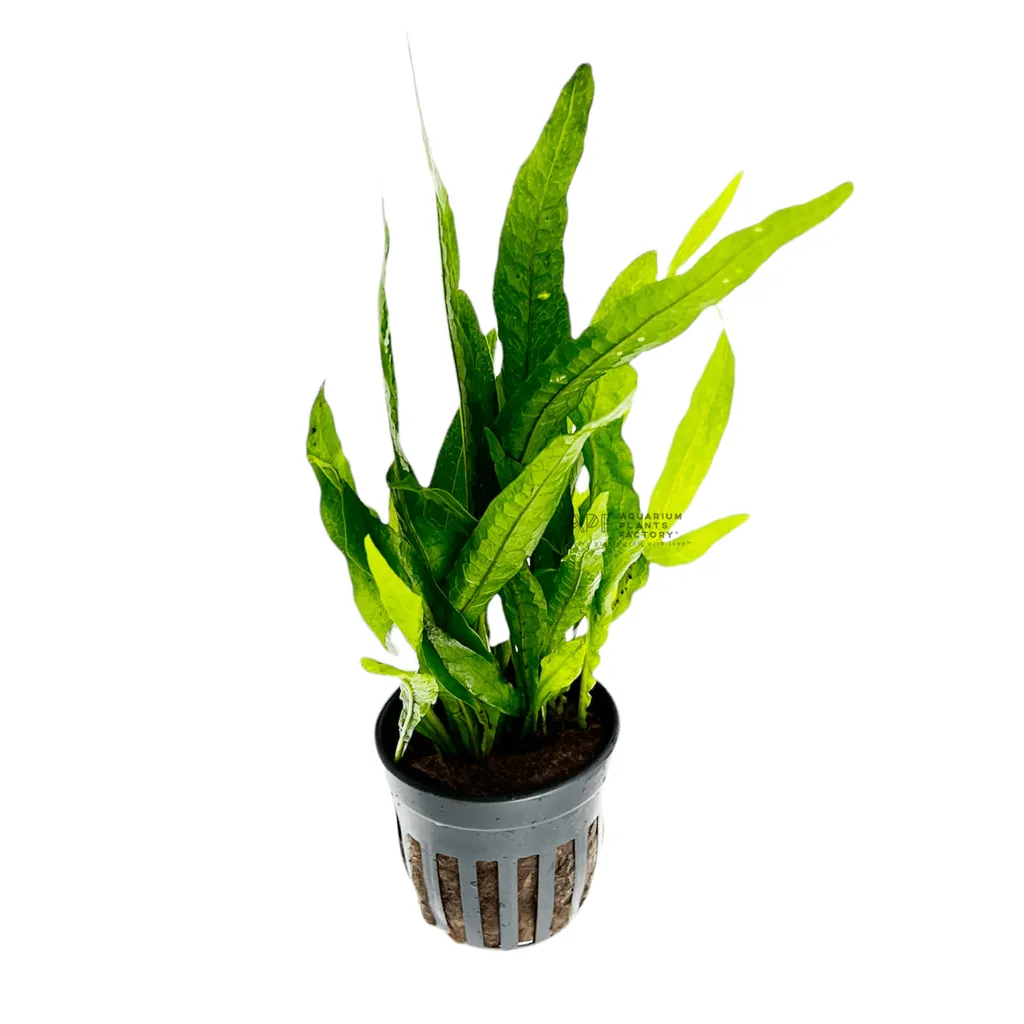
Attach the rhizome to driftwood or rock and keep it above the substrate, burying it causes rot. It is about as easy as aquarium plants get, thriving in low light with no CO2 and tolerating a wide range of water. Its tiny size makes it ideal as a nano feature or a detailed accent in bigger scapes, and it can be left alone for months.
In the wild
Java fern's parent species grows across Southeast Asia on rocks and roots in and beside streams and waterfalls, often clinging to hardscape in fast, shaded water rather than rooting in soil. The Petite is a selected dwarf cultivar of that plant, so it shares the same epiphytic, wood-and-rock lifestyle in a much smaller package.
Good to know
This fern has been reclassified as Leptochilus pteropus but is still sold everywhere under the old name Microsorum pteropus. Petite is a compact form with short, narrow, slightly wavy fronds reaching only a few centimetres, and like all java ferns it reproduces from adventitious plantlets that sprout on mature leaf tips as well as by splitting the rhizome.
Did you know
You do not need to sow anything to propagate it, just wait, tiny baby ferns bud out of the older leaves and drop off to start new plants on their own.