One species · 7 varieties
Java fern
Leptochilus pteropus
Also known as Microsorum pteropus, Polypodium pteropus
FreshwaterBrackishRhizomeRhizome divisionPlantlets
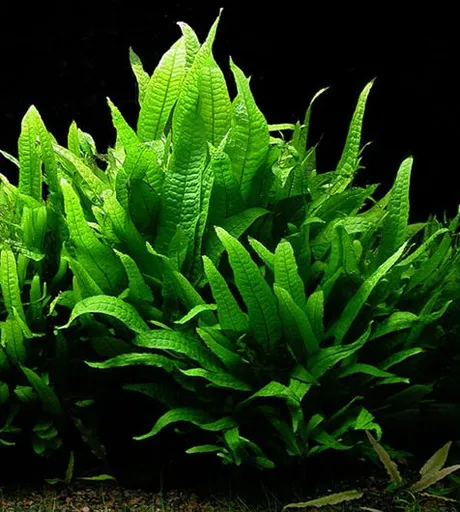
Care at a glance
- Light
- Low light
- CO2
- No CO₂ needed
- Temperature
- 64–82°F
- 18–28°C
- Max height
- 11.8 in
- 30 cm
- Growth rate
- Slow
- Placement
- Epiphyte
- Type
- Rhizome
- pH
- 5.0–7.5
- Hardness
- 2–15 dGH
- Spread
- 7.9 in (20 cm)
- Nutrient uptake
- Water column
- Growth region
- Submersed or emersed
- Difficulty
- Beginner
- Family
- Polypodiaceae
- Origin
- Southeast Asia (Malaysia, Thailand, northeastern India, southern China)
Pick a variety
One setup covers every variety on this page.
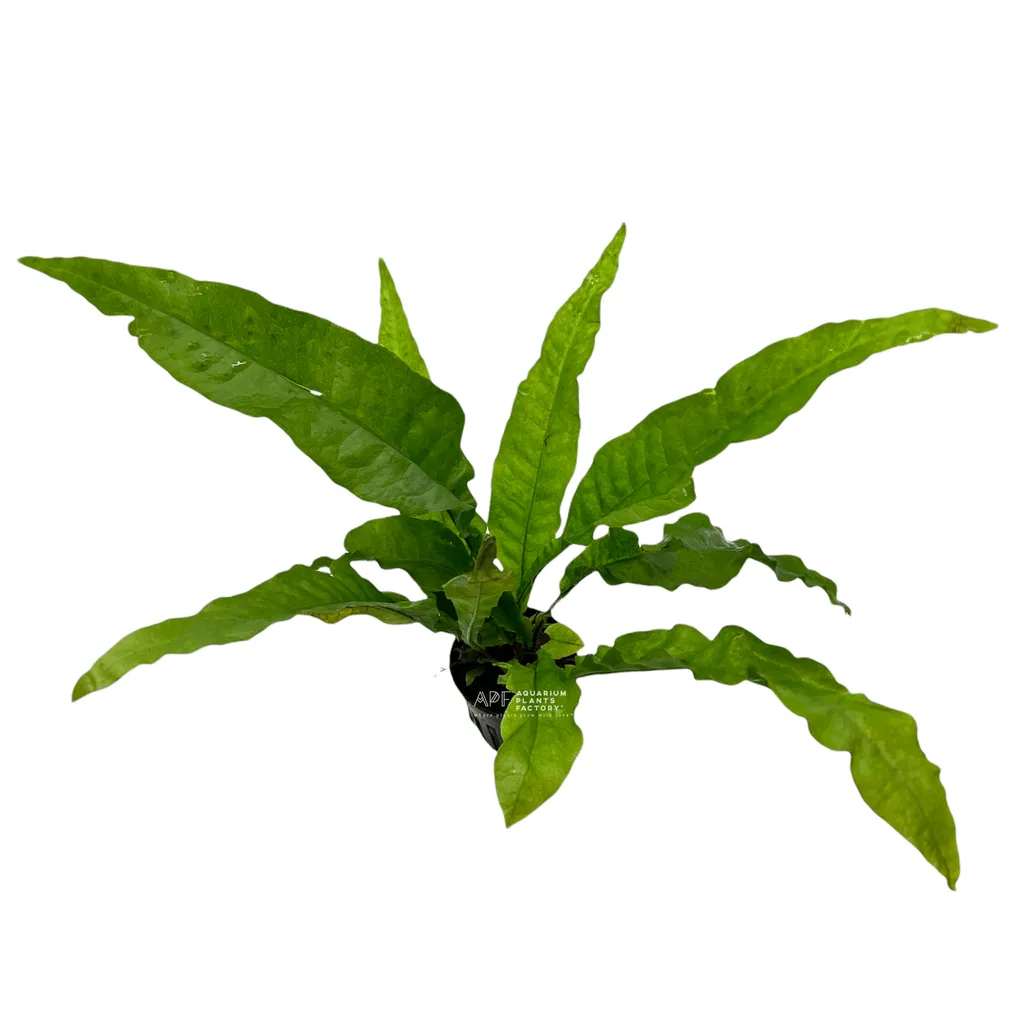
Java fern latifolia
wider, shorter leaves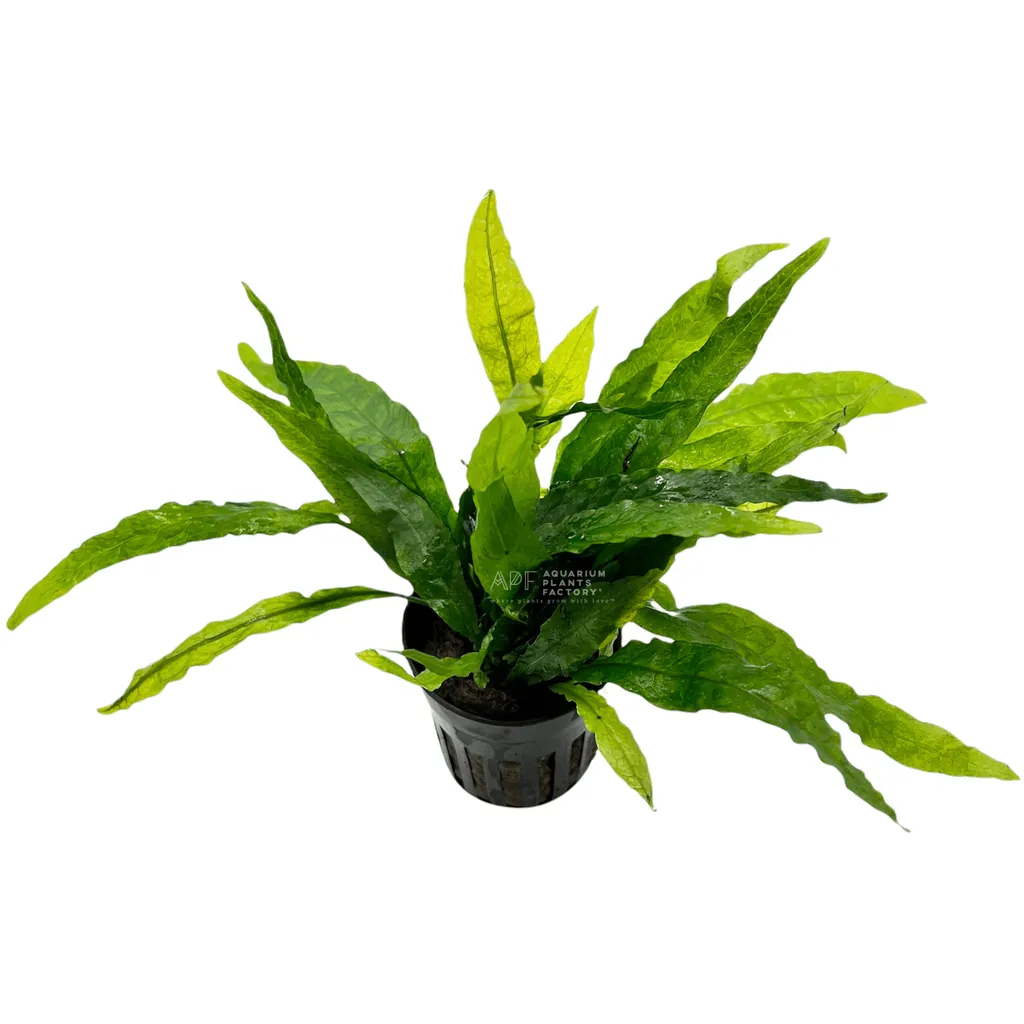
Java fern narrow leaf
slim blades in dense clumps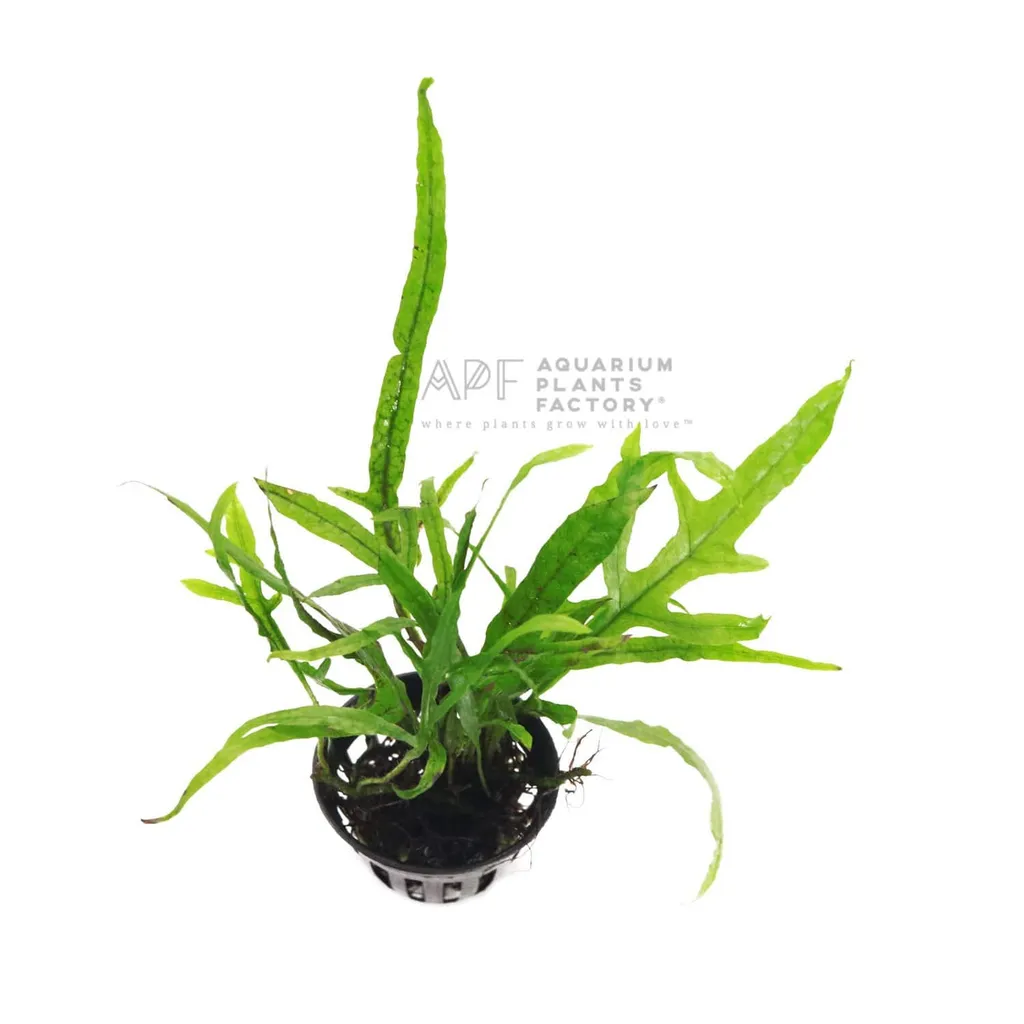
Trident java fern
forked, three-pronged leavesThor's Trident java fern
broader, heavier forks than trident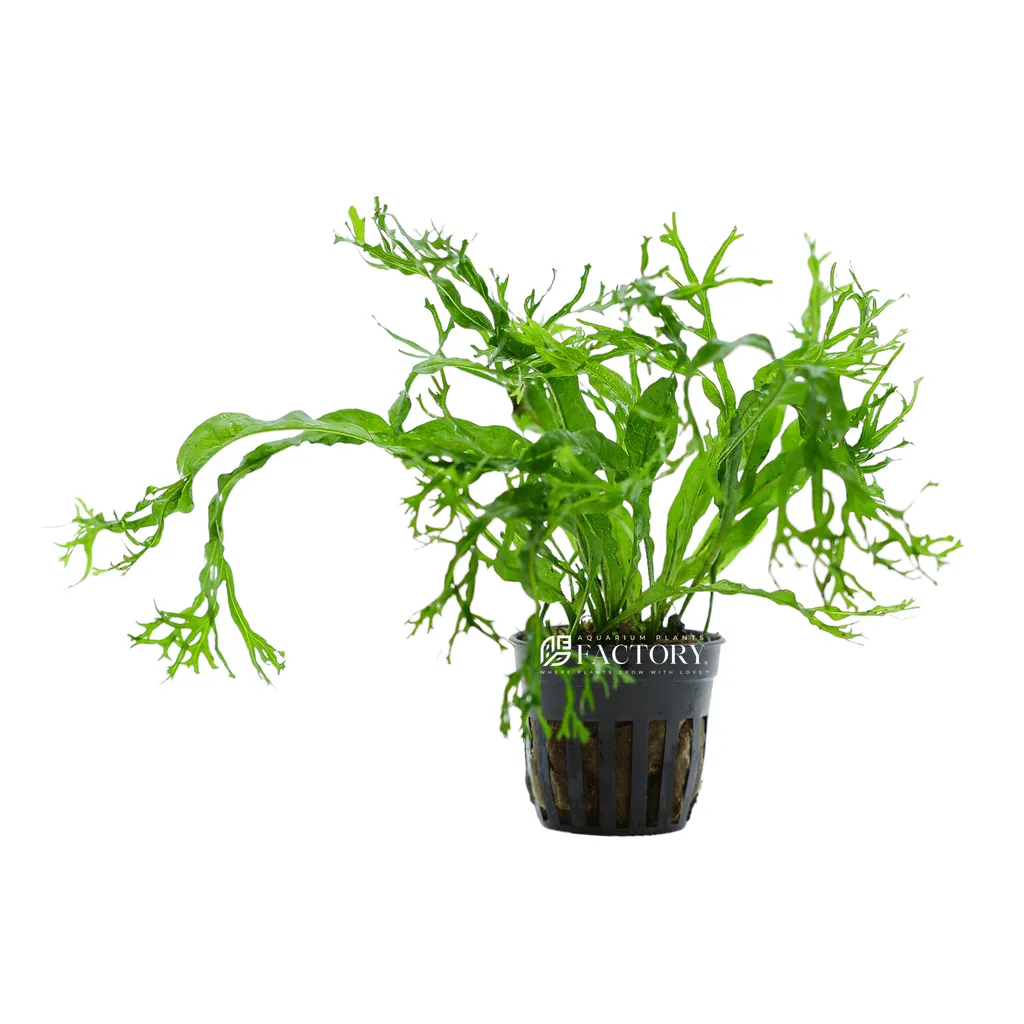
Windelov java fern
lace-fringed leaf tips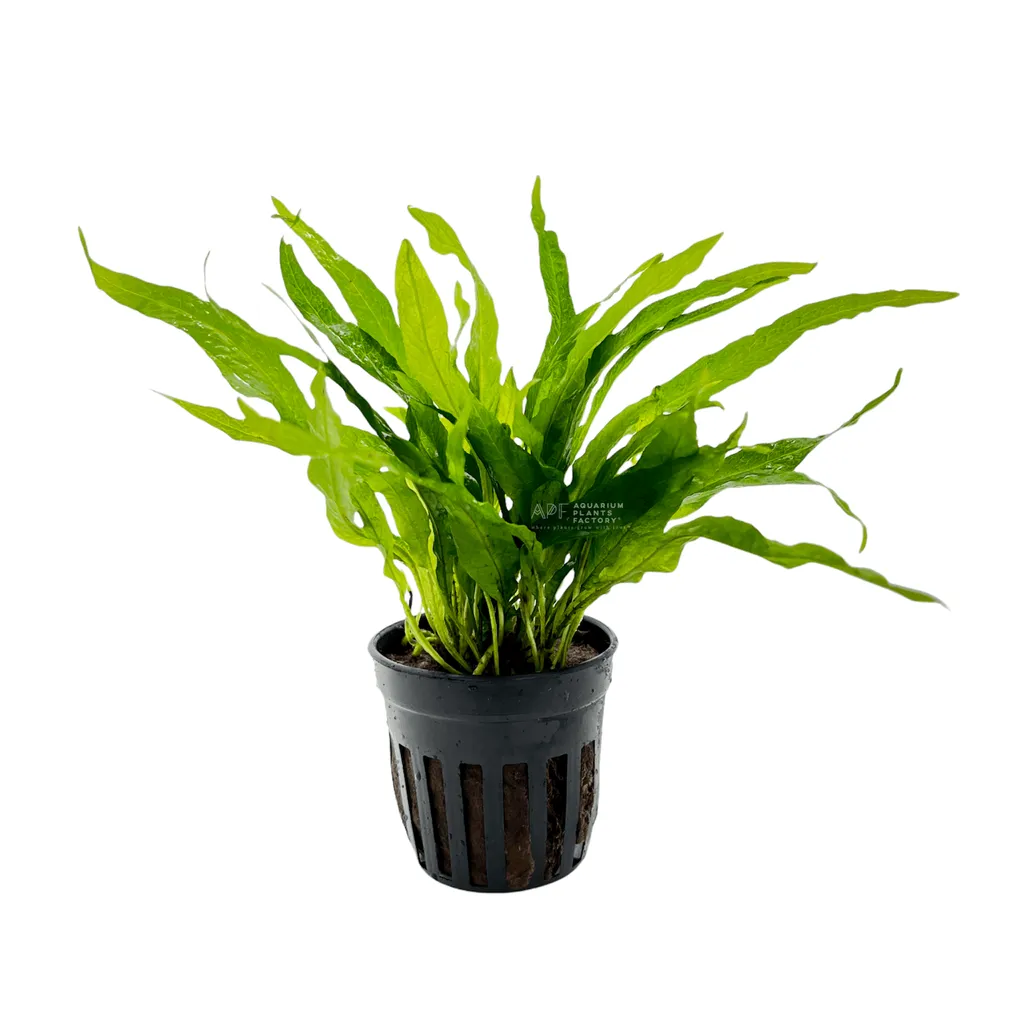
Petite java fern
miniature crown for nano tanks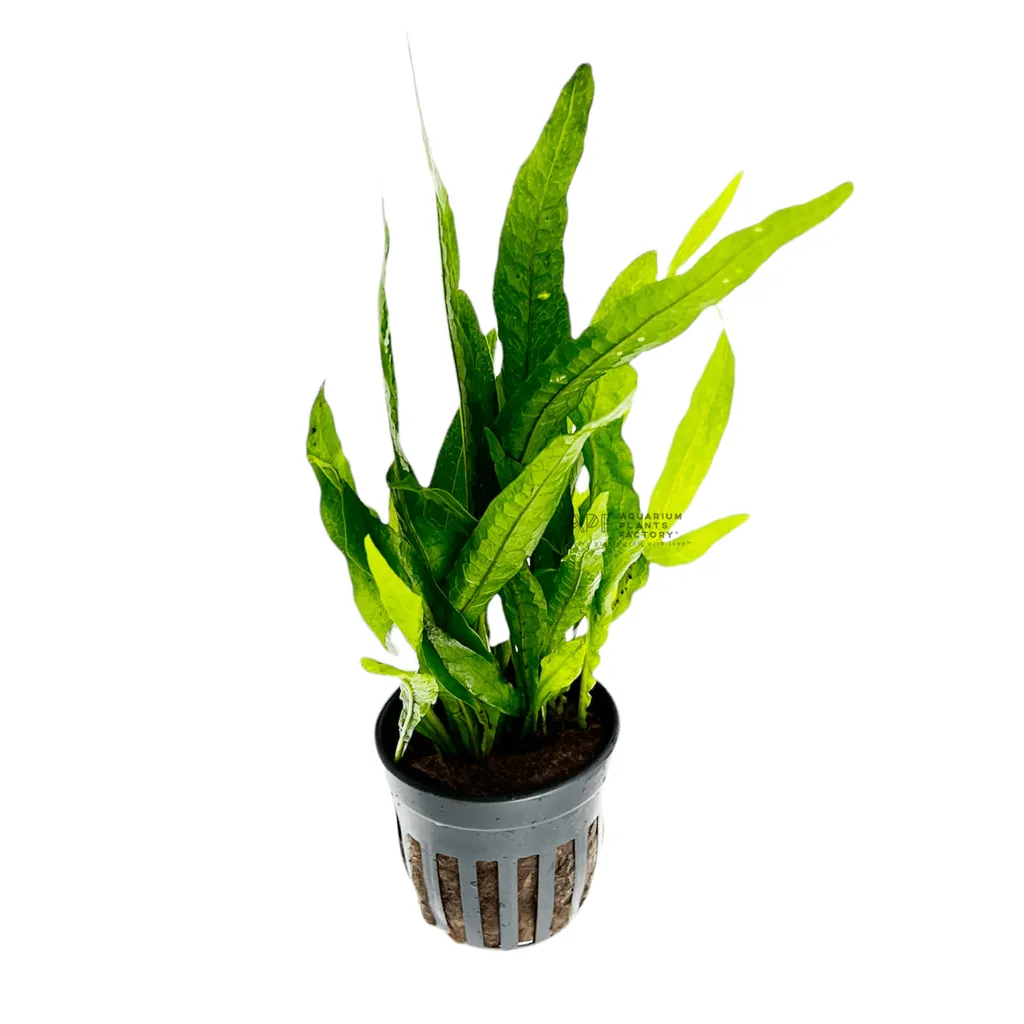
Philippine java fern
hammered leaf texture
One fern, many blades
Windelov's lace tips, Trident's forks and Narrow Leaf's slim blades are all selections of the same fern, kept in circulation by nurseries because they hold their shape. Botany reshuffled the genus from Microsorum to Leptochilus, but the plant in shops did not change, and neither did its care.
Plantlets, not problems
Mature leaves grow black bumps along their undersides and edges, and old leaves sometimes brown off while tiny plants sprout from them. That is how java fern reproduces: each plantlet can be pulled off once it has roots and tied down as a new fern. It is easy to mistake for disease, and it never is.
The rhizome stays in open water
Java fern feeds through its rhizome and roots from the water column, not the substrate. Bury the rhizome and it rots; tie or glue it to wood or rock and it slowly walks across the hardscape, leaf by leaf.
Overview
Tie or glue the rhizome to wood or rock and leave it on the surface, since burying the rhizome in substrate rots it and kills the plant. It thrives in low light with no CO2, drawing nutrients straight from the water column, which makes it one of the most forgiving plants in the hobby. Growth is slow, and the most common scare is older leaves developing black spots and brown patches, which is usually normal plantlet production rather than disease, so leave those leaves until the babies are large enough to detach.
In the wild
Native to Southeast Asia, from Malaysia and Thailand through northeastern India and parts of southern China. It grows along streams, waterfalls and riverbanks, attached to rocks, riparian roots and wood. In the wild it lives both fully submersed and emersed, as long as the rhizome and roots stay wet, so it handles seasonal water level changes well.
Good to know
A fern in the family Polypodiaceae, now formally Leptochilus pteropus though still sold everywhere as Microsorum pteropus. It grows from a creeping rhizome rather than a true root system, anchoring with fine brown holdfast roots instead of feeding from substrate. It is highly variable in the wild, which is why so many leaf forms exist, and it reproduces asexually by sprouting adventitious plantlets from leaf tips and margins as well as by spores.
Did you know
Those black bumps and brown blotches that beginners panic about on the undersides and tips of leaves are not rot but the plant cloning itself, each one grows into a tiny new fern you can pluck off and attach elsewhere.
Common questions
Why are there black spots under the leaves?
They are spore patches and baby plantlets, not a disease. Leave them and you get free ferns.
Does java fern need substrate?
No. It grows attached to wood or rock, and it is one of the few plants that thrives in a bare-bottom tank.
Can java fern handle low light?
Yes, better than almost anything else in the hobby. Strong light mostly just invites algae onto its slow leaves.