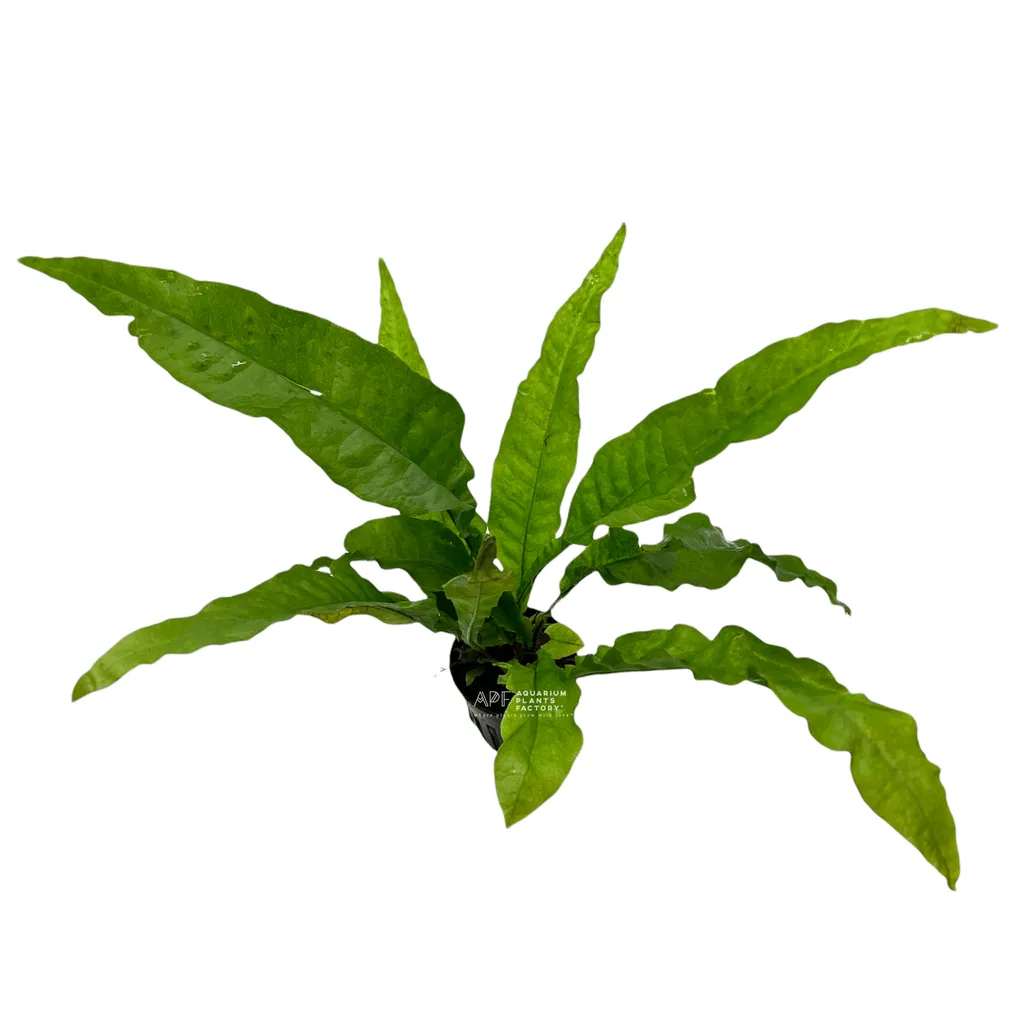
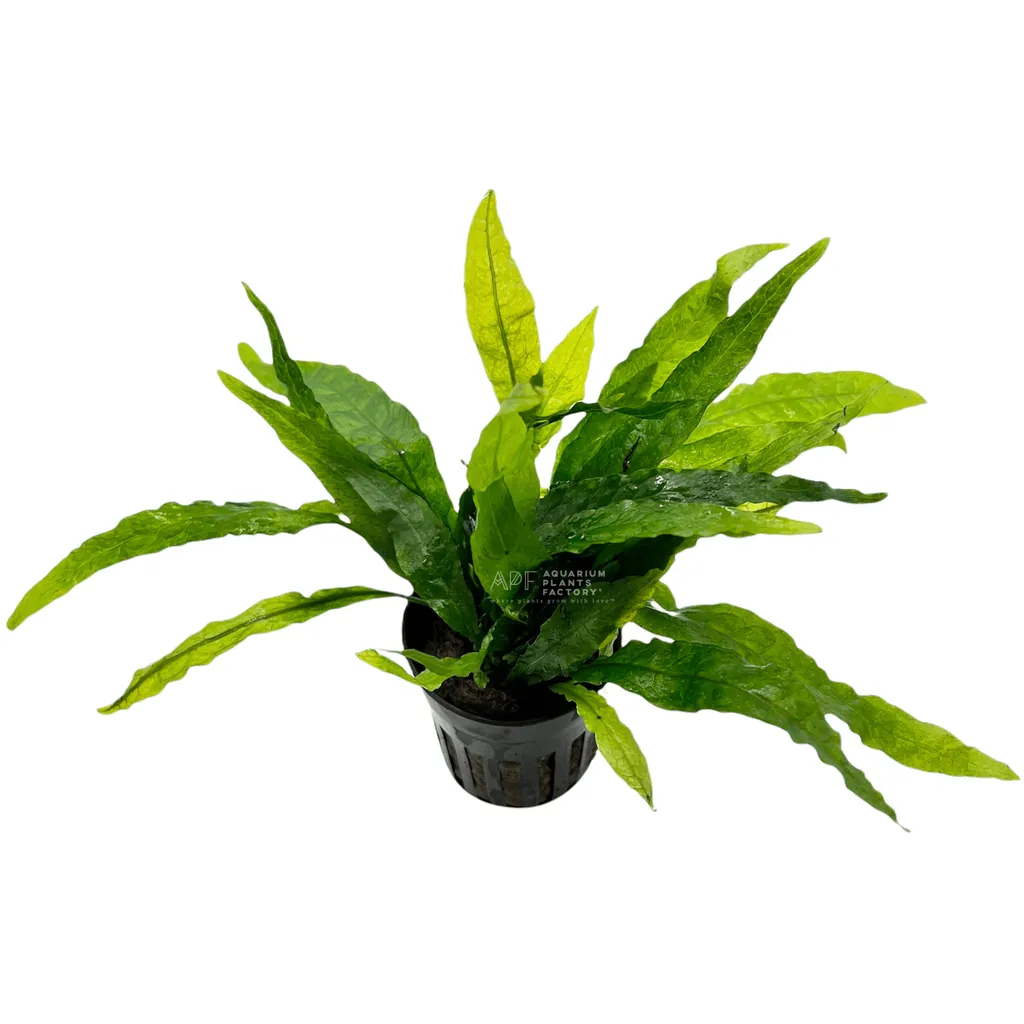
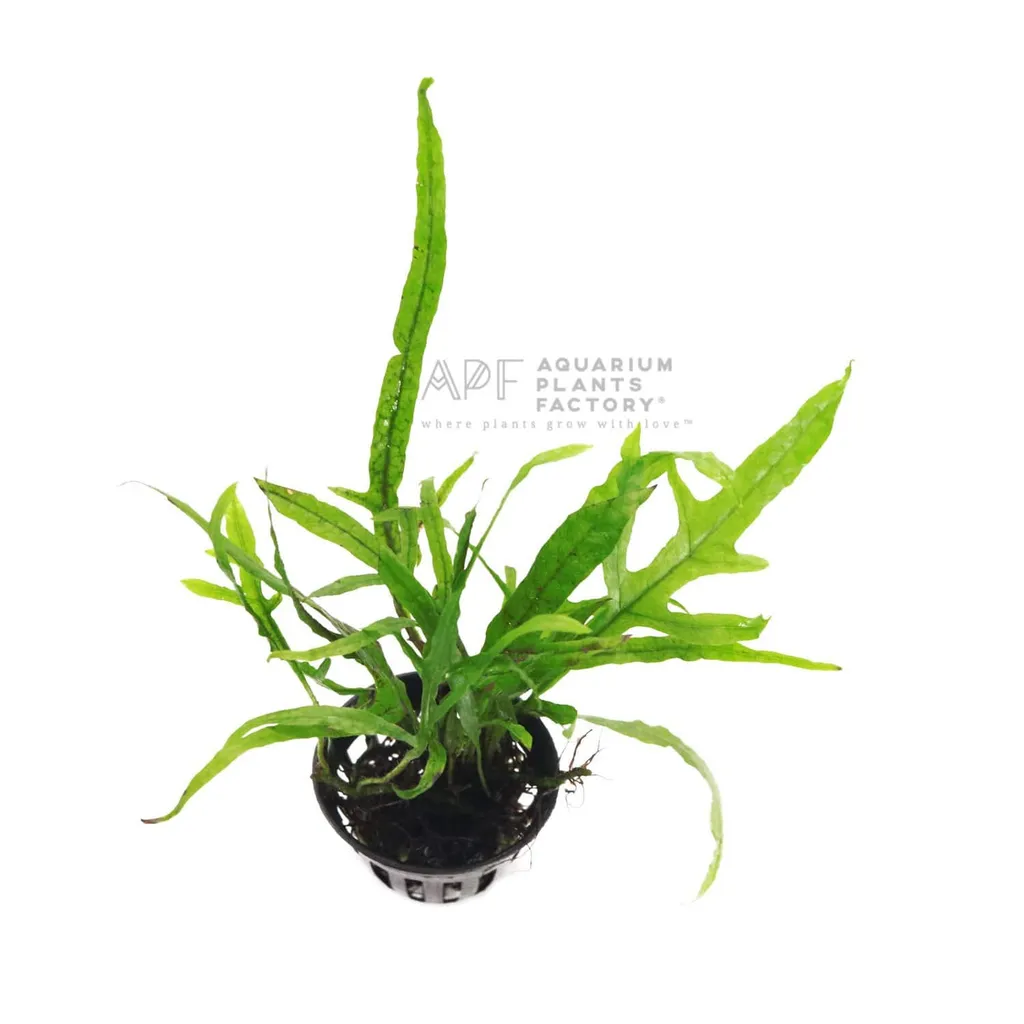
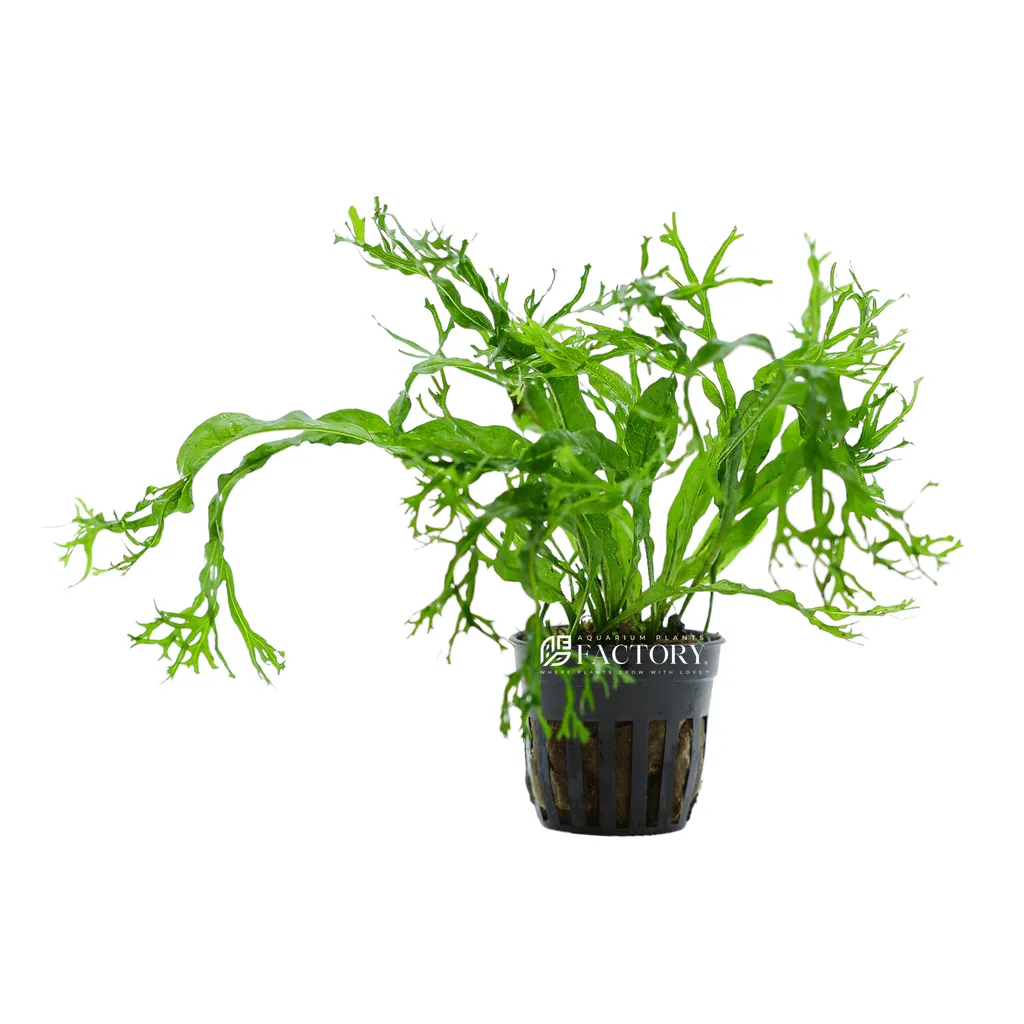
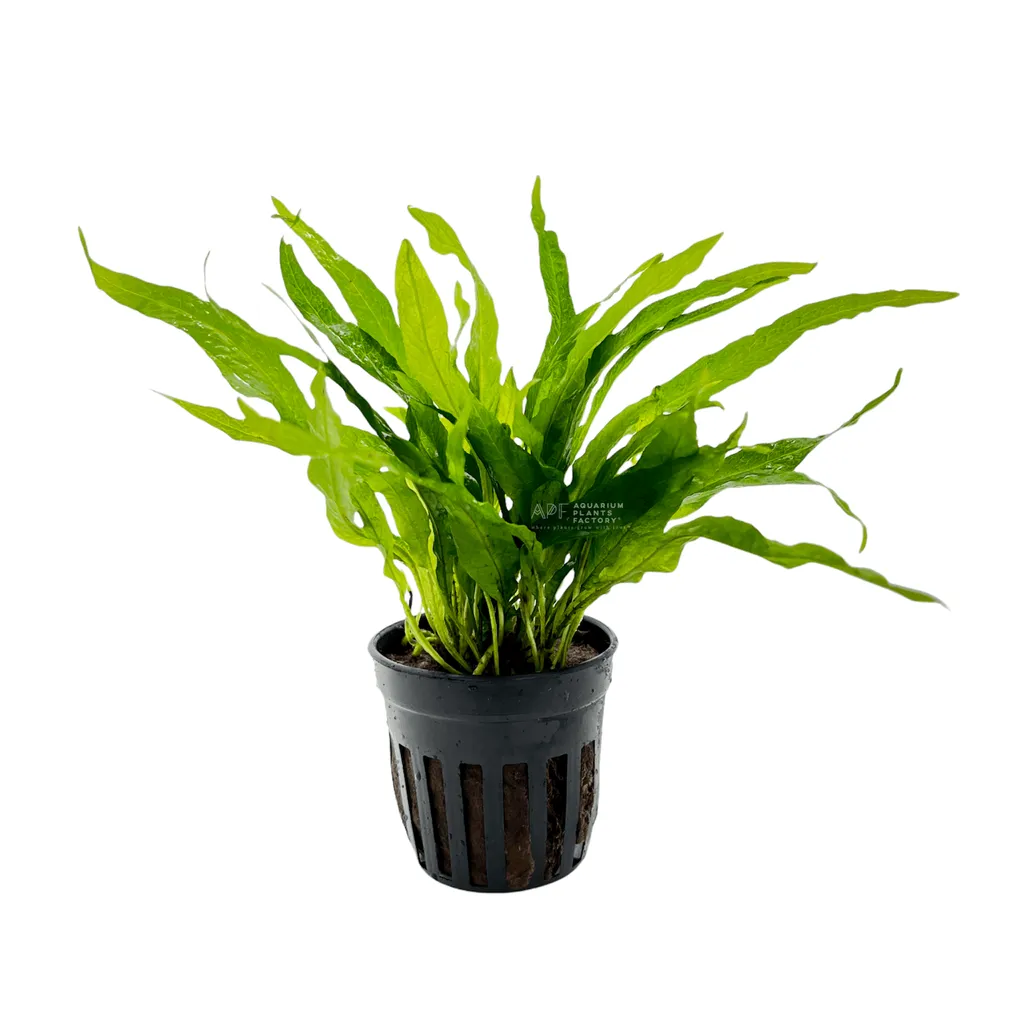
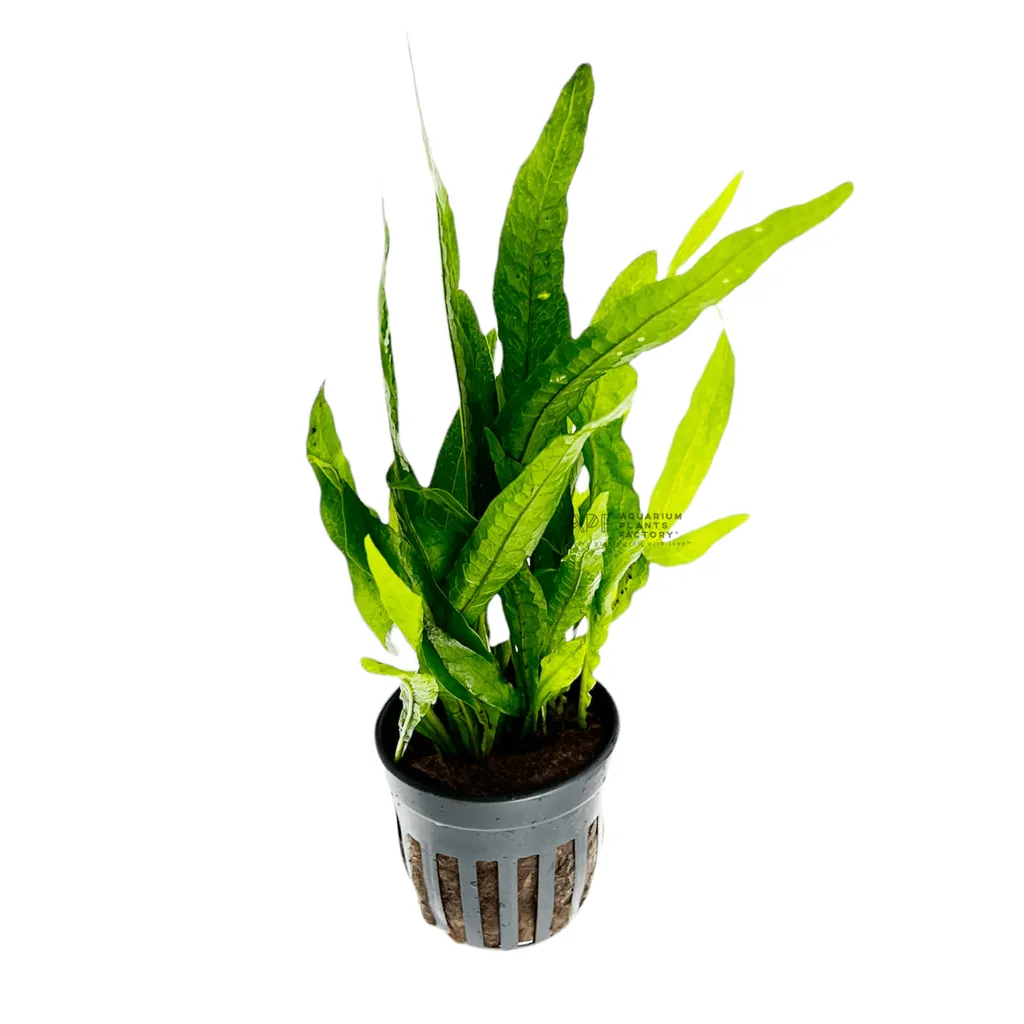
A broad leaved selection of the Southeast Asian Java fern, a species that grows attached to rocks and driftwood along shaded streams and waterfalls.
Overview
Tie or glue the rhizome to wood or rock and keep it above the substrate, since a buried rhizome will rot. It thrives in low to moderate light with no CO2, growing slowly and tolerating a wide range of water. When small black bumps and baby ferns appear on the leaf tips, you can pluck those plantlets off and attach them elsewhere.
In the wild
This is the broad, ruffled leaf form of Java fern, with wide green blades that give it the trade name Java Fern Lettuce. Like the standard plant it is an epiphyte that clings to hardscape rather than rooting in soil. The large leaves make it a bold, easy choice for the mid to background of a shaded tank.
Good to know
Java fern is an epiphytic fern that reproduces from spores and from tiny plantlets that sprout directly on mature leaves and along the rhizome. The accepted genus has moved between Microsorum and Leptochilus, so both names show up in the hobby.
Did you know
Java fern makes new plants right on its own leaves, sprouting little ferns from the leaf edges and tips that drop off and root on their own.