Variety of Java fern
Black Forest java fern
Leptochilus pteropus 'Black Forest'
One of 15 varieties of Leptochilus pteropus · See all varieties →
Also known as Microsorum pteropus 'Black Forest', Microsorum 'Black Forest', Java fern Black Forest, Microsorum pteropus 'Hardy Leaf'
FreshwaterBrackishRhizomeRhizome divisionPlantlets
Varieties · Leptochilus pteropus
See all 15 →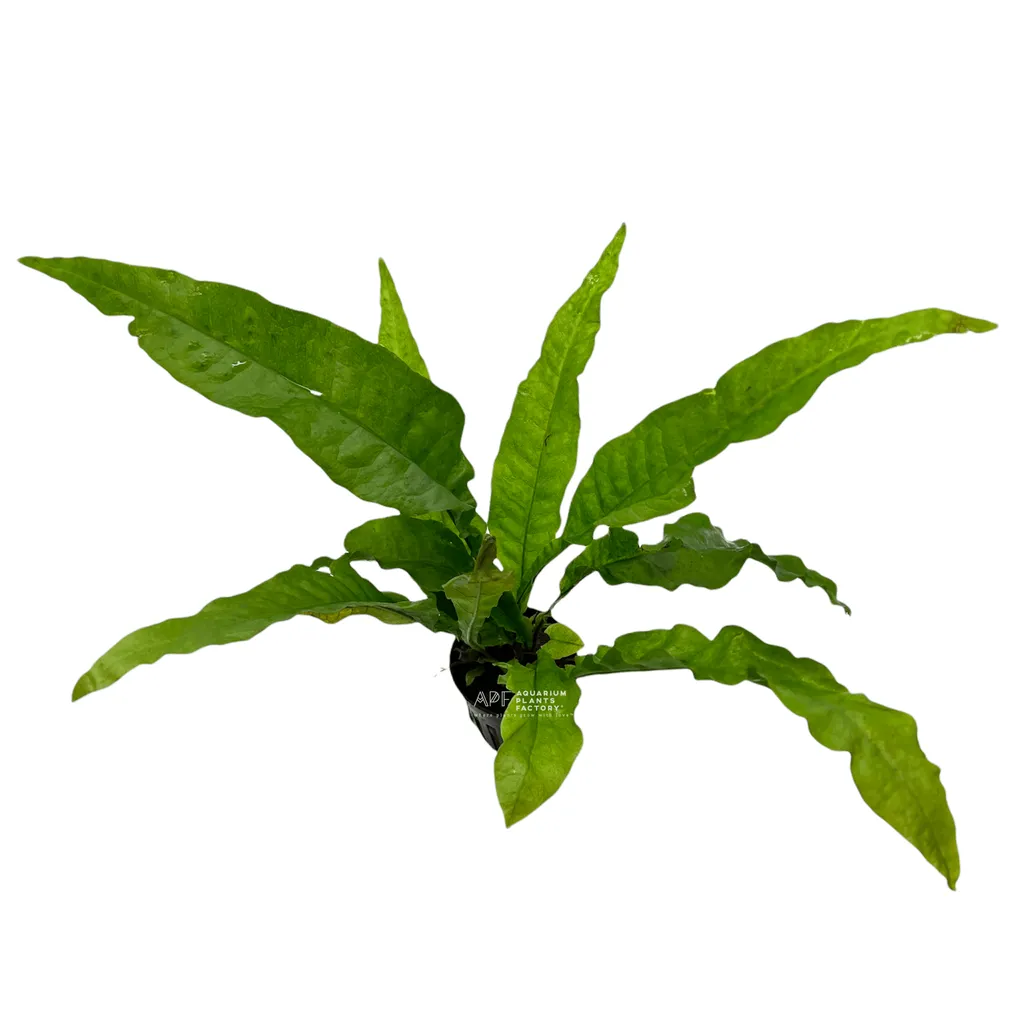
Care at a glance
- Light
- Low light
- CO2
- No CO₂ needed
- Temperature
- 64–82°F
- 18–28°C
- Max height
- 7.9 in
- 20 cm
- Growth rate
- Slow
- Placement
- Epiphyte
- Type
- Rhizome
- pH
- 5.0–7.5
- Hardness
- 2–15 dGH
- Spread
- 7.9 in (20 cm)
- Nutrient uptake
- Water column
- Growth region
- Submersed or emersed
- Difficulty
- Beginner
- Family
- Polypodiaceae
- Origin
- Cultivated form (nursery selection, no wild range)
Overview
Black Forest java fern is a dark-leaved java fern that grows on wood or stone rather than in the substrate. It is a beginner plant.
Did you know
Black Forest java fern also sells as 'Hardy Leaf' java fern, and a Thai grower lists it as Microsorum Black Forest (Hardy). Search both names when shopping, since some sellers use only one of them.
Caring for Black Forest java fern
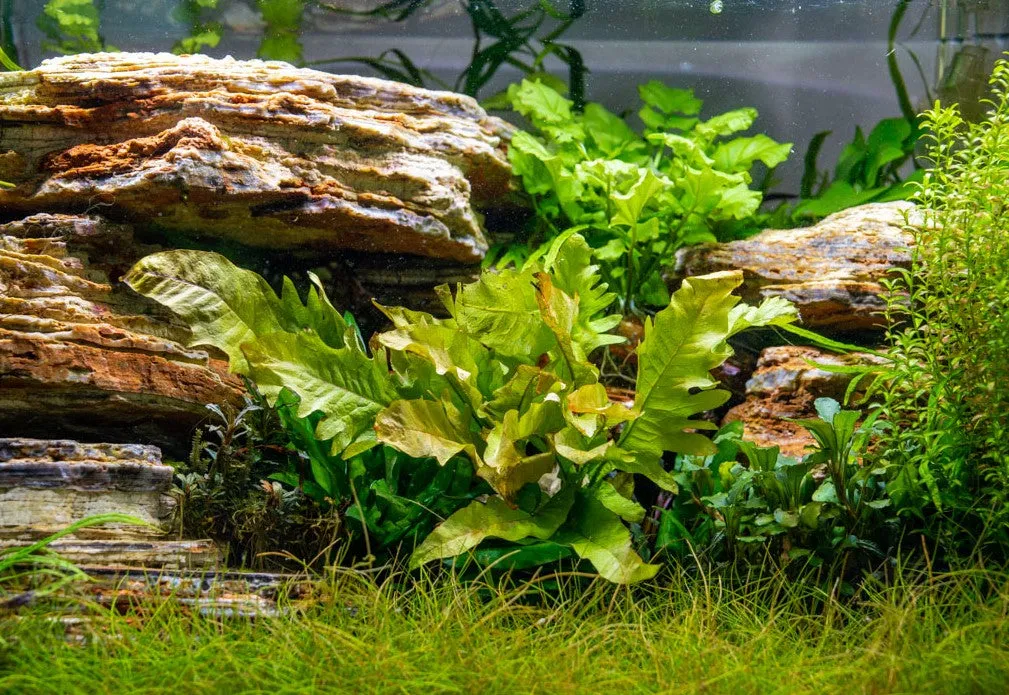
Tie or glue Black Forest java fern to driftwood or stone, with the rhizome kept out of the substrate. A buried rhizome rots. Pale sand, light rock or bright green plants behind it show off the dark leaves. Against dark wood and black soil it is hard to see.
Low light and no CO2 are enough. It feeds from the water, so a liquid fertilizer does more for it than root tabs. It takes 64 to 82°F (18 to 28°C) and also tolerates brackish water.
It grows slowly to about 20 cm. Give it more room than plain java fern, or the inner leaves shade each other and thin out. Pinch off plantlets from older leaves once they have roots, or cut the rhizome into pieces with several leaves each.
Good to know
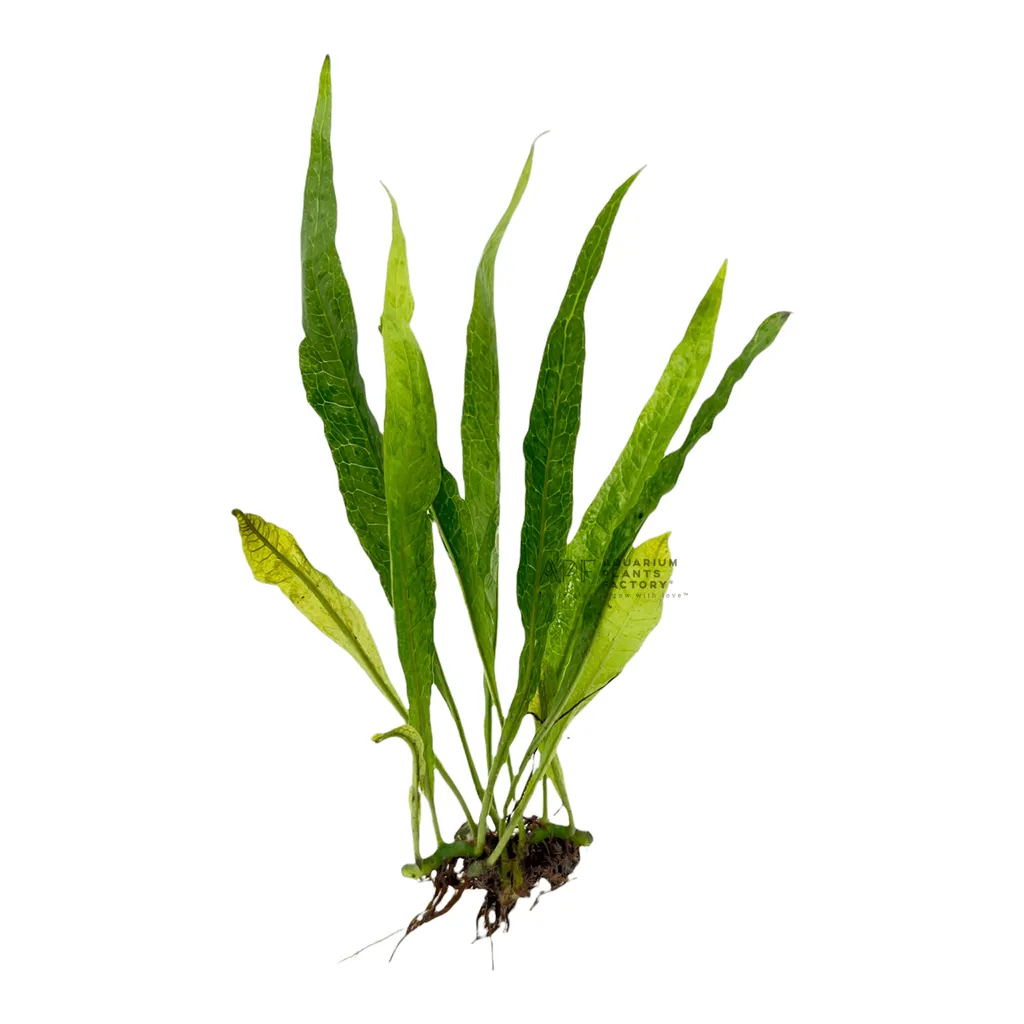
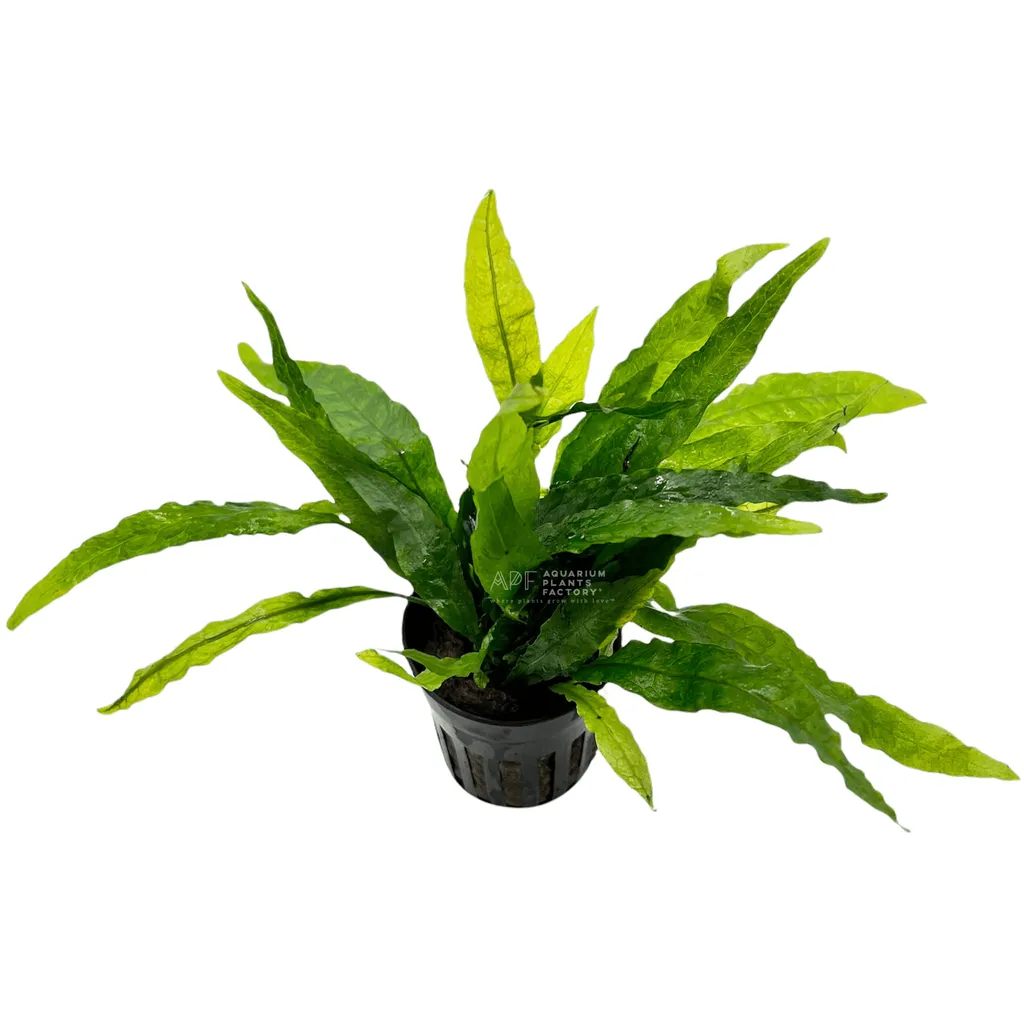
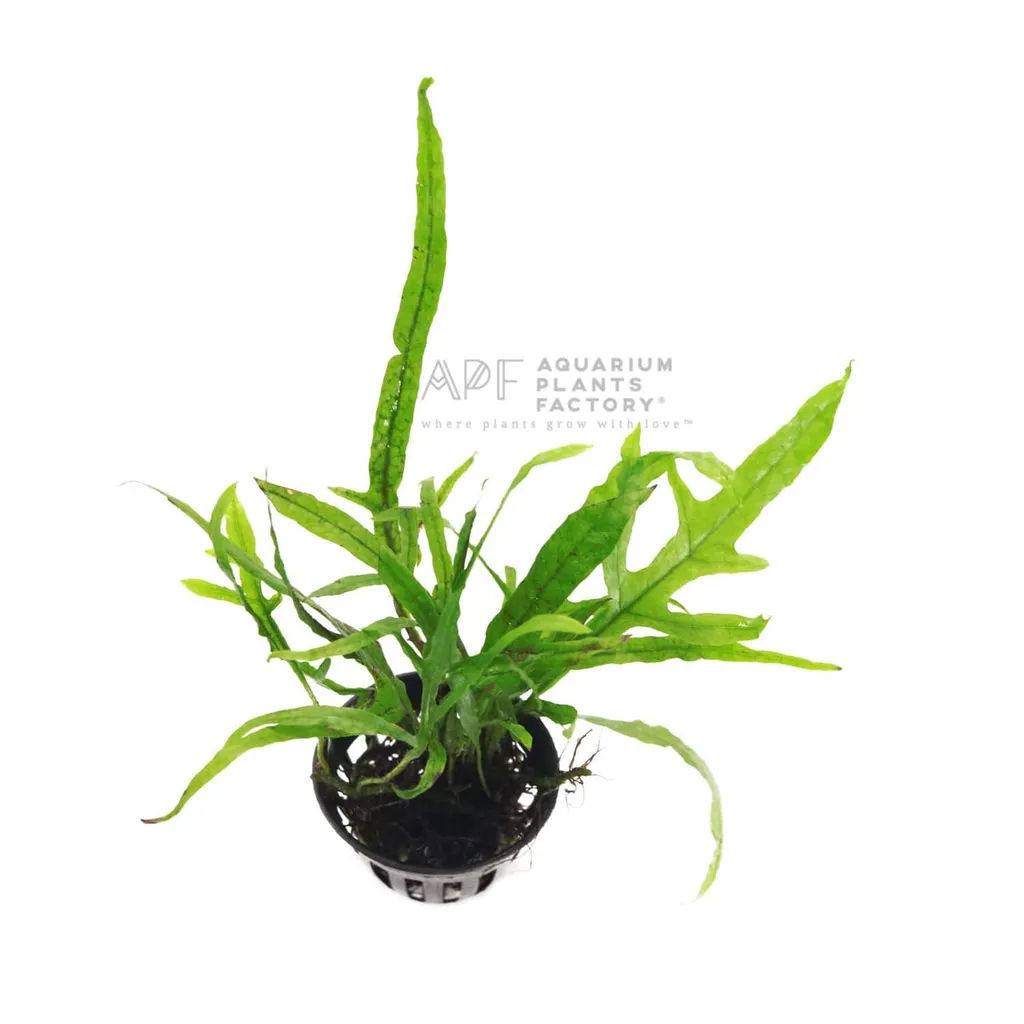
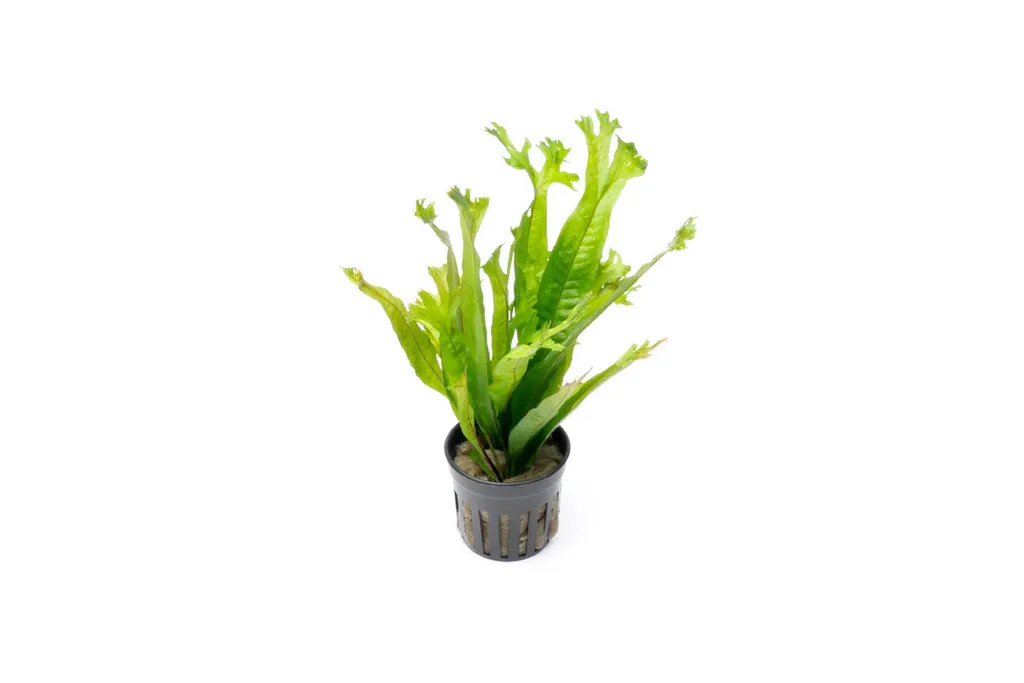
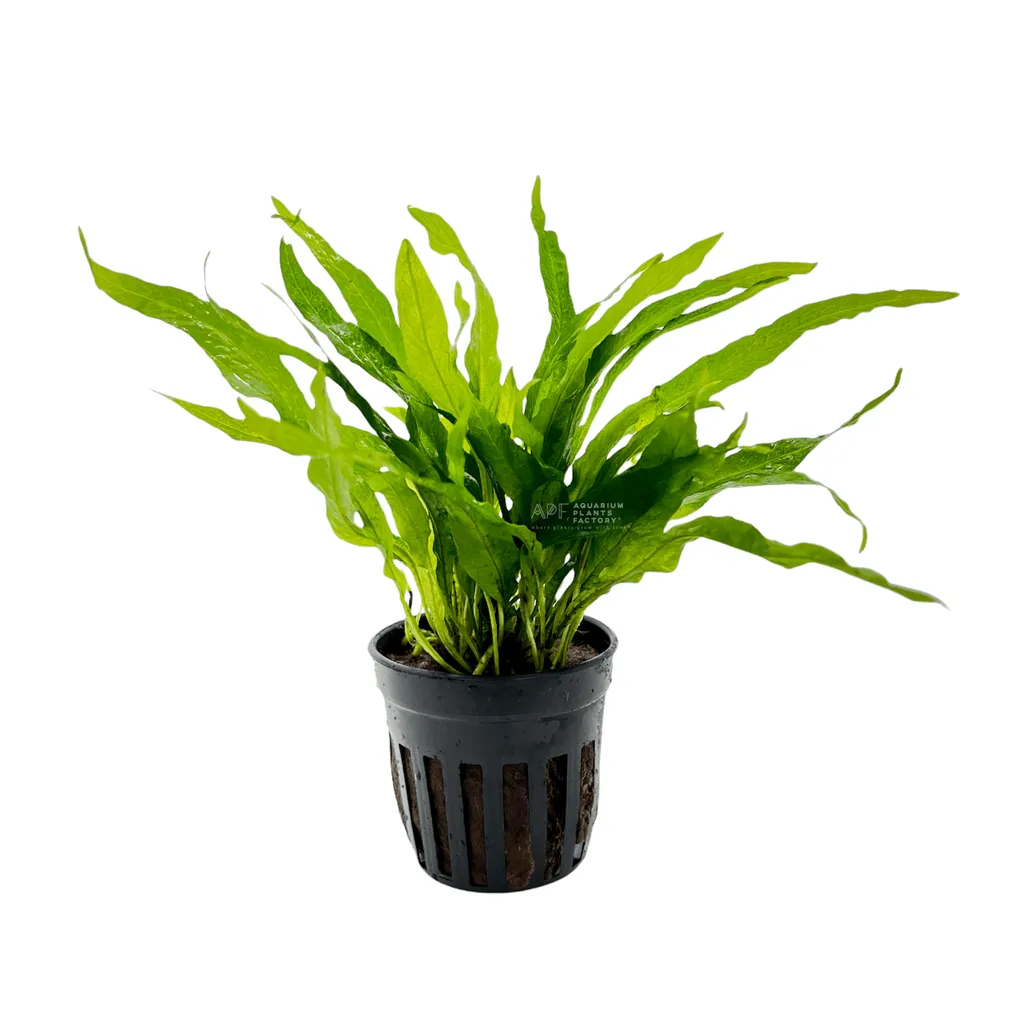
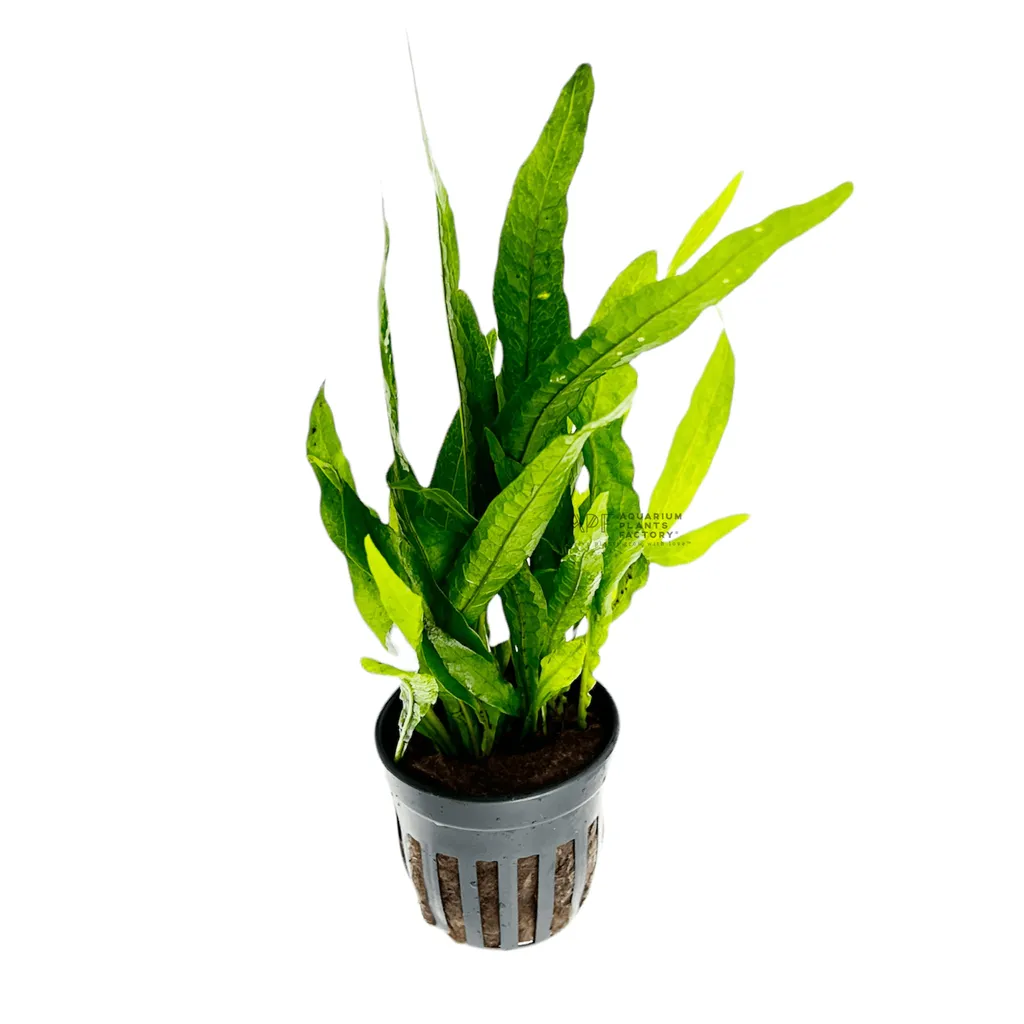
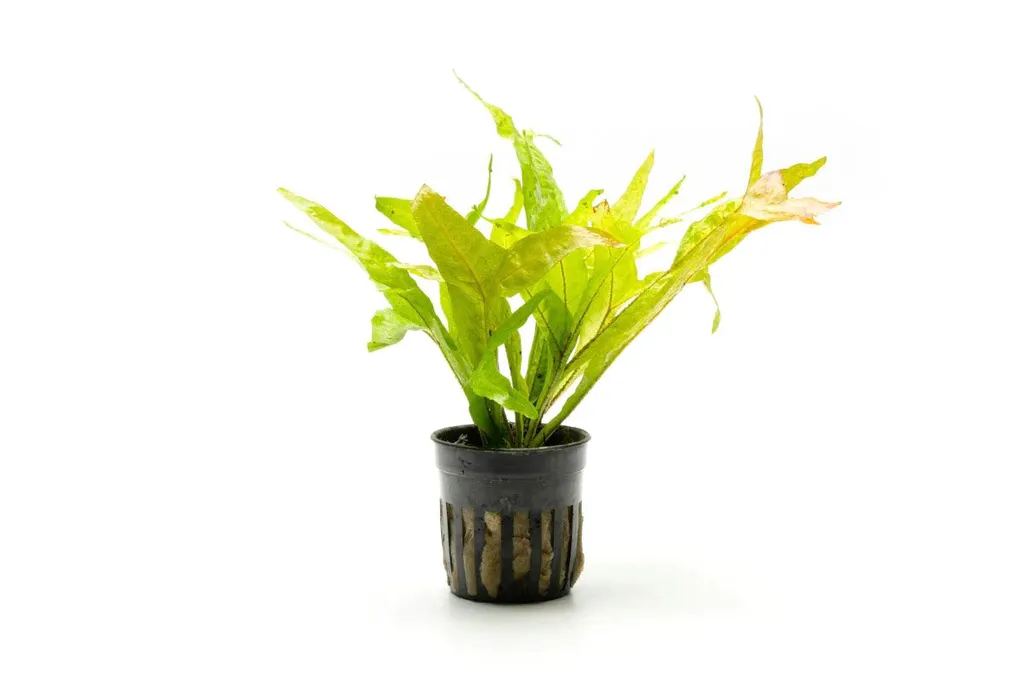
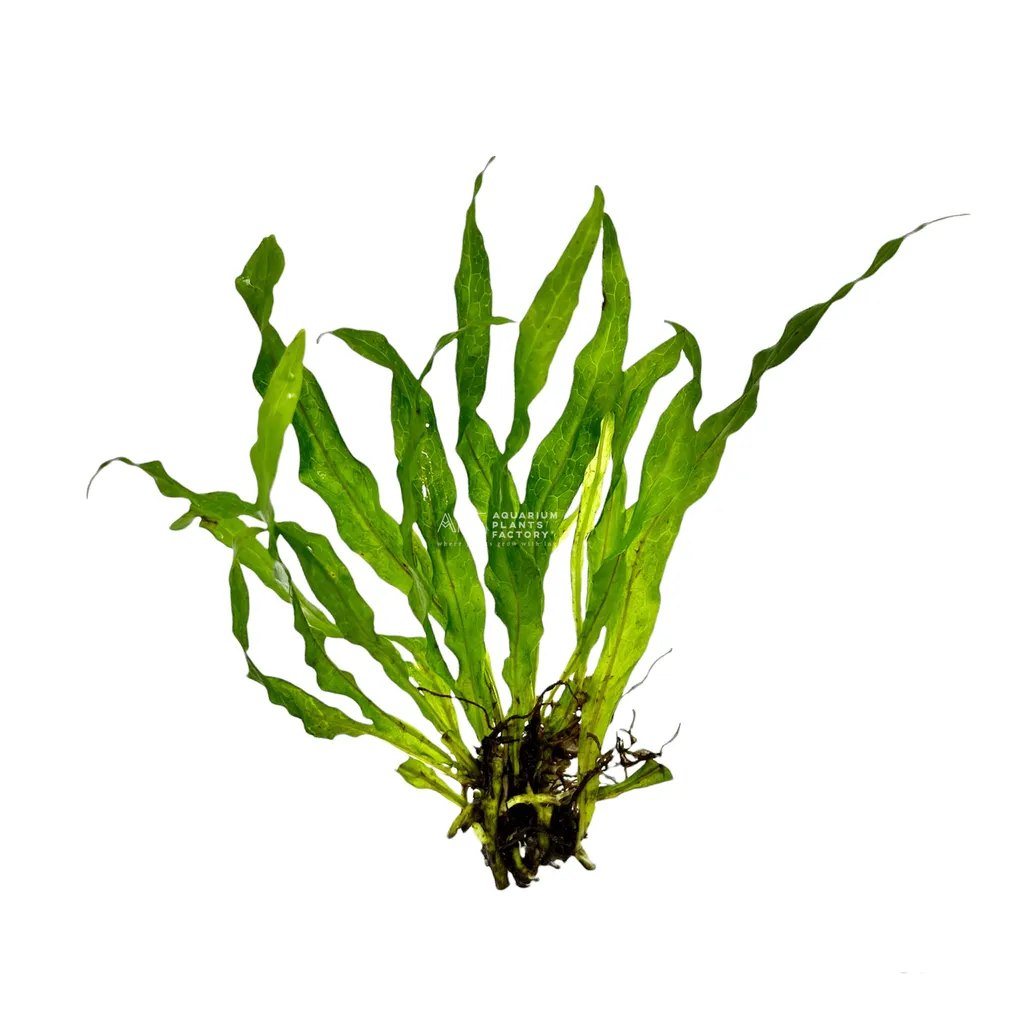
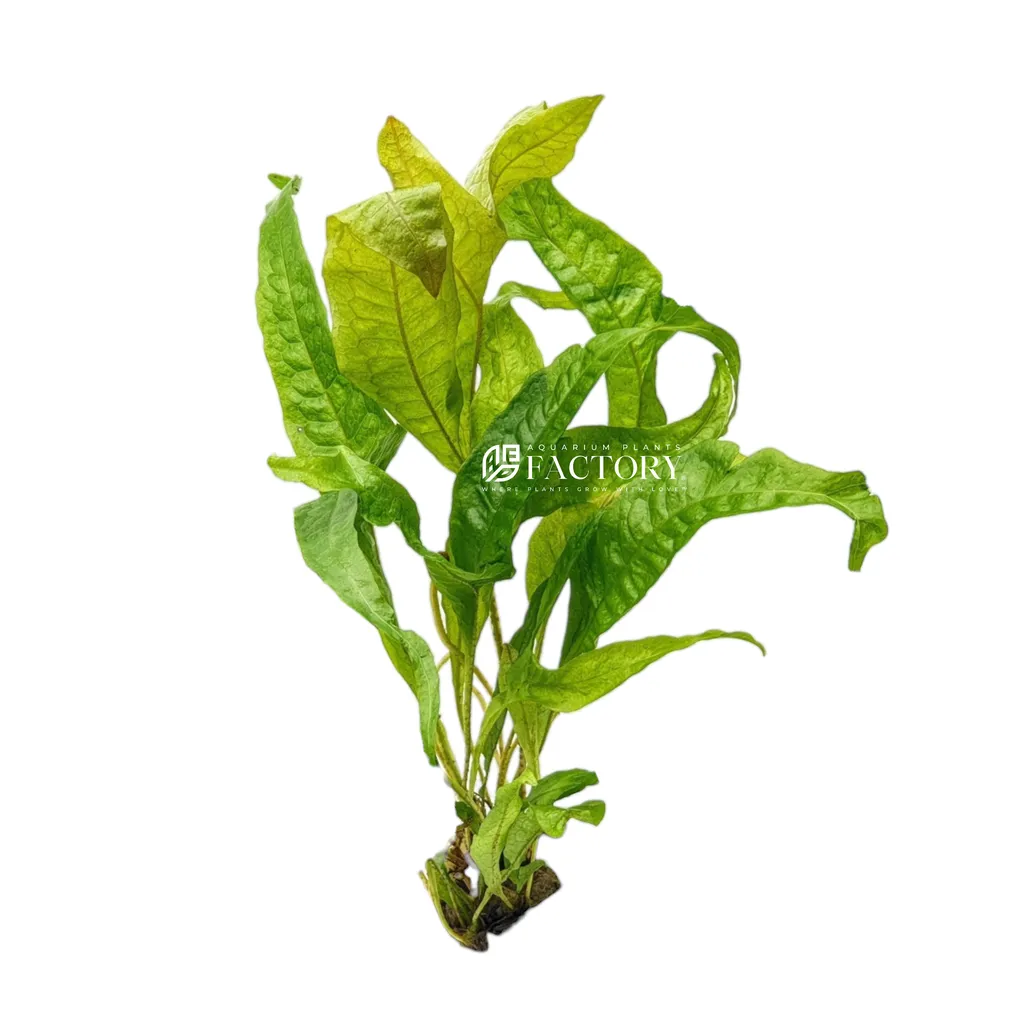
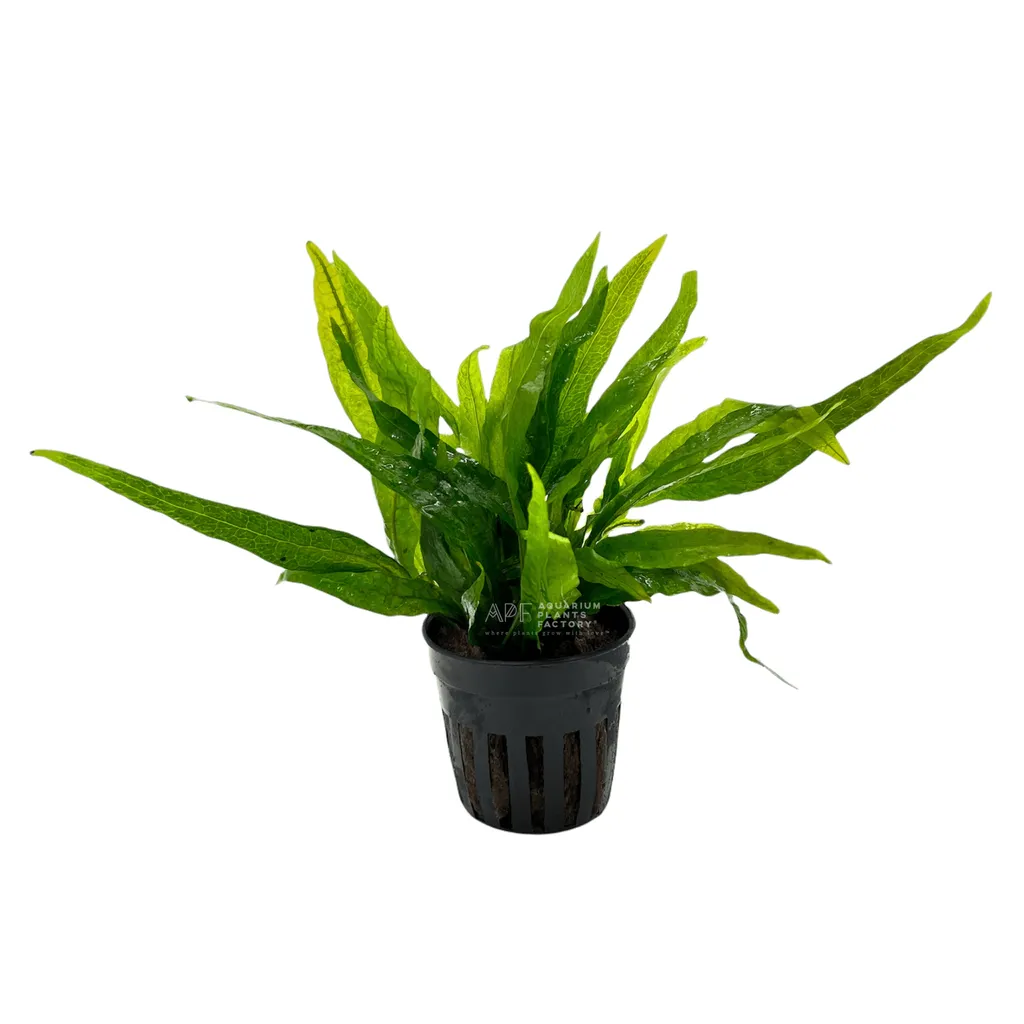
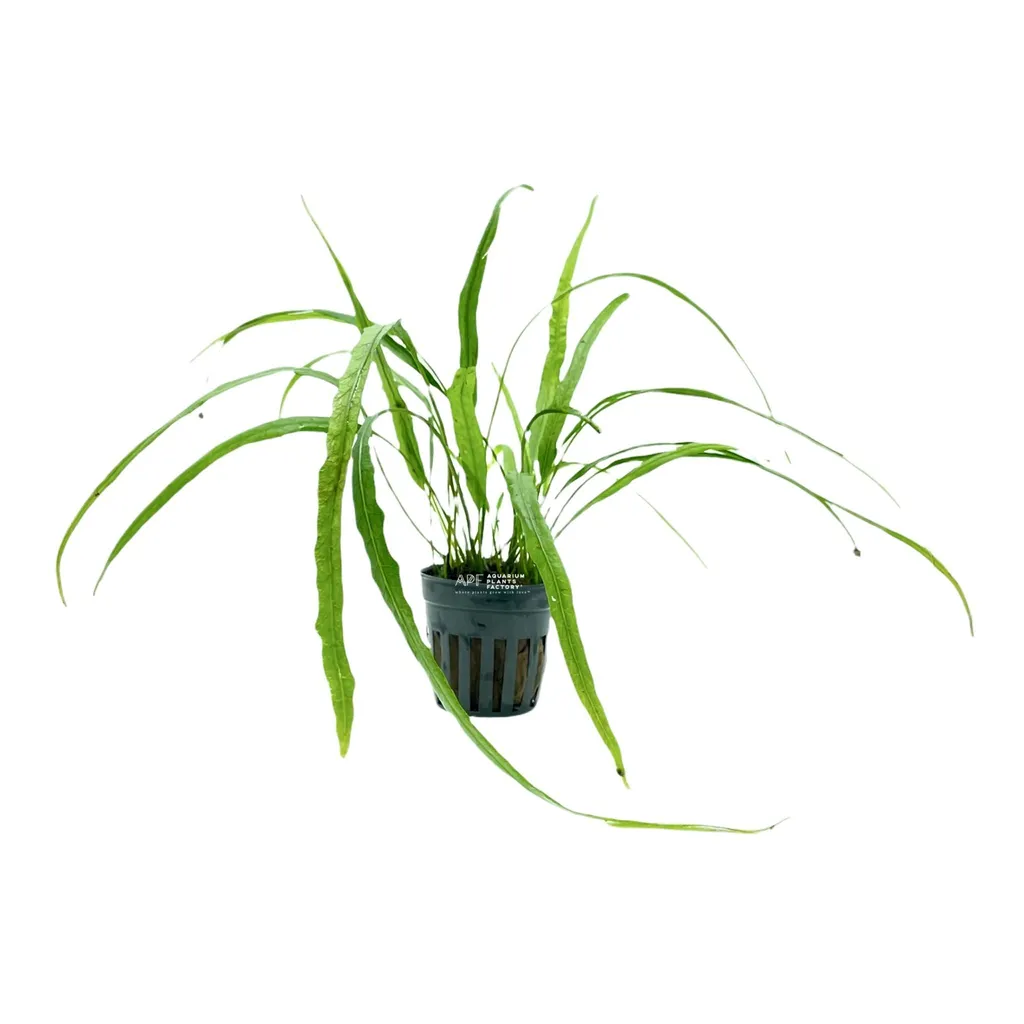
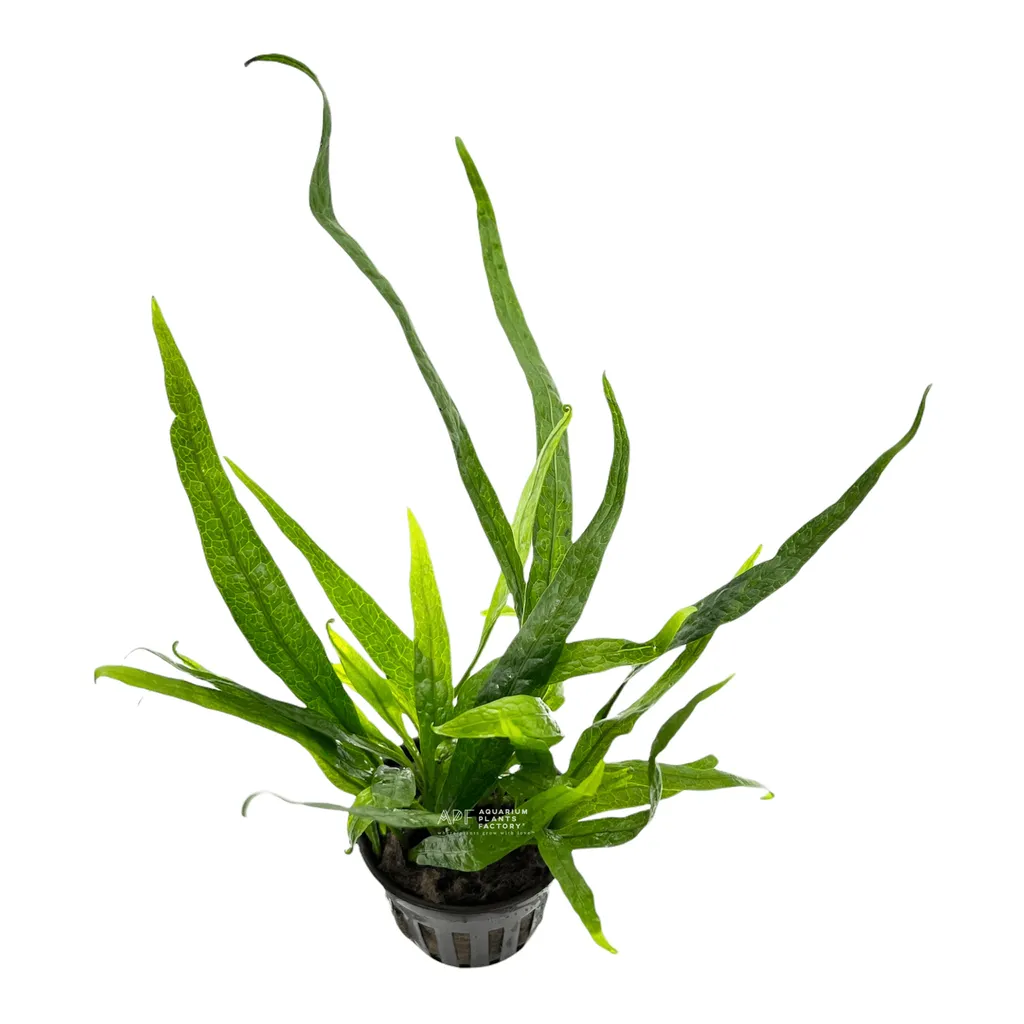
Black Forest is a cultivar of Leptochilus pteropus in the fern family Polypodiaceae, still sold under the older name Microsorum pteropus. Its narrow, lance-shaped leaves are a very dark green, with prominent dark veins and a puckered, textured surface. The clump grows denser than plain java fern. Beside Narrow Leaf it looks darker and rougher, and Philippine has broader, paler leaves with a hammered finish.
In the wild
Black Forest java fern is a trade form with no known wild population. US shops have carried it since at least 2018. Its parent species grows on wet rocks, roots and fallen wood along forest streams from northeastern India and southern China to Malaysia, Thailand and Java.
Common questions
Is Black Forest java fern a different species from java fern?
No. Black Forest java fern is a variety of java fern, Leptochilus pteropus. It reaches about 7.9 in (20 cm), against 11.8 in (30 cm) for the species.
Does Black Forest java fern need to be planted in the substrate?
No. Black Forest java fern grows attached to rock or wood, so tie or glue the rhizome in place. If you plant its roots, keep the rhizome above the substrate, since a buried rhizome rots.
Does Black Forest java fern need CO2?
No. Black Forest java fern grows well without added CO2 and suits a low-tech tank.
How much light does Black Forest java fern need?
Black Forest java fern is a low-light plant, and the light that comes with a standard tank kit is enough for it.
Does Black Forest java fern need root tabs?
No. Black Forest java fern feeds from the water, so a liquid fertilizer suits it better. Root tabs only help if its roots reach into the substrate.
How do you propagate Black Forest java fern?
Black Forest java fern propagates by rhizome division and plantlets. Cut the rhizome into pieces with several leaves each, then tie or plant each piece. Small plantlets form on the plant and can be detached once they have a few roots.
How tall does Black Forest java fern grow?
Black Forest java fern grows to about 7.9 in (20 cm) tall. It grows slowly and rarely needs trimming.