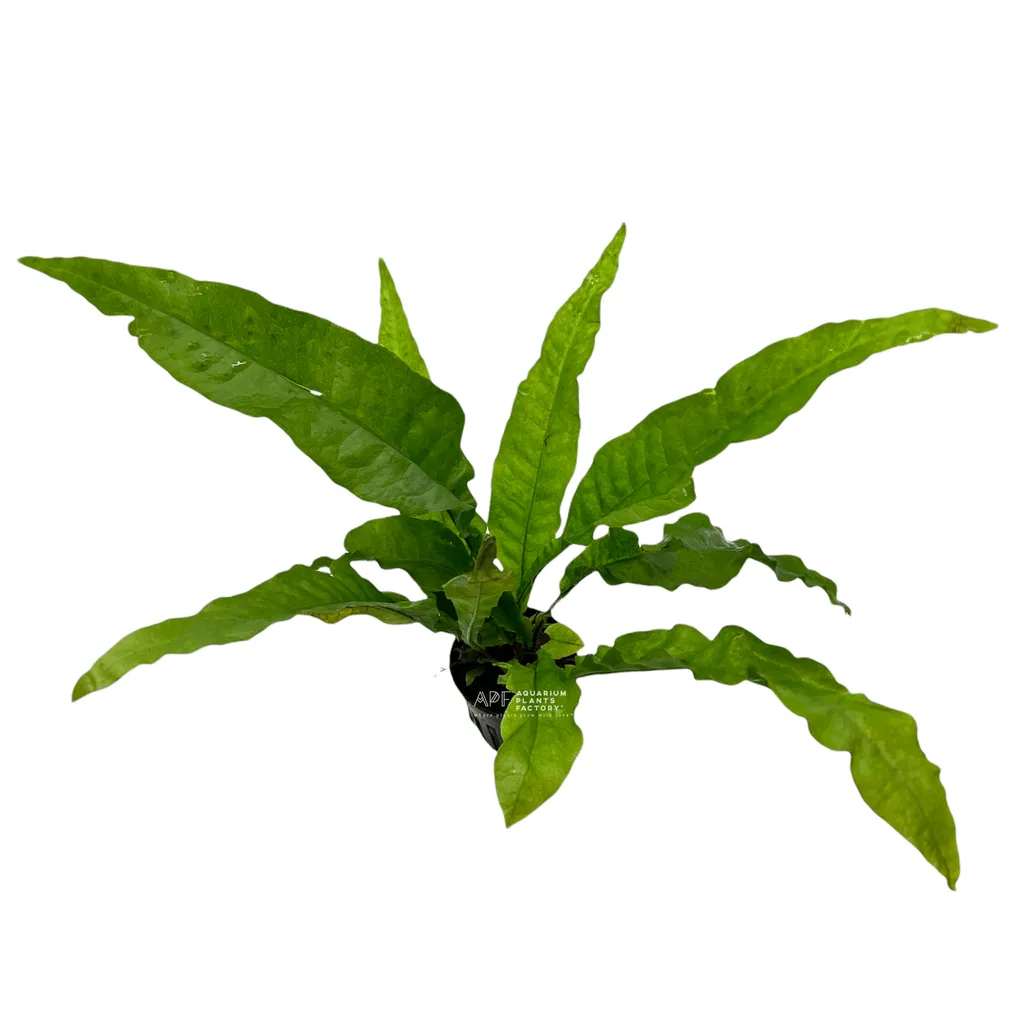
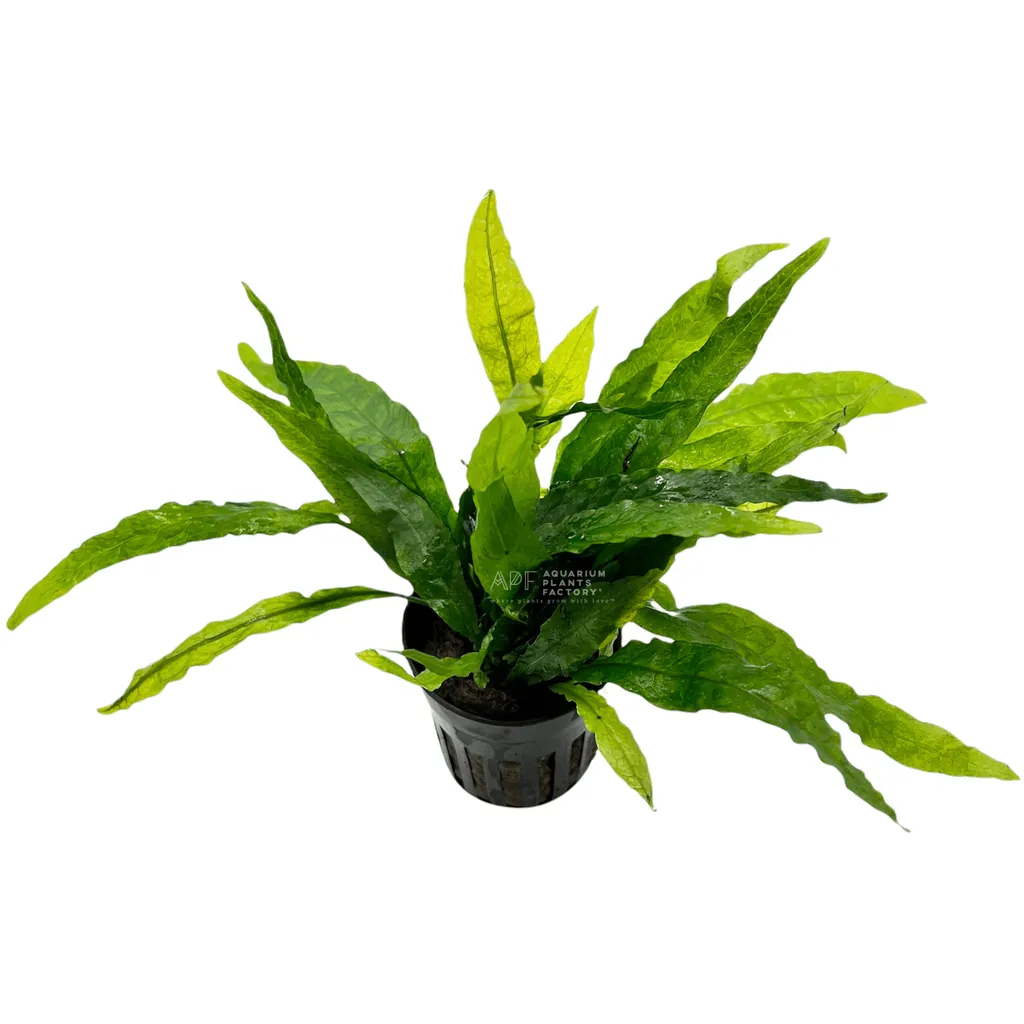
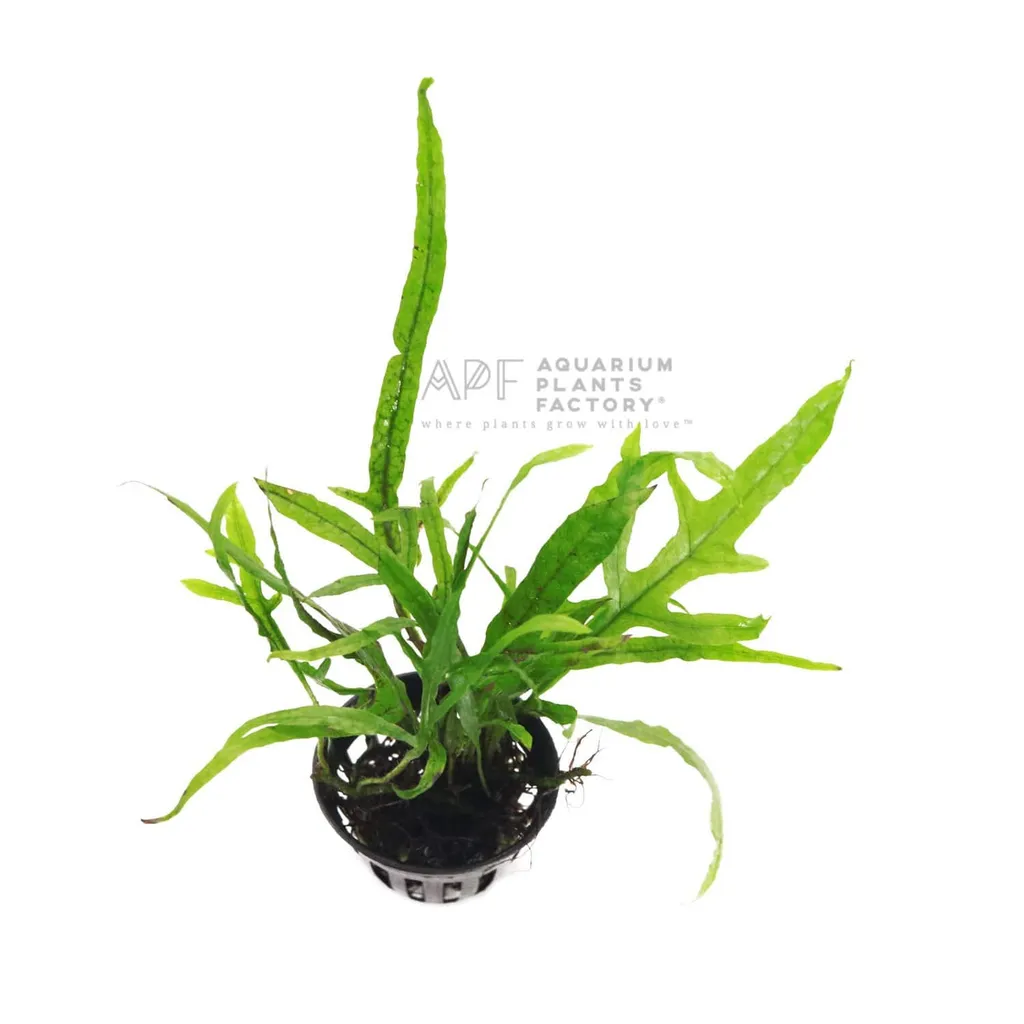
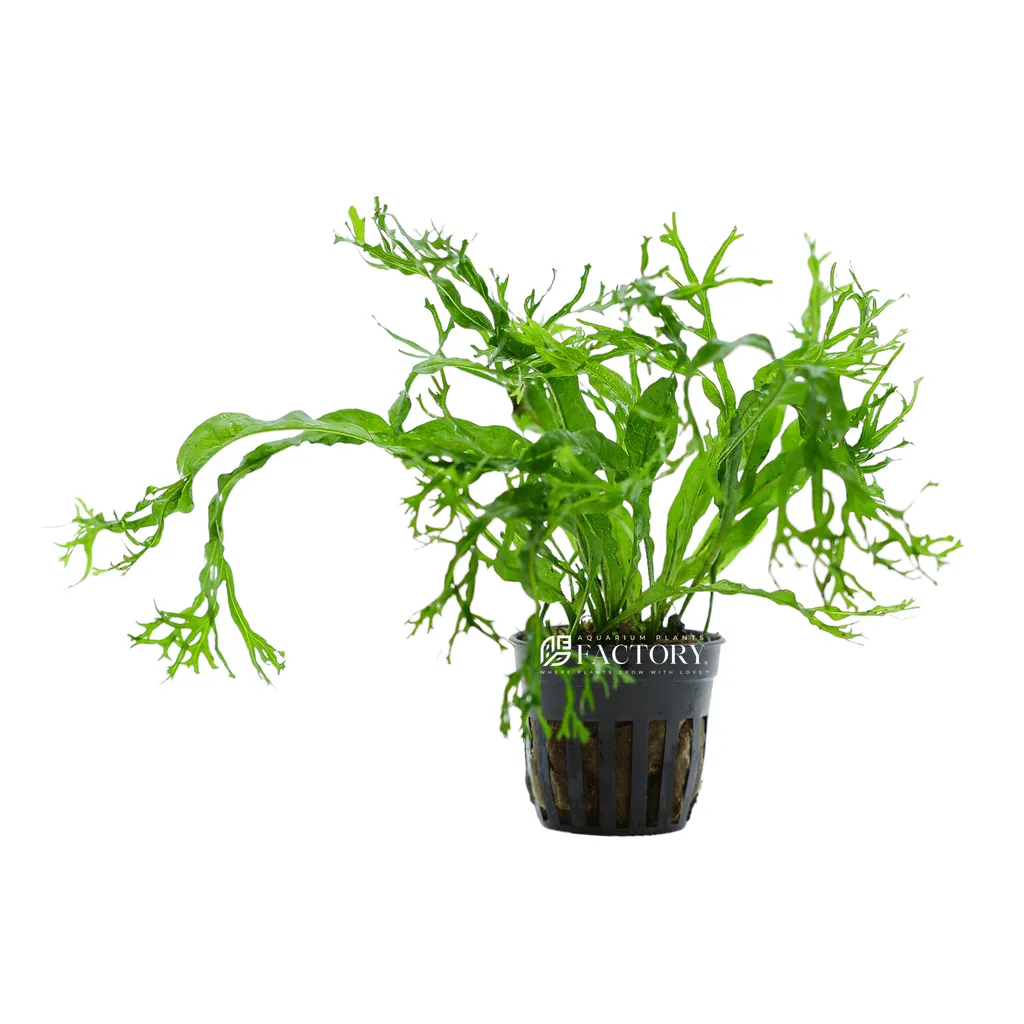
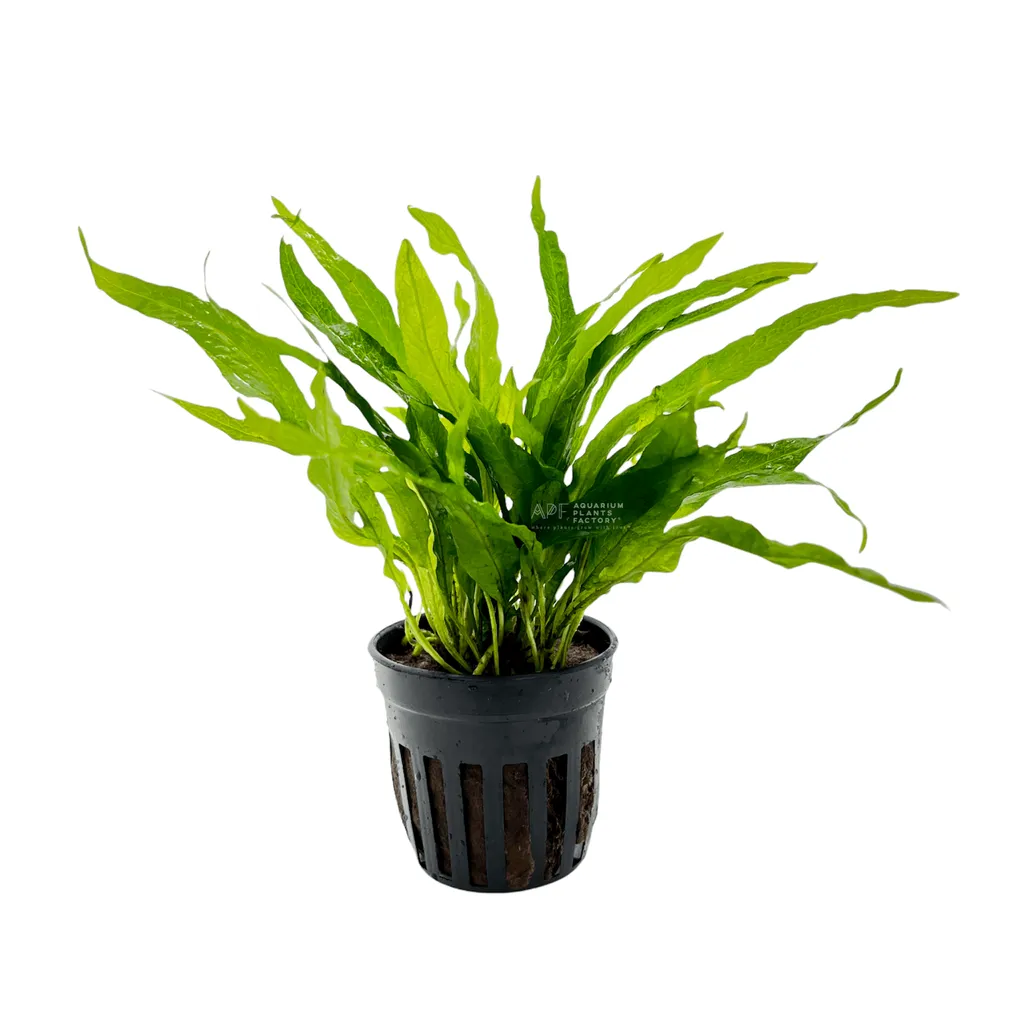
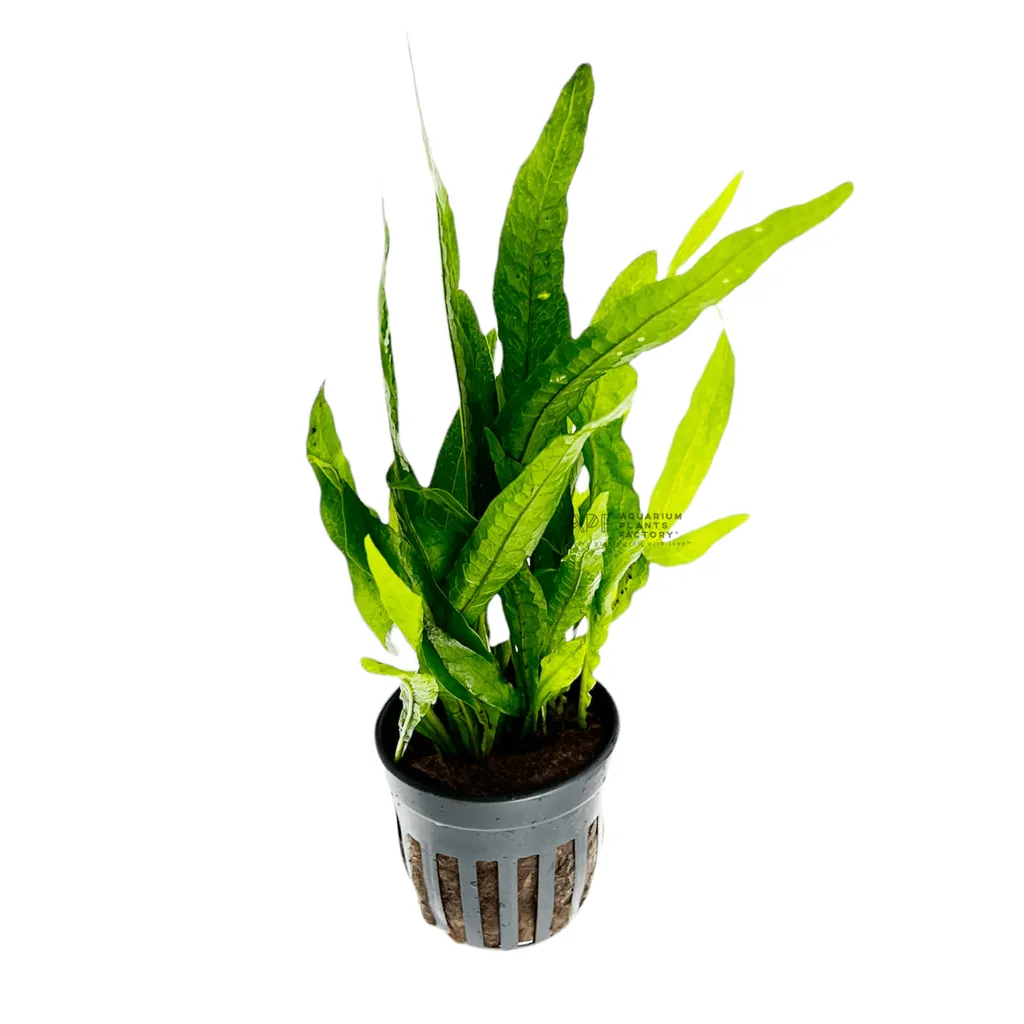
Cultivated selection of Southeast Asian Leptochilus pteropus
Overview
Glue or tie the rhizome to driftwood or rock and never bury it, or it will rot. It thrives in low light with no added CO2, though injected CO2 and stronger light give tighter, faster growth. It is slow and nearly bulletproof, tolerant of a wide parameter range including slightly brackish water, and it spreads by producing baby plants (plantlets) on older fronds that you can detach and reattach elsewhere.
In the wild
This is a nursery selection of Leptochilus pteropus, the java fern, which in the wild grows across Southeast Asia clinging to rocks and wood along streams and in seasonally flooded forest. Like the parent species it is an epiphytic fern that lives with its rhizome exposed, not rooted in soil. It shifts easily between submersed and emersed growth, which is how it survives fluctuating water levels in its native range.
Good to know
Microsorum pteropus belongs to the true fern family Polypodiaceae, and recent taxonomic work moves it into the genus Leptochilus, so you may see it listed as Leptochilus pteropus. 'Thor's Trident' is a hobbyist cultivar with unusually narrow leaves that fork into fine multi-pronged tips, a more delicate version of the standard 'Trident'. As a fern it reproduces by spores in nature, but the black dots on the undersides of aquarium leaves are usually sori (spore cases), not disease.
Did you know
Java fern is one of the few aquarium plants that reproduces mostly by making tiny clones of itself right on its leaf tips, so you can grow a whole colony without ever cutting the parent plant.