Star duckweed
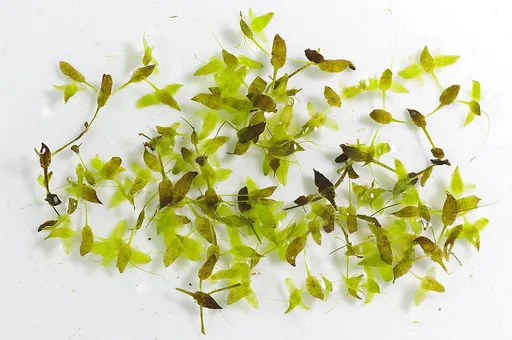
Lemna trisulca
Also known as Ivy duckweed, Ivy-leaved duckweed, Narrow-leaf duckweed, Star duckmeat
FreshwaterFloatingdivisionfragmentation
Care at a glance
- Light
- Low light
- CO2
- No CO₂ needed
- Temperature
- 50–79°F
- 10–26°C
- Max height
- 0.4 in
- 1 cm
- Growth rate
- Medium
- Placement
- Floating
- Type
- Floating
- pH
- 6.0–8.0
- Hardness
- 2–18 dGH
- Spread
- 7.9 in (20 cm)
- Nutrient uptake
- Water column
- Growth region
- Submersed or emersed
- Difficulty
- Easy
- Family
- Araceae
- Origin
- A cool water duckweed of temperate ponds and slow streams across the Northern Hemisphere, drifting just under the surface rather than on top of it.
Overview
Let it drift under the surface in low to moderate light with no CO2 required, and it will slowly build up into cushions. It is far less aggressive than common duckweed, so it will not choke the surface, and it tolerates cool temperatures well. Thin it if it gets thick enough to shade plants beneath.
In the wild
Unlike the duckweeds that coat the surface, star duckweed grows as translucent, toothed fronds joined in branching, ivy like chains that hang just below the water line. The chains tangle into loose cushions that drift midwater and only rise to the top to flower. This gives shrimp and fry a soft, sheltering thicket without blanketing the surface.
Good to know
Star duckweed is one of the few duckweeds that grows submerged, with fronds staying connected in crosswise chains rather than floating singly. It sits in the arum family, the same broad group as anubias and philodendron.
Did you know
Because it floats below the water rather than on top, it is much easier to live with than surface duckweed and rarely takes over a tank.
Related plants
 Low lightFloating0.4 in (1 cm)
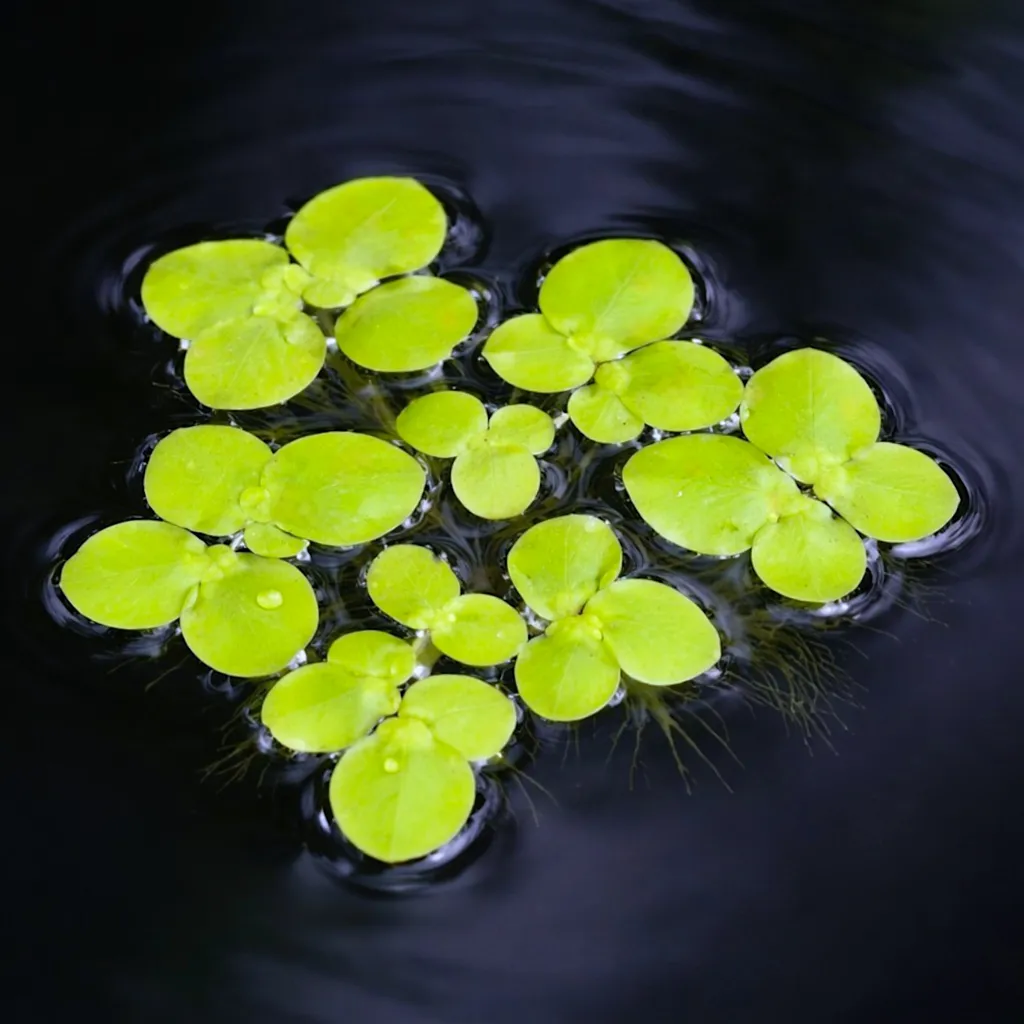
Giant duckweed
Spirodela polyrhiza
Low light · Floating
 Medium lightFloating3.9 in (10 cm)
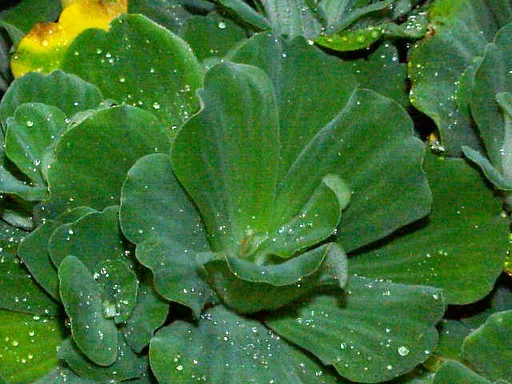
Dwarf water lettuce
Pistia stratiotes
Medium light · Floating
 Medium lightFloating0 in (0.1 cm)
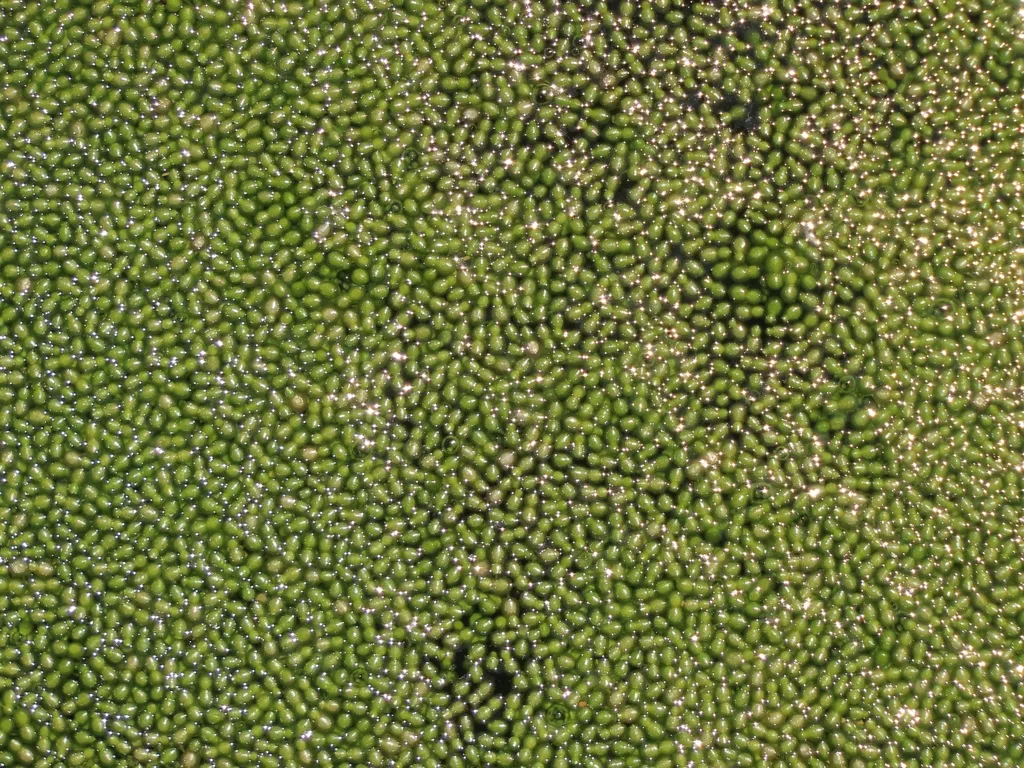
Watermeal
Wolffia globosa
Medium light · Floating
 Low lightEpiphyte0.8 in (2 cm)
Anubias Pangolino
Anubias barteri var. nana 'Pangolino'
Low light · Epiphyte
- Low lightEpiphyte1.2 in (3 cm)
Anubias Micro
Anubias barteri var. nana 'Micro'
Low light · Epiphyte
- Low lightEpiphyte1.6 in (4 cm)
Bucephalandra Mini Coin
Bucephalandra sp. 'Mini Coin'
Low light · Epiphyte