Watermeal
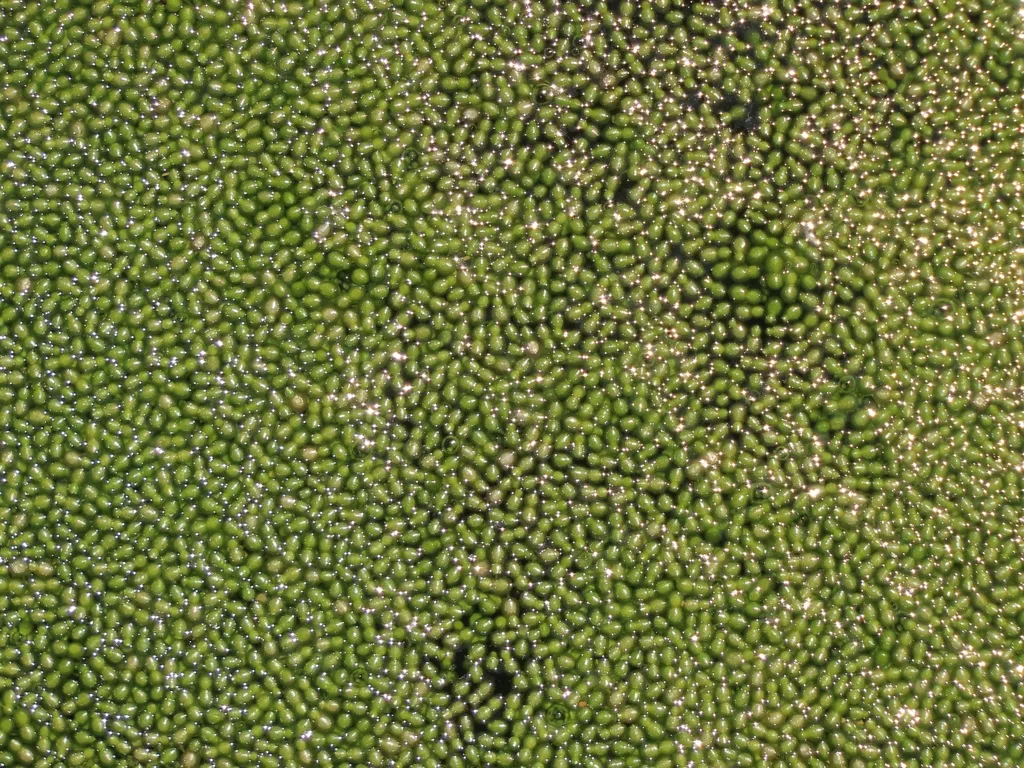
Wolffia globosa
Also known as Asian watermeal, Water meal
FreshwaterFloatingPlantlets
Invasive. Watermeal spreads explosively and is invasive outside its native range. Never release into the wild; dispose of in the trash.
Care at a glance
- Light
- Medium light
- CO2
- No CO₂ needed
- Temperature
- 64–86°F
- 18–30°C
- Max height
- 0 in
- 0.1 cm
- Growth rate
- Fast
- Placement
- Floating
- Type
- Floating
- pH
- 6.0–7.5
- Hardness
- 3–20 dGH
- Spread
- 39.4 in (100 cm)
- Nutrient uptake
- Water column
- Growth region
- Submersed or emersed
- Difficulty
- Easy
- Family
- Araceae
- Origin
- Southeast Asia
Overview
This is a warm-water surface floater that spreads fast and shades the tank below, so it needs regular skimming to keep it in check. It has no roots, so keep surface flow gentle or it gets sucked into filters and pushed around. It is an easy, no-CO2 nutrient sponge and a live food for shrimp, snails, and small fish, but its speed makes it a nuisance if you let it take over. Note it is invasive outside its native Southeast Asia, so never release it into the wild.
In the wild
Watermeal is native to Southeast Asia, where it floats in dense green films across the surface of calm ponds, ditches, marshes, and slow backwaters. Each plant is a rootless, leafless green ball, or thallus, riding on the water surface. Given nutrients and warmth it blankets still water quickly. It has become naturalized and invasive well beyond its native range, including parts of Europe and North America.
Good to know
Wolffia globosa is the world's smallest flowering plant, with each frond roughly 0.1 to 0.2 mm across. It sits in the duckweed subfamily Lemnoideae within the arum family Araceae, and it has no roots, stems, or true leaves, just a single tiny floating thallus. It reproduces almost entirely by budding, and a culture can double its mass in as little as two to four days.
Did you know
Wolffia globosa is not only the world's smallest flowering plant but also produces the world's smallest fruit, and it is eaten as a protein-rich vegetable in parts of Southeast Asia, where it is known as khai-nam, or water eggs.
Related plants
 Low lightFloating0.4 in (1 cm)
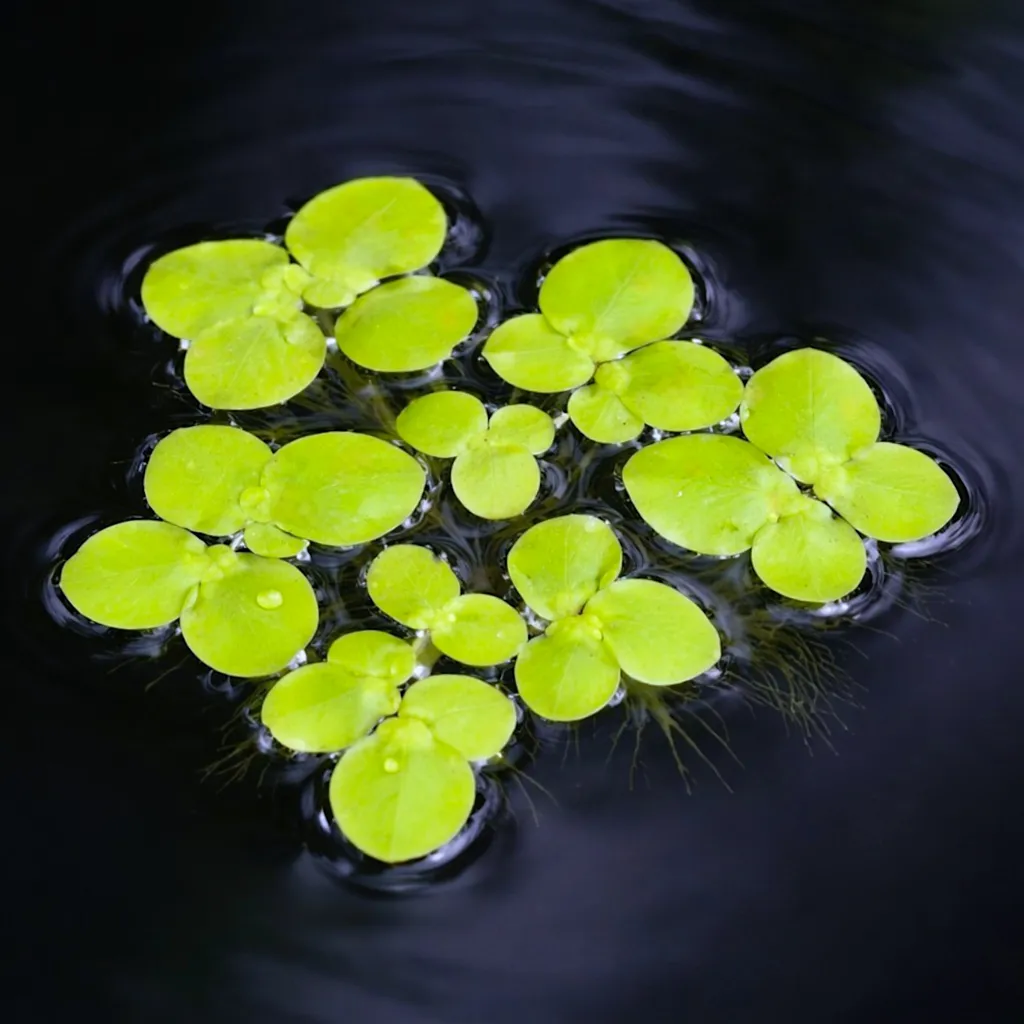
Giant duckweed
Spirodela polyrhiza
Low light · Floating
 Low lightFloating0.4 in (1 cm)
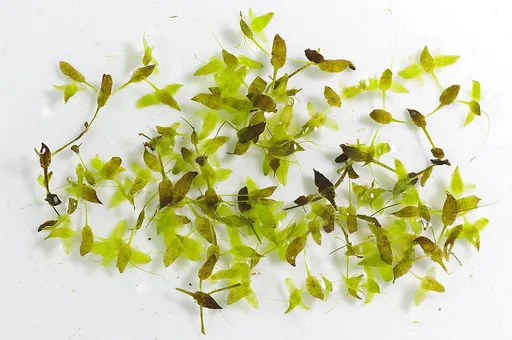
Star duckweed
Lemna trisulca
Low light · Floating
 Medium lightFloating3.9 in (10 cm)
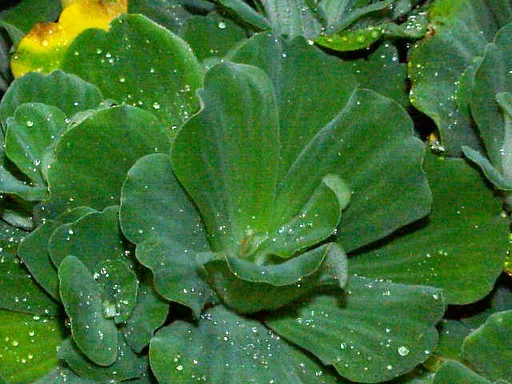
Dwarf water lettuce
Pistia stratiotes
Medium light · Floating
 Low lightEpiphyte0.8 in (2 cm)
Anubias Pangolino
Anubias barteri var. nana 'Pangolino'
Low light · Epiphyte
- Low lightEpiphyte1.2 in (3 cm)
Anubias Micro
Anubias barteri var. nana 'Micro'
Low light · Epiphyte
- Low lightEpiphyte1.6 in (4 cm)
Bucephalandra Mini Coin
Bucephalandra sp. 'Mini Coin'
Low light · Epiphyte