Grassy arrowhead
Sagittaria graminea
Also known as Grass-leaved arrowhead
FreshwaterRosetteRunners
Care at a glance
- Light
- Medium light
- CO2
- No CO₂ needed
- Temperature
- 64–82°F
- 18–28°C
- Max height
- 23.6 in
- 60 cm
- Growth rate
- Fast
- Placement
- Background
- Type
- Rosette
- pH
- 6.5–7.8
- Hardness
- 3–15 dGH
- Spread
- 9.8 in (25 cm)
- Nutrient uptake
- Root feeder
- Growth region
- Submersed or emersed
- Difficulty
- Easy
- Family
- Alismataceae
- Origin
- Eastern North America (Newfoundland and Ontario south to Florida, Texas, and the West Indies)
Overview
Grassy arrowhead is an undemanding rosette plant whose tall, grassy leaves suit the background or the sides of a tank. It rates easy.
Did you know
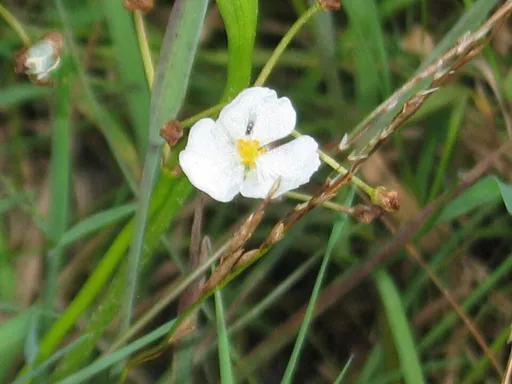
Grassy arrowhead looks completely different above and below water. Submerged it is a plain ribbon of grass, but grown out into the air some forms throw arrow-shaped leaves and rings of small white flowers. The habit is called heterophylly.
Caring for grassy arrowhead
Plant grassy arrowhead with the roots buried and the crown just above the substrate. It feeds mainly through its roots, so push root tabs in near it if the substrate is poor in nutrients.
Medium light is enough, and it grows well without added CO2. It handles 64 to 82°F (18 to 28°C). Submerged, it makes tall, grassy leaves.
Grassy arrowhead grows fast and spreads by runners into a thick stand. Thin it now and then so it stays in its spot. Cut a runner plant free once it has roots and plant it to start a new clump.
Good to know
Grassy arrowhead belongs to the water-plantain family, Alismataceae, along with the other arrowheads in Sagittaria. Its submersed leaves stay narrow and strap-like despite the genus name. Like other Sagittaria it is monoecious, carrying separate male and female flowers in whorls on the same emergent flower stalk.
In the wild
Grassy arrowhead is a marginal aquatic plant of shallow ponds, marshes, ditches and river edges across eastern North America. Its range runs from Canada down to Florida, Texas and the West Indies. In the wild it grows as a rooted rosette of grass-like blades, often emersed at the water's edge. It is not a prohibited or federally regulated plant, though as an ornamental it has escaped cultivation in some regions.
Common questions
Does grassy arrowhead need to be planted in the substrate?
Yes. Bury the roots and leave the crown, where the leaves join, just above the substrate.
Does grassy arrowhead need CO2?
No. Grassy arrowhead grows well without added CO2.
How much light does grassy arrowhead need?
Grassy arrowhead wants medium light. A light sold for planted tanks covers it.
Does grassy arrowhead need root tabs?
Yes. Grassy arrowhead draws much of its food through its roots. Push root tabs in near it, or grow it in a nutrient-rich soil.
How do you propagate grassy arrowhead?
Grassy arrowhead propagates by runners. New plants grow along its runners. Cut one free once it has roots and plant it.
How tall does grassy arrowhead grow?
Grassy arrowhead grows to about 23.6 in (60 cm) tall. It grows fast, so expect to trim it often.
Related plants
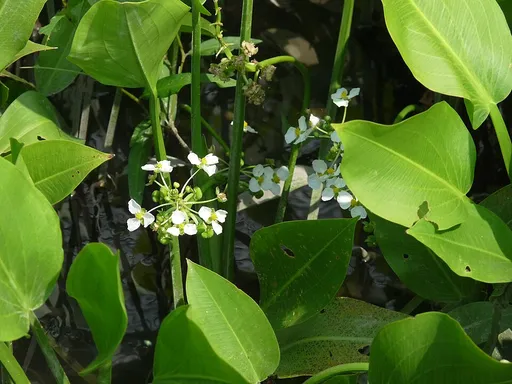 Medium lightMidground15.7 in (40 cm)
Giant sagittaria
Sagittaria platyphylla
Medium light · Midground
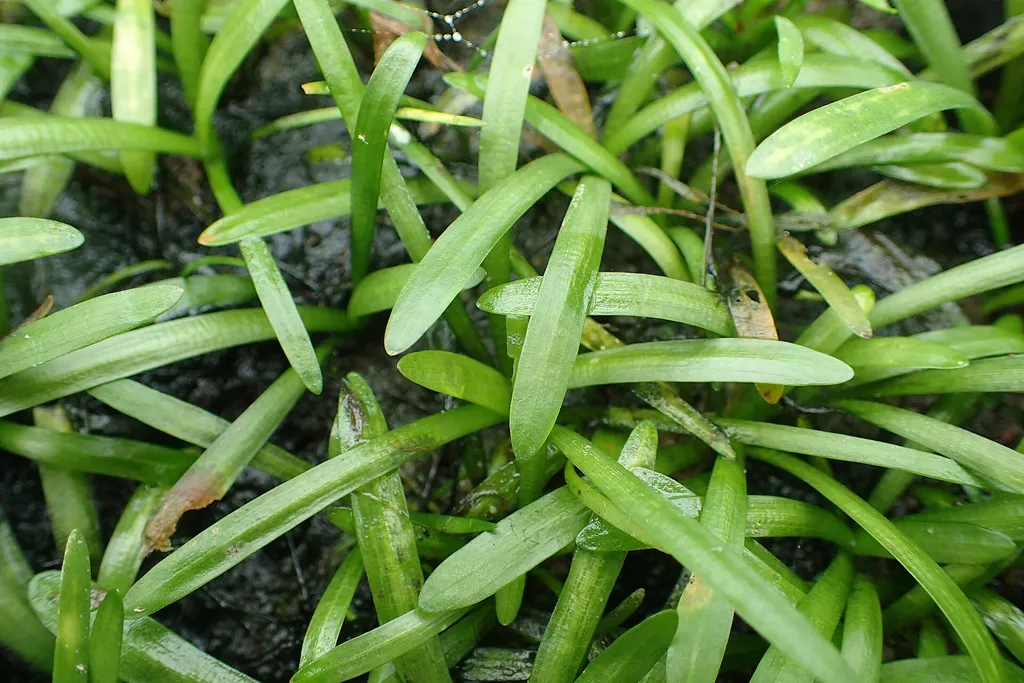 Low lightForeground11.8 in (30 cm)
Dwarf sagittaria
Sagittaria subulata
Low light · Foreground
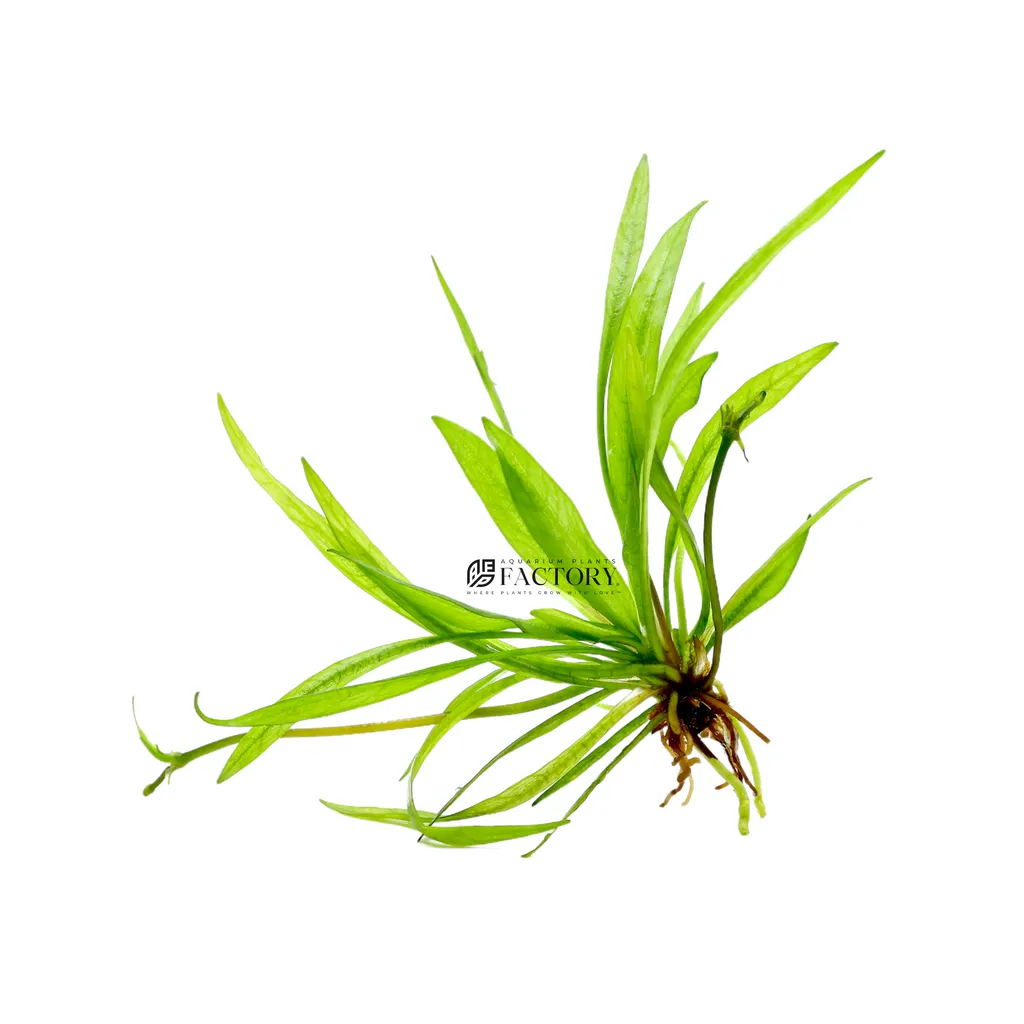 Medium lightBackground23.6 in (60 cm)
Narrow leaf chain sword
Helanthium bolivianum 'Angustifolius'
Medium light · Background
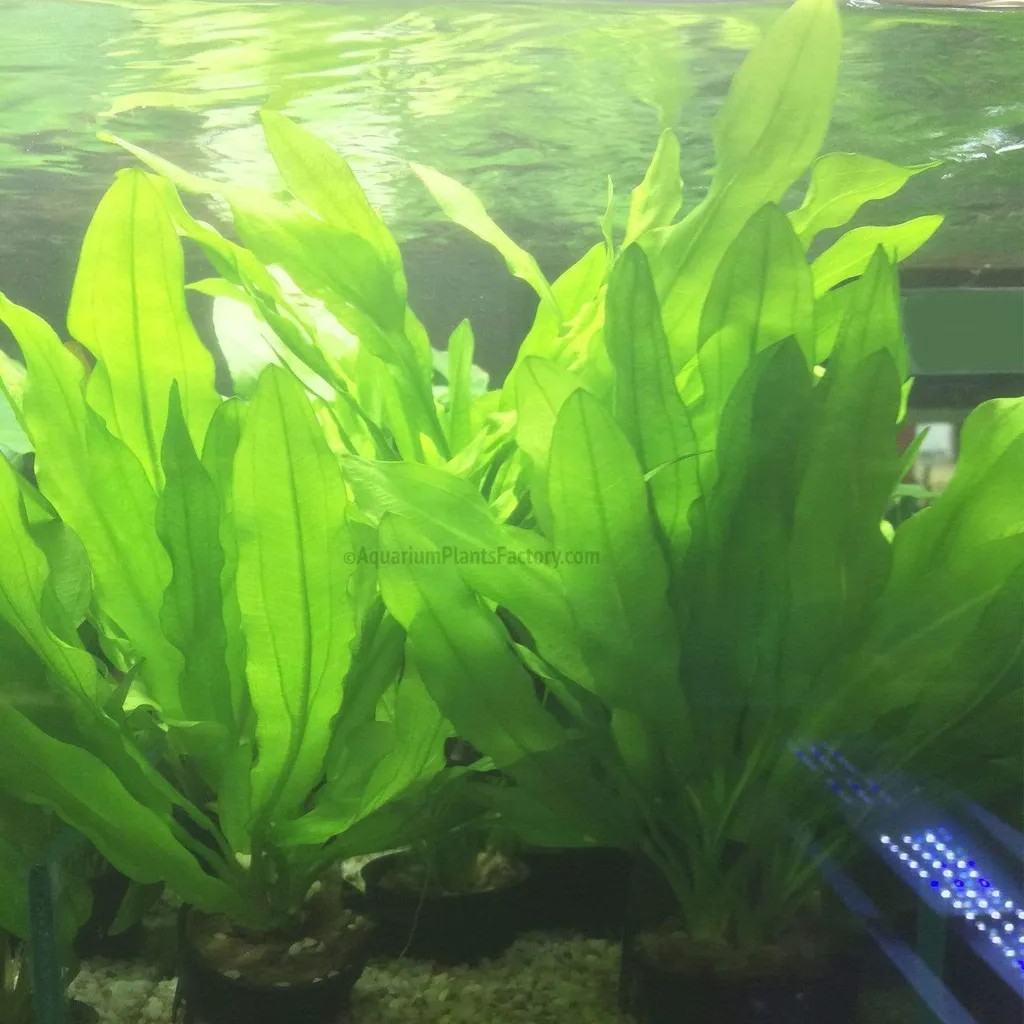 Medium lightBackground23.6 in (60 cm)
Ruffled sword
Echinodorus major
Medium light · Background
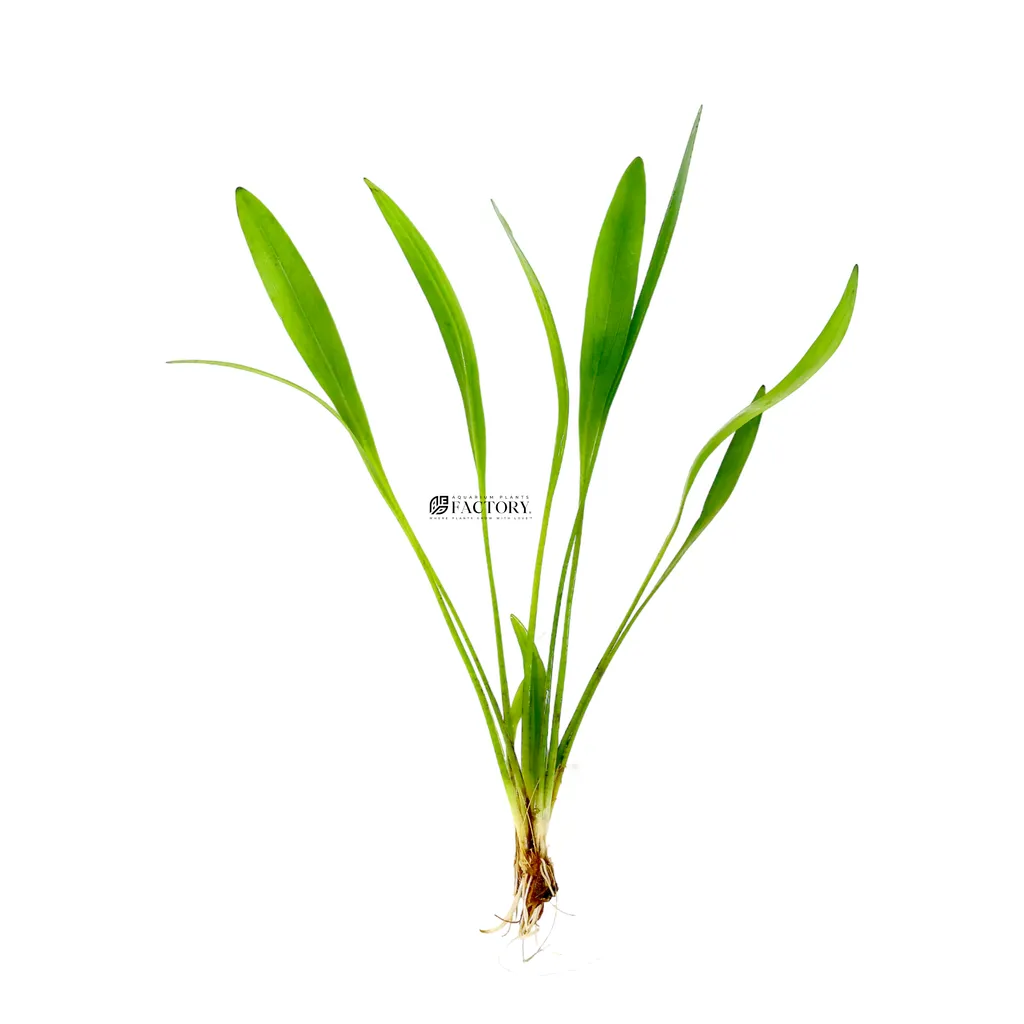 Medium lightBackground21.7 in (55 cm)
Uruguay sword
Echinodorus uruguayensis
Medium light · Background
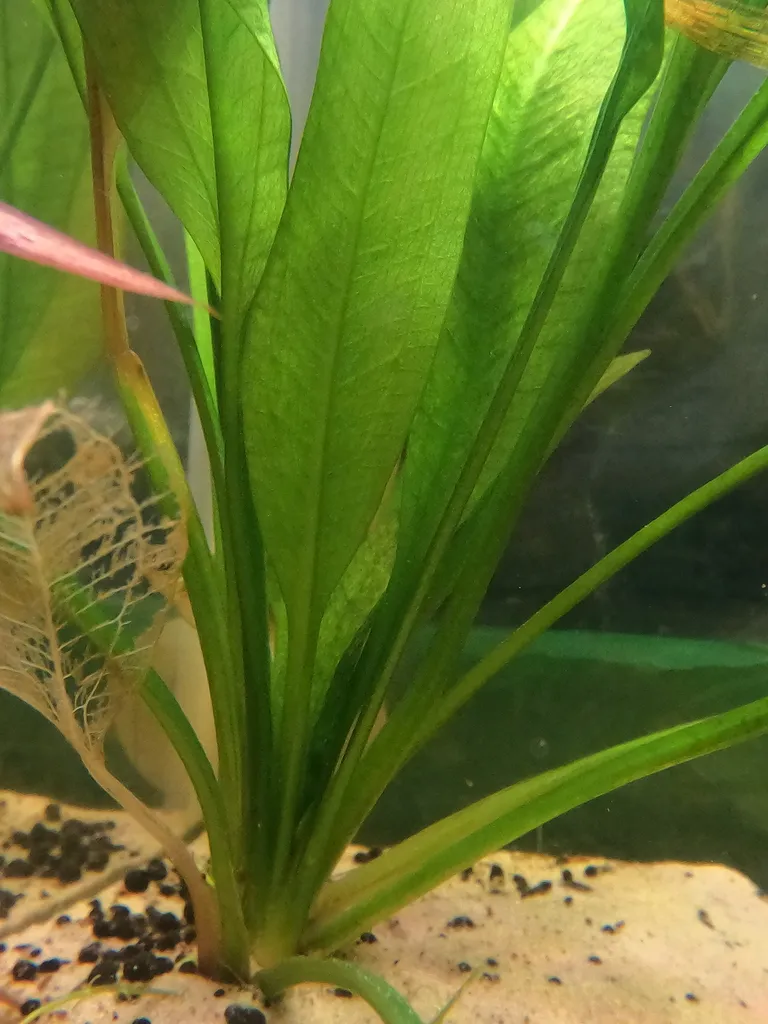 Medium lightBackground19.7 in (50 cm)
Amazon sword
Echinodorus grisebachii
Medium light · Background