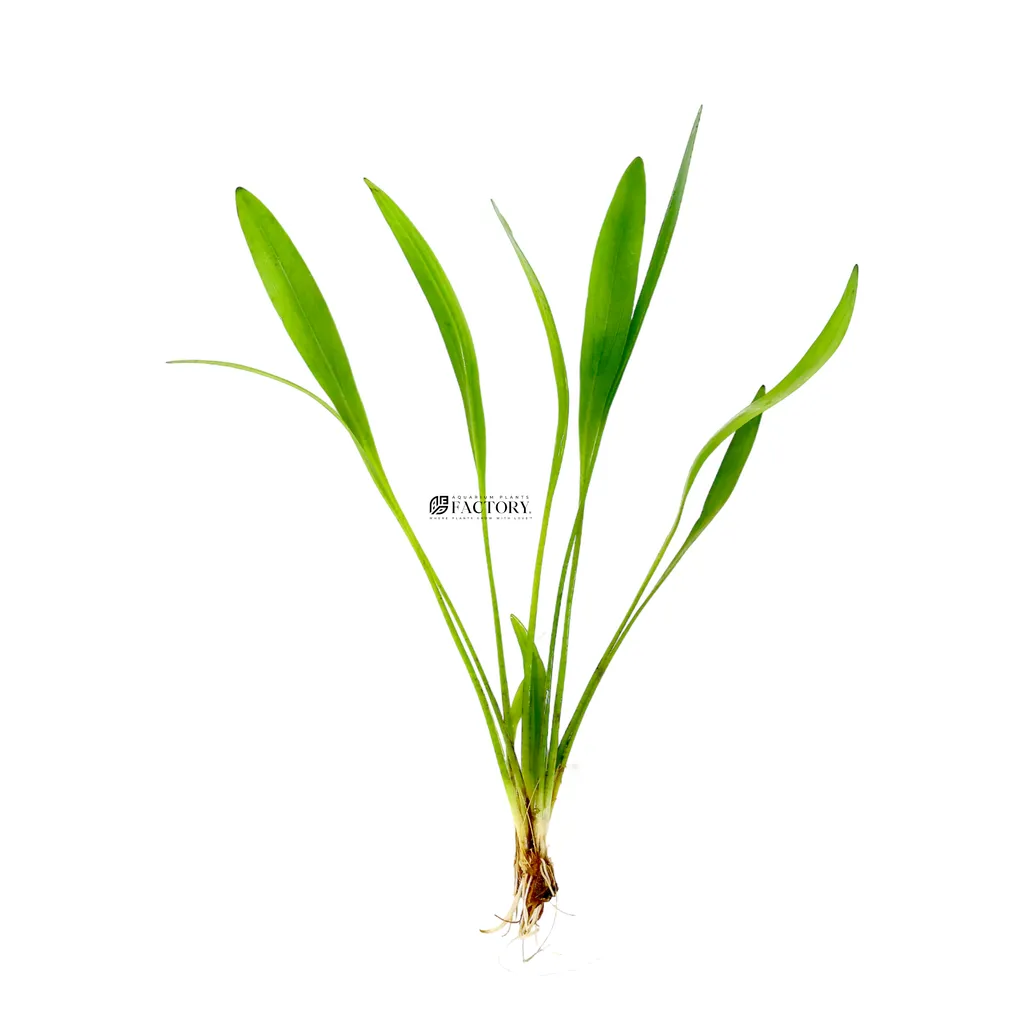
Amazon sword
Echinodorus grisebachii
Also known as Echinodorus amazonicus, Echinodorus bleheri, Echinodorus bleherae, Echinodorus parviflorus, Aquarius grisebachii
FreshwaterRosetteRunnersPlantlets
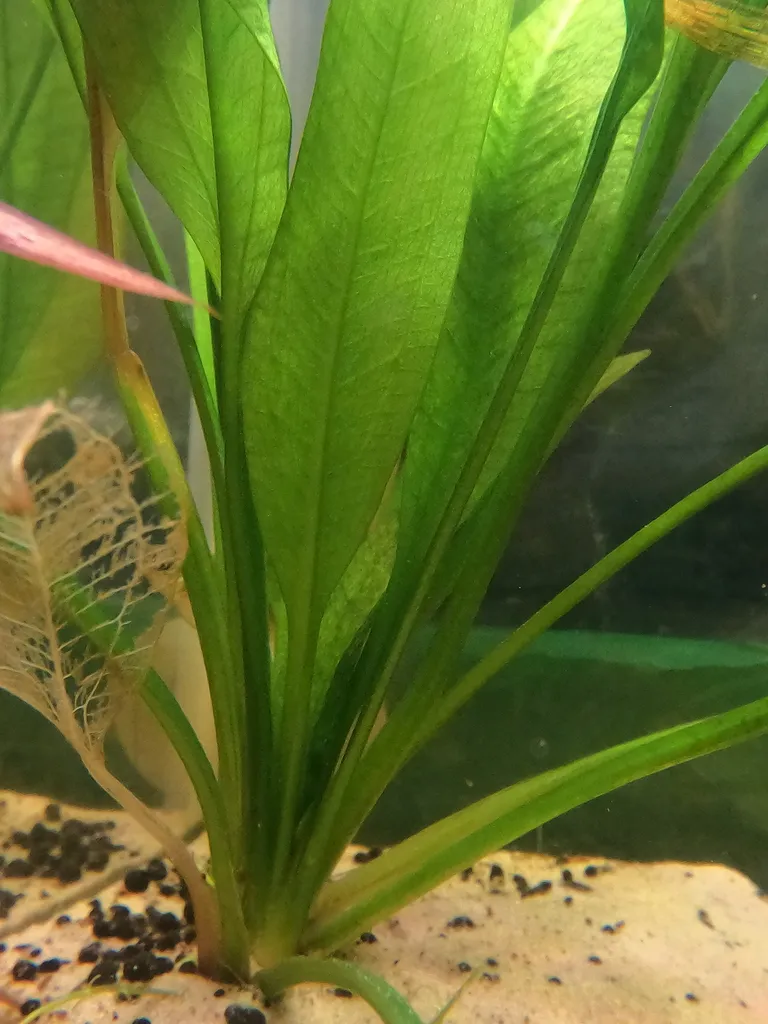
Care at a glance
- Light
- Medium light
- CO2
- CO₂ beneficial
- Temperature
- 72–82°F
- 22–28°C
- Max height
- 19.7 in
- 50 cm
- Growth rate
- Medium
- Placement
- Background
- Type
- Rosette
- pH
- 6.5–7.5
- Hardness
- 5–15 dGH
- Spread
- 15.7 in (40 cm)
- Nutrient uptake
- Root feeder
- Growth region
- Submersed or emersed
- Difficulty
- Easy
- Family
- Alismataceae
- Origin
- Cuba, Central and South America (Amazon basin)
Overview
A classic background or centerpiece rosette for medium and larger tanks. Plant it in nutrient rich substrate and keep the crown (where leaves meet roots) above the soil so it does not rot, then feed it with root tabs since it is a heavy root feeder. It does fine in medium light without CO2, though added CO2 and iron-rich fertilizer give bigger, greener leaves. Expect some old leaves to melt back after planting while it adjusts, and remember a healthy specimen gets large, so give it room.
In the wild
Native to Cuba, Central America, and South America as far south as Brazil and Bolivia, where it grows in stagnant to slow flowing water 50 to 100 cm deep. It is an amphibious marsh plant that stays submersed for most of the year and only pushes emersed leaves and flower stalks when the water drops in the dry season.
Good to know
A member of the Alismataceae (water plantain family). After 2008 DNA work, several plants long sold as separate species (E. amazonicus, E. bleherae, E. gracilis, E. parviflorus) were folded into E. grisebachii as synonyms, which is why the trade name is such a tangle. It grows from a central rosette on a short rootstock and reproduces by adventitious daughter plants that form along arching flower stalks and by runners.
Did you know
Many of the swords sold under different names (amazonicus, bleheri, gracilis) are genetically the same plant. The 2008 DNA study collapsed all of them into Echinodorus grisebachii, so two sword plants with different price tags and labels can be identical.
Related plants
 High lightBackground19.7 in (50 cm)
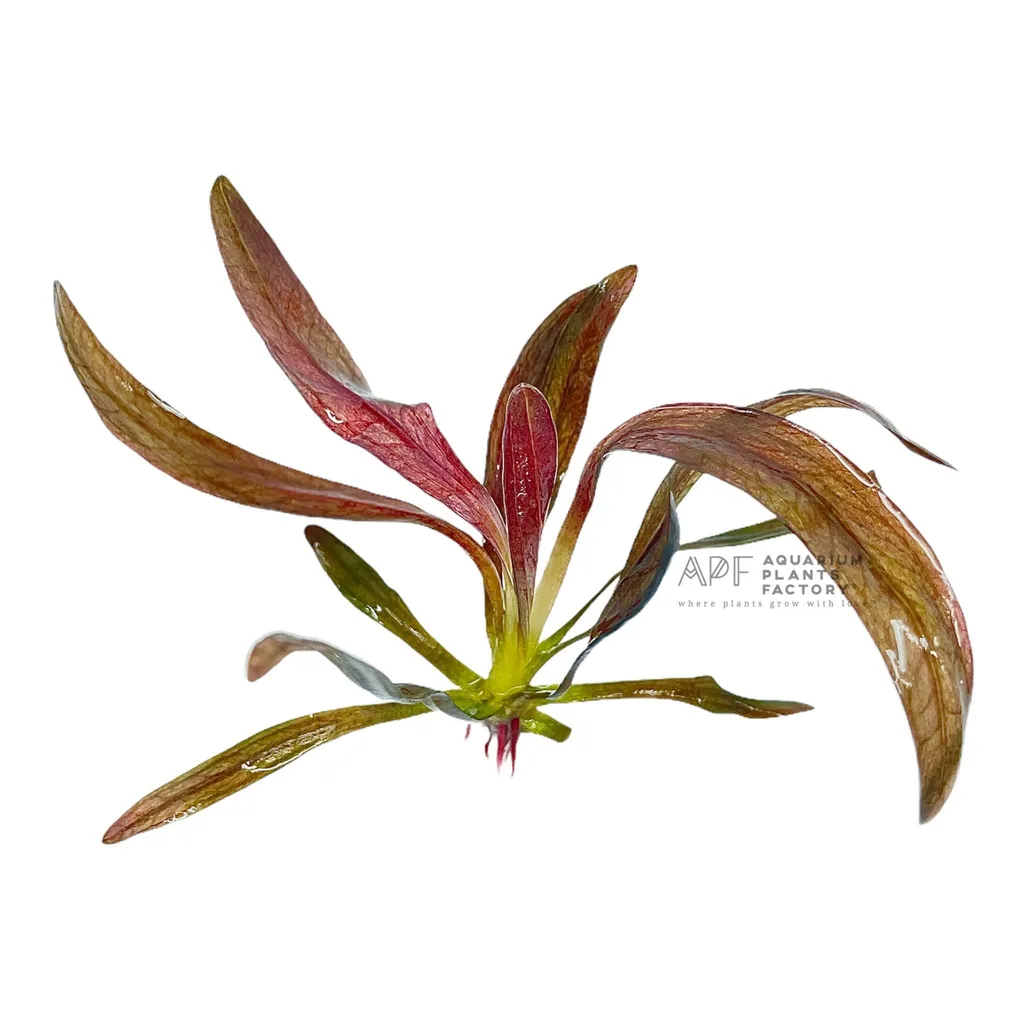
Horemanii sword
Echinodorus horemanii
High light · Background
 Medium lightBackground19.7 in (50 cm)
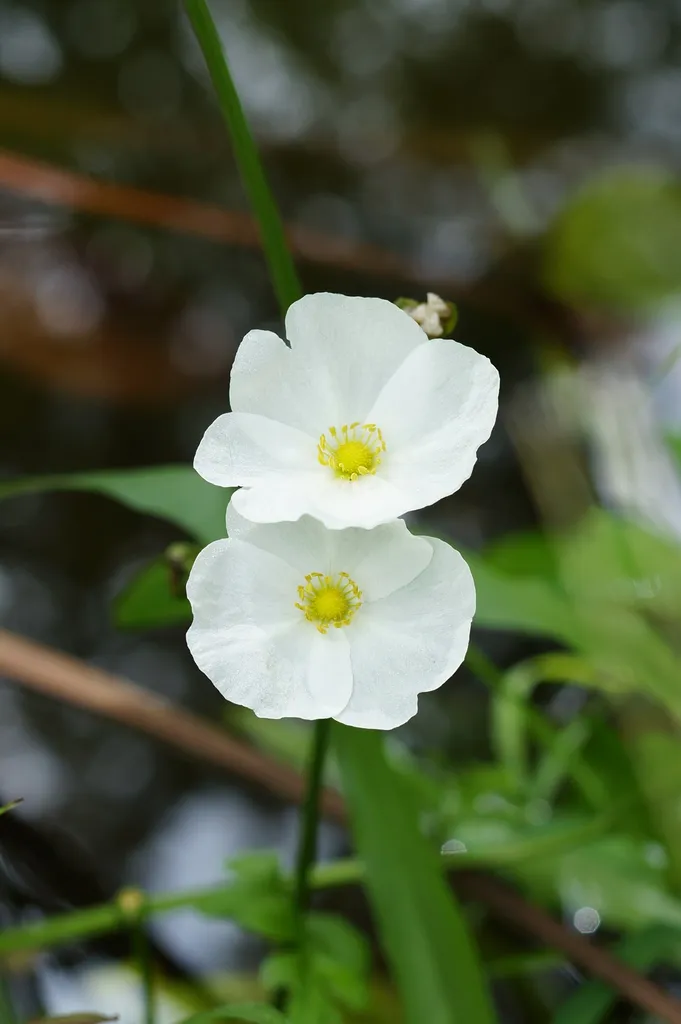
Marble queen sword
Echinodorus cordifolius
Medium light · Background
 Medium lightBackground19.7 in (50 cm)
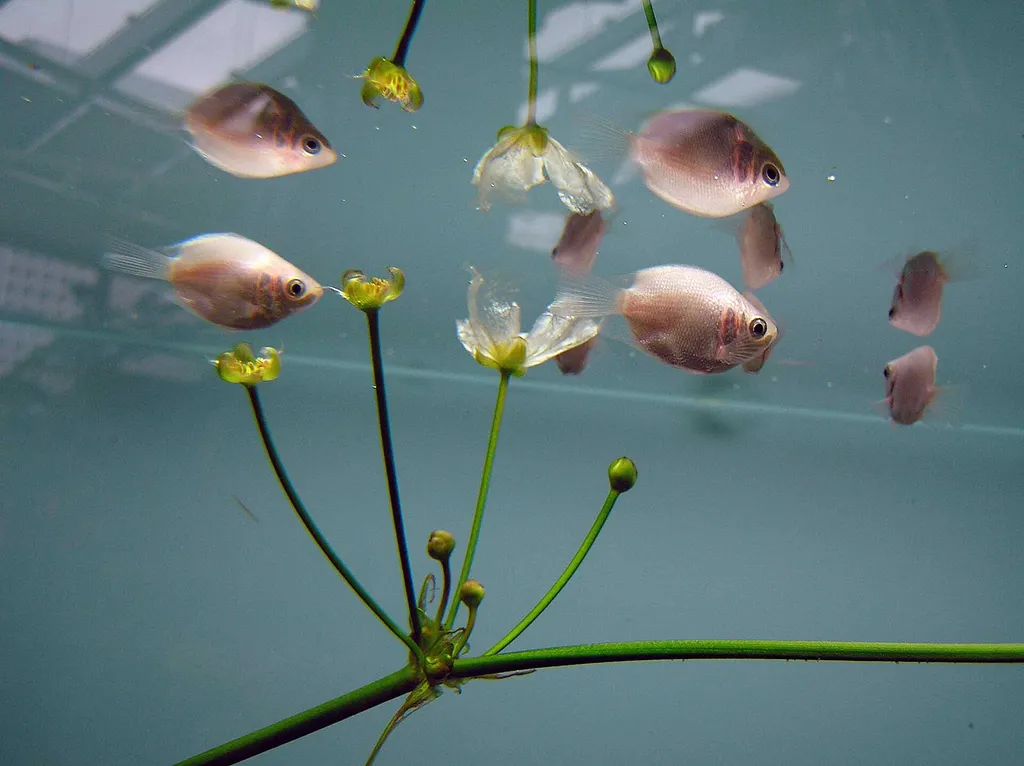
Melon sword
Echinodorus osiris
Medium light · Background
- Medium lightBackground19.7 in (50 cm)
Echinodorus decumbens
Medium light · Background
 Medium lightBackground21.7 in (55 cm)
Uruguay sword
Echinodorus uruguayensis
Medium light · Background
- Medium lightBackground17.7 in (45 cm)
Kleiner Bar sword
Echinodorus 'Kleiner Bär'
Medium light · Background