Marble queen sword
Echinodorus cordifolius
Also known as Spade leaf sword, Radican sword, Echinodorus cordifolius 'Marble Queen', Echinodorus 'Tropica Marble Queen', Creeping burhead, Aquarius cordifolius
FreshwaterRosettePlantletsRhizome division
Care at a glance
- Light
- Medium light
- CO2
- CO₂ beneficial
- Temperature
- 72–82°F
- 22–28°C
- Max height
- 19.7 in
- 50 cm
- Growth rate
- Medium
- Placement
- Background
- Type
- Rosette
- pH
- 6.2–7.5
- Hardness
- 4–12 dGH
- Spread
- 11.8 in (30 cm)
- Nutrient uptake
- Root + water column
- Growth region
- Submersed or emersed
- Difficulty
- Easy
- Family
- Alismataceae
- Origin
- Mexico and southern United States
Overview
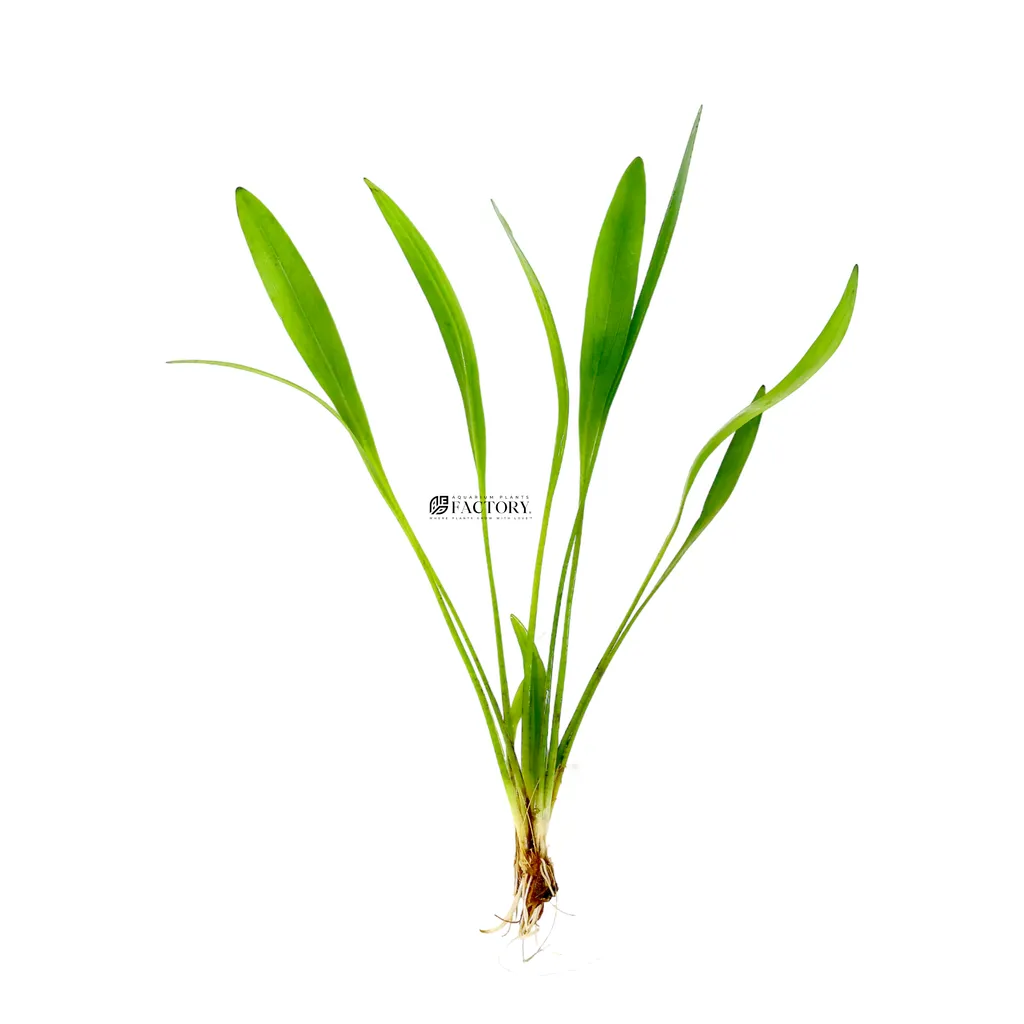
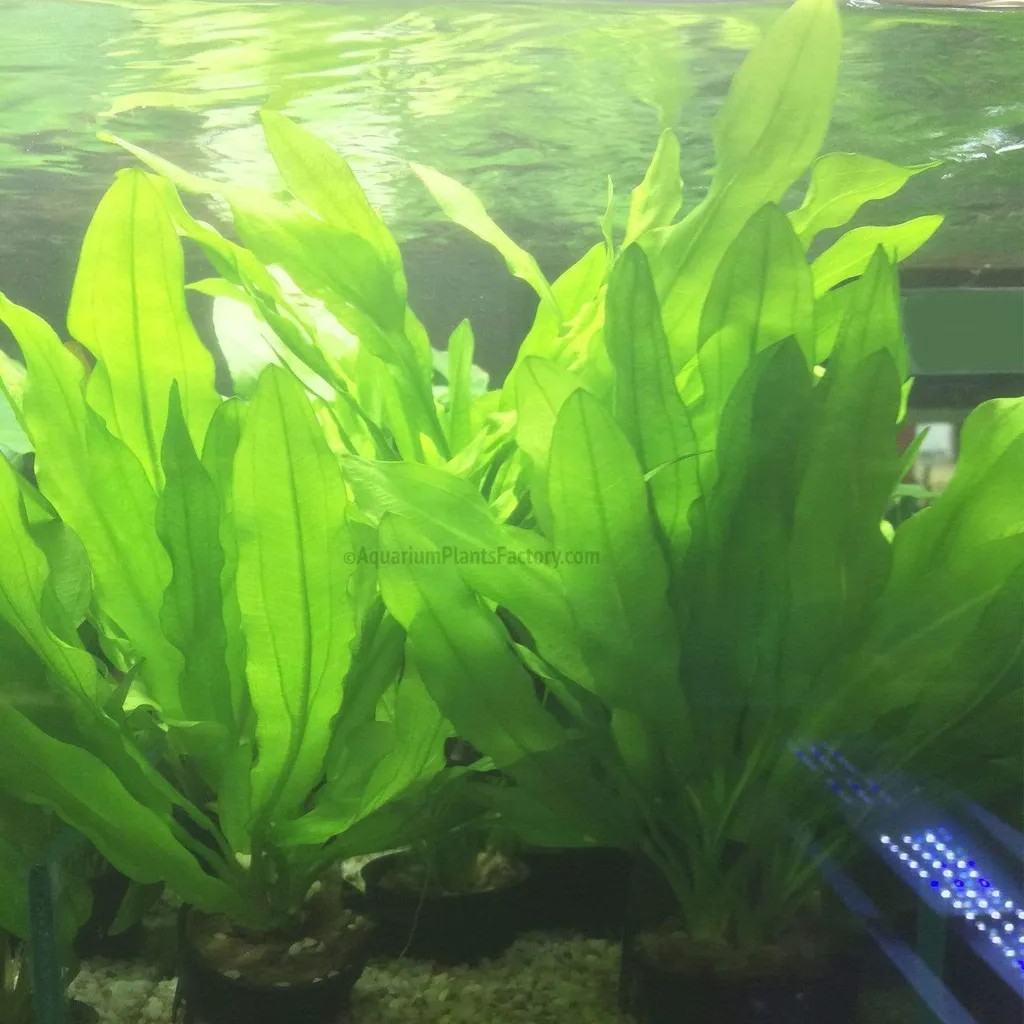
Marble queen sword is an easy sword plant that gets large, so it belongs in the background of a tall, wide tank.
Did you know
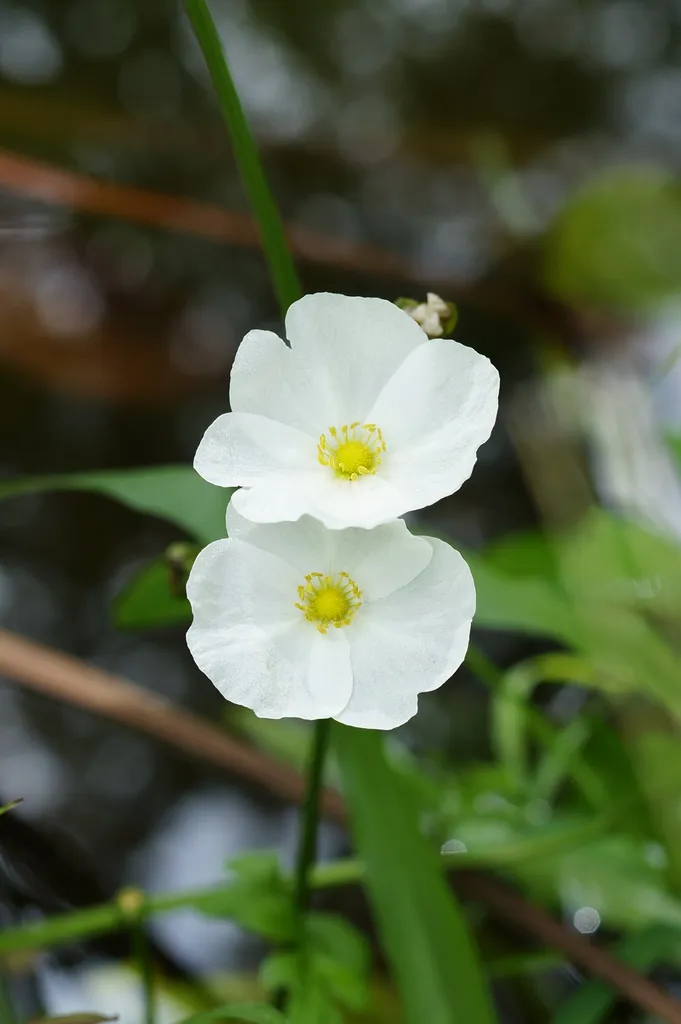
Marble queen sword can climb right out of a tank. Given bright light and a long day, its flower stalk arches over the rim and roots wherever it touches down. That habit is where the old nickname creeping burhead comes from.
Caring for marble queen sword
Plant marble queen sword in a rich substrate or over plenty of root tabs, with the crown just above the surface. It is a heavy root feeder and also takes food from the water, so a liquid fertilizer helps. Keep it at 72 to 82°F (22 to 28°C) and a pH of 6.2 to 7.5.
CO2 and good light sharpen the marbling. Under strong light and a long photoperiod, it sends leaves up to and out of the surface. Give it headroom and let it grow emersed, or trim the tallest leaves to keep it submersed.
It propagates by daughter plants that sprout along the arching flower stalk. Pot them up once they have a few roots, and split older crowns.
Good to know
Echinodorus cordifolius is a true species in the family Alismataceae, also called the spade leaf sword. The 'Marble Queen' and 'Tropica Marble Queen' selections are variegated forms, with cream and white marbling on green, heart-shaped leaves. Submersed leaves stay shorter, on longer petioles, while emersed leaves are larger and tougher. The plant flowers readily above the waterline.
In the wild
Echinodorus cordifolius is native to the southern United States and Mexico. It grows in boggy ground, marshes, ditches and the muddy margins of slow water. It is a marsh plant by nature, spending much of its life emersed with spade-shaped leaves held above the water. It only goes fully submersed when flooded.
Common questions
Does marble queen sword need to be planted in the substrate?
Yes. Bury the roots and leave the crown, where the leaves join, just above the substrate.
Does marble queen sword need CO2?
No, but it helps. Marble queen sword can grow without injected CO2, and added CO2 makes it grow faster.
How much light does marble queen sword need?
Marble queen sword wants medium light. A light sold for planted tanks covers it.
Does marble queen sword need root tabs?
They help. Marble queen sword takes nutrients through both its roots and its leaves. Root tabs near its roots and a liquid fertilizer cover both.
How do you propagate marble queen sword?
Marble queen sword propagates by plantlets and rhizome division. Small plantlets form on the plant and can be detached once they have a few roots. Cut the rhizome into pieces with several leaves each, then tie or plant each piece.
How tall does marble queen sword grow?
Marble queen sword grows to about 19.7 in (50 cm) tall. It grows at a moderate pace.
Related plants
 Medium lightBackground19.7 in (50 cm)
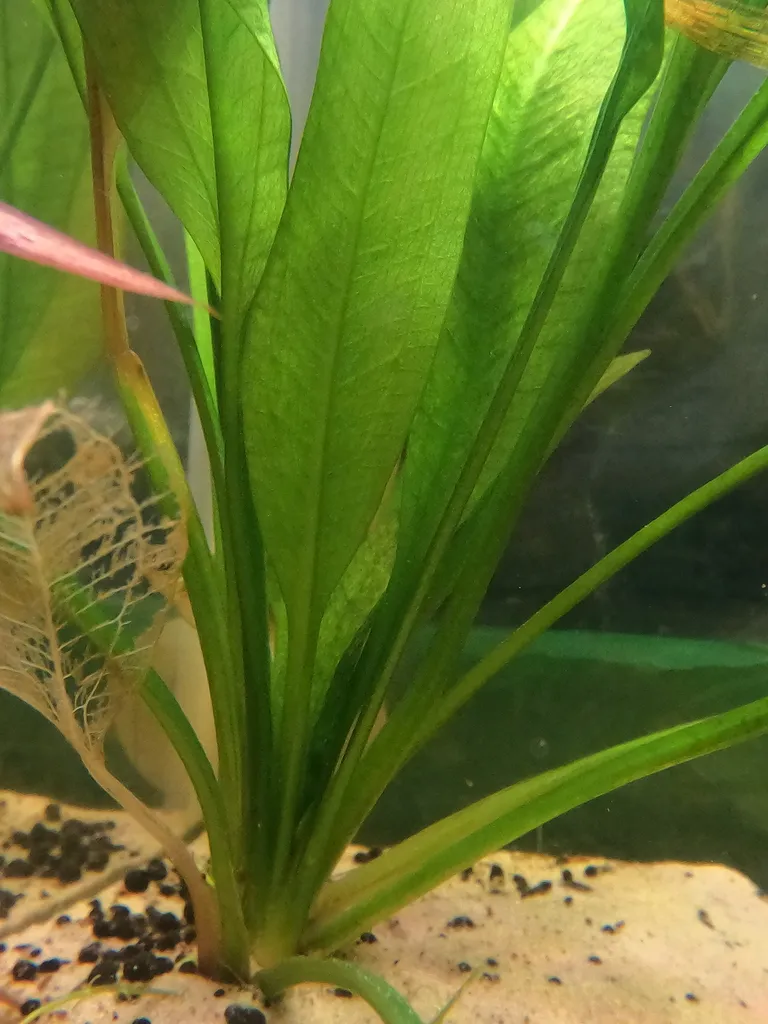
Amazon sword
Echinodorus grisebachii
Medium light · Background
 High lightBackground19.7 in (50 cm)
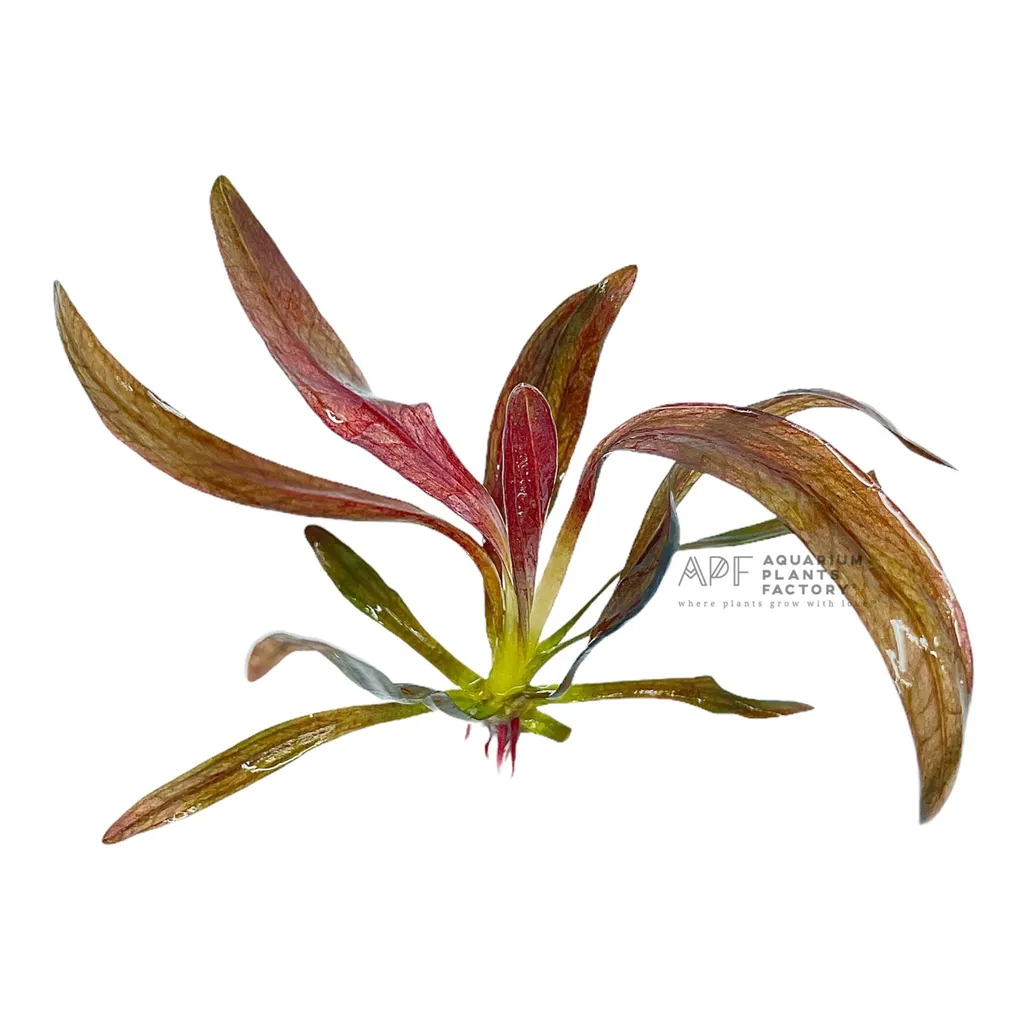
Horemanii sword
Echinodorus horemanii
High light · Background
 Medium lightBackground19.7 in (50 cm)
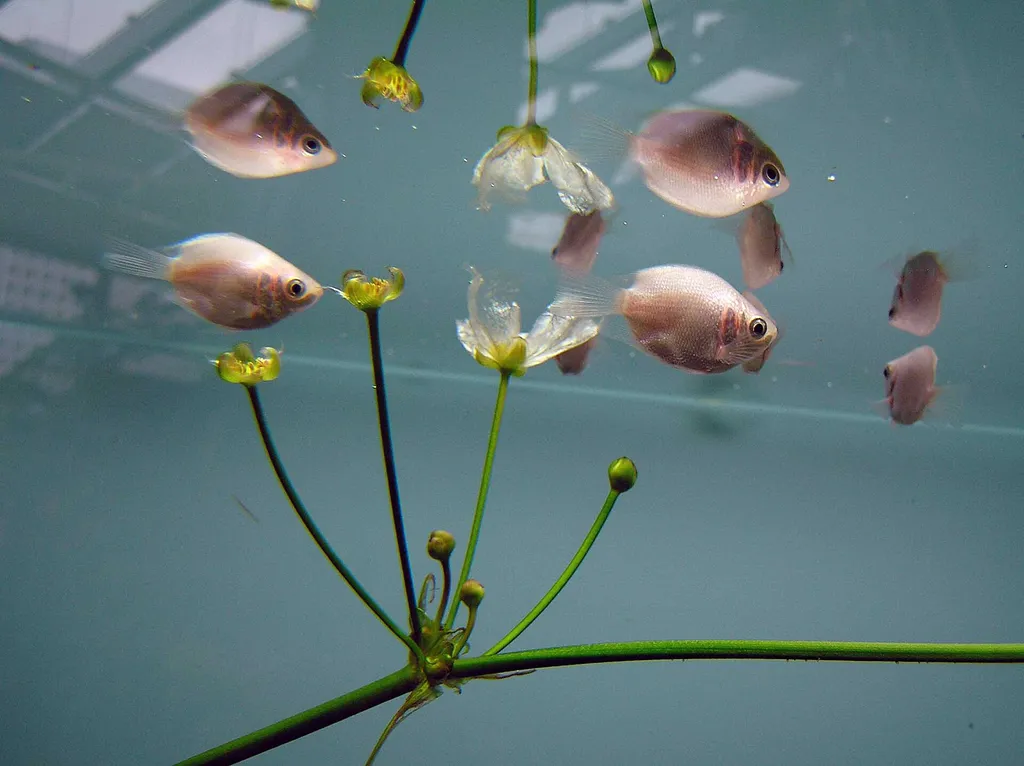
Melon sword
Echinodorus osiris
Medium light · Background
- Medium lightBackground19.7 in (50 cm)
Echinodorus decumbens
Medium light · Background
 Medium lightBackground21.7 in (55 cm)
Uruguay sword
Echinodorus uruguayensis
Medium light · Background
 Medium lightBackground23.6 in (60 cm)
Ruffled sword
Echinodorus major
Medium light · Background