Dwarf water clover
Marsilea crenata
Also known as Dwarf four leaf clover, Water clover, Marsilea minuta
FreshwaterCarpetingRhizome divisionSpores
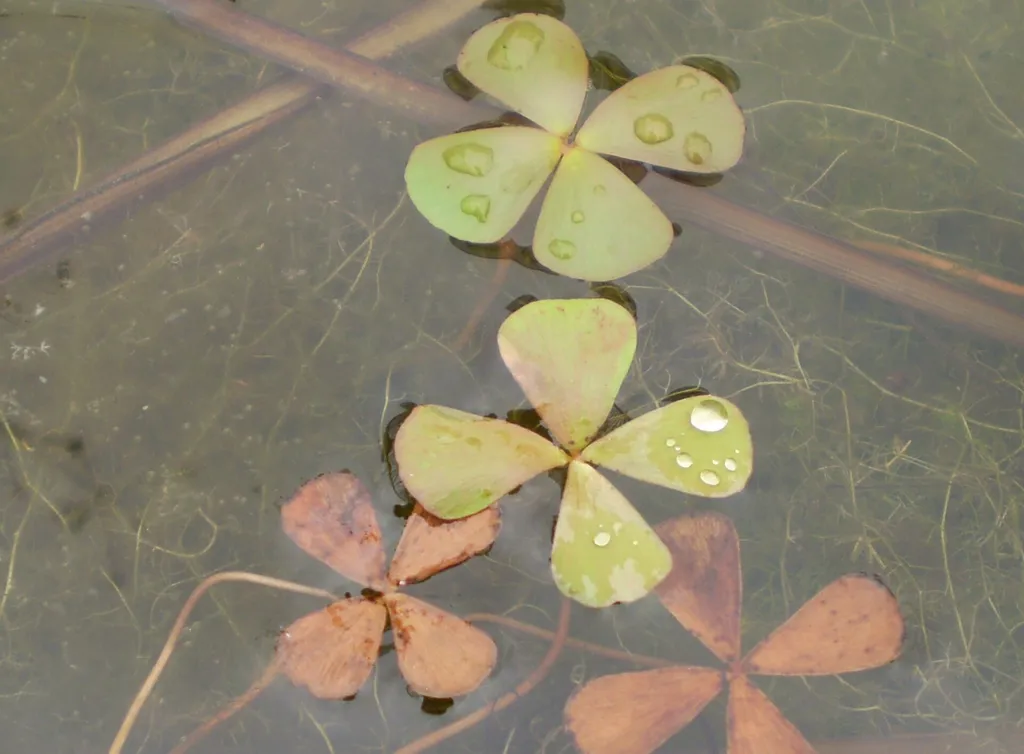
Care at a glance
- Light
- Low light
- CO2
- No CO₂ needed
- Temperature
- 64–82°F
- 18–28°C
- Max height
- 3.1 in
- 8 cm
- Growth rate
- Slow
- Placement
- Foreground
- Type
- Carpeting
- pH
- 6.0–7.5
- Hardness
- 2–15 dGH
- Spread
- 3.9 in (10 cm)
- Nutrient uptake
- Root + water column
- Growth region
- Submersed or emersed
- Difficulty
- Easy
- Family
- Marsileaceae
- Origin
- Southeast Asia (Indonesia, Malaysia and surrounding region)
Overview
One of the most forgiving carpeting plants, well suited to low-tech tanks since it carpets in low to medium light with no CO2 required, though both speed it up. Plant it by pressing the rhizome flat along the substrate and letting it creep, splitting an established mat by dividing the rhizome to spread it further. It is a slow grower, so expect a patient fill-in, and the leaf shape will shift as it converts from emersed to submersed growth, which is normal and not a sign of trouble. Bright light tends to keep it low and compact while shade lets it grow a little taller.
In the wild
An aquatic fern from Southeast Asia, where it grows in rice paddies, ditches, and marshy ground that floods and dries on a seasonal cycle. In the wild it is amphibious, producing four-lobed clover-like leaves above the water when emersed and adapting its leaf form when submersed. In Indonesia its young emersed shoots are even harvested as an edible vegetable.
Good to know
Despite the clover-like leaves it is a true fern in the family Marsileaceae, not a flowering plant, and it reproduces in nature by spores rather than seeds. It spreads through a creeping horizontal rhizome that sends down roots and pushes up new fronds along its length. Submersed it commonly grows single-lobe or two-lobe leaves rather than the classic four-leaf clover form seen above water, and the trade frequently mixes it up with the very similar Marsilea hirsuta.
Did you know
It is an aquatic fern, so the four-leaf-clover look is pure coincidence, and submerged in a tank it often drops to a single rounded lobe per stalk and looks nothing like a clover at all.
Related plants
- Medium lightForeground3.1 in (8 cm)
Narrow leaf water clover
Marsilea angustifolia
Medium light · Foreground
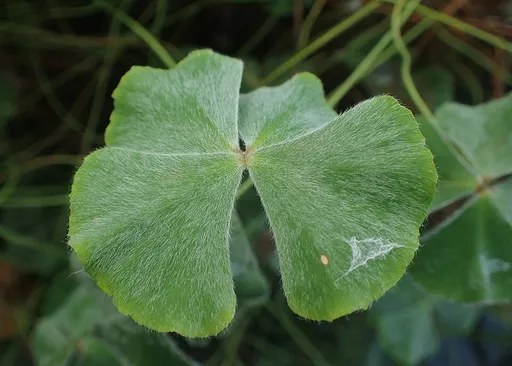 Medium lightForeground3.9 in (10 cm)
Marsilea hirsuta
Medium light · Foreground
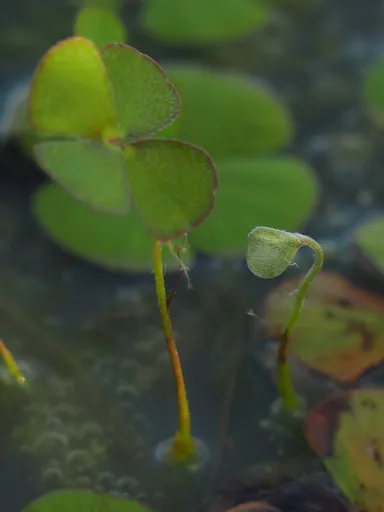 Medium lightForeground4.7 in (12 cm)
Common nardoo
Marsilea drummondii
Medium light · Foreground
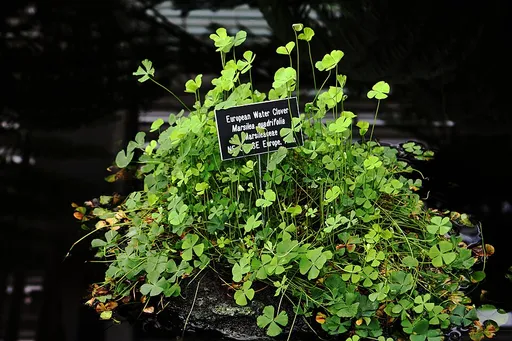 Medium lightForeground4.7 in (12 cm)
Marsilea quadrifolia
Medium light · Foreground
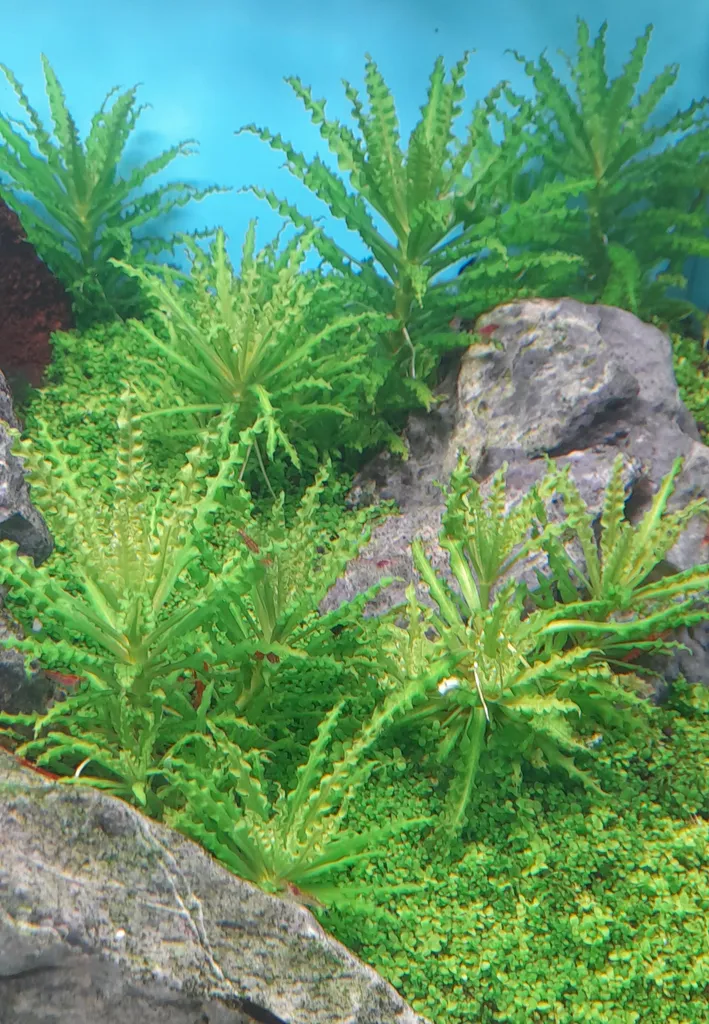 High lightForeground3.1 in (8 cm)
Pogostemon helferi
High light · Foreground
- Medium lightForeground3.1 in (8 cm)
Ranalisma rostratum
Medium light · Foreground