Dwarf baby tears
Hemianthus callitrichoides 'Cuba'
Also known as HC Cuba, Cuba, Dwarf baby's tears, Cuba pearlweed, Micranthemum callitrichoides 'Cuba'
FreshwaterCarpetingRunnersCuttings
Care at a glance
- Light
- High light
- CO2
- CO₂ required
- Temperature
- 64–82°F
- 18–28°C
- Max height
- 2 in
- 5 cm
- Growth rate
- Medium
- Placement
- Foreground
- Type
- Carpeting
- pH
- 5.0–7.0
- Hardness
- 0–18 dGH
- Spread
- 2 in (5 cm)
- Nutrient uptake
- Root + water column
- Growth region
- Submersed
- Difficulty
- Difficult
- Family
- Linderniaceae
- Origin
- Cuba
Overview
Dwarf baby tears, sold as HC Cuba, is a low carpeting plant for the foreground. It is a demanding plant and is rated difficult.
Did you know
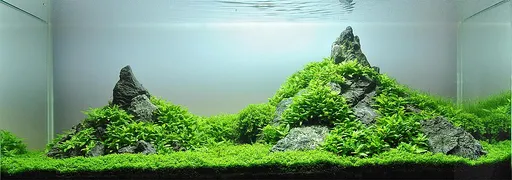
A healthy carpet of dwarf baby tears pearls dramatically. Under bright light and good CO2 the tiny leaves coat themselves in oxygen bubbles, and the whole lawn shimmers.
Caring for dwarf baby tears
Plant dwarf baby tears in small pinches a centimeter or two apart on a fine, nutrient-rich soil. The runners then knit the pinches together into one carpet.
It needs high light and pressurized CO2 at around 20 to 40 mg/l to stay flat and dense. It feeds through its roots and its leaves, so back the rich substrate with a liquid fertilizer. Keep it at 64 to 82°F (18 to 28°C). Yellowing shoot tips usually signal iron deficiency.
It grows at a medium pace. Keep flow steady across the carpet and trim it to encourage horizontal spread, replanting rooted runners or cut tops where the carpet is thin. Without strong light and CO2 it grows leggy, traps debris and detaches in sheets.
Good to know
Dwarf baby tears is often called the smallest aquarium plant in the world, with leaves only 3 to 4 mm across. It was long lumped under the broader Hemianthus genus and placed in Scrophulariaceae. It and its lindernia relatives are now treated under Linderniaceae. The 'Cuba' name sets this clone apart from the larger Hemianthus micranthemoides.
In the wild
Dwarf baby tears is native to Cuba. It was collected from a rocky stream roughly 90 km east of Havana and brought into the hobby by Tropica in 2004. In the wild it grows as a low creeping mat along wet rock and gravel, partly submerged and partly emersed at the water's edge.
Common questions
Does dwarf baby tears need to be planted in the substrate?
Yes. Split it into small clumps and push each one into the substrate with tweezers, leaving gaps for it to fill.
Does dwarf baby tears need CO2?
Yes. Dwarf baby tears needs injected CO2 to grow well, and it usually struggles without it.
How much light does dwarf baby tears need?
Dwarf baby tears needs high light from a strong planted-tank LED. In weaker light it grows upward instead of spreading across the substrate.
Does dwarf baby tears need root tabs?
They help. Dwarf baby tears takes nutrients through both its roots and its leaves. Root tabs near its roots and a liquid fertilizer cover both.
How do you propagate dwarf baby tears?
Dwarf baby tears propagates by runners and cuttings. New plants grow along its runners. Cut one free once it has roots and plant it. Cut off the top of a stem and replant it, and the stump left behind grows new shoots.
How tall does dwarf baby tears grow?
Dwarf baby tears grows to about 2 in (5 cm) tall. It grows at a moderate pace.
Related plants
 Medium lightMidground7.9 in (20 cm)
Pearlweed
Hemianthus glomeratus
Medium light · Midground
 Medium lightForeground2 in (5 cm)
Monte Carlo
Micranthemum tweediei
Medium light · Foreground
 Medium lightForeground2 in (5 cm)
Monte Carlo White
Micranthemum tweediei 'White'
Medium light · Foreground
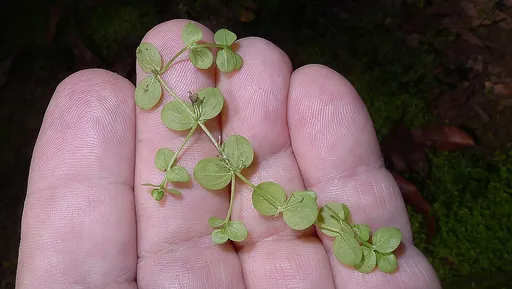 Medium lightMidground7.9 in (20 cm)
Giant baby tears
Micranthemum umbrosum
Medium light · Midground
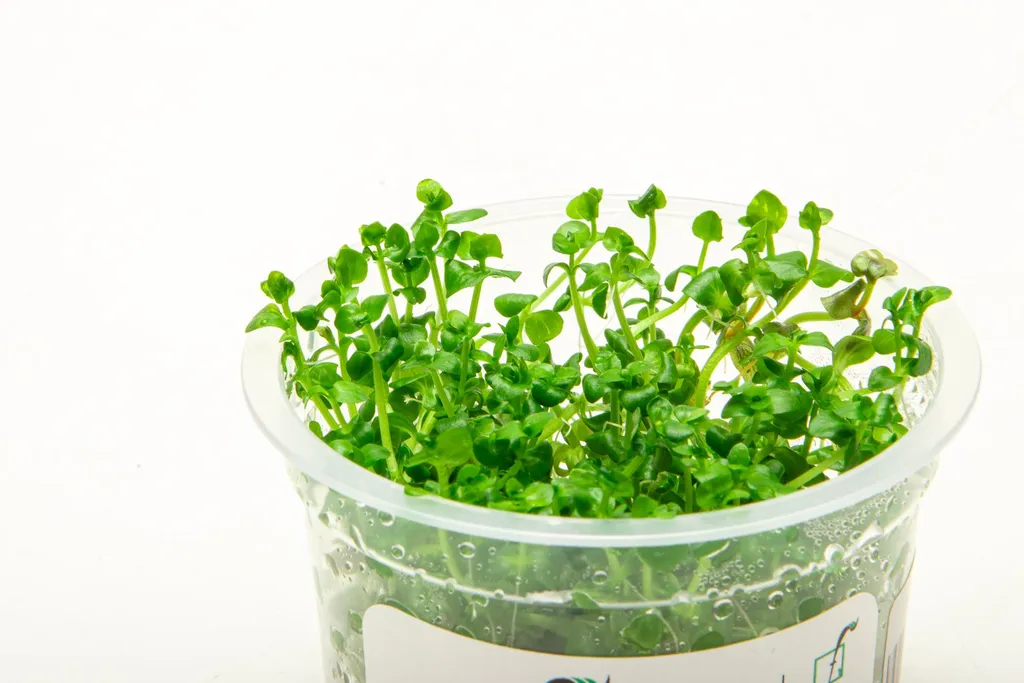 Medium lightBackground11.8 in (30 cm)
Lindernia rotundifolia
Medium light · Background