Giant baby tears
Micranthemum umbrosum
Also known as Pearl weed, Shade mudflower, Giant pearl grass, Giant pearlweed
FreshwaterStemCuttingsSide shoots
Care at a glance
- Light
- Medium light
- CO2
- CO₂ beneficial
- Temperature
- 68–82°F
- 20–28°C
- Max height
- 7.9 in
- 20 cm
- Growth rate
- Fast
- Placement
- Midground
- Type
- Stem
- pH
- 6.0–7.5
- Hardness
- 2–15 dGH
- Spread
- 3.9 in (10 cm)
- Nutrient uptake
- Water column
- Growth region
- Submersed or emersed
- Difficulty
- Easy
- Family
- Linderniaceae
- Origin
- Southeastern USA and Central/South America
Overview
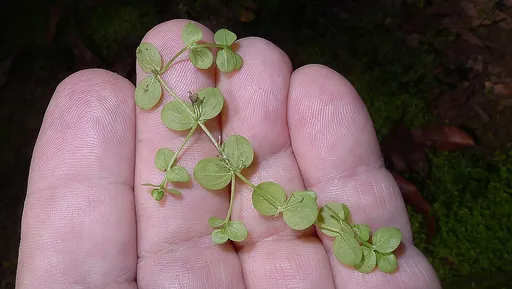
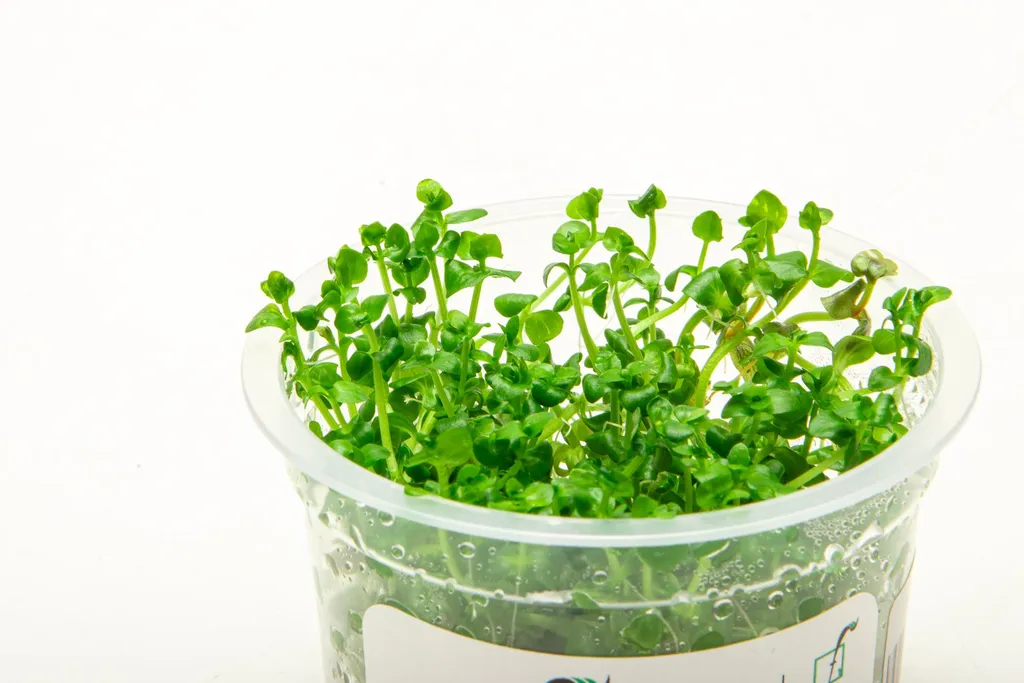
Giant baby tears is a fast, easy stem plant for the midground, where it grows into a bushy mass of small bright green leaves.
Did you know
Giant baby tears gets its hobby name, pearl weed, from the strings of tiny oxygen bubbles that cling to its leaves. They show up on a bright, CO2-rich day.
Caring for giant baby tears
Strip the leaves from the lower part of each stem and plant the stems one at a time in the midground. Giant baby tears also makes a bushy mat, and hard trimming keeps it low enough to fill the foreground.
It wants medium light, which gives looser, upright growth. Brighter light keeps it compact and bushy. CO2 is optional, but it encourages dense growth and pearling.
Giant baby tears is mainly a water-column feeder with a weak root system. Dose a liquid fertilizer rather than relying on root tabs. Keep the water at 68 to 82°F (20 to 28°C) with a pH of 6 to 7.5.
It grows fast, and under strong light it needs trimming every week. The trimmed tops replant easily, and the stumps left behind grow new side shoots.
Good to know
Giant baby tears belongs to the family Linderniaceae. It is the larger, round-leaved pearl weed, distinct from the finer Micranthemum 'Monte Carlo' and the much-confused Micranthemum micranthemoides, formerly Hemianthus micranthemoides. Underwater it carries ovate leaves in opposite pairs along soft, creeping stems. Its other common name, shade mudflower, reflects the shady habitats it favors in the wild.
In the wild
Giant baby tears is native to the southeastern United States, from Texas to Florida and Virginia, and to parts of Central and South America. It grows in ponds, ditches and slow rivulets with soft to moderately hard water. In many areas it is emersed in summer and submersed in winter, so it handles both forms readily.
Common questions
Does giant baby tears need to be planted in the substrate?
Yes. Strip the leaves from the lower part of each stem, then push the stems into the substrate one at a time, a little apart.
Does giant baby tears need CO2?
No, but it helps. Giant baby tears can grow without injected CO2, and added CO2 makes it grow faster.
How much light does giant baby tears need?
Giant baby tears wants medium light. A light sold for planted tanks covers it.
Does giant baby tears need root tabs?
No. Giant baby tears takes most of its nutrients from the water, so a liquid fertilizer does more for it than root tabs.
How do you propagate giant baby tears?
Giant baby tears propagates by cuttings and side shoots. Cut off the top of a stem and replant it, and the stump left behind grows new shoots. Cut a side shoot off once it has a few leaves and plant it on its own.
How tall does giant baby tears grow?
Giant baby tears grows to about 7.9 in (20 cm) tall. It grows fast, so expect to trim it often.
Related plants
 Medium lightForeground2 in (5 cm)
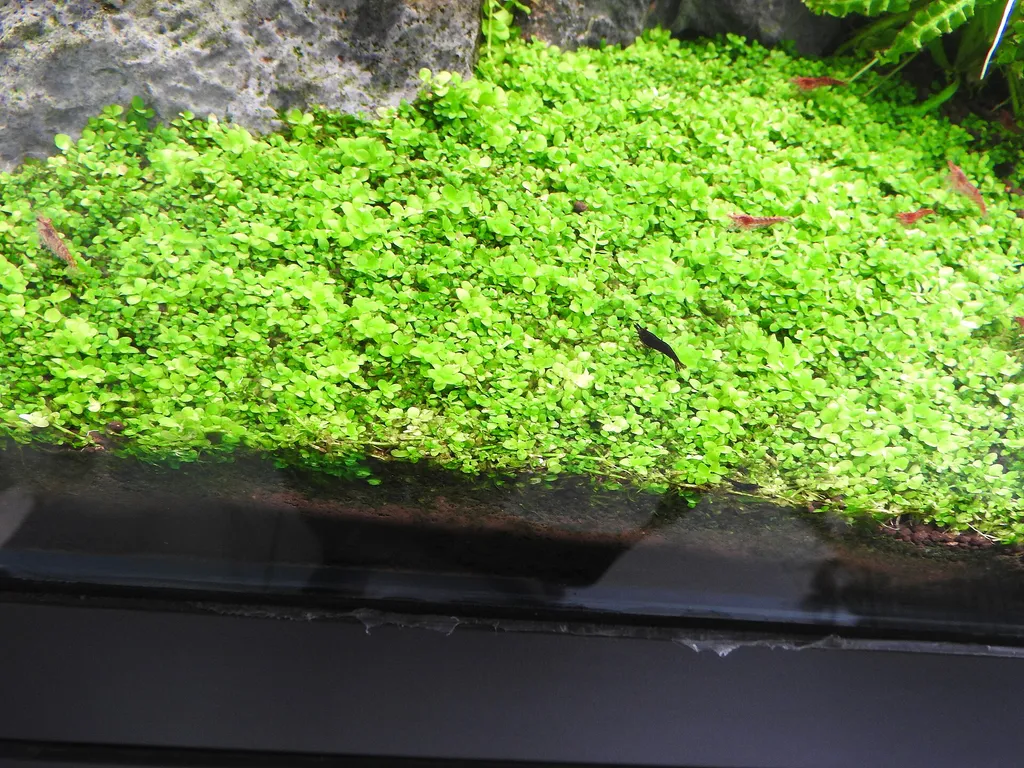
Monte Carlo
Micranthemum tweediei
Medium light · Foreground
 Medium lightForeground2 in (5 cm)
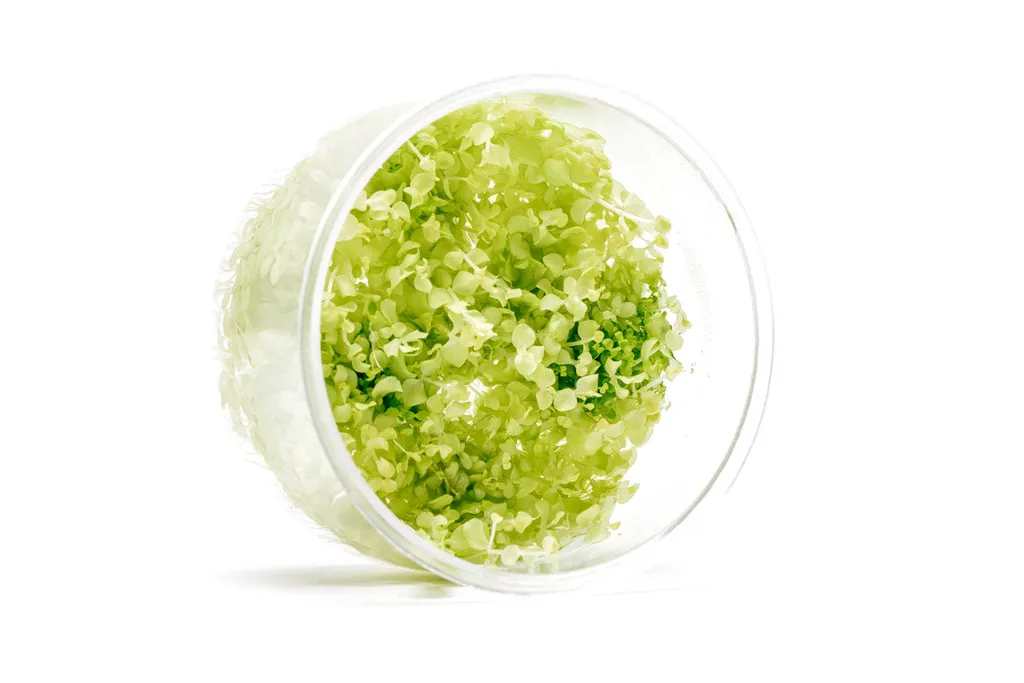
Monte Carlo White
Micranthemum tweediei 'White'
Medium light · Foreground
 Medium lightMidground7.9 in (20 cm)
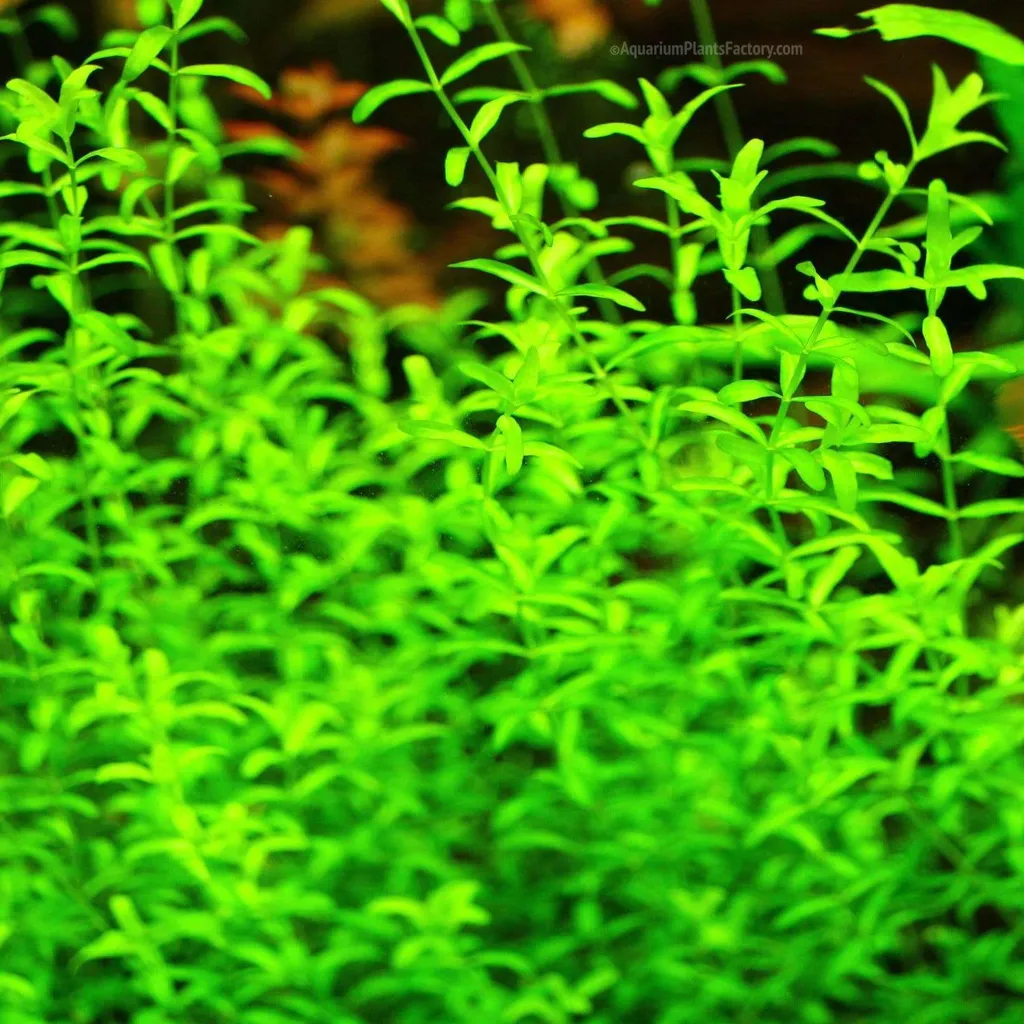
Pearlweed
Hemianthus glomeratus
Medium light · Midground
 Medium lightBackground11.8 in (30 cm)
Lindernia rotundifolia
Medium light · Background
 High lightForeground2 in (5 cm)
Dwarf baby tears
Hemianthus callitrichoides 'Cuba'
High light · Foreground