One species · 2 forms
Hydrocotyle Japan
Hydrocotyle tripartita
Also known as Hydrocotyle tripartita 'Japan', Hydrocotyle sp. Japan, Japan clover, Hydrocotyle
FreshwaterCarpetingRunnersCuttings
Care at a glance
- Light
- Medium light
- CO2
- CO₂ beneficial
- Temperature
- 64–82°F
- 18–28°C
- Max height
- 2 in
- 5 cm
- Growth rate
- Fast
- Placement
- Foreground
- Type
- Carpeting
- pH
- 5.0–7.5
- Hardness
- 1–10 dGH
- Spread
- 5.9 in (15 cm)
- Nutrient uptake
- Root + water column
- Growth region
- Submersed or emersed
- Difficulty
- Easy
- Family
- Araliaceae
- Origin
- Probably Australia (the aquarium strain's source is unclear)
Pick a form
Mini shares Hydrocotyle Japan's care, while Variegated needs strong light and does best with CO2.
Overview
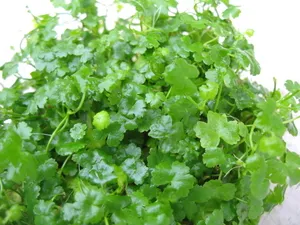
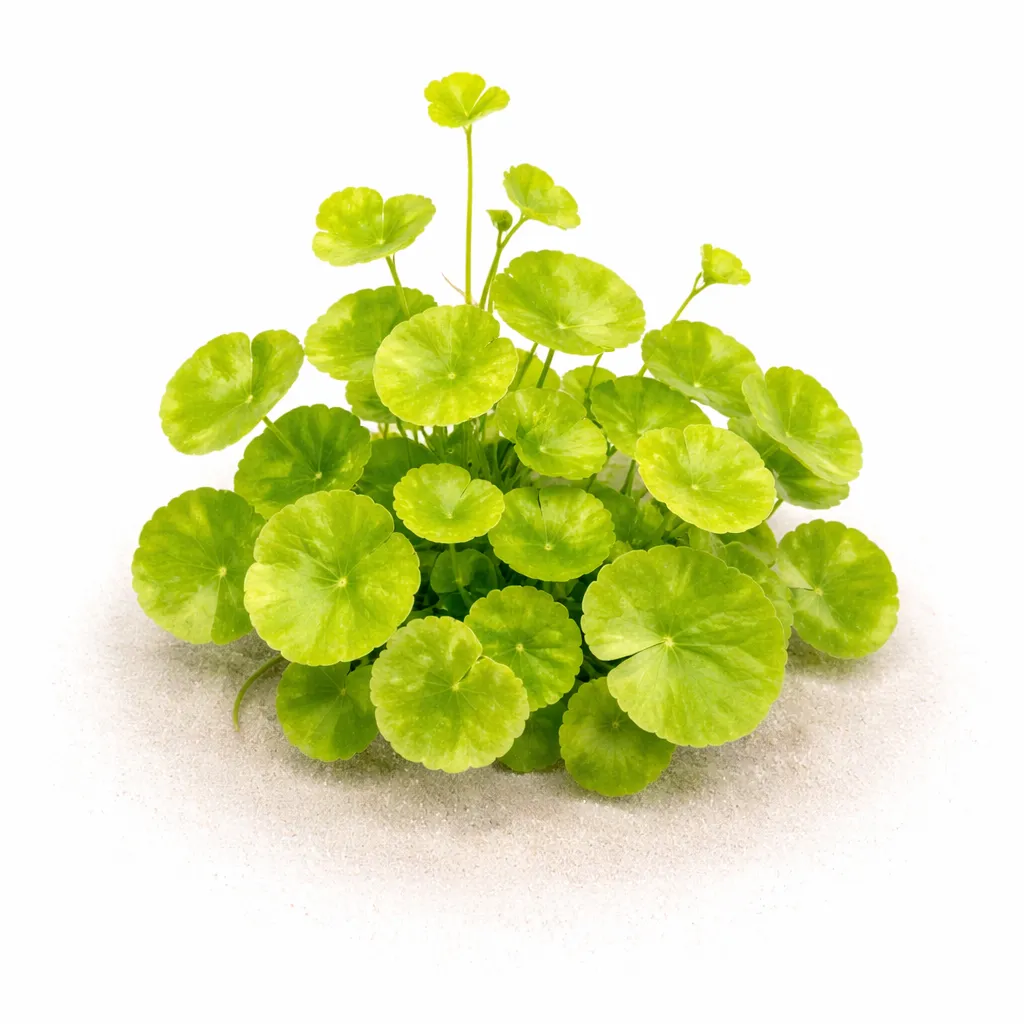
Hydrocotyle Japan is a fast-growing carpet plant for the foreground. It is the easiest plant in this group and a good beginner carpet.
Did you know
Hydrocotyle Japan is one of the few foreground plants that climbs hardscape. Aquascapers use it to drape green over wood and rock as well as to carpet the ground.
Caring for Hydrocotyle Japan
Split Hydrocotyle Japan into small clumps and push each one into the foreground with tweezers, leaving gaps for it to fill. It can also be attached to wood or rock, or even left to float. Emersed-grown portions can melt a little if they switch to submersed growth too quickly.
It carpets well under medium light and grows without injected CO2. CO2 plus fertilizer make growth faster, more compact and a brighter green. It feeds through its roots and leaves, so root tabs and a liquid fertilizer both help. Keep the water at 64 to 82°F (18 to 28°C).
It is a vigorous runner that needs regular trimming. Press the mat down during maintenance to keep it low, since left alone it piles up and climbs. New plants grow along the runners, and each one can be cut free and replanted once it has roots.
Hydrocotyle tripartita Mini carries the same three-lobed clover leaf as Hydrocotyle Japan at about half the size, according to ADA. Kept trimmed, Mini carpets at about 3 cm, against 5 cm for Japan. Left untrimmed, it builds a cushion up to 10 cm. Glass Aqua notes that the Mini often sells as Hydrocotyle 'Japan', so compare leaf size in the photos.
Hydrocotyle Variegated carries splashes of white and cream on the same clover leaves, and it stays smaller and more compact than Japan. The pale tissue does little photosynthesis, so Variegated needs strong light. CO2 and regular fertilizer keep its runners creeping instead of stalling. Variegated is rated medium difficulty, against easy for Japan and Mini. It came from the Sreepadma farm in India and circulates mainly as tissue culture.
Good to know
Hydrocotyle Japan sits in the ivy family, Araliaceae, since the genus was moved out of the older Apiaceae treatment. The species name tripartita refers to its deeply three-parted leaves. The trade name 'Japan' marks a small-leaved cultivated form rather than a distinct species, and it is also sold as Japan clover.
In the wild
Hydrocotyle tripartita grows in wet, marshy ground and shallow water. It creeps across the substrate and over stones, with small three-lobed leaves on thin upright stems. Flowgrow lists the aquarium plant as Hydrocotyle cf. tripartita of unclear origin, probably Australia, and the hobby sells it as the 'Japan' form.
Common questions
Why is my variegated hydrocotyle turning green?
Variegated hydrocotyle can throw all-green shoots that have reverted to the plain plant. Remove them early, or the faster plain growth takes over the patch. Strong light, CO2 and regular fertilizer keep the pale runners growing, while a dim tank lets them dwindle.
Does Hydrocotyle tripartita Mini stay small?
Trimmed often, Hydrocotyle tripartita Mini carpets at about 3 cm, and ADA says its leaves get smaller after a few trims. In dim light its runners grow upward and turn leggy. Keep it under medium to high light with CO2, trim often and press the runners down.
Is Hydrocotyle mini the same plant as Hydrocotyle tripartita Mini?
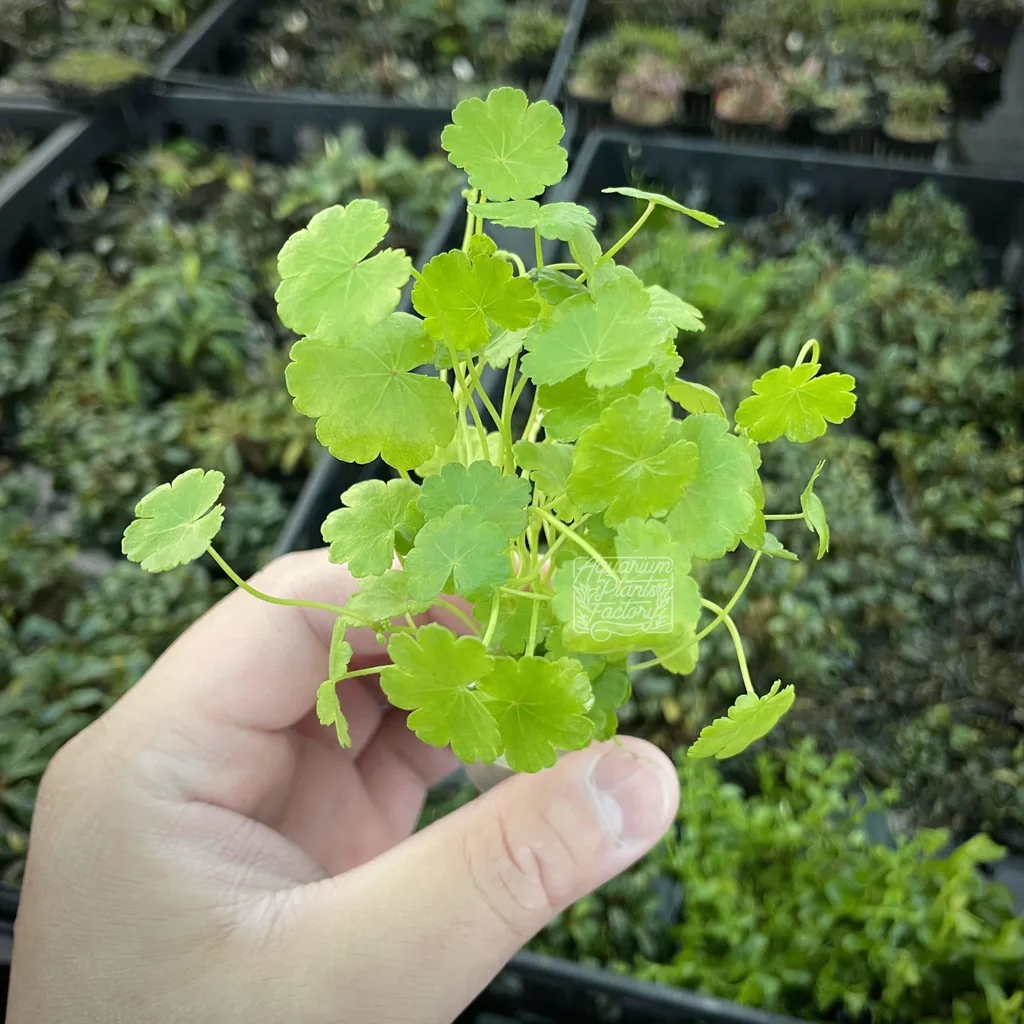
The plant sold as Hydrocotyle mini is a different species, Hydrocotyle sibthorpioides, with rounder, shallowly lobed leaves. Tripartita Mini has the deeply three-lobed clover leaf of Hydrocotyle Japan. Check the full name on the label before you buy.
Does Hydrocotyle Japan need to be planted in the substrate?
Yes. Split it into small clumps and push each one into the substrate with tweezers, leaving gaps for it to fill.
Does Hydrocotyle Japan need CO2?
No, but it helps. Hydrocotyle Japan can grow without injected CO2, and added CO2 makes it grow faster.
How much light does Hydrocotyle Japan need?
Hydrocotyle Japan wants medium light. A light sold for planted tanks covers it.
Does Hydrocotyle Japan need root tabs?
They help. Hydrocotyle Japan takes nutrients through both its roots and its leaves. Root tabs near its roots and a liquid fertilizer cover both.
How do you propagate Hydrocotyle Japan?
Hydrocotyle Japan propagates by runners and cuttings. New plants grow along its runners. Cut one free once it has roots and plant it. Cut off the top of a stem and replant it, and the stump left behind grows new shoots.
Related plants
 High lightForeground2 in (5 cm)
Hydrocotyle mini
Hydrocotyle sibthorpioides
High light · Foreground
 High lightForeground3.9 in (10 cm)
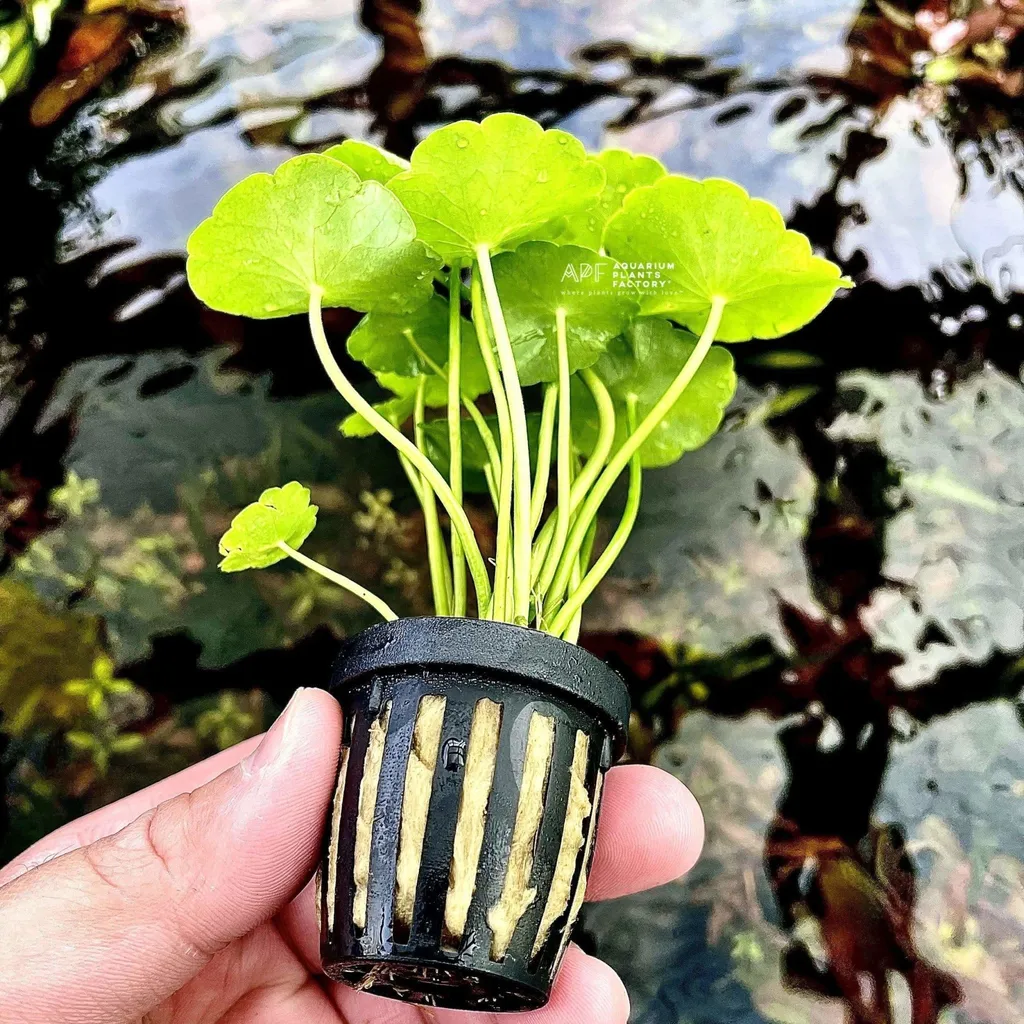
Whorled pennywort
Hydrocotyle verticillata
High light · Foreground
 Medium lightFloating5.9 in (15 cm)
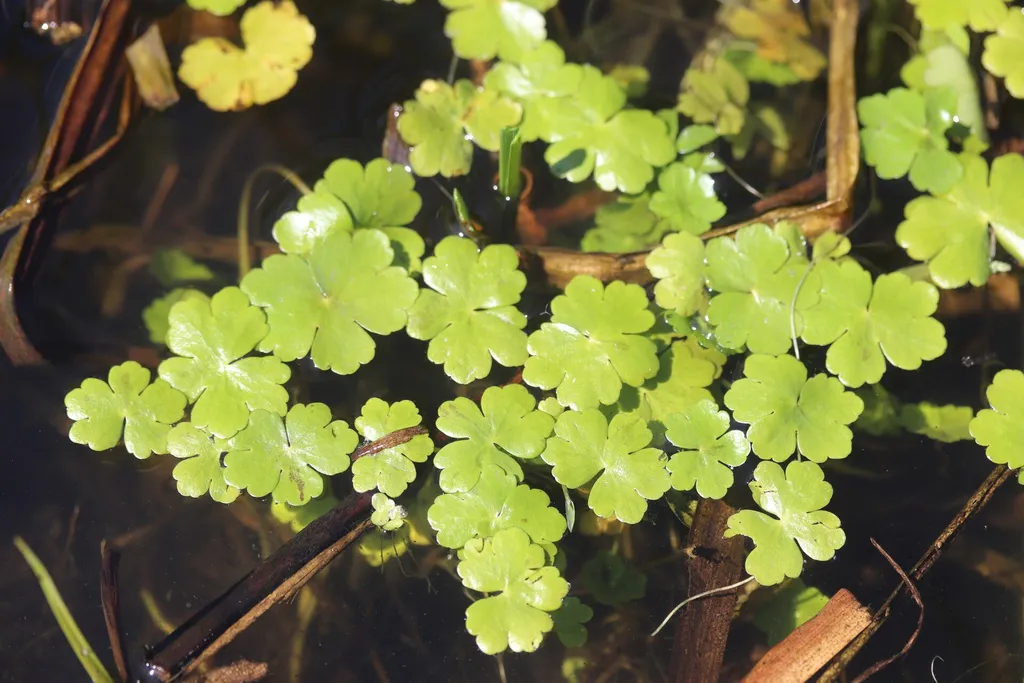
Floating pennywort
Hydrocotyle ranunculoides
Medium light · Floating
 Medium lightMidground19.7 in (50 cm)
Brazilian pennywort
Hydrocotyle leucocephala
Medium light · Midground
 Medium lightMidground19.7 in (50 cm)
Brazilian pennywort Variegated
Hydrocotyle leucocephala 'Variegated'
Medium light · Midground