Hydrocotyle mini
Hydrocotyle sibthorpioides
Also known as Lawn pennywort, Lawn marshpennywort, Dwarf pennywort
FreshwaterCarpetingRunnersCuttings
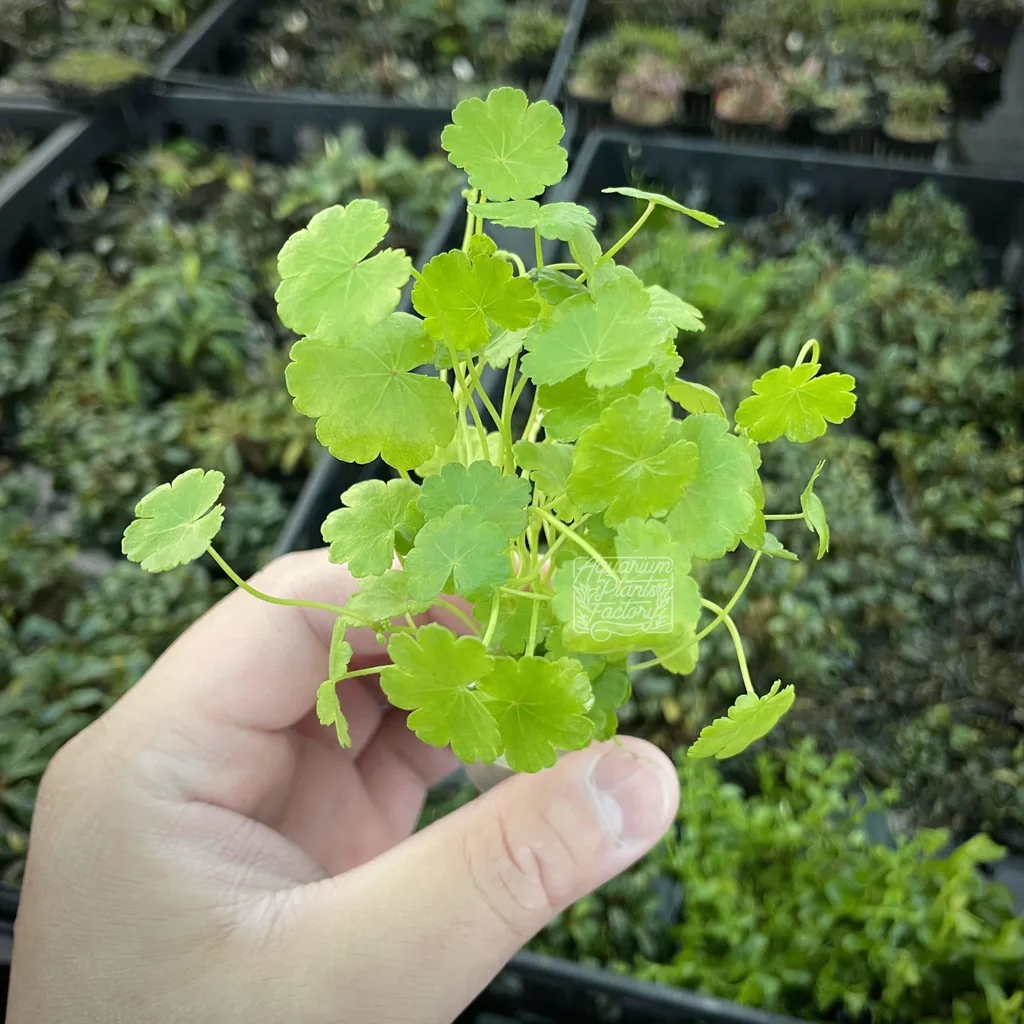
Care at a glance
- Light
- High light
- CO2
- CO₂ required
- Temperature
- 59–82°F
- 15–28°C
- Max height
- 2 in
- 5 cm
- Growth rate
- Fast
- Placement
- Foreground
- Type
- Carpeting
- pH
- 5.0–7.5
- Hardness
- 2–14 dGH
- Spread
- 7.9 in (20 cm)
- Nutrient uptake
- Root + water column
- Growth region
- Submersed or emersed
- Difficulty
- Medium
- Family
- Araliaceae
- Origin
- Tropical to warm-temperate Asia and tropical Africa
Overview
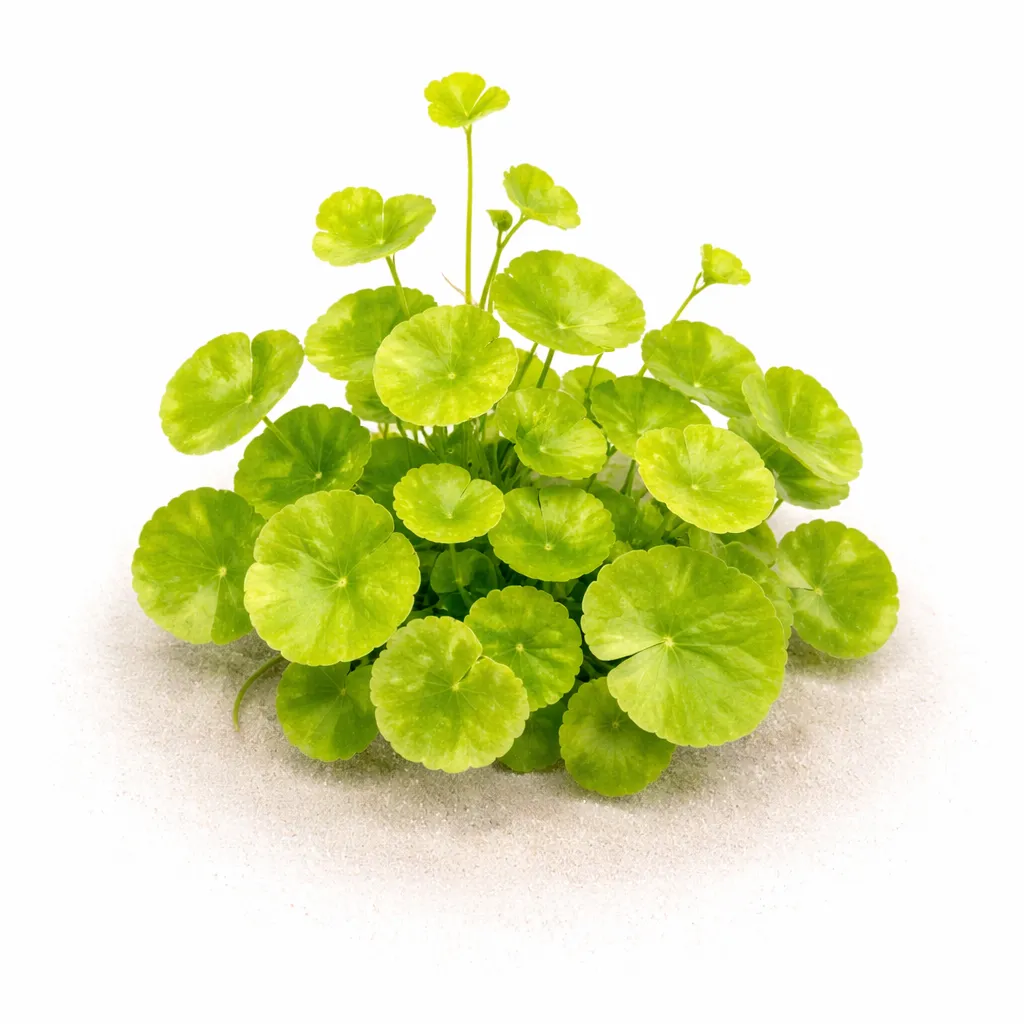
Hydrocotyle mini makes a denser, finer-leaved foreground carpet than the popular Hydrocotyle Japan. It is a step fussier, with a medium difficulty rating.
Did you know
Hydrocotyle mini is used in traditional East Asian herbal medicine, where the whole herb is known as tian hu sui. That use came long before it ever entered the aquascaping hobby.
Caring for Hydrocotyle mini
Split Hydrocotyle mini into small clumps and push each one into the foreground with tweezers, leaving gaps for it to fill. It can also be tied to hardscape or grown emersed. Keep the water at 59 to 82°F (15 to 28°C).
Give it strong, high light to keep it low. It needs injected CO2 plus regular liquid fertilizer to grow compact and green rather than leggy. In low light with no CO2 it tends to decay. Root tabs near its roots help as well, since it feeds through both roots and leaves.
Left to itself, it runs fast and piles up, so trim it and press the mat down often. New plants grow along the runners and can be cut free once they have roots.
Good to know
Hydrocotyle mini is Hydrocotyle sibthorpioides Lamarck, in the family Araliaceae with the other aquarium pennyworts. It was long placed in Apiaceae. The species name honors the botanist John Sibthorp. Its rounded, shallowly lobed leaves set it apart from the three-lobed H. tripartita often grown beside it. It is also called lawn pennywort or dwarf pennywort.
In the wild
Hydrocotyle mini is a small creeping pennywort from tropical and warm-temperate Asia and tropical Africa. It grows in damp lawns, ditches and the margins of shallow water. Its thin runners root at the nodes and throw up tiny clover-like leaves only a centimeter or two across.
Common questions
Does Hydrocotyle mini need to be planted in the substrate?
Yes. Split it into small clumps and push each one into the substrate with tweezers, leaving gaps for it to fill.
Does Hydrocotyle mini need CO2?
Yes. Hydrocotyle mini needs injected CO2 to grow well, and it usually struggles without it.
How much light does Hydrocotyle mini need?
Hydrocotyle mini needs high light from a strong planted-tank LED. In weaker light it grows upward instead of spreading across the substrate.
Does Hydrocotyle mini need root tabs?
They help. Hydrocotyle mini takes nutrients through both its roots and its leaves. Root tabs near its roots and a liquid fertilizer cover both.
How do you propagate Hydrocotyle mini?
Hydrocotyle mini propagates by runners and cuttings. New plants grow along its runners. Cut one free once it has roots and plant it. Cut off the top of a stem and replant it, and the stump left behind grows new shoots.
How tall does Hydrocotyle mini grow?
Hydrocotyle mini grows to about 2 in (5 cm) tall. It grows fast, so expect to trim it often.
Related plants
 Medium lightForeground2 in (5 cm)
Hydrocotyle Japan
Hydrocotyle tripartita
Medium light · Foreground
- High lightForeground2 in (5 cm)
Hydrocotyle Variegated
Hydrocotyle tripartita 'Variegated'
High light · Foreground
 High lightForeground3.9 in (10 cm)
Whorled pennywort
Hydrocotyle verticillata
High light · Foreground
- Medium lightForeground3.9 in (10 cm)
Hydrocotyle tripartita Mini
Hydrocotyle tripartita 'Mini'
Medium light · Foreground
 Medium lightFloating5.9 in (15 cm)
Floating pennywort
Hydrocotyle ranunculoides
Medium light · Floating
 Medium lightMidground19.7 in (50 cm)
Brazilian pennywort
Hydrocotyle leucocephala
Medium light · Midground