Form of Hydrocotyle Japan
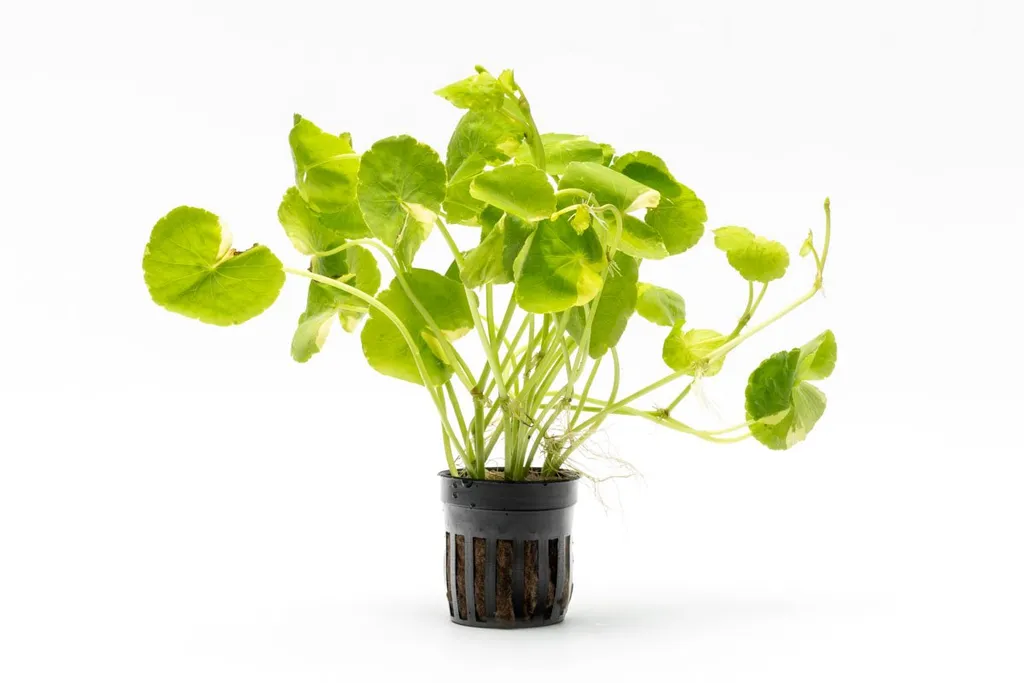
Hydrocotyle Variegated
Hydrocotyle tripartita 'Variegated'
One of 2 forms of Hydrocotyle tripartita · See all forms →
Also known as Hydrocotyle tripartita 'Mini Variegated', Hydrocotyle Mini Variegated, Hydrocotyle tripartita Variegated
FreshwaterCarpetingRunnersCuttings
Forms · Hydrocotyle tripartita
See all 2 →- VariegatedThis page
- Mini
Care at a glance
- Light
- High light
- CO2
- CO₂ beneficial
- Temperature
- 64–82°F
- 18–28°C
- Max height
- 2 in
- 5 cm
- Growth rate
- Fast
- Placement
- Foreground
- Type
- Carpeting
- pH
- 5.0–7.5
- Hardness
- 1–10 dGH
- Spread
- 5.9 in (15 cm)
- Nutrient uptake
- Root + water column
- Growth region
- Submersed or emersed
- Difficulty
- Medium
- Family
- Araliaceae
- Origin
- Cultivated selection (Sreepadma farm, India; parent species probably from Australia)
Overview
Hydrocotyle Variegated turns the easy Japan clover into a plant of medium difficulty. It is a low, fast-growing carpet plant for the foreground.
Did you know
The white patches on Hydrocotyle Variegated are tissue with almost no chlorophyll. Every pale leaf is one the plant partly carries as a passenger.
Caring for Hydrocotyle Variegated
Split Hydrocotyle Variegated into small clumps and push each one into the substrate with tweezers, leaving gaps for it to fill. Use it as an accent or let it carpet, and pin the runners down until they root. Keep the water at 64 to 82°F (18 to 28°C).
Give it strong, high light, since its white leaf tissue does little photosynthesis. It grows without injected CO2, but CO2 and regular fertilizer are strongly advised to keep the runners creeping instead of stalling. In a dim low-tech tank it dwindles. It feeds through its roots and leaves, so pair root tabs with a liquid fertilizer.
It grows fast, so expect regular trimming. Trim by cutting runners and replanting the plantlets. Remove any all-green reverted shoots, or the faster plain growth takes over the patch.
Good to know
Hydrocotyle Variegated is a selection of Hydrocotyle tripartita in the family Araliaceae, sold as 'Variegated' and 'Mini Variegated'. Its clover-like, three-lobed leaves carry splashes of white and cream where the ordinary plant is uniform bright green. It runs smaller and more compact than the standard Japan form.
In the wild
Hydrocotyle Variegated is a cultivated selection that does not occur in the wild. Its parent, Hydrocotyle tripartita, is a creeping marsh pennywort, probably from Australia. The parent runs across wet ground and shallow margins emersed, and it adapts readily to submersed growth. The variegated form was introduced from the Sreepadma farm in India and circulates mainly as tissue culture.
Common questions
Is Hydrocotyle Variegated a different species from Hydrocotyle Japan?
No. Hydrocotyle Variegated is a form of Hydrocotyle Japan, Hydrocotyle tripartita. It wants high light, where the species wants medium. It also differs in difficulty and growth rate.
Does Hydrocotyle Variegated need to be planted in the substrate?
Yes. Split it into small clumps and push each one into the substrate with tweezers, leaving gaps for it to fill.
Does Hydrocotyle Variegated need CO2?
No, but it helps. Hydrocotyle Variegated can grow without injected CO2, and added CO2 makes it grow faster.
How much light does Hydrocotyle Variegated need?
Hydrocotyle Variegated needs high light from a strong planted-tank LED. In weaker light it grows upward instead of spreading across the substrate.
Does Hydrocotyle Variegated need root tabs?
They help. Hydrocotyle Variegated takes nutrients through both its roots and its leaves. Root tabs near its roots and a liquid fertilizer cover both.
How do you propagate Hydrocotyle Variegated?
Hydrocotyle Variegated propagates by runners and cuttings. New plants grow along its runners. Cut one free once it has roots and plant it. Cut off the top of a stem and replant it, and the stump left behind grows new shoots.
How tall does Hydrocotyle Variegated grow?
Hydrocotyle Variegated grows to about 2 in (5 cm) tall. It grows fast, so expect to trim it often.
Related plants
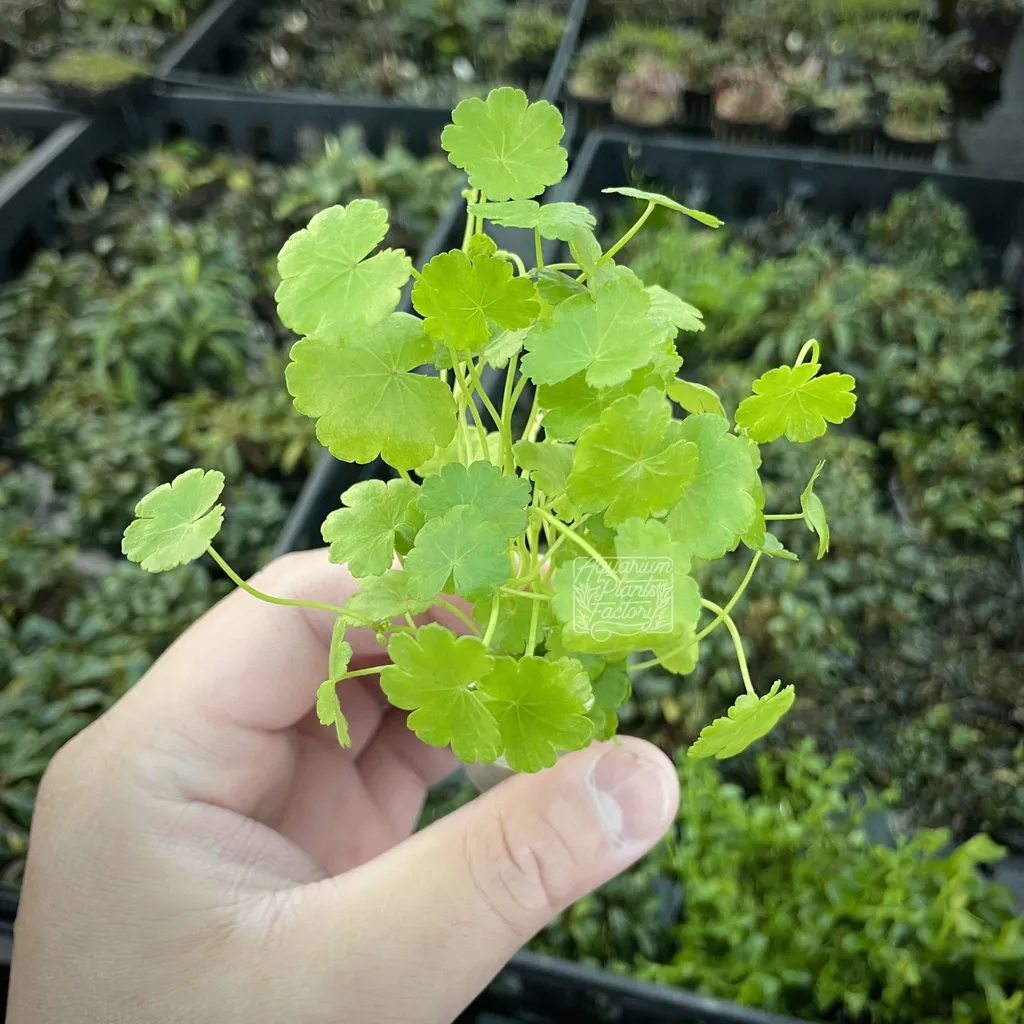 High lightForeground2 in (5 cm)
Hydrocotyle mini
Hydrocotyle sibthorpioides
High light · Foreground
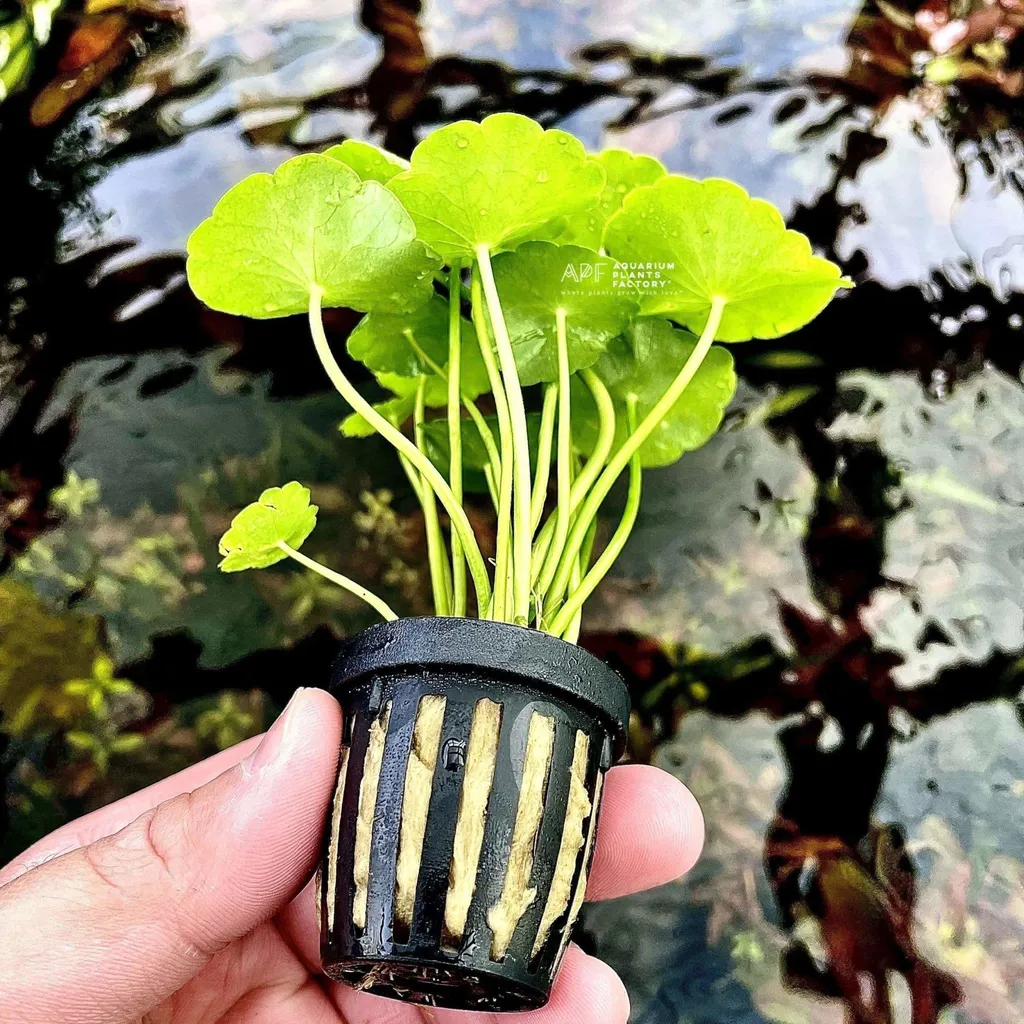 High lightForeground3.9 in (10 cm)
Whorled pennywort
Hydrocotyle verticillata
High light · Foreground
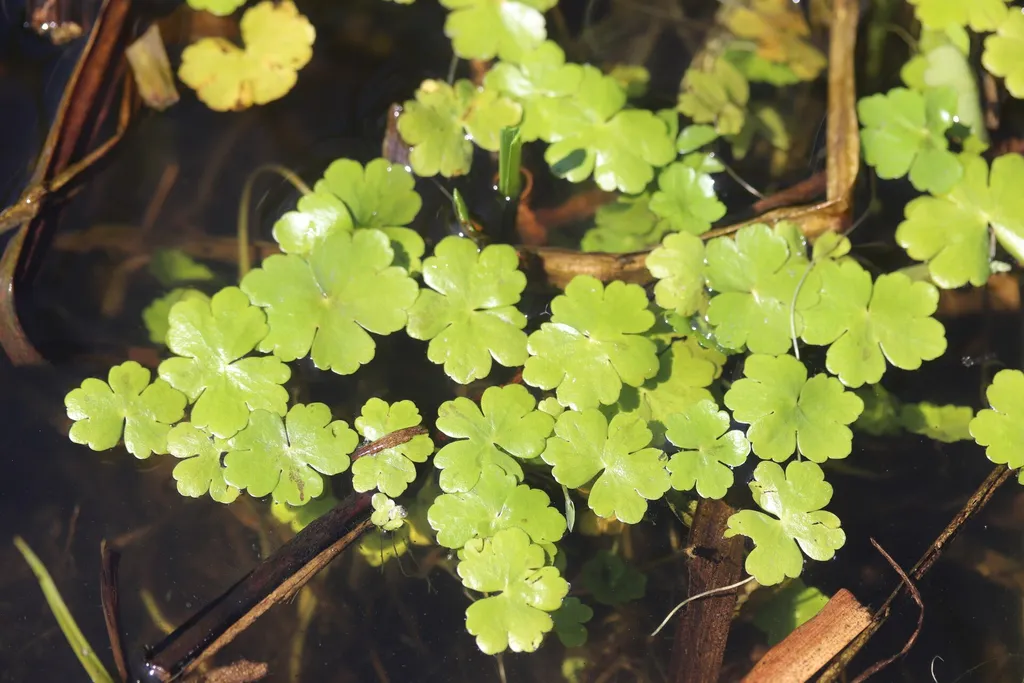 Medium lightFloating5.9 in (15 cm)
Floating pennywort
Hydrocotyle ranunculoides
Medium light · Floating
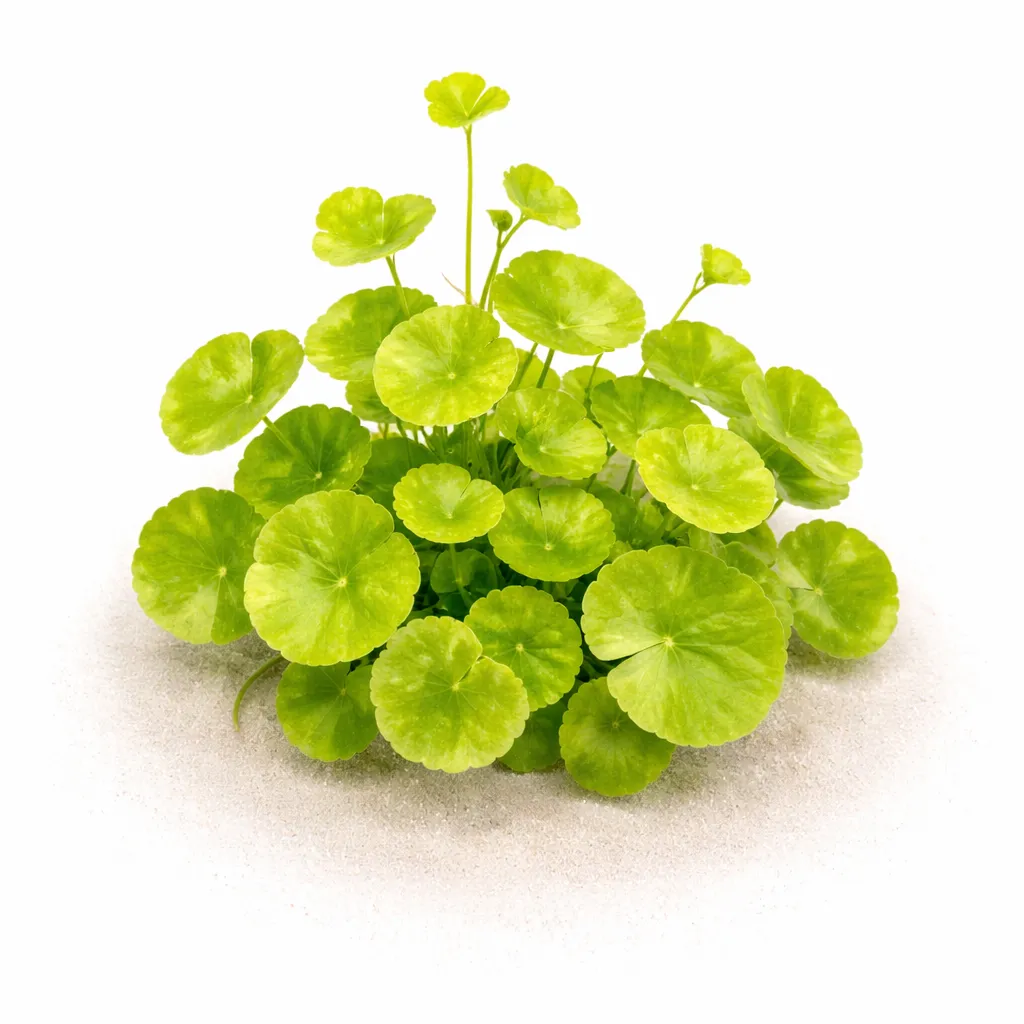 Medium lightMidground19.7 in (50 cm)
Brazilian pennywort
Hydrocotyle leucocephala
Medium light · Midground
 Medium lightMidground19.7 in (50 cm)
Brazilian pennywort Variegated
Hydrocotyle leucocephala 'Variegated'
Medium light · Midground