Floating pennywort
Hydrocotyle ranunculoides
Also known as Floating marsh-pennywort, American pennywort, Hydrocotyle natans
FreshwaterFloatingFragmentationRunners
Invasive. Banned in the EU and Great Britain as an invasive alien species; sale has been prohibited in England and Wales since 2014. Never release into the wild; dispose of plants in the trash.
Care at a glance
- Light
- Medium light
- CO2
- CO₂ beneficial
- Temperature
- 50–79°F
- 10–26°C
- Max height
- 5.9 in
- 15 cm
- Growth rate
- Fast
- Placement
- Floating
- Type
- Floating
- pH
- 6.0–8.0
- Hardness
- 4–18 dGH
- Nutrient uptake
- Root + water column
- Growth region
- Submersed or emersed
- Difficulty
- Easy
- Family
- Araliaceae
- Origin
- The Americas (North, Central and South); introduced in Europe, Asia and Australia
Overview
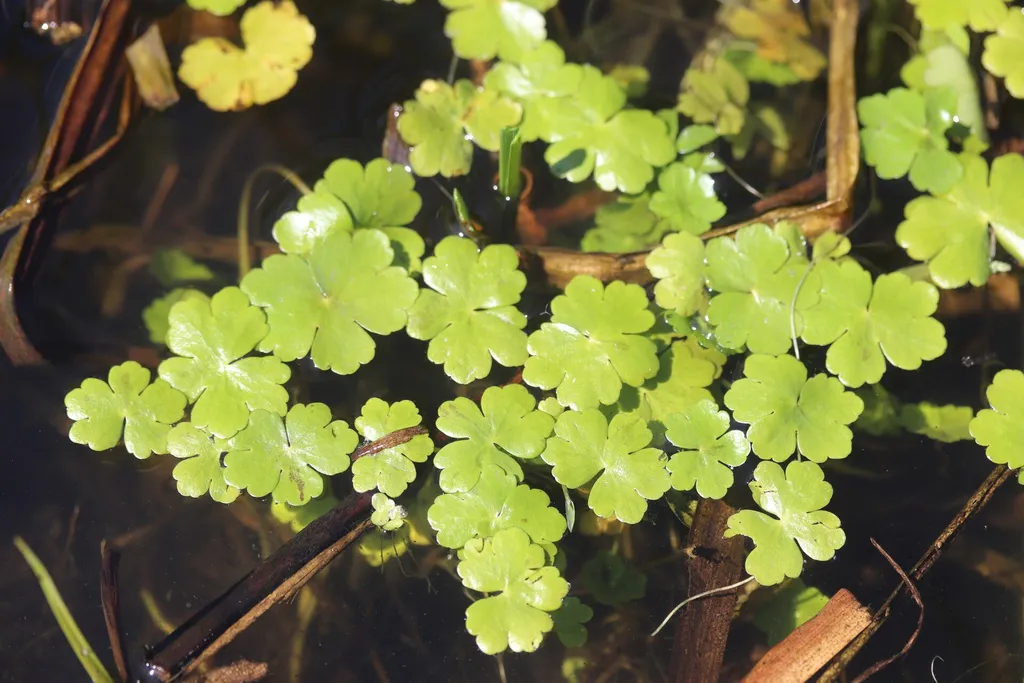
Floating pennywort is a floating creeper for ponds and open-top setups rather than a fully submersed plant. It is easy to grow and spreads fast.
Did you know
In Britain, floating pennywort mats can lengthen by around 20 centimeters a day in high summer, and rivers are cleared of it by the barge-load. It became one of the first plants ever banned for sale in England and Wales.
Caring for floating pennywort
Float it with its leaves in the air, its roots trailing in rich water and plenty of room to run. Floating pennywort can also root in the substrate at the edges, or drift as a loose mat.
Medium light suits it, and it grows without injected CO2, though CO2 speeds it up. It takes nutrients through both roots and leaves, so rich water feeds it, and root tabs help wherever it roots. Keep the water at 50 to 79°F (10 to 26°C).
Growth is startling in warm weather, so treat trimming as mowing. Stems root at every node, and fragments as small as a single node regrow into new mats.
Keep every fragment out of drains and waterways. Where it is legal at all, keep it only in a closed indoor system.
Good to know
Floating pennywort is a true pennywort in the ivy family, Araliaceae. It shares a genus with Brazilian pennywort but is far larger in leaf and appetite. The species name ranunculoides means buttercup-like, for the rounded, lobed leaf shape. Its stems grow along the surface rather than upward. It is also called American pennywort and floating marsh-pennywort.
In the wild
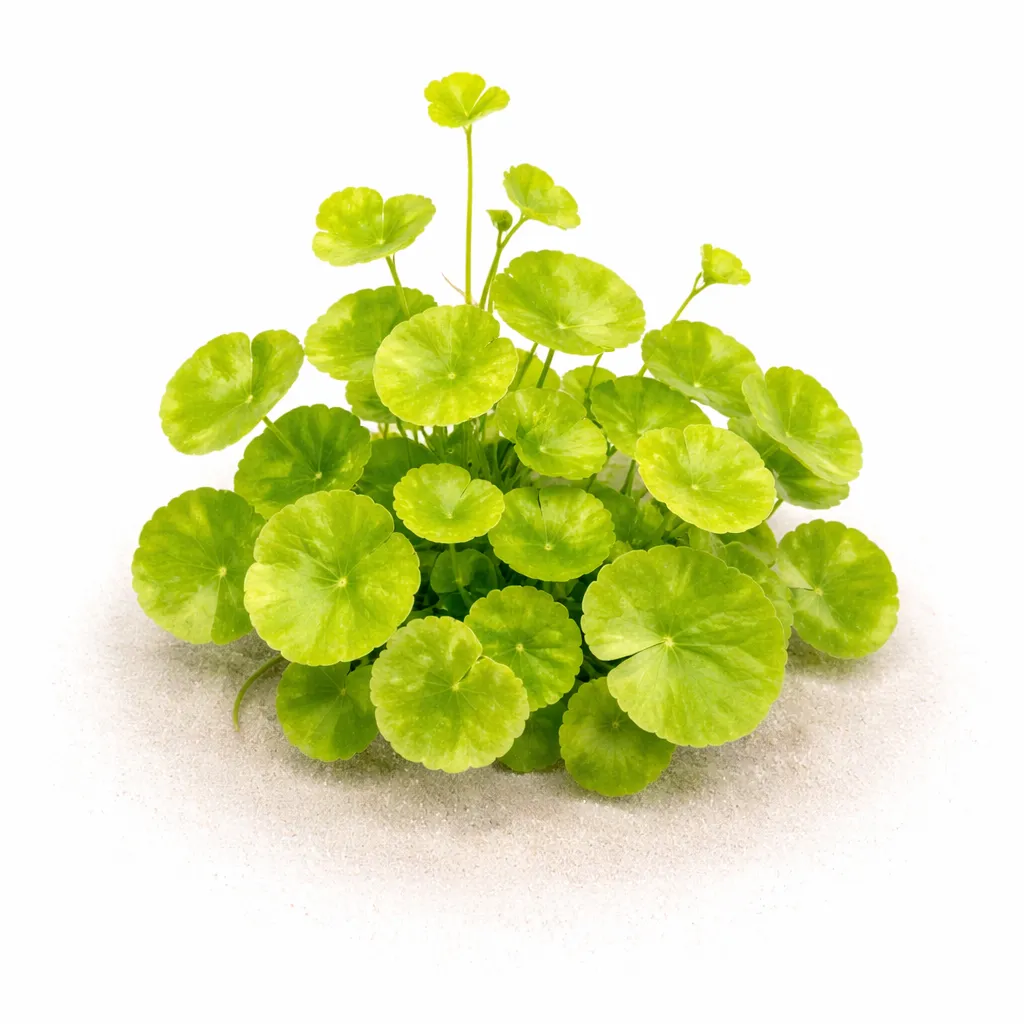
Floating pennywort is at home in slow, nutrient-rich lowland waters across the Americas. It roots at the margins and sends fleshy runners out over the surface, each node holding a glossy, ruffled, kidney-shaped leaf above the water. In its introduced range, those runners build floating mats dense enough to cover whole channels. Those mats led to an EU-wide ban.
Common questions
Does floating pennywort need to be planted in the substrate?
No. Floating pennywort can root in the substrate or float as a loose mat.
Does floating pennywort need CO2?
No, but it helps. Floating pennywort can grow without injected CO2, and added CO2 makes it grow faster.
How much light does floating pennywort need?
Floating pennywort wants medium light. A light sold for planted tanks covers it.
Does floating pennywort need root tabs?
They help. Floating pennywort takes nutrients through both its roots and its leaves. Root tabs near its roots and a liquid fertilizer cover both.
How do you propagate floating pennywort?
Floating pennywort propagates by fragmentation and runners. Pieces that break off keep growing, so pulling a clump apart spreads it. New plants form along its runners and break away to float on their own.
Related plants
 High lightForeground3.9 in (10 cm)
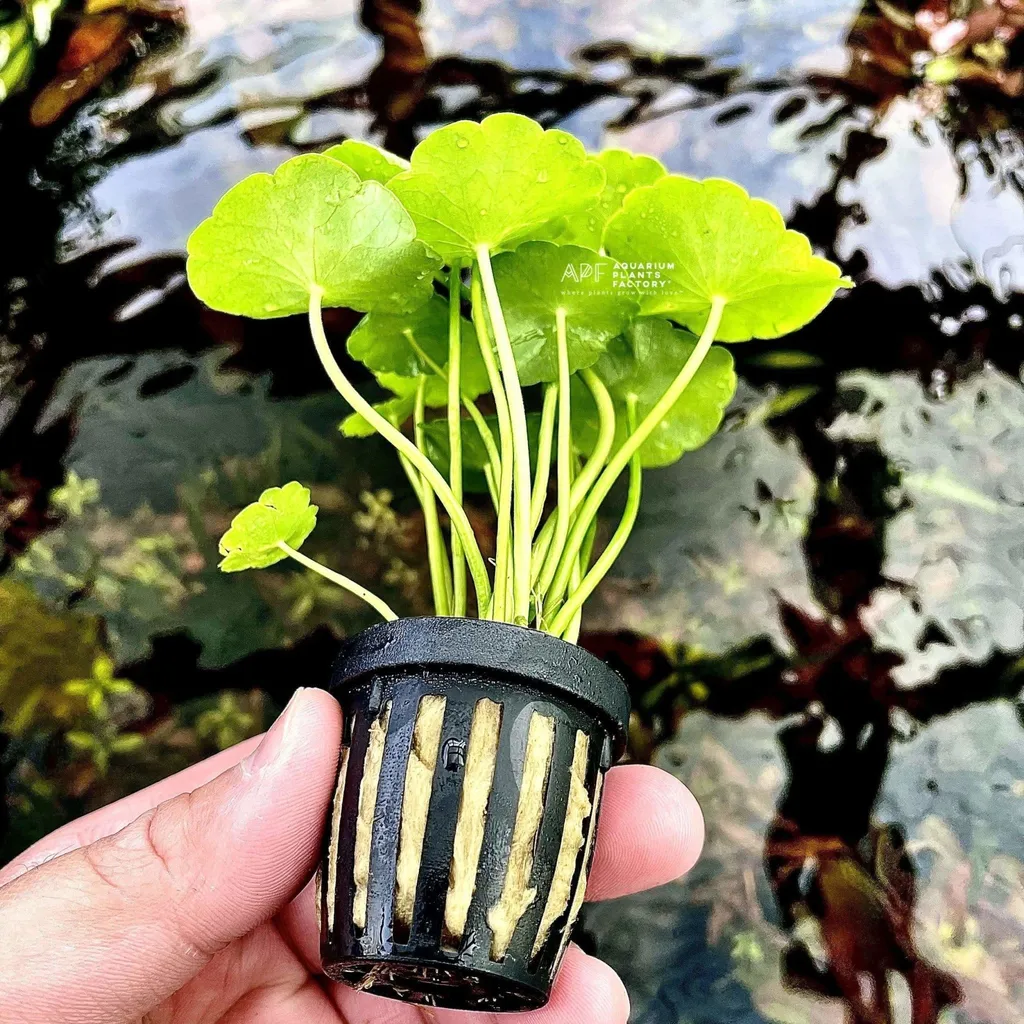
Whorled pennywort
Hydrocotyle verticillata
High light · Foreground
- Medium lightForeground3.9 in (10 cm)
Hydrocotyle tripartita Mini
Hydrocotyle tripartita 'Mini'
Medium light · Foreground
 Medium lightForeground2 in (5 cm)
Hydrocotyle Japan
Hydrocotyle tripartita
Medium light · Foreground
 High lightForeground2 in (5 cm)
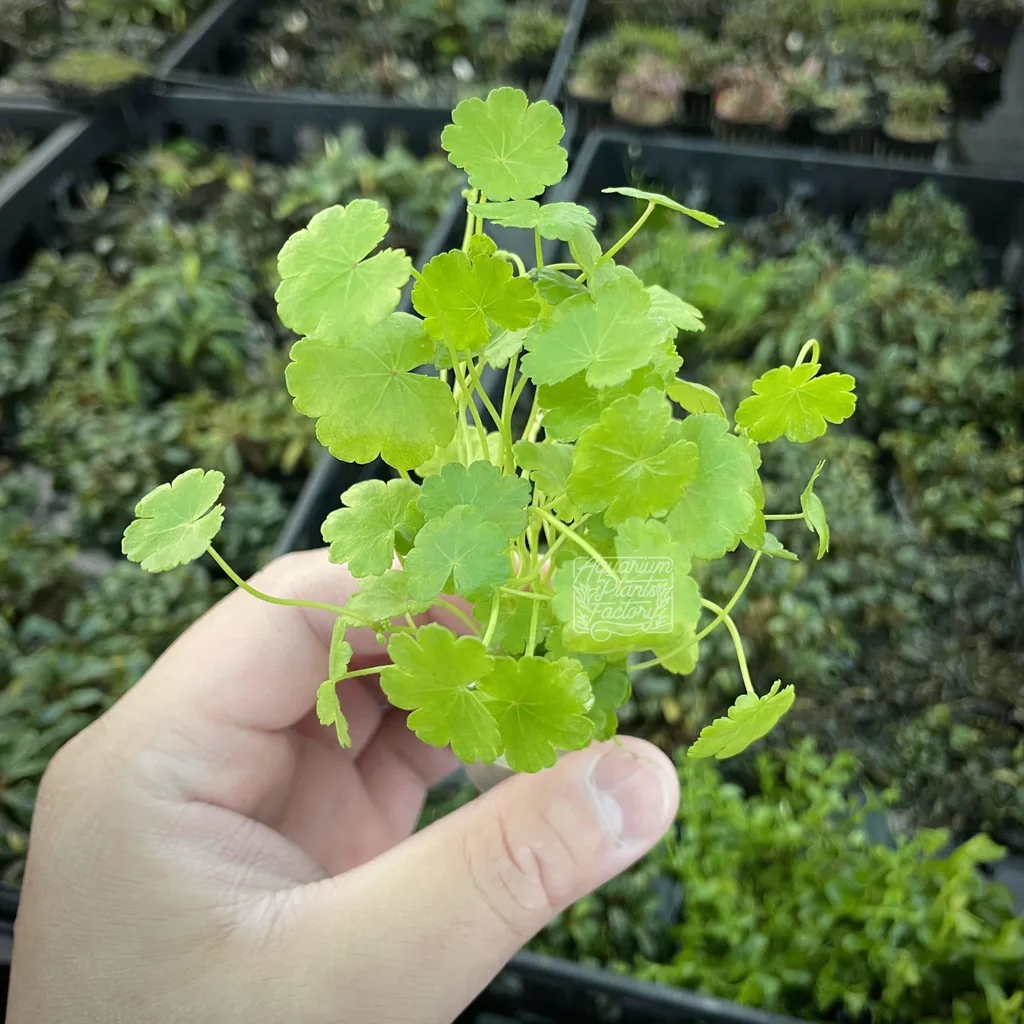
Hydrocotyle mini
Hydrocotyle sibthorpioides
High light · Foreground
- High lightForeground2 in (5 cm)
Hydrocotyle Variegated
Hydrocotyle tripartita 'Variegated'
High light · Foreground
 Medium lightMidground19.7 in (50 cm)
Brazilian pennywort
Hydrocotyle leucocephala
Medium light · Midground