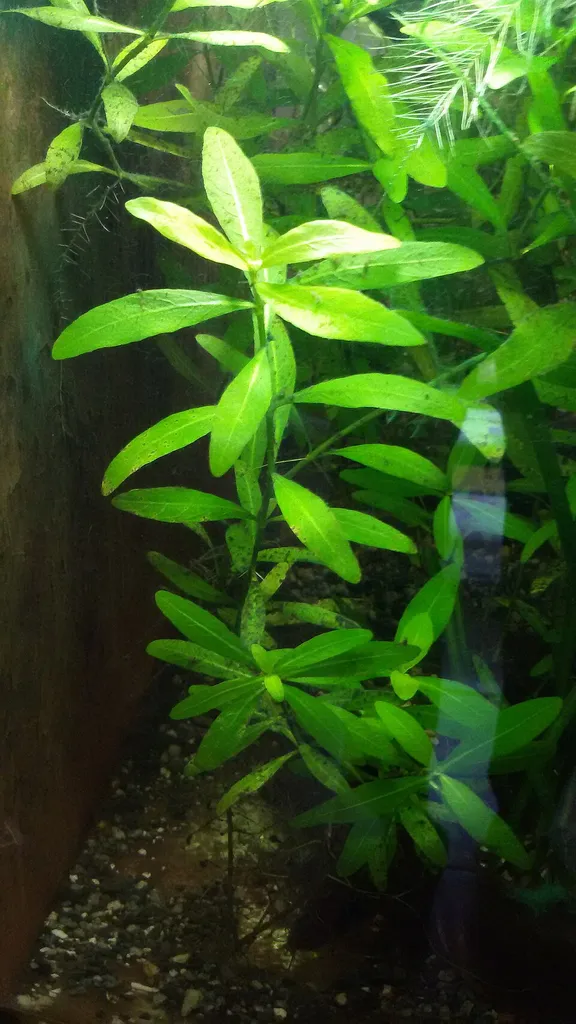
Hygrophila polysperma
Also known as Dwarf hygro, Indian waterweed, Miramar weed, East Indian hygrophila
FreshwaterStemCuttingsSide shoots
Prohibited. Listed as a US federal noxious weed. Illegal to sell, buy, or transport across state lines in the United States. Never release into the wild.
Care at a glance
- Light
- Low light
- CO2
- No CO₂ needed
- Temperature
- 64–82°F
- 18–28°C
- Max height
- 17.7 in
- 45 cm
- Growth rate
- Fast
- Placement
- Background
- Type
- Stem
- pH
- 5.0–8.0
- Hardness
- 2–18 dGH
- Spread
- 3.1 in (8 cm)
- Nutrient uptake
- Root + water column
- Growth region
- Submersed or emersed
- Difficulty
- Beginner
- Family
- Acanthaceae
- Origin
- South and Southeast Asia (India, Bhutan, Bangladesh, Nepal)
Overview
Plant cuttings in loose bunches in the mid to background, spacing stems so light reaches the lower leaves. It is one of the toughest plants in the hobby, growing fast in low light with no CO2 and feeding from both water column and substrate, so it is excellent for cycling new tanks and soaking up excess nutrients. The main pitfall is its speed: it needs frequent trimming or it shades everything below it, and trimmings must be binned rather than released into waterways because it is invasive.
In the wild
Hygrophila polysperma comes from streams, ditches, and marshes across South and Southeast Asia, including India, Bangladesh, Nepal, and Bhutan. It grows both submersed as a soft-stemmed water plant and emersed along muddy banks during low water. It tolerates a very wide range of conditions, which is why it has naturalized and is now an invasive weed in parts of North America and Europe.
Good to know
It belongs to the family Acanthaceae, the same family as the larger Hygrophila corymbosa. As a stem plant it grows upward from a single shoot, throwing pairs of opposite leaves and rooting readily at any node that touches substrate. The popular Rosanervig variety, with pink veining caused by a controlled nutrient variegation, was named and distributed by the Danish nursery Tropica.
Did you know
It grows so aggressively that it is a federally listed noxious weed in the United States, illegal to sell or transport across state lines, even though it remains one of the most recommended beginner plants elsewhere in the world.
Related plants
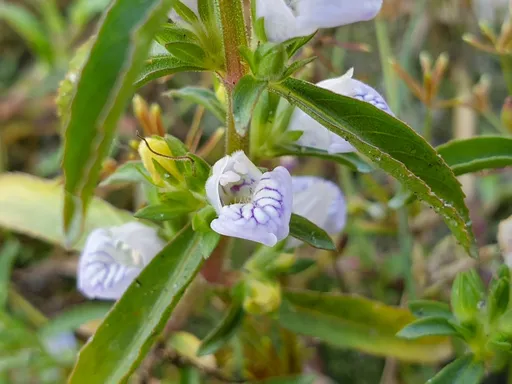 High lightBackground19.7 in (50 cm)
Hygrophila balsamica
High light · Background
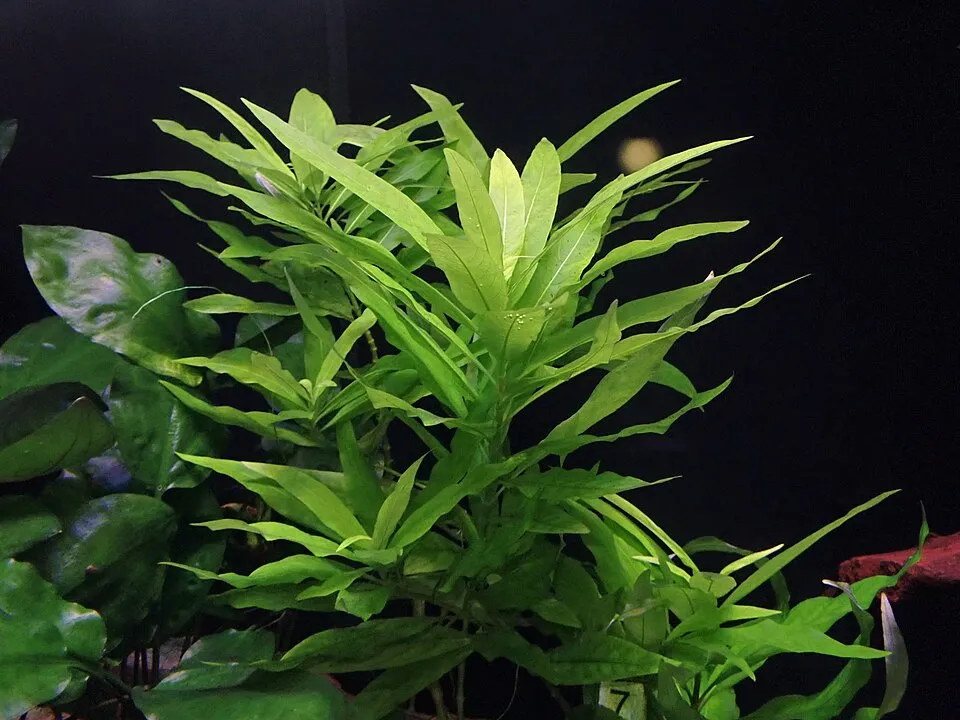 Low lightBackground19.7 in (50 cm)
Hygrophila corymbosa
Low light · Background
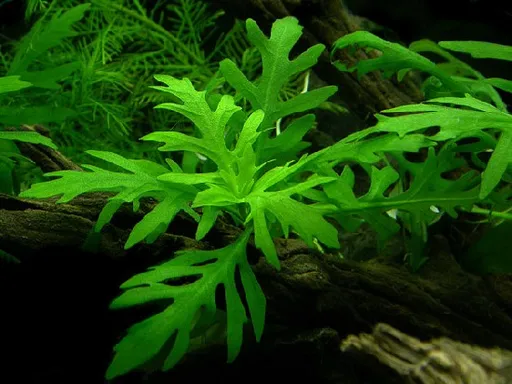 Medium lightBackground19.7 in (50 cm)
Water wisteria
Hygrophila difformis
Medium light · Background
- Medium lightBackground19.7 in (50 cm)
Hygrophila corymbosa Cherry Leaf
Hygrophila corymbosa 'Cherry Leaf'
Medium light · Background
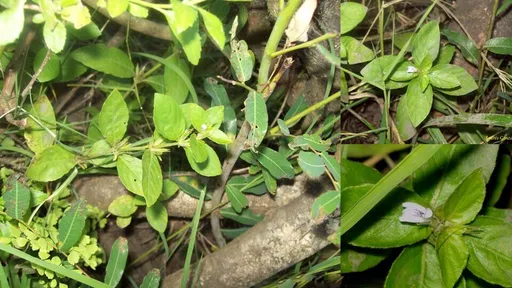 Medium lightBackground15.7 in (40 cm)
Hygrophila costata
Medium light · Background
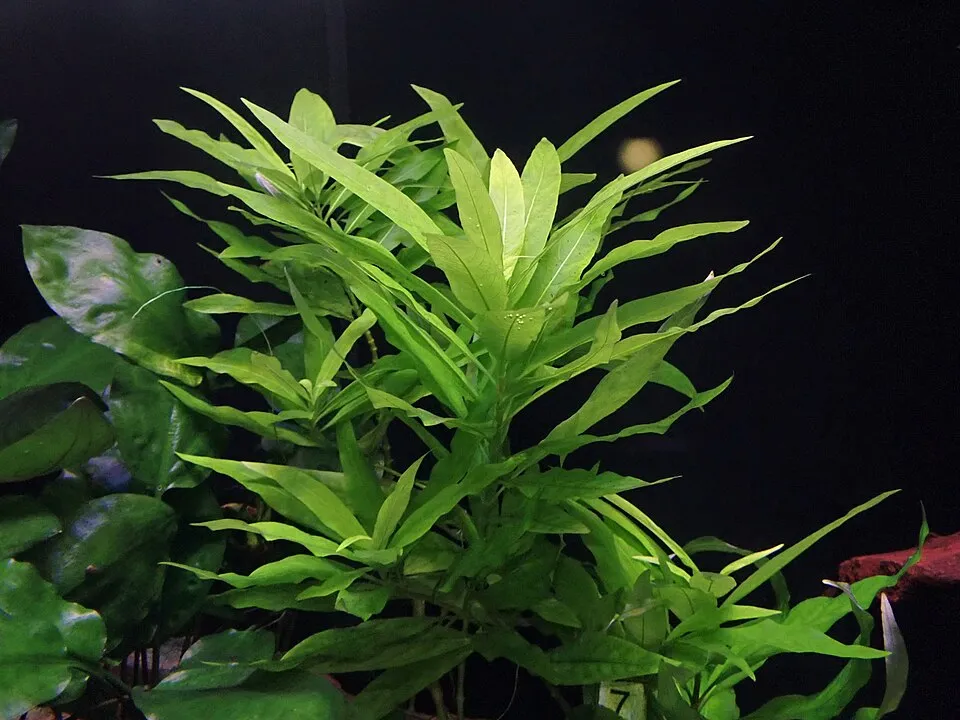 Medium lightBackground15.7 in (40 cm)
Hygrophila Siamensis
Hygrophila corymbosa 'Siamensis'
Medium light · Background