Water hyacinth
Pontederia crassipes
Also known as Eichhornia crassipes, Common water hyacinth, Floating water hyacinth, Terror of Bengal
FreshwaterFloatingRunnersdivision
Invasive. Banned in the EU and prohibited in several US states. Never release into the wild; dispose of plants in the trash.
Care at a glance
- Light
- High light
- CO2
- No CO₂ needed
- Temperature
- 59–86°F
- 15–30°C
- Max height
- 15.7 in
- 40 cm
- Growth rate
- Fast
- Placement
- Floating
- Type
- Floating
- pH
- 6.0–8.0
- Hardness
- 2–18 dGH
- Spread
- 11.8 in (30 cm)
- Nutrient uptake
- Water column
- Growth region
- Submersed or emersed
- Difficulty
- Easy
- Family
- Pontederiaceae
- Origin
- A free floating plant native to the Amazon basin of South America, now spread across warm regions worldwide where it blankets lakes and slow rivers.
Overview
It needs strong overhead light and open headroom, so it suits ponds and open topped tanks more than covered aquariums. There is no planting or CO2 involved, and it grows explosively fast while stripping nitrate and phosphate from the water. Skim off excess plants often to stop it from sealing over the surface.
In the wild
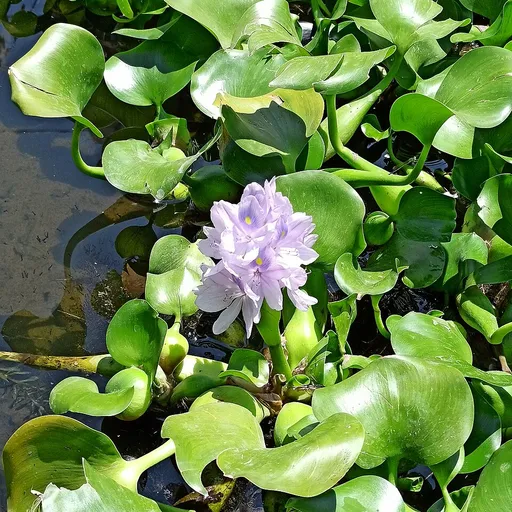
Water hyacinth floats on glossy rounded leaves held up by swollen, air filled stalks, trailing long feathery dark roots beneath. Those roots make excellent cover and spawning cover for fry and shrimp. Given light and space it throws up showy lavender flower spikes, though in a covered tank it usually stays small.
Good to know
Long placed in the genus Eichhornia, water hyacinth is now classified in Pontederia. Its buoyancy comes from spongy, air filled tissue packed into the swollen leaf stalks.
Did you know
Nicknamed the terror of Bengal, water hyacinth can double its numbers in about two weeks and is a prohibited or noxious weed in many US states and countries, so it must never be released into natural water.