Narrow leaf anacharis
Elodea najas
Also known as Egeria najas, Elodea naias, Narrowleaf anacharis
FreshwaterStemCuttings
Invasive. Regulated as a restricted noxious weed in California (listed as Egeria najas). Never release into the wild; dispose of trimmings in the trash.
Care at a glance
- Light
- Medium light
- CO2
- No CO₂ needed
- Temperature
- 59–82°F
- 15–28°C
- Max height
- 15.7 in
- 40 cm
- Growth rate
- Fast
- Placement
- Background
- Type
- Stem
- pH
- 6.0–8.0
- Hardness
- 2–20 dGH
- Spread
- 1.2 in (3 cm)
- Nutrient uptake
- Water column
- Growth region
- Submersed
- Difficulty
- Beginner
- Family
- Hydrocharitaceae
- Origin
- South America (Brazil, Paraguay, Uruguay, northern Argentina)
Overview
Narrow leaf anacharis is one of the easiest stem plants there is and a beginner pick for the background.
Did you know
Narrow leaf anacharis is easy to tell from the common anacharis, Egeria densa, at the shop. Look at the leaf edges. The teeth on Elodea najas are coarse enough to see with the naked eye, while those on densa are not.
Caring for narrow leaf anacharis
Plant the stems loosely in the background or let them float. The stems are brittle, so handle them in bunches and expect fragments. Each fragment can grow into a new plant.
Narrow leaf anacharis grows fast with no added CO2 and copes with almost any light, temperature or hardness. Medium light suits it, and it handles 59 to 82°F (15 to 28°C). It is fully aquatic with no emersed form and feeds from the water column, so liquid fertilizer suits it. That makes it a workhorse in new tanks, soaking up nutrients that would otherwise feed algae.
Under good light, expect to trim it weekly. Replant the cut tops or throw them out. In California it is a restricted noxious weed, so trimmings go in the trash, never down a drain or into a pond.
Good to know
Narrow leaf anacharis is a member of Hydrocharitaceae, the frogbit family. Planchon described it as Egeria najas, and most shop tags still print that name. Recent treatments fold Egeria into Elodea, which gives Elodea najas. Next to Egeria densa, its leaves are narrower and often recurved, and its shoots run finer and more open.
In the wild
Narrow leaf anacharis is native to slow rivers, lakes and reservoirs in Brazil, Paraguay, Uruguay and northern Argentina. It grows rooted or drifting there in large submersed stands. In Brazilian reservoirs it can form dense underwater meadows.
Common questions
Does narrow leaf anacharis need to be planted in the substrate?
Yes. Strip the leaves from the lower part of each stem, then push the stems into the substrate one at a time, a little apart.
Does narrow leaf anacharis need CO2?
No. Narrow leaf anacharis grows well without added CO2.
How much light does narrow leaf anacharis need?
Narrow leaf anacharis wants medium light. A light sold for planted tanks covers it.
Does narrow leaf anacharis need root tabs?
No. Narrow leaf anacharis takes most of its nutrients from the water, so a liquid fertilizer does more for it than root tabs.
How do you propagate narrow leaf anacharis?
Narrow leaf anacharis propagates by cuttings. Cut off the top of a stem and replant it, and the stump left behind grows new shoots.
How tall does narrow leaf anacharis grow?
Narrow leaf anacharis grows to about 15.7 in (40 cm) tall. It grows fast, so expect to trim it often.
Related plants
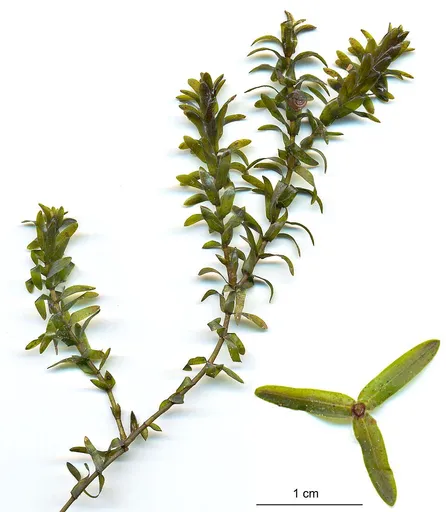 Low lightBackground23.6 in (60 cm)
Canadian waterweed
Elodea canadensis
Low light · Background
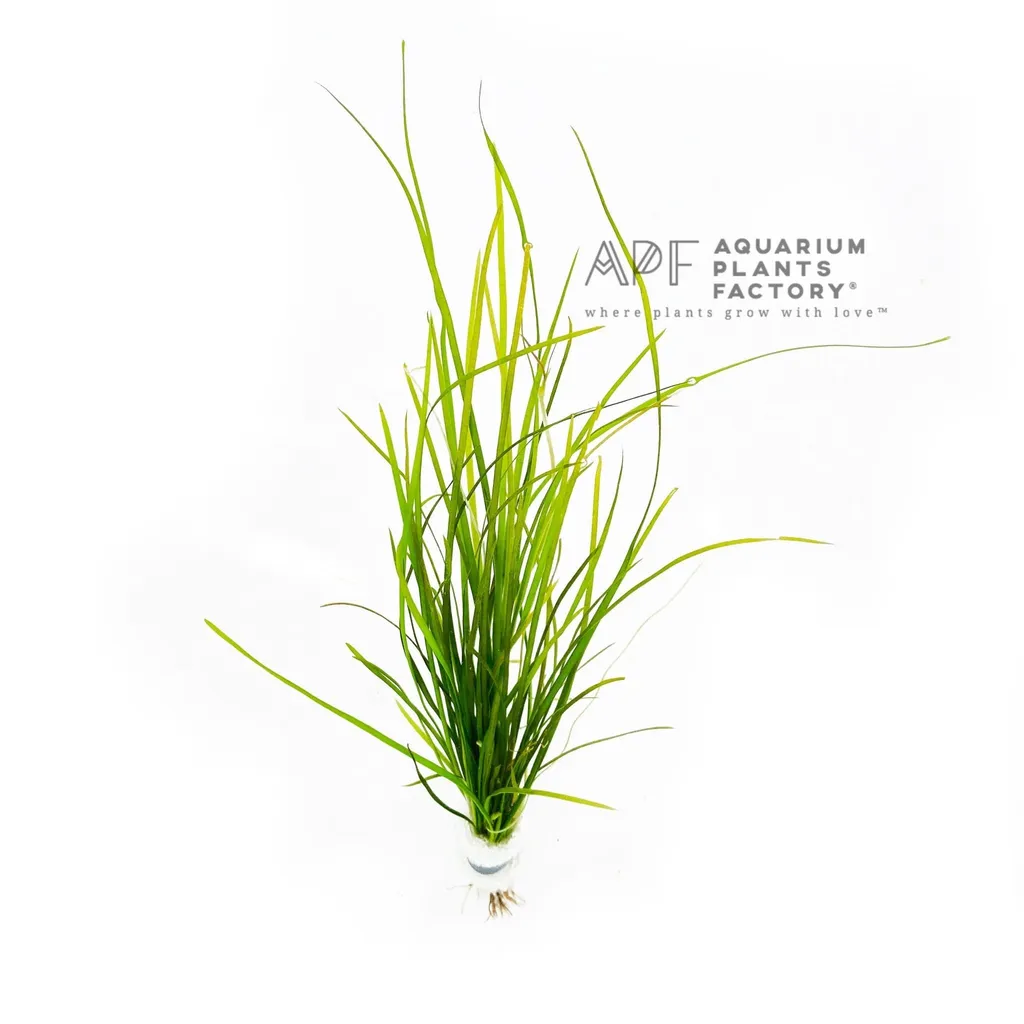 Medium lightBackground15.7 in (40 cm)
Dwarf vallisneria
Vallisneria nana
Medium light · Background
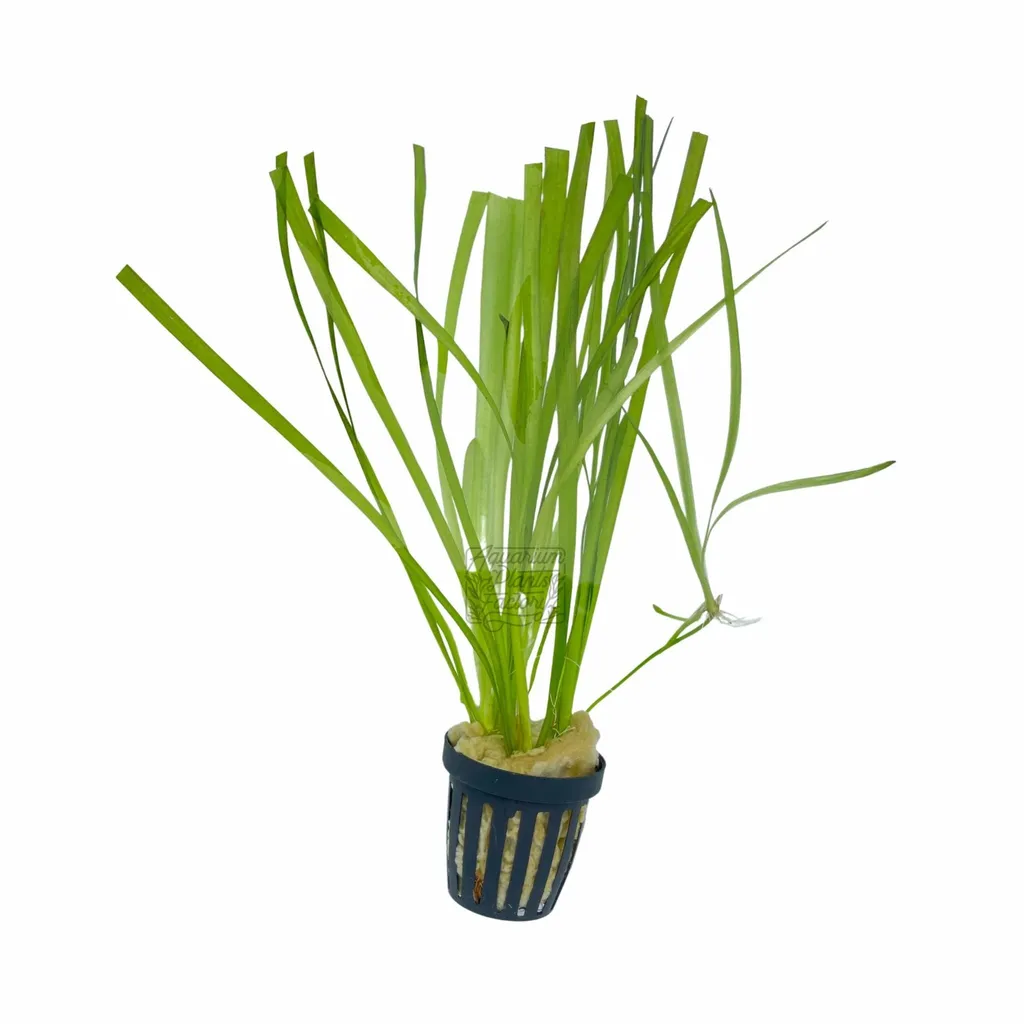 Medium lightBackground19.7 in (50 cm)
Vallisneria spiralis
Medium light · Background
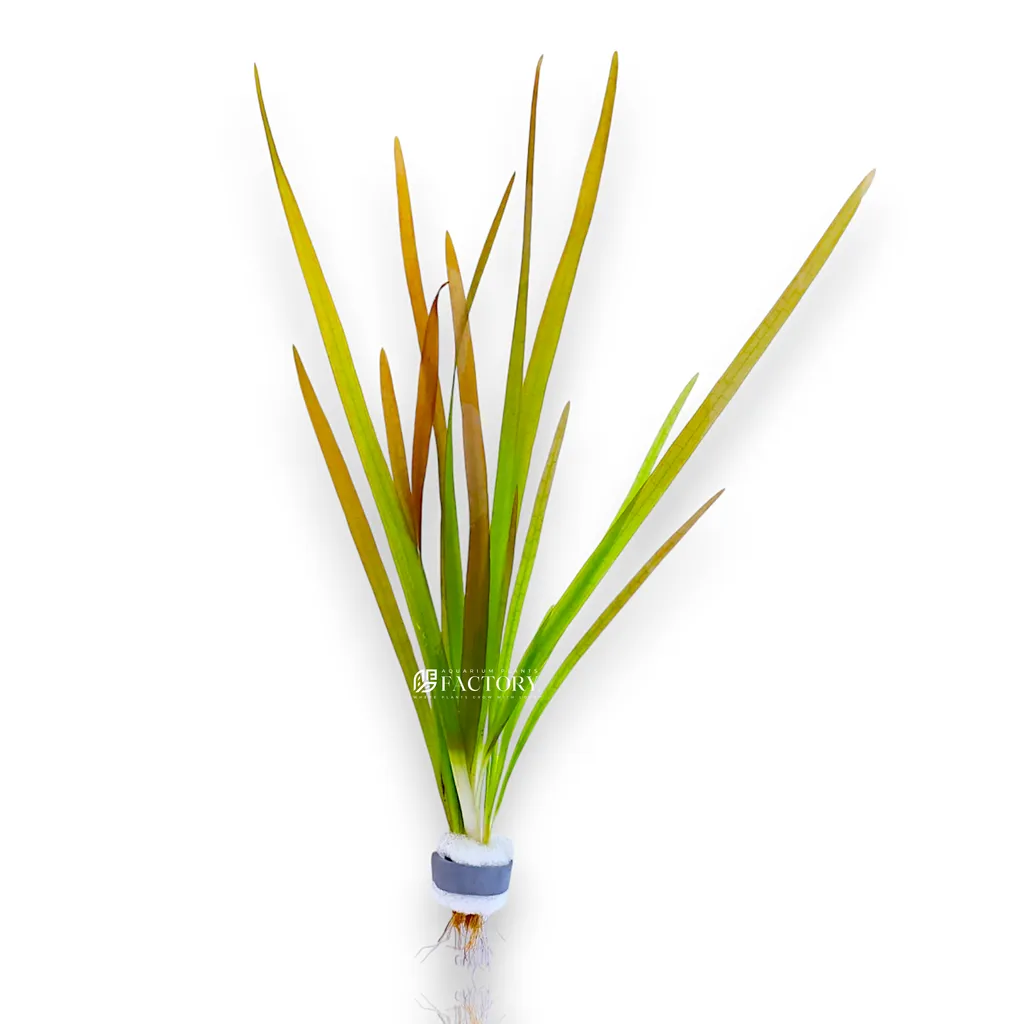 Medium lightBackground23.6 in (60 cm)
Vallisneria Rubra
Vallisneria australis 'Rubra'
Medium light · Background
- Medium lightBackground23.6 in (60 cm)
Corkscrew val
Vallisneria natans
Medium light · Background
- Medium lightBackground23.6 in (60 cm)
Vallisneria nana Tiger
Vallisneria nana 'Tiger'
Medium light · Background