Red mangrove
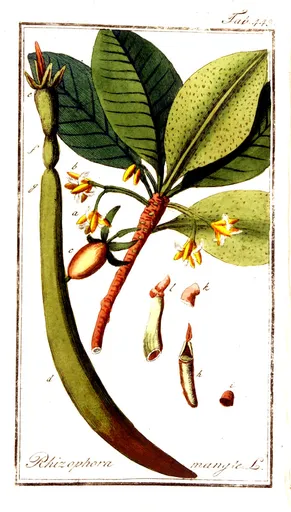
Rhizophora mangle
Also known as Red mangrove propagule, American mangrove
BrackishSaltwaterStemPlantlets
Care at a glance
- Light
- High light
- CO2
- No CO₂ needed
- Temperature
- 72–82°F
- 22–28°C
- Max height
- 23.6 in
- 60 cm
- Growth rate
- Slow
- Placement
- Background
- Type
- Stem
- pH
- 7.5–8.4
- Hardness
- 8–25 dGH
- Spread
- 5.9 in (15 cm)
- Nutrient uptake
- Root + water column
- Growth region
- Emersed
- Difficulty
- Medium
- Family
- Rhizophoraceae
- Origin
- Tropical and subtropical coasts of the Americas, West Africa, and the Pacific
Overview
Plant the propagule with the root end in the substrate or wedged among rock, leaving the growing tip and leaves above the water, and give it bright light from above since it grows emersed into the air. It is slow but hardy and undemanding once established, needs no CO2, and pulls nutrients from both the water and its roots, so it doubles as natural filtration. Keep the leaves rinsed of salt every few days and remove any that drop before they rot and foul the water. It handles brackish and marine conditions and will slowly grow into a small tree, so it suits an open-topped tank with headroom rather than a closed aquarium. Sold stock is aquacultured and sustainable.
In the wild
Red mangroves line tropical and subtropical estuaries, lagoons, and sheltered coasts across the Americas, West Africa, and the Pacific, rooting in soft tidal mud where salt and fresh water mix. They are true trees, not aquatic plants, and in the hobby they are grown from propagules, the long pencil-shaped seedlings the tree drops ready to root. They are euryhaline and thrive in brackish to marine water, which makes them a natural fit for a brackish tank, an open-topped estuary setup, or a marine refugium at a pH of 7.5 to 8.4 and a temperature of 22 to 28 C. Only the roots and lower stem sit in the water while the leaves grow up into the air, so they need an open top and a light above the waterline.
Good to know
A woody tree in the family Rhizophoraceae, known for the arching stilt or prop roots that hold it above the tidal mud and for being viviparous: the seed germinates while still attached to the parent, growing into a propagule that drops and takes root. In a tank it grows slowly as a single upright stem with paired glossy leaves, and it exports nutrients as it grows, which is why marine keepers use it in refugiums. It sheds salt largely through its leaves, so a crust of salt on the foliage is normal.
Did you know
It grows by dropping a living seedling rather than a seed. The pencil-like propagule you buy is already a small plant that germinated on the parent tree, so you plant it point-down and it simply carries on growing, sending leaves up into the air and roots down into the substrate.
Related plants
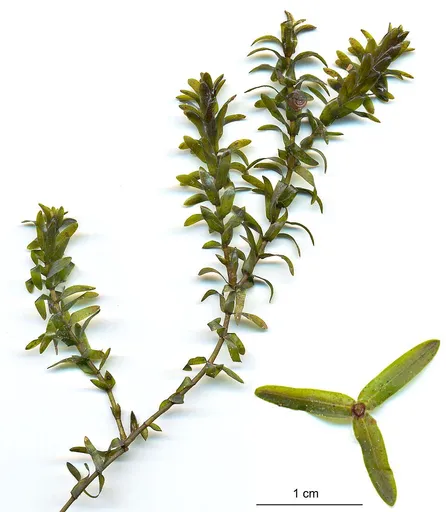 Low lightBackground23.6 in (60 cm)
Canadian waterweed
Elodea canadensis
Low light · Background
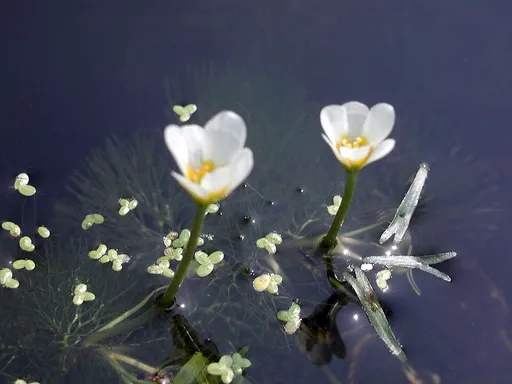 High lightBackground23.6 in (60 cm)
Green cabomba
Cabomba caroliniana
High light · Background
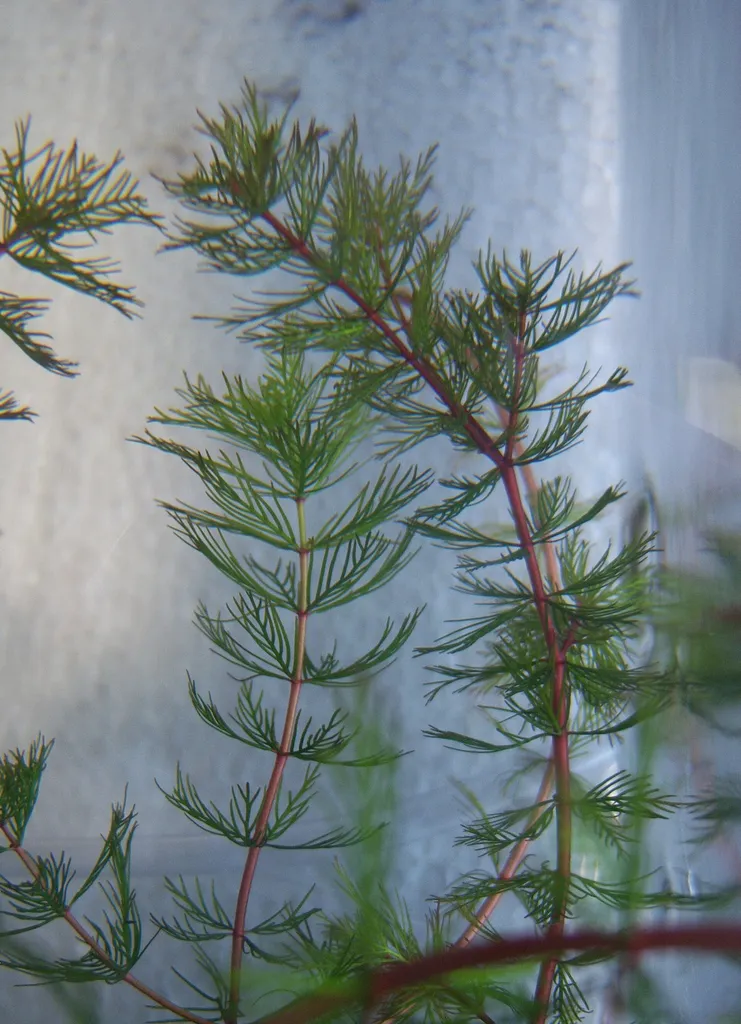 Medium lightBackground23.6 in (60 cm)
Myriophyllum Snowflake
Myriophyllum quitense
Medium light · Background
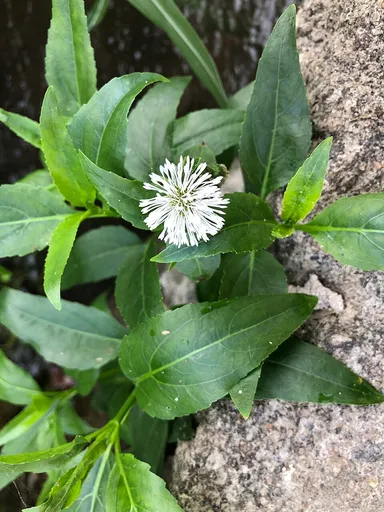 High lightBackground23.6 in (60 cm)
Senegal tea plant
Gymnocoronis spilanthoides
High light · Background
- High lightBackground23.6 in (60 cm)
Myriophyllum Roraima
Myriophyllum sp. 'Roraima'
High light · Background
- Medium lightBackground23.6 in (60 cm)
Potamogeton gayi
Medium light · Background