Myriophyllum Snowflake
Myriophyllum quitense
Also known as Myriophyllum elatinoides, Myriophyllum elatinoides Snowflake, Myriophyllum sp. Snowflake
FreshwaterStemCuttingsSide shoots
Care at a glance
- Light
- Medium light
- CO2
- CO₂ beneficial
- Temperature
- 64–82°F
- 18–28°C
- Max height
- 23.6 in
- 60 cm
- Growth rate
- Fast
- Placement
- Background
- Type
- Stem
- pH
- 5.5–7.5
- Hardness
- 2–12 dGH
- Spread
- 2 in (5 cm)
- Nutrient uptake
- Root + water column
- Growth region
- Submersed or emersed
- Difficulty
- Easy
- Family
- Haloragaceae
- Origin
- South America (Andes); scattered populations in western North America
Overview
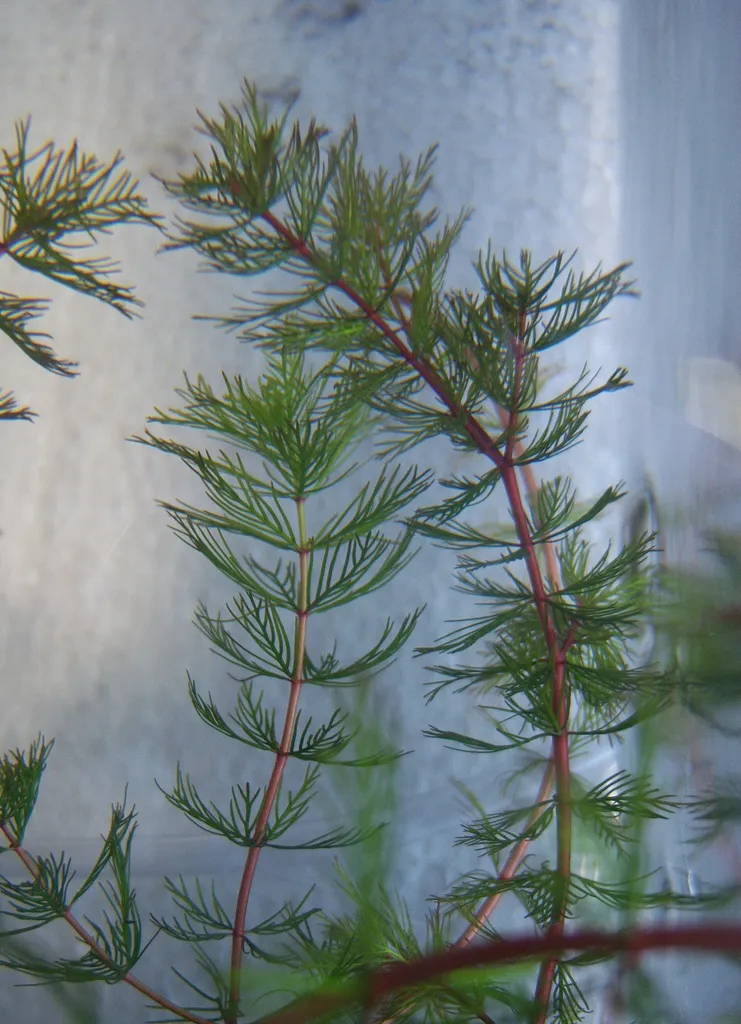
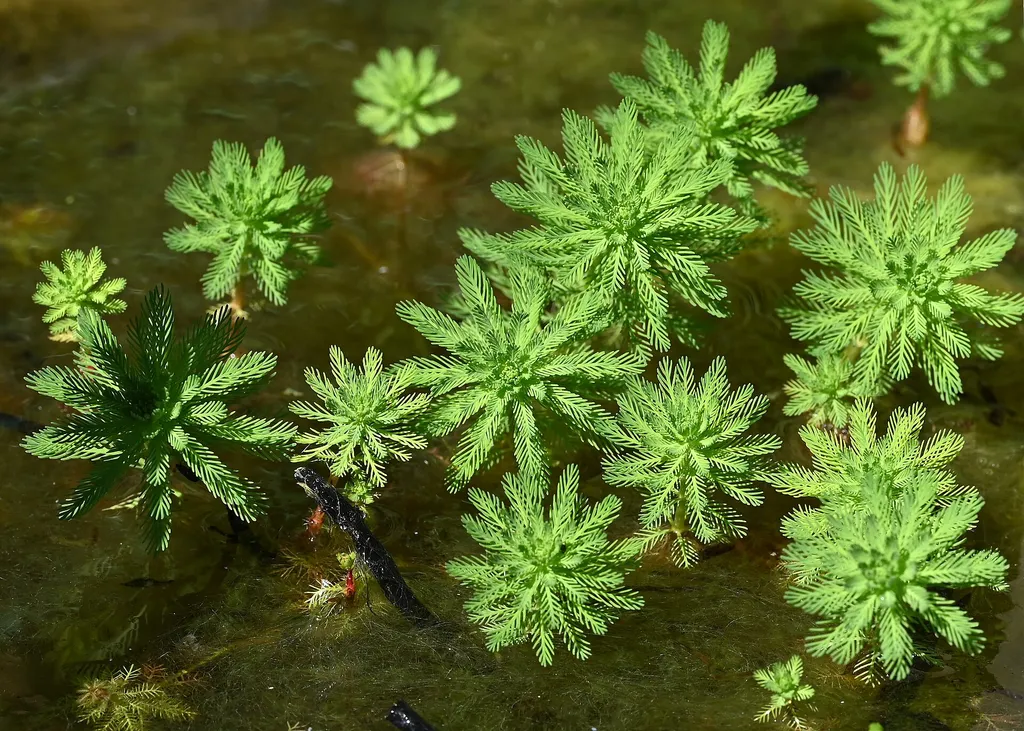
Myriophyllum Snowflake is an easy, fast-growing milfoil that forms a feathery bush in the background.
Did you know
The species name of Myriophyllum Snowflake, quitense, means from Quito. The plant was first described from Andean collections near the Ecuadorian capital. That mountain heritage is why it tolerates cool water so well.
Caring for Myriophyllum Snowflake
Strip the leaves from the lower part of each stem first. Plant the stems a couple of centimeters apart in a nutrient-rich substrate, toward the back of the tank.
Myriophyllum Snowflake wants medium light or better. Its frosted tips show best under stronger light with CO2, though neither is needed for plain healthy growth. It feeds through its roots and from the water, so add a liquid fertilizer to the rich substrate.
It grows fast to about 24 in (60 cm), so trim it often. Every cut top replants, and trimming forces the side shoots that make it dense. It handles cooler water than most stems, from 64 to 82°F (18 to 28°C), and does fine in unheated tanks.
The fine foliage catches debris. Keep the flow decent and the mulm down.
Good to know
Myriophyllum Snowflake is a water milfoil in the family Haloragaceae, described by Kunth from Ecuador. Myriophyllum elatinoides is treated as a synonym, and it is the name the trade prefers. Whorls of finely divided, feather-like leaves ring each stem. The pale, silvery-green new growth at the tips is the trait the Snowflake selection is sold on.
In the wild
Myriophyllum quitense grows in cool, clear lakes, streams and Andean waterways from Ecuador south through South America. Scattered populations also live in western North America. It is amphibious, growing submersed in deeper water and creeping emersed on wet margins, and a fully terrestrial form is documented from Bolivia.
Common questions
Does Myriophyllum Snowflake need to be planted in the substrate?
Yes. Strip the leaves from the lower part of each stem, then push the stems into the substrate one at a time, a little apart.
Does Myriophyllum Snowflake need CO2?
No, but it helps. Myriophyllum Snowflake can grow without injected CO2, and added CO2 makes it grow faster.
How much light does Myriophyllum Snowflake need?
Myriophyllum Snowflake wants medium light. A light sold for planted tanks covers it.
Does Myriophyllum Snowflake need root tabs?
They help. Myriophyllum Snowflake takes nutrients through both its roots and its leaves. Root tabs near its roots and a liquid fertilizer cover both.
How do you propagate Myriophyllum Snowflake?
Myriophyllum Snowflake propagates by cuttings and side shoots. Cut off the top of a stem and replant it, and the stump left behind grows new shoots. Cut a side shoot off once it has a few leaves and plant it on its own.
How tall does Myriophyllum Snowflake grow?
Myriophyllum Snowflake grows to about 23.6 in (60 cm) tall. It grows fast, so expect to trim it often.
Related plants
 High lightBackground23.6 in (60 cm)
Myriophyllum Roraima
Myriophyllum sp. 'Roraima'
High light · Background
- Medium lightBackground23.6 in (60 cm)
Myriophyllum pinnatum
Medium light · Background
 Medium lightBackground19.7 in (50 cm)
Myriophyllum Guyana
Myriophyllum mattogrossense
Medium light · Background
 Medium lightBackground15.7 in (40 cm)
Myriophyllum ussuriense
Medium light · Background
 High lightBackground15.7 in (40 cm)
Parrot's feather
Myriophyllum aquaticum
High light · Background
- High lightBackground11.8 in (30 cm)
Red myriophyllum
Myriophyllum tuberculatum
High light · Background