Myriophyllum pinnatum
Also known as Green myrio, Cutleaf watermilfoil, Myriophyllum scabratum
FreshwaterStemCuttingsSide shoots
Care at a glance
- Light
- Medium light
- CO2
- CO₂ beneficial
- Temperature
- 39–81°F
- 4–27°C
- Max height
- 23.6 in
- 60 cm
- Growth rate
- Fast
- Placement
- Background
- Type
- Stem
- pH
- 6.0–7.5
- Hardness
- 0–30 dGH
- Spread
- 3.1 in (8 cm)
- Nutrient uptake
- Root + water column
- Growth region
- Submersed or emersed
- Difficulty
- Medium
- Family
- Haloragaceae
- Origin
- Eastern North America
Overview
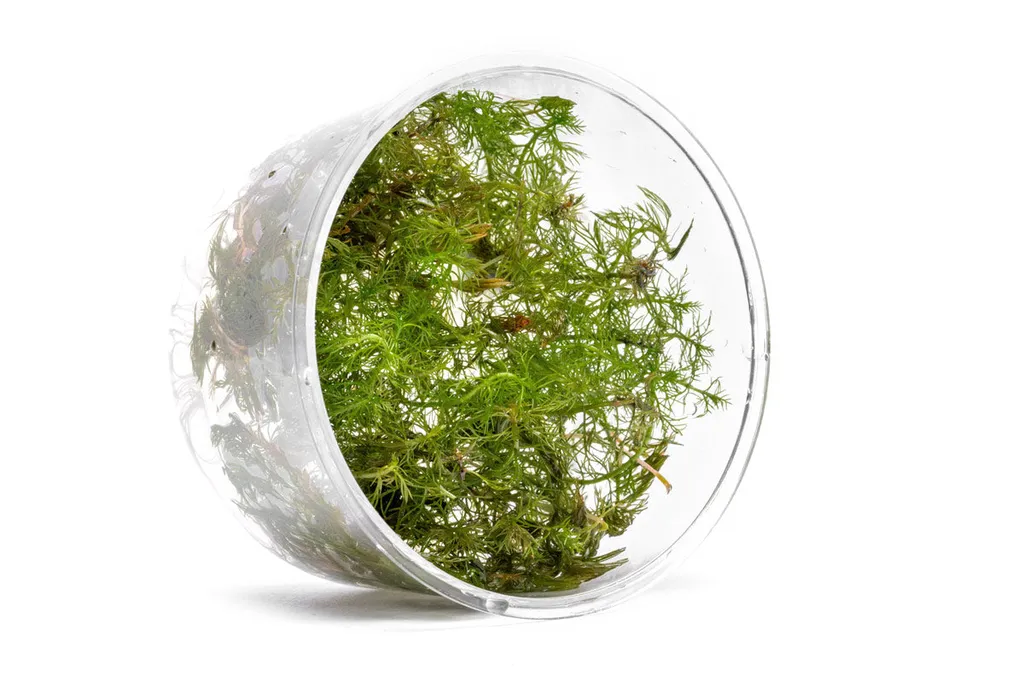
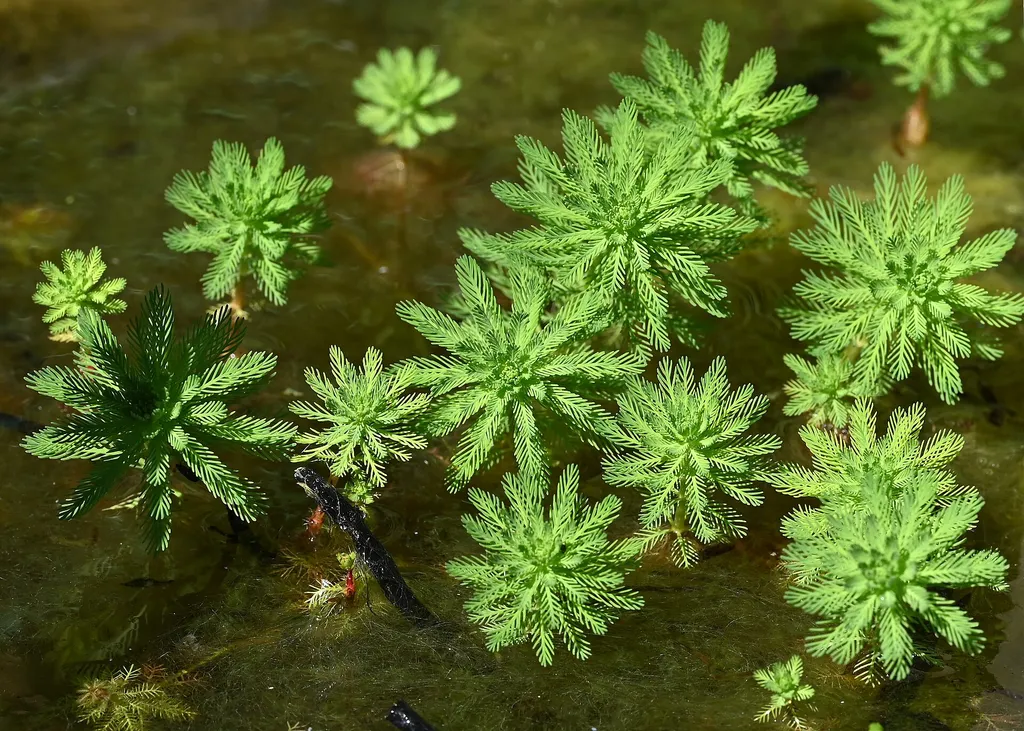
Myriophyllum pinnatum is a fast, dense milfoil for the background, with green to reddish stems. Shops usually sell it in bunches as green myrio, and its fine foliage doubles as cover for fry and shy fish.
Did you know
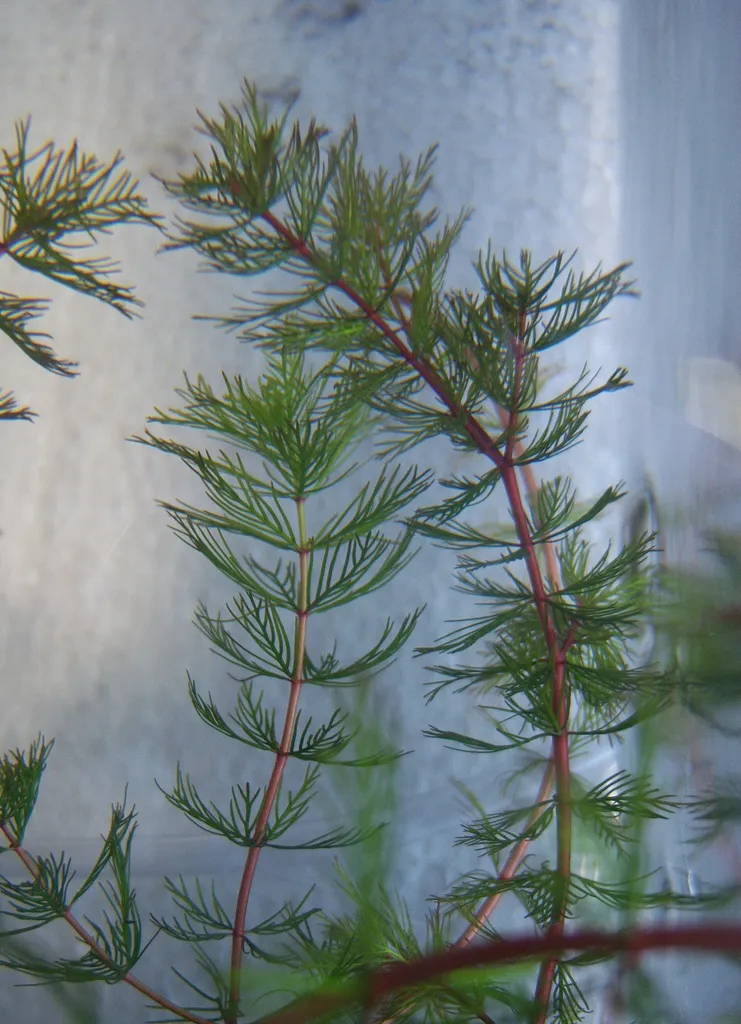
Myriophyllum pinnatum is easy to pick out of its genus by its mixed leaf arrangement. Its leaves sit both in whorls and alternately on the same stem, where most milfoils keep strict whorls. Find both on one stem and you are holding this plant, whatever name the shop label uses.
Caring for Myriophyllum pinnatum
Strip the leaves from the lower part of each stem and push the stems into the substrate one at a time, near the back. Give Myriophyllum pinnatum at least medium light. Poor light shows as bare lower stems, as on most fine-leaved stems.
It grows without injected CO2, but CO2 plus iron-rich fertilization keeps the foliage full rather than sparse. It feeds through its roots and from the water, so root tabs and a liquid fertilizer both help.
It prefers the cooler end of tropical temperatures and is one of the few common stems happy in coldwater setups. It handles 39 to 81°F (4 to 27°C), so it works in unheated tanks and ponds.
It grows fast, to about 24 in (60 cm). Trim and replant the tops regularly, since the bunch thickens from replanted cuttings rather than from old stems. The stumps left behind push new side shoots.
Good to know
Myriophyllum pinnatum is a watermilfoil in the family Haloragaceae. The name pinnatum means feathered, for the finely divided leaves. An older synonym is Myriophyllum scabratum. The aquarium trade has long mislabeled it Myriophyllum hippuroides, which is properly a different, western North American species.
In the wild
Myriophyllum pinnatum is native to eastern North America, in shallow lakes, pond margins, swamps and marshy woodland. It is amphibious, with submersed stems in open water and a stockier emersed form on wet mud. Its range runs well into the temperate zone.
Common questions
Does Myriophyllum pinnatum need to be planted in the substrate?
Yes. Strip the leaves from the lower part of each stem, then push the stems into the substrate one at a time, a little apart.
Does Myriophyllum pinnatum need CO2?
No, but it helps. Myriophyllum pinnatum can grow without injected CO2, and added CO2 makes it grow faster.
How much light does Myriophyllum pinnatum need?
Myriophyllum pinnatum wants medium light. A light sold for planted tanks covers it.
Does Myriophyllum pinnatum need root tabs?
They help. Myriophyllum pinnatum takes nutrients through both its roots and its leaves. Root tabs near its roots and a liquid fertilizer cover both.
How do you propagate Myriophyllum pinnatum?
Myriophyllum pinnatum propagates by cuttings and side shoots. Cut off the top of a stem and replant it, and the stump left behind grows new shoots. Cut a side shoot off once it has a few leaves and plant it on its own.
How tall does Myriophyllum pinnatum grow?
Myriophyllum pinnatum grows to about 23.6 in (60 cm) tall. It grows fast, so expect to trim it often.
Related plants
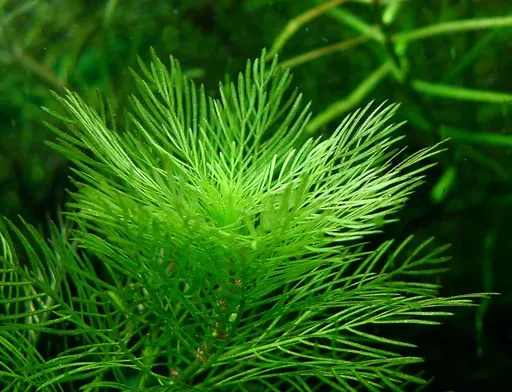
 High lightBackground23.6 in (60 cm)
Myriophyllum Roraima
Myriophyllum sp. 'Roraima'
High light · Background
 Medium lightBackground23.6 in (60 cm)
Myriophyllum Snowflake
Myriophyllum quitense
Medium light · Background
 Medium lightBackground19.7 in (50 cm)
Myriophyllum Guyana
Myriophyllum mattogrossense
Medium light · Background
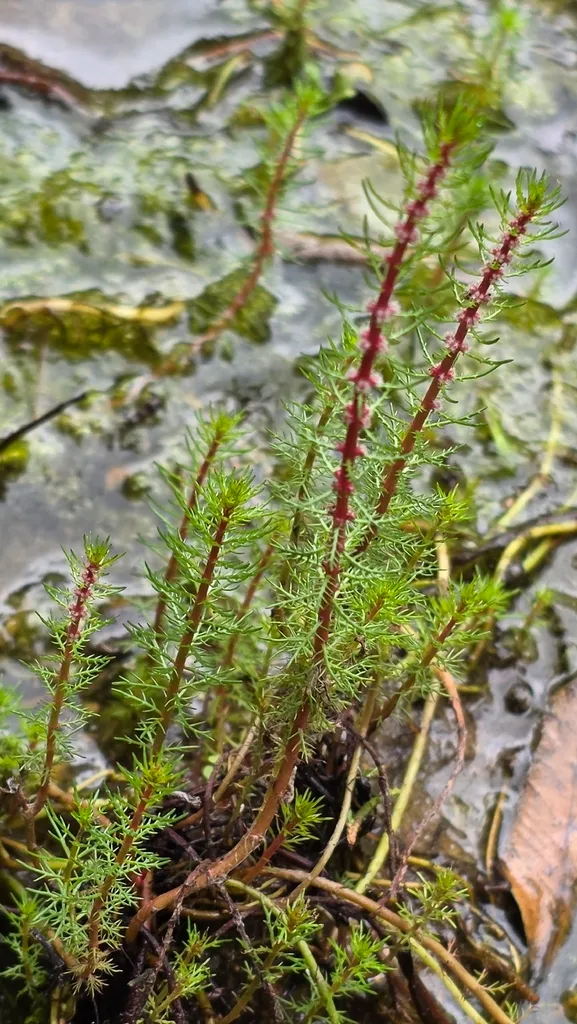 Medium lightBackground15.7 in (40 cm)
Myriophyllum ussuriense
Medium light · Background
 High lightBackground15.7 in (40 cm)
Parrot's feather
Myriophyllum aquaticum
High light · Background
- High lightBackground11.8 in (30 cm)
Red myriophyllum
Myriophyllum tuberculatum
High light · Background