Myriophyllum Guyana
Myriophyllum mattogrossense
Also known as Myriophyllum sp. 'Guyana', Mattogrosso milfoil, Green milfoil, Red foxtail
FreshwaterStemCuttingsSide shoots
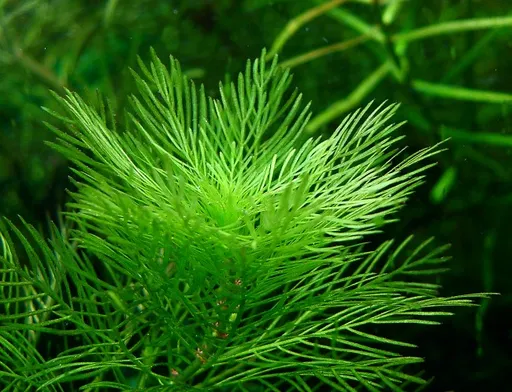
Care at a glance
- Light
- Medium light
- CO2
- CO₂ beneficial
- Temperature
- 68–82°F
- 20–28°C
- Max height
- 19.7 in
- 50 cm
- Growth rate
- Fast
- Placement
- Background
- Type
- Stem
- pH
- 6.0–7.5
- Hardness
- 2–12 dGH
- Spread
- 2.4 in (6 cm)
- Nutrient uptake
- Root + water column
- Growth region
- Submersed or emersed
- Difficulty
- Easy
- Family
- Haloragaceae
- Origin
- South America (Mato Grosso region of Brazil)
Overview
A bright green, feathery background stem that is genuinely easy and grows fast even in lower-tech tanks, though medium to high light keeps it dense and CO2 plus dosing make it lusher. Plant in groups and it quickly forms a soft, bushy backdrop; left alone it will reach the surface, so trim and replant the tops. The fine leaves are a magnet for algae if light and nutrients are out of balance, so keep parameters steady and flow decent. An iron-rich substrate or root tabs plus water-column ferts suit it well.
In the wild
Myriophyllum mattogrossense comes from South America and is named for the Mato Grosso region of Brazil, growing in shallow slow water where it forms soft, feathery underwater foliage. It is one of the more forgiving milfoils, switching between an emersed and a fully submersed form and reaching the surface quickly in good conditions. In the hobby it is widely sold under the trade name Myriophyllum 'Guyana'.
Good to know
It belongs to Haloragaceae, the watermilfoil family. The genus Myriophyllum gets its name from the Greek for countless leaves, a nod to the finely divided whorled foliage that gives milfoils their feathery look. The aquarium-trade name Myriophyllum 'Guyana' is generally applied to this same species rather than a botanically distinct plant.
Did you know
Did you know its feathery leaves make it a favourite spawning mop in the wild and in breeding tanks. The dense whorls of fine foliage trap eggs and give fry somewhere to hide, which is partly why milfoils are such popular plants for fish breeders.
Related plants
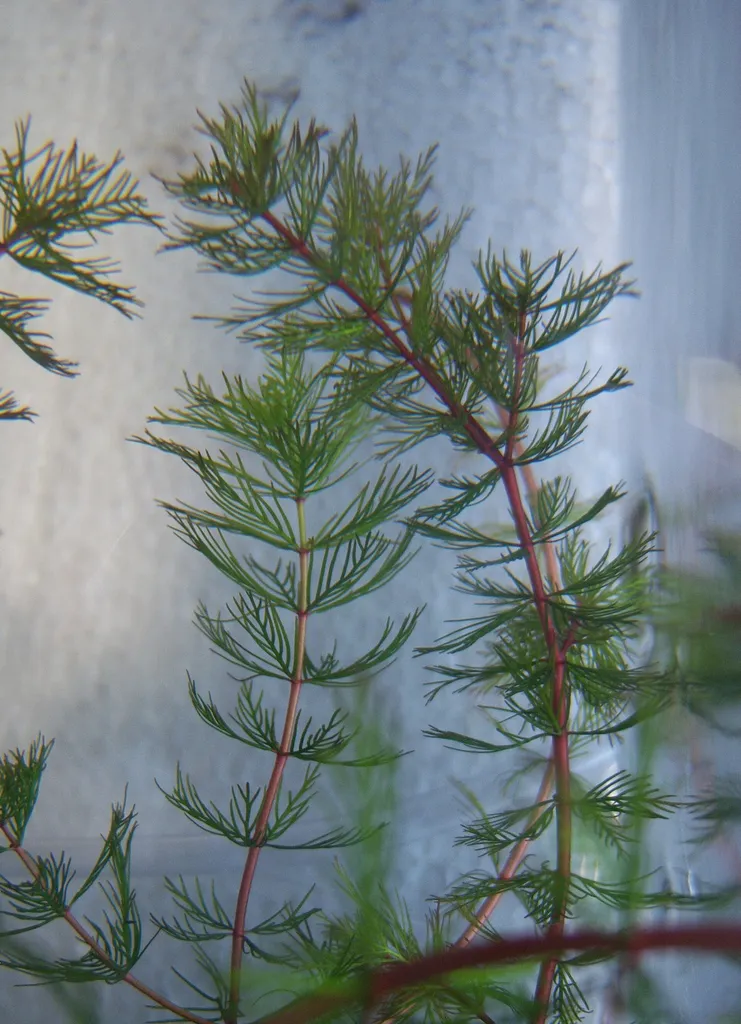 Medium lightBackground23.6 in (60 cm)
Myriophyllum Snowflake
Myriophyllum quitense
Medium light · Background
- Medium lightBackground23.6 in (60 cm)
Myriophyllum pinnatum
Medium light · Background
- High lightBackground23.6 in (60 cm)
Myriophyllum Roraima
Myriophyllum sp. 'Roraima'
High light · Background
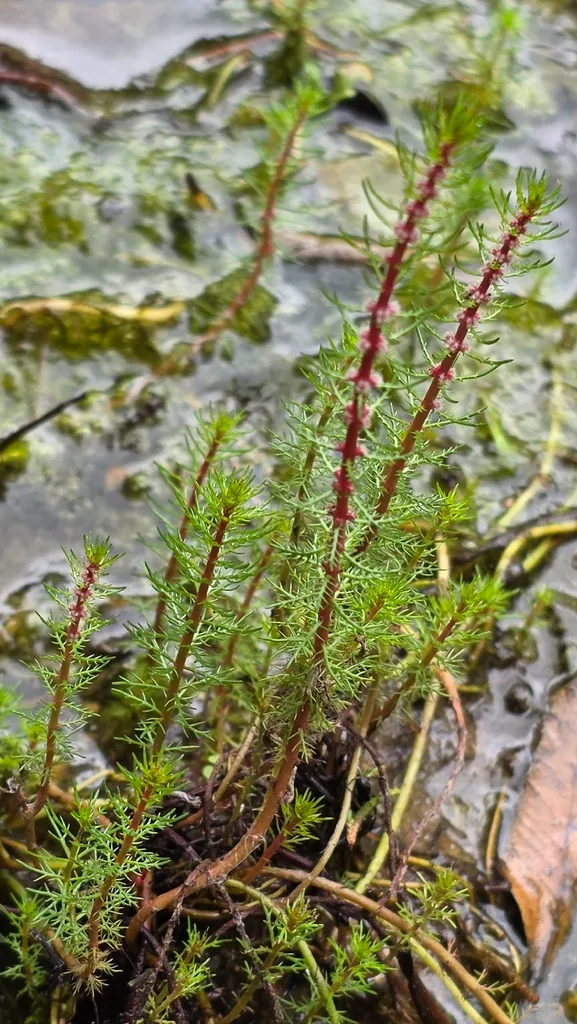 Medium lightBackground15.7 in (40 cm)
Myriophyllum ussuriense
Medium light · Background
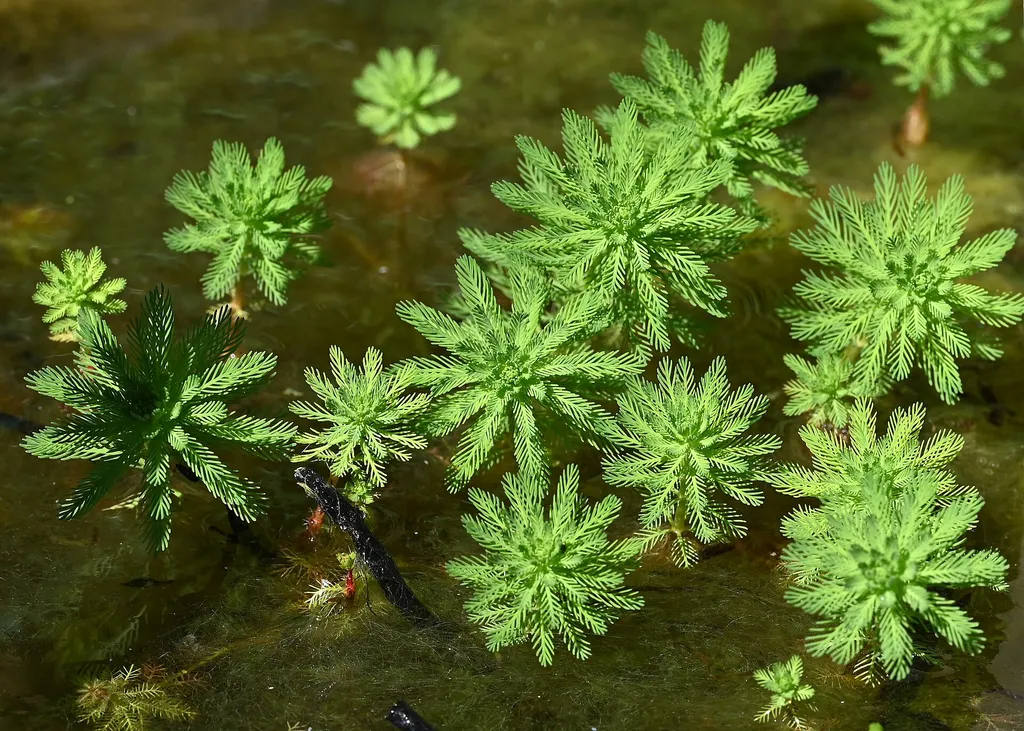 High lightBackground15.7 in (40 cm)
Parrot's feather
Myriophyllum aquaticum
High light · Background
- High lightBackground11.8 in (30 cm)
Red myriophyllum
Myriophyllum tuberculatum
High light · Background