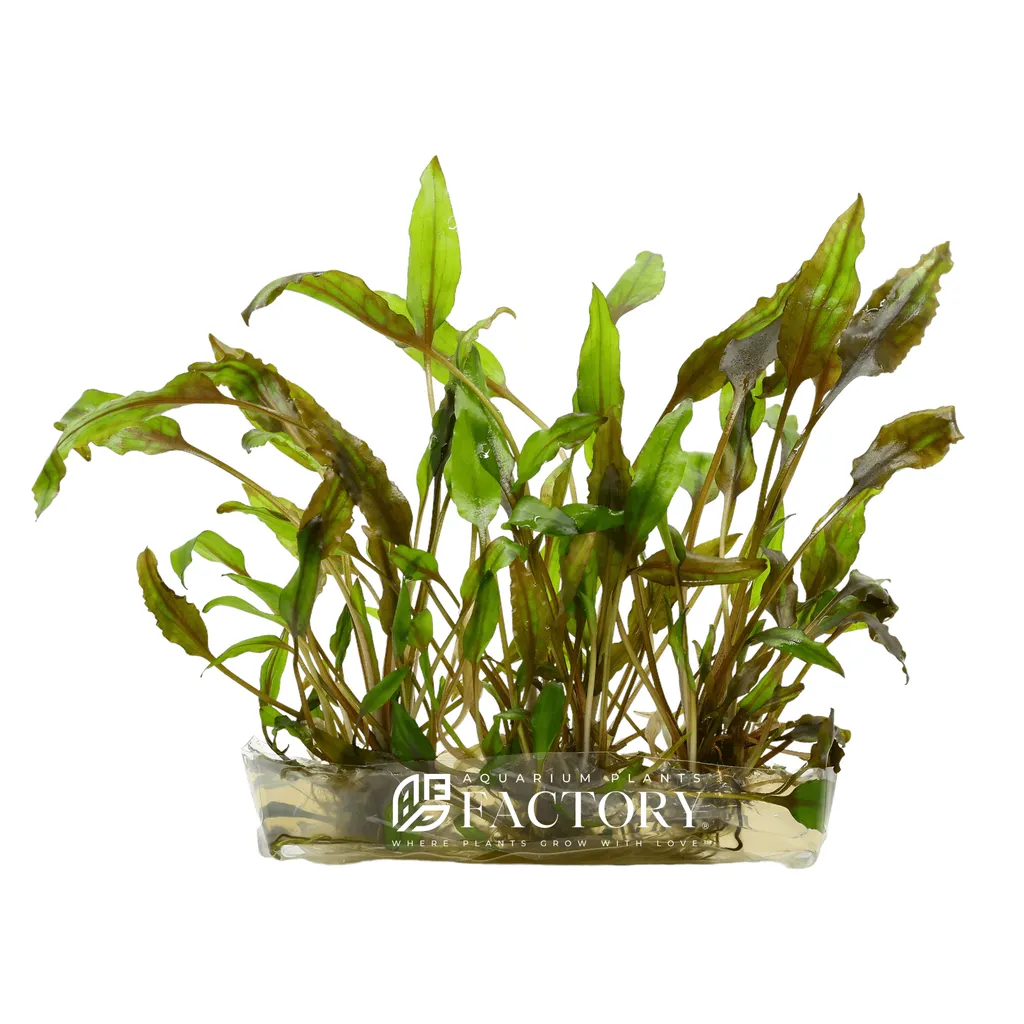
Cryptocoryne ciliata
Also known as Ciliated crypt, Fringed water trumpet, Crypt ciliata
FreshwaterBrackishRosetteRunners
Care at a glance
- Light
- Medium light
- CO2
- No CO₂ needed
- Temperature
- 73–82°F
- 23–28°C
- Max height
- 23.6 in
- 60 cm
- Growth rate
- Slow
- Placement
- Background
- Type
- Rosette
- pH
- 6.5–7.8
- Hardness
- 4–18 dGH
- Spread
- 11.8 in (30 cm)
- Nutrient uptake
- Root feeder
- Growth region
- Submersed or emersed
- Difficulty
- Medium
- Family
- Araceae
- Origin
- Coastal Southeast Asia: tidal zones and mangrove margins from India and Sri Lanka to New Guinea
Overview
Use it as a large background or specimen rosette, planting the crown at the substrate surface in rich soil and feeding it with root tabs, since it is a heavy root feeder. It is more demanding of light than most crypts and grows slowly, so give it moderate to strong lighting and be patient. CO2 is not required. Its headline use is the brackish tank, where it is one of the only true aquatic plants that will grow, but it does equally well in plain fresh water. Expect the usual crypt melt after planting or any big change in conditions, so trim the mush and wait for new tank-adapted leaves rather than pulling the plant. It gets large and can grow emersed out of an open tank, so give it height and room.
In the wild
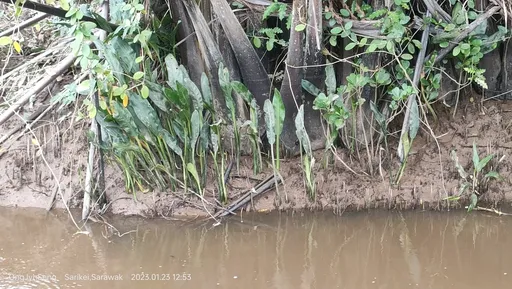
Cryptocoryne ciliata grows along tidal riverbanks, in coastal marshes, and at the edges of mangrove swamps across coastal Southeast Asia, from India and Sri Lanka through Malaysia and Indonesia to the Philippines and New Guinea. Unlike the shaded forest-stream crypts, it lives in bright, open tidal zones in muddy soil, and its water fluctuates between fresh and brackish as the tide moves. That brackish tolerance is what makes it special: it is one of the very few crypts that survives real salt, up to around 1.005 specific gravity or about 7 ppt. It handles a wide range of tank conditions, from 23 to 28 C at a pH of 6.5 to 7.8, and grows in both freshwater and low-end brackish setups.
Good to know
A large water trumpet in the arum family (Araceae), so its bloom is a spathe and spadix rather than a true flower, fringed at the edge, which gives the species its name ciliata, meaning fringed with hairs. It grows as a big rosette from a stout crown and spreads by runners that send up new plants nearby. Two varieties exist, var. ciliata and the larger var. latifolia, and both are amphibious, growing submersed underwater and emersed on the banks, where the leaves turn thicker and firmer and flowering becomes much more likely.
Did you know
It is the go-to plant for anyone trying to grow greenery in a brackish tank, since almost every other aquarium plant fails in salt. In its native tidal zones it copes with brackish water by living an amphibious life, and in an open tank it will happily push leaves and even a fringed flower up into the air the way it does on a mangrove riverbank.
Related plants
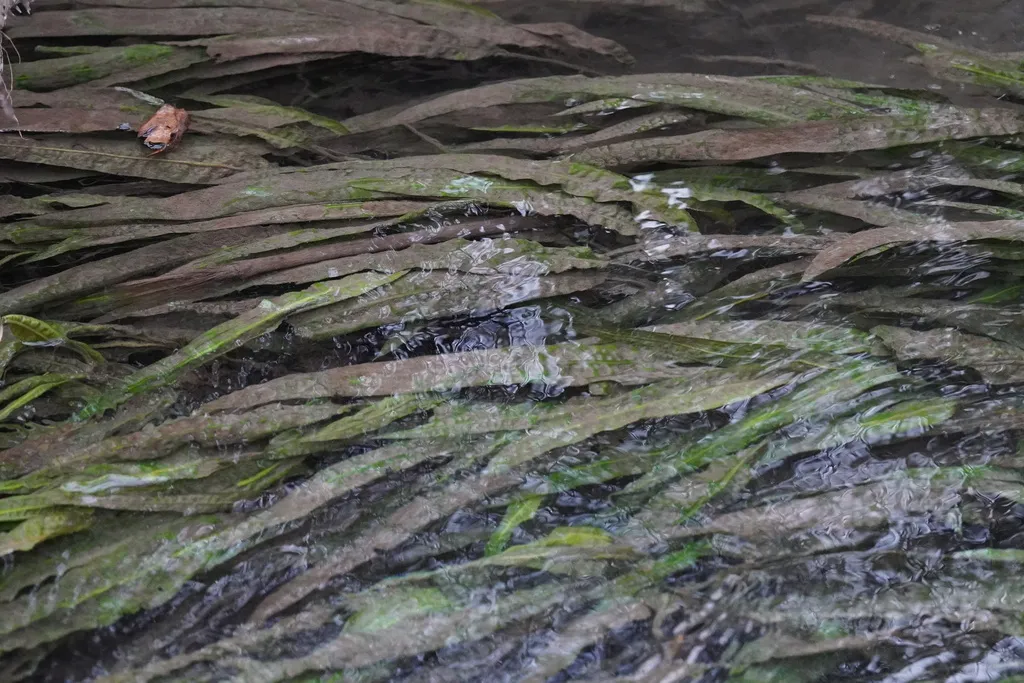 Medium lightBackground23.6 in (60 cm)
Cryptocoryne crispatula
Medium light · Background
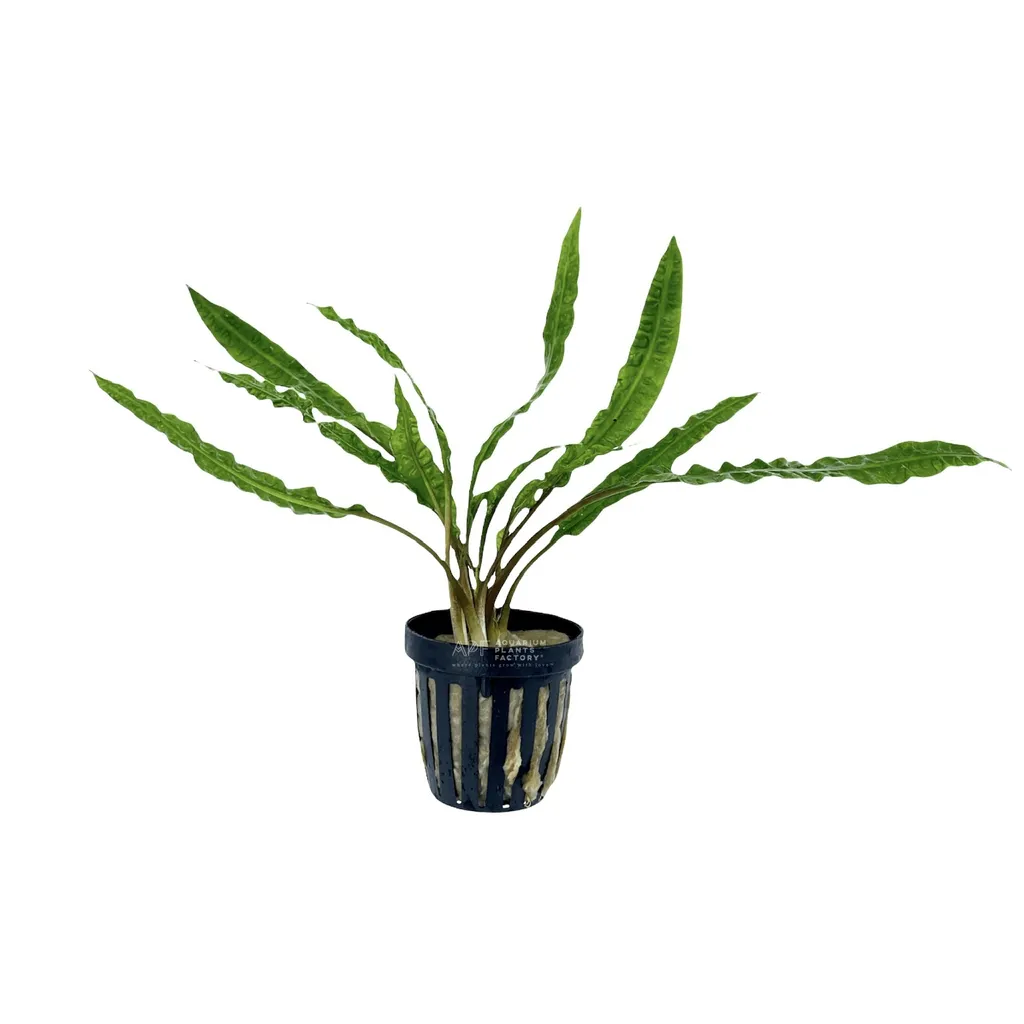 Medium lightBackground19.7 in (50 cm)
Cryptocoryne balansae
Cryptocoryne crispatula var. balansae
Medium light · Background
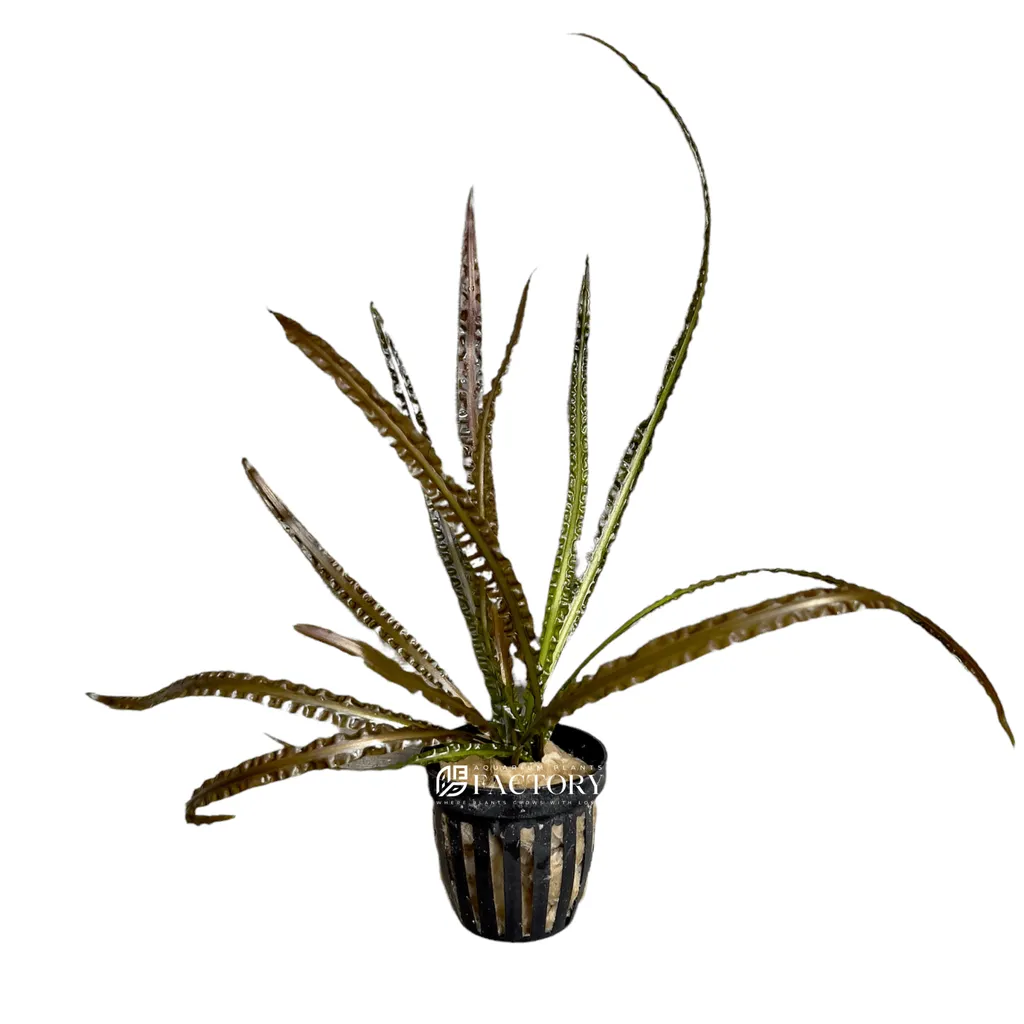 Low lightBackground19.7 in (50 cm)
Cryptocoryne retrospiralis
Low light · Background
 Low lightBackground19.7 in (50 cm)
Cryptocoryne usteriana
Low light · Background
- Medium lightBackground19.7 in (50 cm)
Cryptocoryne tonkinensis
Cryptocoryne crispatula var. tonkinensis
Medium light · Background
- Low lightBackground15.7 in (40 cm)
Cryptocoryne spiralis Nari
Cryptocoryne spiralis 'Nari'
Low light · Background