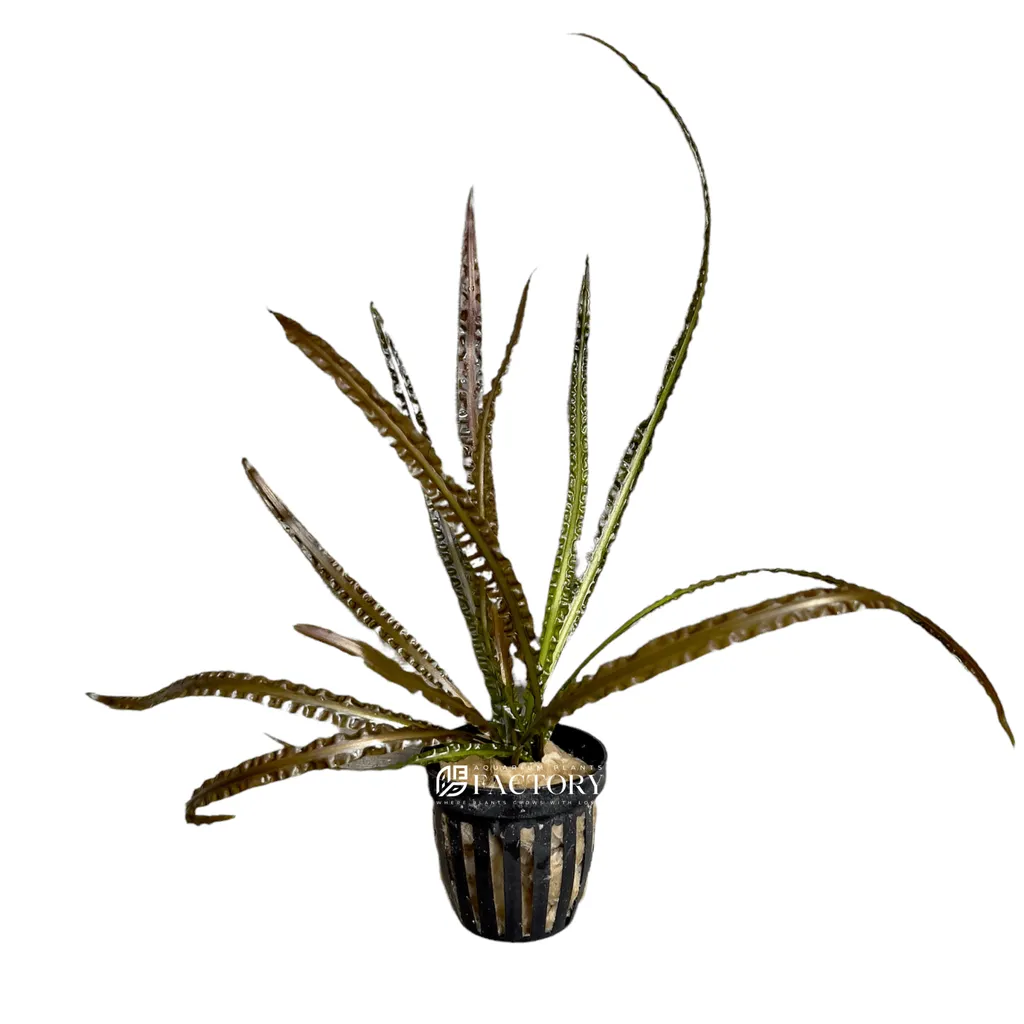
Cryptocoryne retrospiralis
Also known as Retrospiralis crypt, Cryptocoryne roxburghiana, Cryptocoryne dalzellii
FreshwaterRosetteRunnersRhizome division
Care at a glance
- Light
- Low light
- CO2
- No CO₂ needed
- Temperature
- 68–82°F
- 20–28°C
- Max height
- 19.7 in
- 50 cm
- Growth rate
- Slow
- Placement
- Background
- Type
- Rosette
- pH
- 6.0–8.0
- Hardness
- 2–18 dGH
- Spread
- 5.9 in (15 cm)
- Nutrient uptake
- Root + water column
- Growth region
- Submersed or emersed
- Difficulty
- Easy
- Family
- Araceae
- Origin
- India
Overview
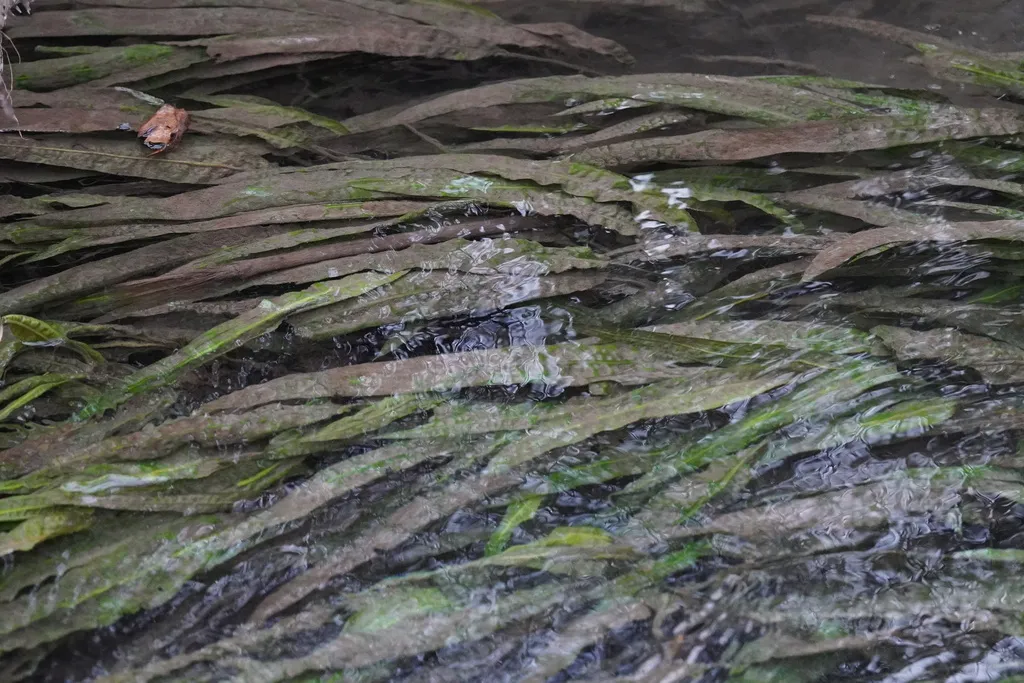
A tall background crypt whose long, narrow, spiraled leaves give a vertical, flowing look that suits taller tanks. It is impressively easy for its height: low light is enough and no CO2 is required, though both speed it up. As a heavy root feeder it wants a nutrient-rich substrate (aquasoil or sand with root tabs) and a couple of inches of depth for the roots. Expect leaf melt when first introduced, this is normal acclimation, after which it grows back and slowly spreads by runners. Leave it in place once planted.
In the wild
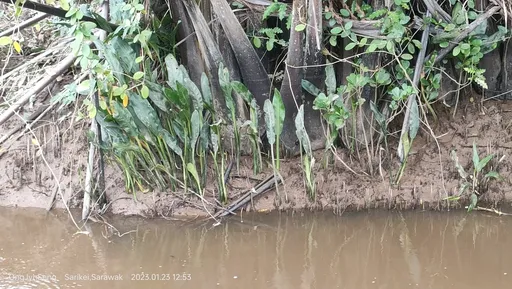
Native to the west coast of India and east into Myanmar, growing in streams and slow rivers in lowland forest, in seasonally inundated pools, and on riverbanks that are only submerged at high water. It moves between submersed and emersed life as the water rises and falls through the year.
Good to know
Described long ago by Roxburgh and later placed in Cryptocoryne by Kunth, it carries a string of old synonyms including Cryptocoryne roxburghiana and C. dalzellii. It sits in the Araceae and is closely allied to the crispatula group, distinguished by its narrow, twisting leaves.
Did you know
The species name retrospiralis refers to the leaves twisting back on themselves in a corkscrew, a feature that becomes more pronounced as the plant matures and the leaves lengthen toward half a meter.
Related plants
 Medium lightBackground19.7 in (50 cm)
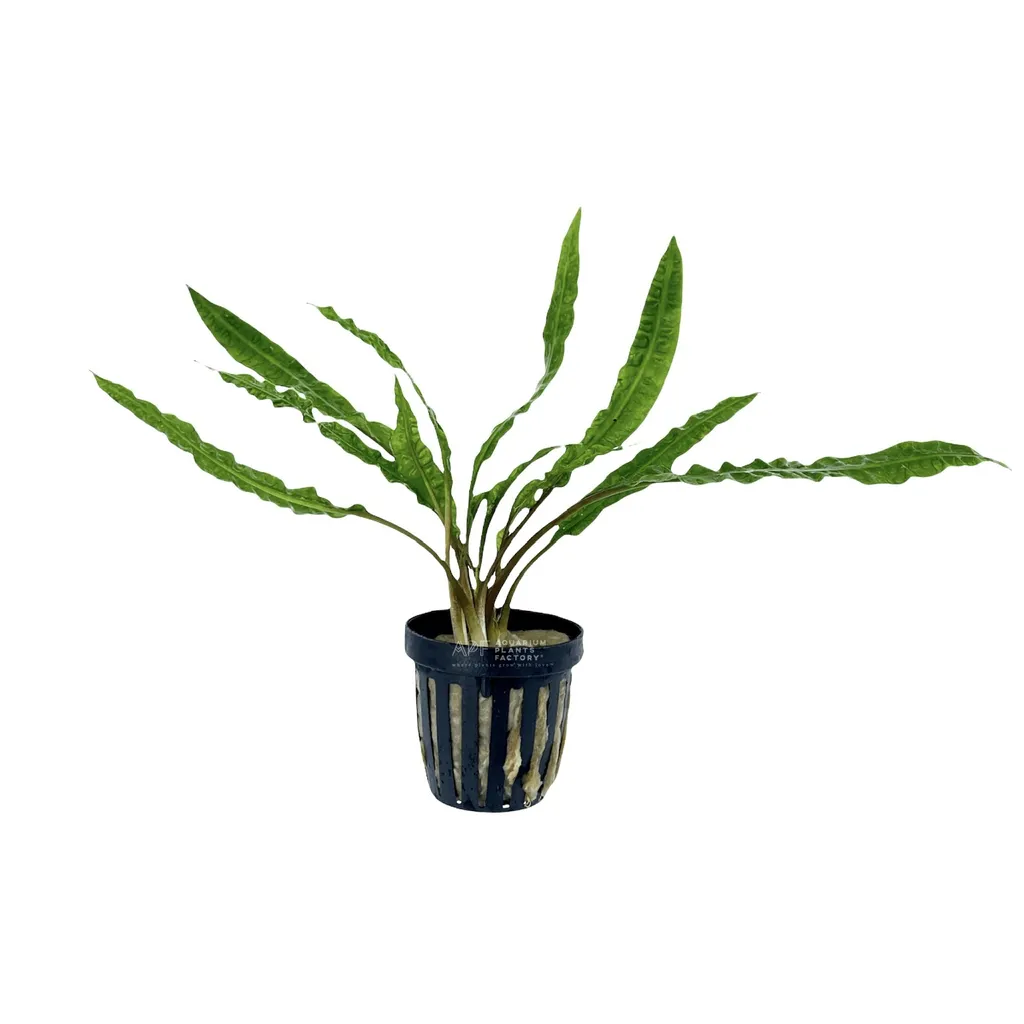
Cryptocoryne balansae
Cryptocoryne crispatula var. balansae
Medium light · Background
 Low lightBackground19.7 in (50 cm)
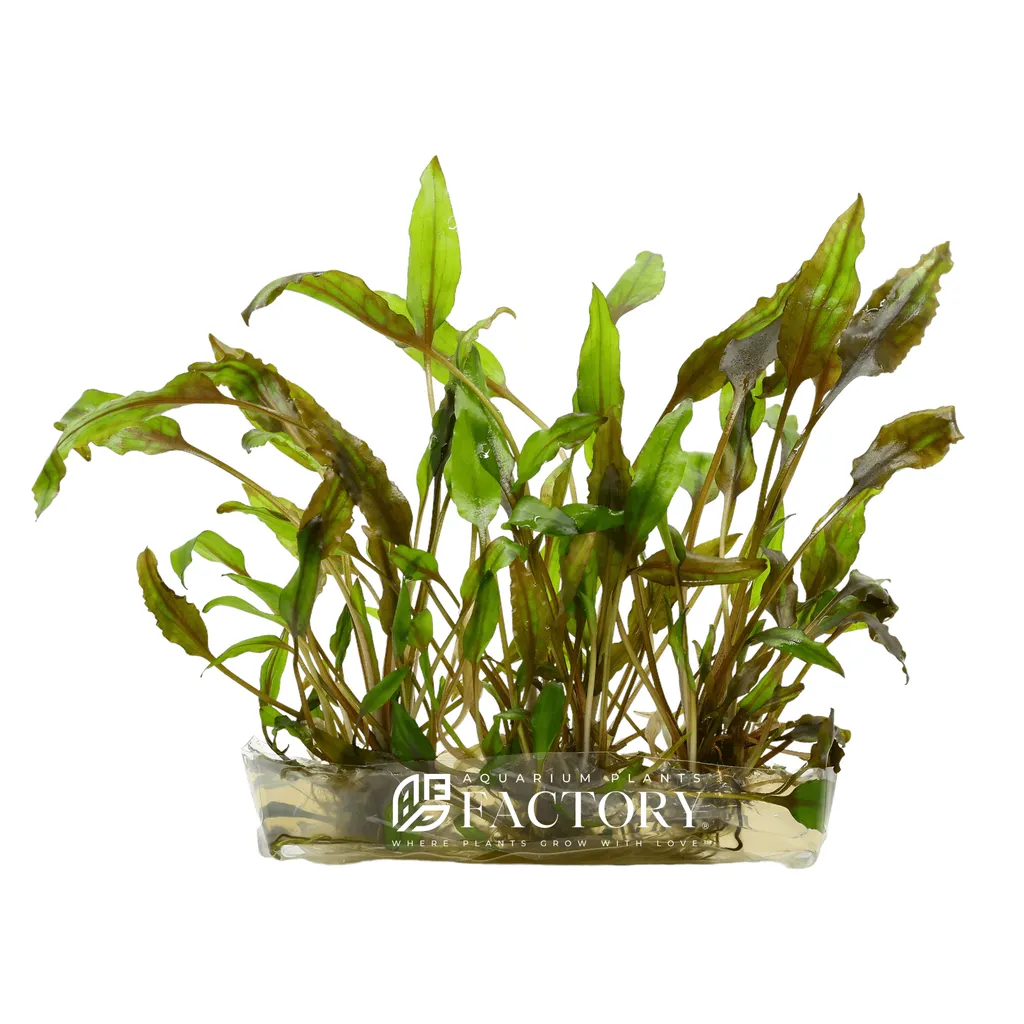
Cryptocoryne usteriana
Low light · Background
- Medium lightBackground19.7 in (50 cm)
Cryptocoryne tonkinensis
Cryptocoryne crispatula var. tonkinensis
Medium light · Background
 Medium lightBackground23.6 in (60 cm)
Cryptocoryne ciliata
Medium light · Background
 Medium lightBackground23.6 in (60 cm)
Cryptocoryne crispatula
Medium light · Background
- Low lightBackground15.7 in (40 cm)
Cryptocoryne spiralis Nari
Cryptocoryne spiralis 'Nari'
Low light · Background